After failing to return the grand total of 160 pounds, which is a lifetime of chess earnings for the average amateur player, an English chess player has found himself in court.
Archive for January, 2015
Chess News 6: Unpaid chess loan lands player in court.
Posted in Life beyond the chess board on January 24, 2015| Leave a Comment »
More on F.Dickens
Posted in History of Bedfordshire Chess, tagged F.Dickens chess on January 24, 2015| Leave a Comment »
In case you thought that Dickens’s victory was something of a fluke, I have found a game where he draws with Jacques Mieses, a leading player of his day.

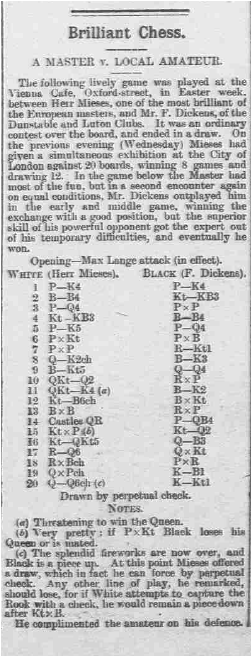
Here’s the final position.

The position after 20…Kg8. Note that it is Mieses going for the draw. If you play through the game you will see that white misses a clear win with 16 Nb5. Better would have been Nxe6 Qxe6 with Qf3, after which the double threat of the pin on the queen and the rook en prise cannot be met (see below).
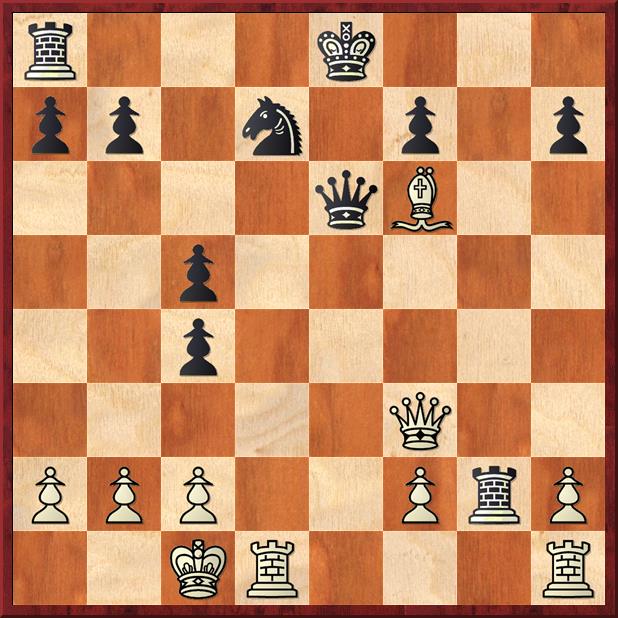
What white should have played. Black is lost.
When Lasker came to Luton… .
Posted in History of Bedfordshire Chess, tagged lasker in luton on January 23, 2015| Leave a Comment »
Courtesy of The British Newspaper Archive (Beds Advertiser and Luton Times Feb 21st 1908), I have unearthed evidence that the former world champion Dr. Emanuel Lasker performed a simul in my home town, his record being W13 D3 L1.
It’s an entertaining little read. Even though the world champion arrived late after being directed to Leighton Buzzard en route, he nonetheless gave a good account of himself against reasonable opposition. A piece well worth reading, I have given the author F.Dickens’s win below the excerpt.

E.Lasker V F. Dickens final position
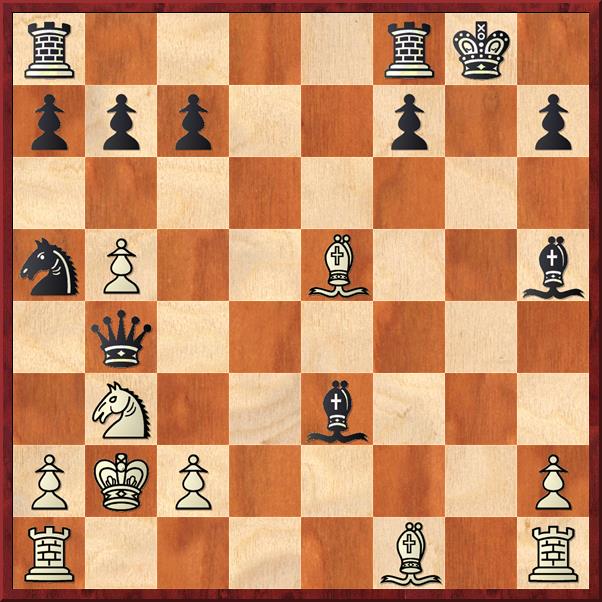
17. …Bxh5. The queen is captured.
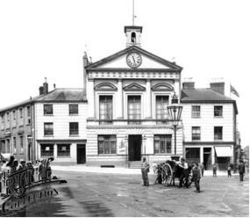
Where Lasker played. The old town hall before Luton’s fiesty, and decidedly immigrant population burnt it down. I wonder what he thought of Luton? He must have stayed the night at least.
![The Town Hall smouldering [Z1306-75]](https://mccreadyandchess.com/wp-content/uploads/2015/01/the-town-hall-smouldering-z1306-75.jpg)
Evidence of the above.
What the Dickens!
Posted in History of Bedfordshire Chess, tagged chess in luton on January 13, 2015| 2 Comments »
He who climbs upon the highest mountains laughs at all tragedies, real or imaginary. Nietzsche TSZ
By now you’ve probably noticed that the best site on the net is Edward Winter’s Chess Notes and the worst is my own…right? If not then shame on you. Owing to the former ambitions of the Proletarian Tourist Excursions Society not too far from Stalin’s home town and a near simultaneous fireworks display held past midnight at -10, some late night surfing on top of a snow-capped mountain range has come to fruition.
A book about chess in my home county was written in 1933, Chess in Bedfordshire by F. Dickens and G.L. White (Leeds, 1933). According to Mr.Winter my home town had its fair share of pre-WW2 talent, with an adopted Lutonian disposing of former world champion Lasker in a simul with the Falkbeer Counter-gambit of all things, and a possible relative of Dickens beating Tartakower, also in a simul. Admittedly, the play from our Maestros leaves a lot to be desired, and had Tartakower played 13…g5 against me (see below), there is no doubt I would have beaten him too. I will endeavour to find out what brought him to Luton and report any findings.
Before its catastrophic modernization, which began in the 1950’s and finished the year I was born, Luton was once a quaint picturesque town where everyone knew each other -quite unlike what it has become. If you don’t know anything about Luton, it was once voted as the worst town in England, although in truth it’s best described as a northern town down south. In recent years it has become an immigration dumping ground for the government, causing the rise of the far-right movement the EDL, which was formed by a group of individuals who lived at the top of my road, and went to the same school I did. http://news.bbc.co.uk/2/hi/uk_news/3692154.stm
In chess terms it is famous for the shortest game ever played between Stewart Reuben and Tony Miles in 1975, the game was:
1. Draw.
I am indebted to Edward Winter for the content below:
Courtesy of ChessNotes 7224. http://www.chesshistory.com/winter/winter85.html
An adopted Lutonian, J.E.D Moysey, owner of the once infamous Midland Hotel beats Lasker!

What the Dickens! Tartakower loses in Luton!
S.W. Dickens – Savielly Tartakower
Luton, January 1928
Queen’s Gambit Declined
1 d4 d5 2 c4 e6 3 Nc3 Nf6 4 Bg5 Be7 5 e3 Nbd7 6 Nf3 O-O 7 Rc1 c6 8 a3 Ne4 9 Bxe7 Qxe7 10 Bd3 f5 11 O-O Rf6 12 Ne2 Rh6 13 Ng3

13…g5 (‘Fierce, but premature attack.’) 14 cxd5 (‘Initial move of a combination threatening to win two pawns and the exchange.’) 14…g4 15 dxe6 gxf3 16 Nxf5 Qxe6 17 Nxh6+ (‘17 Bc4, pinning the queen, would shorten the road to victory.’) 17…Qxh6 18 Bxe4 fxg2 19 Bxg2 Nf6 20 Qf3 Kh8 21 Rc5 Bg4 22 Qf4 Qxf4 23 exf4 Rd8 24 h3 Bh5 25 Rf5 Kg7 26 Re1 Rxd4 27 Re7+ Kg6 28 Rg5+ Kh6 29 Rxb7 Rxf4 30 Rc5 Bg6 31 Rxa7 Rd4 32 Rxc6 Nh5 33 Rac7 Rd1+ 34 Kh2 Rd2 35 Be4 (‘A good manoeuvre to gain freedom.’) 35…Rxf2+ 36 Kg1 Rxb2 37 Bxg6 hxg6 38 a4 Nf4 39 a5 Ra2 40 a6 Kh5 41 a7 Kh4 42 Rc4 g5 43 Rh7+ Kg3 44 Rc3+ Resigns.
Source: pages 19 and 68-69 of Chess in Bedfordshire by F. Dickens and G.L. White (Leeds, 1933).
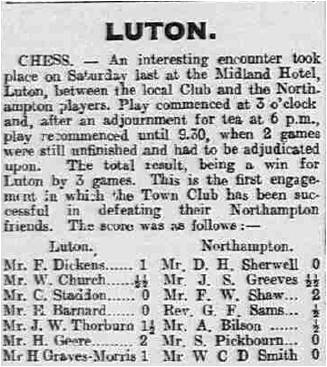
An excerpt from the Beds Advertiser and Luton Times Nov 11th 1910 shows F.Dickens in action for Luton (source cf: The British Newspaper Archive)
Legal Disclaimer by the author:
This post contains disturbing, graphic imagery that is far too shocking for chess players. Discretionary viewing is advised.

The danger of staring too long at this still is that you may become a feature of our lifeless past for generations. Imagine having to wait over 100 years before anyone could upload and emancipate you into the net.
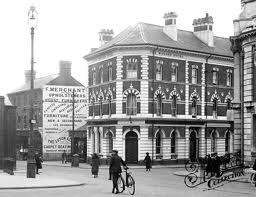
The horror of it all. The Midland Hotel, a typically rough Luton drinking establishment and its chess-playing owner who’indulged in animated and dogmatic estimates of London players he had met’ during heavy drinking sessions. ‘-his favourite derogatory phrase, delivered in his strong public school accent, was “He’s a mere CAFFYHOUSE player!” So often did he bring this out that it became a sort of shibboleth or “Hi, de, Hi!” in Luton chess circles.’ http://www.chesshistory.com/winter/winter85.html Please go to 7223.
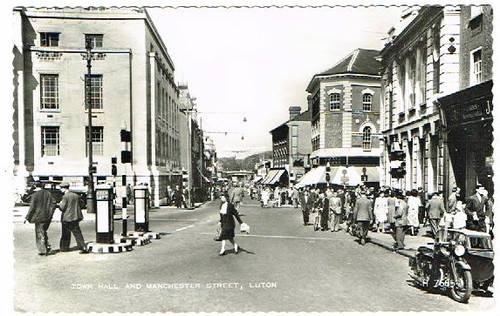
The Midland Hotel is to the right. It was demolished as was much of Luton town centre for the sake of ‘progress’. The substance of that progress was concrete, unpainted concrete and lots of it, rendering the town centre a light-grey colour in the sun and dark-grey in the rain, sleet and snow. An American style mall became the focal point of the town and ripped the heart out of it. Apart from its grotesque, functionalist design, the most obvious criticism, which still stands today, is that a shopping centre cannot function as the heart of the town, given that it closes at 5pm the town centre is dead thereafter. Culture gave way to commerce, which in turn was based on the whims of a few empowered and disenchanted individuals.
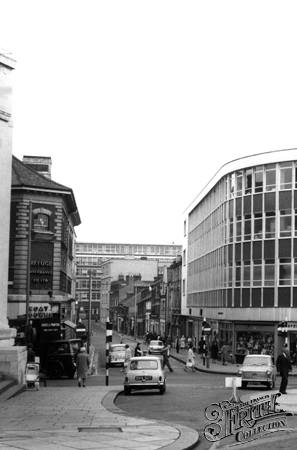
The swinging sixties: when you look at this image you can’t help but relive those psychedelic grooves can you? The street you see (Williamson St.) no longer exists and in the name of progress, the building to the right was ripped down and rebuilt to look the same some years later. This is why so many leave small towns in England, they have nothing to offer except urban misery.

The 70’s revealed in what is the most graphic, disturbing image ever to be posted on a chess website. Luton Arndale centre: a timeless void you must never gaze into.
The Price of Art in Luton
On the bridge approaching the railway,
the man was begging.
I said draw me a dog
and I’ll give you a quid.
So I gave him some paper
and he did.
And I said, there you go, mate,
you can make money out of art!
Will you sign it?
As I handed him the one pound thirty-odd
I had in my pocket,
he informed me that the signed ones were a fiver.
John Hegley (Luton poet and comedian)
A music video by The Doves, which illustrates the effects of the drab and dreary nature of urban life in 70’s Britain can be found below. After being brutalized by a bland supermarket, a gentleman breaks down mentally and abandons all around him. In his need to escape he undertakes a journey full of functionalist architecture, panic, exotica and psychedelia. All that aside its a very catchy tune.
An intriguing critique of chess…
Posted in Quaint Chess History on January 8, 2015| Leave a Comment »
Following a link from chess24, I found an intriguing critique of chess from the July 2nd edition of Scientific American, 1859, which was written to address the enthusiasm for chess Morphy’s success had generated across their young nation. It’s quite an amusing little read with a few sound points but much dubious argumentation between them.
CHESS-PLAYING EXCITEMENT. The achievements of our young countryman, Paul Morphy, in vanquishing the most distinguished chess players of Europe, have excited in our people a very pardonable degree of national pride; hence they have exhibited a strong exultant feeling in welcoming him back to his native land as the Chess Champion of the World. He has been received with high demonstrations in several cities, and public testimonials of great value have been presented to him; while at the same time poets have sung, and sages have delivered orations in his praise. At some of these exhibitions there was a considerable display of “Buncombe,” especially at the one held in Boston, where some of our scientific friends rather overdid the thing by their adulations; yet all this might be overlooked if such influences extended no further than the time and place when and where these effusions were uttered. But we regret to state that this is not the case, for a pernicious excitement to learn and play chess has spread all over the country, and numerous clubs for practicing this game have been formed in cities and villages. Why should we regret this? it may be asked. We answer, chess is a mere amusement of a very inferior character, which robs the mind of valuable time that might be devoted to nobler acquirements, while at the same time it affords no benefit whatever to the body.
Chess has acquired a high reputation as being a means to discipline the mind, because it requires a strong memory and peculiar powers of combination. It is also generally believed that skill in playing it affords evidence of a superior intellect. These opinions, we believe, are exceedingly erroneous. Napoleon the Great, who had a great passion for playing chess, was often beaten by a rough grocer in St. Helena. Neither Shakespeare, Milton, Newton, nor any of the great ones of the earth, acquired proficiency in chess-playing. Those who have become the most renowned players seem to have been endowed with a peculiar intuitive faculty for making the right moves, while at the same time they seem to have possessed very ordinary faculties for other purposes.
The game of chess does not add a single new fact to the mind; it does not excite a single beautiful thought; nor does it serve a single purpose for polishing and improving the nobler faculties.
Persons engaged in sedentary occupations should never practice this cheerless game; they require out-door exercises for recreation—not this sort of mental gladiatorship. Those who are engaged in mental pursuits should avoid a chess-board as they would an adder’s nest, because chess misdirects and exhausts their intellectual energies. Rather let them dance, sing, play ball, perform gymnastics, roam in the woods or by the seashore, than play chess. It is a game which no man who depends on his trade, business or profession can afford to waste time in practicing; it is an amusement—and a very unprofitable one—which the independently wealthy alone can afford time to lose in its pursuit. As there can be no great proficiency in this intricate game without long-continued practice, which demands a great deal of time, no young man who designs to be useful in the world can prosecute it without danger to his best interests. A young gentleman of our acquaintance, who had become a somewhat skillful player, recently pushed the chess-board from him at the end of a game, declaring, “I have wasted too much time upon it already; I cannot afford to do this any longer; this is my last game.’ We recommend his resolution to all those who have been foolishly led away by the present chess-excitement, as skill in this game is neither a useful nor graceful accomplishment.
New Spassky Interview
Posted in Life beyond the chess board on January 8, 2015| Leave a Comment »
Courtesy of Colin McGourty, a great interview with Spassky can be found on chess24 here: https://chess24.com/en/read/news/spassky-i-still-look-at-chess-with-the-eyes-of-a-child.
As you may know, Spassky is one of the game’s great raconteurs and is always worth listening to. A well handled interview with much food for thought.
Surviving Living Chess (and the cold)!
Posted in Life beyond the chess board on January 7, 2015| Leave a Comment »
As I write from behind the former iron curtain it is past midnight. The streets below my window are bitterly cold and quiet now. The 50 kmh winds blowing across Baku bring the temperature down to below -20. Work has been closed. Twelve hours of snow are forecast, it will feel like -30 tomorrow they said on the radio. I do not have to wake up early the next day. My wife and daughter are fast asleep. There is time to write. Many candles are lit. Let us begin.
In my distant homelands there is momentum to bring chess into schools in the hope that, one day, every child in England will play chess at school. Should that ever become a reality, then its popularity might give rise to the many forms of our beautiful game now rapidly becoming obsolete. Living chess, where actual people participate as pieces/pawns could capture the imagination of the nation, and like in the army, a form of national conscription may one day exist, where all members of the public are commandeered, just like in the tv show linked below. Should you ever find yourself in such an unlikely situation, you might want to know which piece/pawn has the highest survival rate on the board. By that I mean which piece/pawn is least likely to be captured (Kings excluded of course). Even if you’re not a life-long day-dreamer like myself, you can rate your chances of survival more effectively by clicking on the following link: http://www.quora.com/What-are-the-chances-of-survival-of-individual-chess-pieces-in-average-games.

Do you know who the actor is in the centre of the shot?
If you’ve ever been lucky enough to watch a game of living chess ‘live’ as it were, then you’ll know how great it can be. If you haven’t, then you could click on the link below to see a dramatized version of it. However, young readers should note that the show might be too retro for them, and lovers of mainstream media should note that the show is a cult classic. It is Patrick McGoohan’s ‘The Prisoner’ from the 60’s, episode 8 entitled ‘Checkmate’. It’s one that he wrote himself as he too was a chess lover. It’s very heavy on metaphor and a little difficult to follow if you aren’t familiar with the concept of the show, so my advice is look into it first if you haven’t watched it before. I did a photo shoot there once, the village is as beautiful now as it was then I can confirm. The iconography in the show is fascinating and the production crew were highly accomplished but its certainly not for everyone.
Anyway, its been a long day and its nearly one am now, I’d best get to bed and hope the heating doesn’t fail…enjoy.
Book Review 9 Yuri Averbakh – Centre Stage and Behind The scenes (The personal memoir of a Soviet Chess Legend)
Posted in Reviews, tagged centre stage and behind the scenes, yuri averbakh on January 2, 2015| Leave a Comment »
Everyone needs his memories. They keep the wolf of insignificance from the door. -Saul Bellow, Mr. Stammer’s Planet
In our modern age, where we are immured by the artifice of consumerism, it is tough to know what to buy and read. Courtesy of on-line purchasing and the emergence of e-books, we are more spoilt for choice than ever, now unsure of which format as well as what to buy in a rapidly evolving market.
Apart from experiencing the rise and fall of the Soviet Union, GM Averbakh established himself as both a noted journalist and diplomat across many decades, which is why he is a good choice of subject for chess lovers. In his ‘personal memoir’ he gives us great insight into his early life, and Moscow in the 1930’s. Some thirty pages in, chess appears and his thoughts on his opponents and the various political institutions he represented make for a fascinating read. The latter stages of the book give an insider’s account of more recent times, and opinion if Averbakh was not directly involved in the events he discusses. This does mean though, that like myself, you will be scratching your head as to what the genre of the book actually is.
It’s old news that ‘New In Chess’ are rather sloppy at times, and so the sub-title ‘A personal memoir of a Soviet chess legend’ is a little confusing, and certainly not one our self-effacing author would have chosen I’m sure. Traditionally, memoirs have a narrow focus and are nothing like how the book begins, with its strict chronology and broad subject matter, which reads more like autobiography. They are also never referred to as ‘personal’ since they are always first-person accounts. But once the author’s chess-life makes an appearance it does take ‘centre-stage’ itself and narrows the content accordingly, however, the move towards memoir quickly disappears towards the end of the book as the author spends much time describing events which he had little or no involvement in at all. For most readers this probably won’t matter at all but I found it disappointing since Averbakh writes about his own life very well. The book would have been stronger had he remained true to its purported aims. Its failure to do so was yet another predictable example of trying to cram as much material into a publication, I thought.
‘It has been said that though god cannot alter the past, historians can’ Samuel Butler
At his best, GM Averbakh describes his past as like a plaited rope with its interwoven strands representing its different aspects, all united by his chess, which is the rope itself. His efficient style and the structure of the book make for an engaging read. I noticed that, unlike many of his former comrades, Averbakh is able to resist embellishment, safe in the knowledge that the richness of the content does all the work for him.
‘History is…never history, but history-for’ Claude Levi Strauss
‘(…) it’s one thing to recall what happened yesterday, but something else entirely when you recall what happened 50 years ago. Naturally you perceive things completely differently. In actual fact, Russian history contains an awful lot of lying, and that’s to put it mildly. Yuri Averbakh (http://www.chessintranslation.com/2012/02/averbakh-history-is-written-by-the-victors)
When writing about the many people whom he encountered Averbakh is magnanimous rather than grandiloquent. The impression you gain from reading -and it is only an impression, more on that to come- is that he is insightful, mature and consistent in his views; you understand very quickly why his exploits off the board surpassed those over it. Regarding the comments on the back cover, ‘A unique, revealing and at times unsettling story -essential reading for anyone interested in the history of chess and the Soviet Union’. Again, it is an essential read for those ‘interested in the history of [20th century] chess’, I think, but to what extent the content can be considered reliable is another matter. The major flaw with this publication is that there is no introduction so we don’t know whether research took place and what material was used. At times it’s obvious that the author was writing without assistance as his attempts to set events in context are sometimes inaccurate by decades. Writing about events 50 years ago and more is problematic on a number of levels. You would have to have a very simplistic view of how memory works, thinking we can just rewind into the past like a video cassette and replay events as we wish to think otherwise. Since Freud it has been generally accepted that we strive to forget as much as we remember and that this plays a crucial role in forming our identity and self-hood. Moving beyond there is the difficulty of understanding what exactly our relationship to the world is as our pasts aren’t just shaped by our own actions but the actions of others too. Often these are hidden from or by ourselves and may appear contingent and without a rational basis. Furthermore, the moment you employ a narrative to describe the past, you are already selecting what to and not to include, thus representing the past in its completeness quickly becomes unachievable. This is why people believe in autobiography so much, as first person accounts enable the author to appear more complete, coherent and consistent than they really are.
‘Each time I’ve been to Jouy I’ve seen a bit of canal in one place, and then I’ve turned a corner and seen another, but when I saw the second I could no longer see the first. I tried to put them together in my mind’s eye; it was no good. But from the top of Saint-Hilaire its quite another matter – a regular network in which the place is enclosed. Only you can’t see any water… . To get it all quite perfect you would have to be in both places at once; up at the top of the steeple of Saint-Hilaire and down there at Jouy-le-Vicornte’.
Proust, Remembrance of things past Vol 1 (Penguin) pg.114-115
I think the best use for Averbakh’s book is to use it to help you build up a picture of 20th century chess but bear in mind its limitations.
Some quick last thoughts…
‘The struggle of man against power is the struggle of memory against forgetting’ Milan Kundera, The book of laughter and forgetting.
Averbakh is good at telling us how his life was shaped by others. I suppose if there’s ever one culture in which our decisions are made for us, Soviet Russia, with its neglect of individualism would be it. If you read the book, you will understand how vital it was to tow the party line. If you’ve ever wondered why Soviet chess became infamous for being plagued by internal dissensions, Averbakh’s book can help you understand why. Even the smallest of mistakes, such as asking to think something over instead of doing as you are told without question was enough to have your career ruined. Averbakh’s career both on and off the board suffered numerous setbacks because he made the mistake of thinking for himself whilst dealing with pedantic, and sometimes psychotic, officials. As you may know, several ex-KGB members had senior positions in chess in Soviet times, the most notorious being Baturinsky. I know very little about the KGB but feel that the book does a disservice to them, whenever they appear, all the jokes they made amongst themselves were about having someone arrested or imprisoned or shot! Happy reading.
Condemned to see everywhere a state of becoming…the past has to be forgotten if it is not to become the gravedigger of the present…forgetting is essential to action…it is altogether impossible to live at all without forgetting’ Nietzsche – Untimely Meditations, pgs.61-62.
A nice win by Averbakh
http://www.chessgames.com/perl/chessgame?gid=1321911
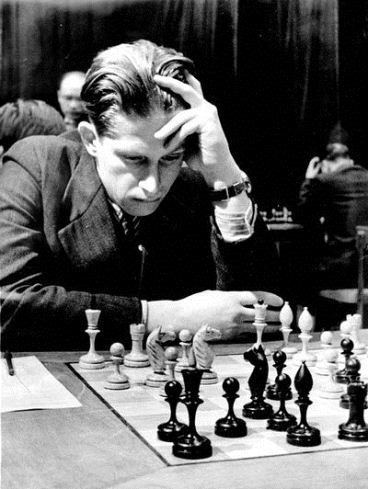
I’ll leave you decide whether being on the fringe of the world championship cycle for a brief part of your career entitles you to the term ‘a chess legend’ but from reading his book it would appear that Mr.Averbakh was indeed a gentleman.

The Soviet Union?
Some upcoming publications from the wonderful world of chess literature (images courtesy of Kingpin & Release the Kraken)

There are many who are fond of Kasparov’s series. Do they know he didn’t write much of it, employing a team up upwardly mobile GMs to do the research for him I wonder?
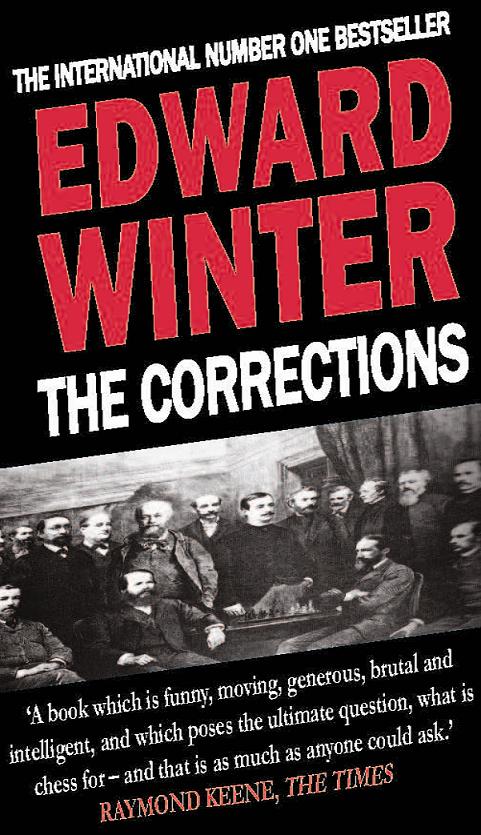
Our overworked academic sets the record straight, amending all those rickety assertions we have become inured to over the years by titled chess players. With over 300 million pages to explore this book is a real bargain.

Notice the buzz word ‘Secrets’ there. I can’t tell you anything about this book because its a secret, so you’ll have to buy it first before realizing its a waste of money.

A shocking cover and a choice of opening that the author has never played but has recently coveted as it provides a niche in the market for our cash-strapped author.
-
Recent Posts
Archives
…on what this site initially became…on what this site is now becoming…on what this site cannot become…
Categories
- Academia
- Bedfordshire Chess
- Chess
- Chess in Thailand
- Dear Ken
- Documentaries
- FIDE
- History of Bedfordshire Chess
- Humour
- Kasparyan
- Life beyond the chess board
- Luton Chess Club
- Meme
- Moves I could never play
- My daughter
- My own endeavours
- My Own Games
- My own warped humour
- On-line journal
- Personal Interest & Experience
- Postmodern History
- Quaint Chess History
- Reflections
- Reviews
- Selected on-line games
- Sources of inspiration
- Tournament Chess
- Trivia
- Viz inspired material
- Who wants to be a millionaire chess special
- World Championships Analytics
Posts which McCready is mighty pleased with
Luton & The University of Bedfordshire Chess Club
01582 743921/07710036246 (Humuyan)Tuesdays from 7.30 pm, The Library, Ground Floor
Please go to:
https://www.lutonchessclub.com/Blog Stats
- 32,224 hits
-
Join 39 other subscribers
-
A side note on how to read old Tom Sweby's columns
-
Not perhaps, but quintessentially, Old Tom Sweby is best thought of as a passionate devotee to the newspapers he wrote for. He was well read and knowledgeable of the Bedfordshire chess scene and well beyond, given that he was the president of the S.C.C.U. once upon a time. He was generally well-respected and rubbed shoulders with many, if not all, of those eminent within British chess circles. It would, however, be a critical mistake to see his column is primary source material entirely. That it is not. You will also find secondary source material quoted too, and the reliability of that is not quite as Tom hoped. Given that he wrote for decades, this is to some degree inevitable, and after all we are all prone to error whether we realize it or not. Thankfully, with regards to old Tom Sweby, they are infrequent and for the most part old Tom continued to document events and developments in the Bedfordshire league from the get go as best he could but, of course, everything lies open to interpretation. Despite this, and generally speaking. this does indeed make him informative and thus worth reading. Dare I say his columns constitute a narrative describing the latest developments, match reports and changing nature of the Beds league...he knew his audience and wrote according. This manifested itself over decades but brevity was always in play courtesy of the restictions imposed by writing a column. Should you wish to read a in instrumental figure of the Beds' league post WW2, you are quite welcome to peruse what has been posted here... . :-) I should, however, point out that as the decades wore on he gradually moved on away from narratives concerning the Bedfordshire league towards affairs both historical and international. The reasons for this are multifarous, old age was a predominante factor presumably, however, the bottom line is with regards to how the Bedfordshire chess scene developed post WW2: old Tom Sweby is your go to guy. He wrote more about chess in Bedforshire than anyone else did but given he was a Lutonian and writing for a Luton newspaper there is both bias and greater coverage of his hometown than the rest of the county.
Gallery
-
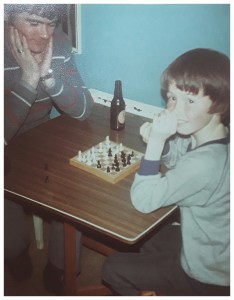
- I’m either 10 or 11 here
-

- 1982, myself versus Brian from Sunderland.
-

- At the Thai Junior chess championships. My daughter of course.
-

- Pattaya 2011
-

- 2011
-
- Thai Junior Championships
-

- 2008
-

- 2011
-
- Around 2011
-
- 2011
-

- Pattaya 2009
-

- 2011
-

- Kuwait 2008
-

- 2012
-
- 2012
-
- 2011 BKK Chess club
-

- 2011
-

- 2011 Thai Open
-
- 2011 Thai Open
-
- 2013 approx
-
- Around 2014
-
- 2010
-
- 2012
-

- Around 2011
-
- 2011
-
- 2011
-

- 2013
-

- Around 2011
-

- Around 2011
-

- 2020
-
- 2011
-

- 2008
-
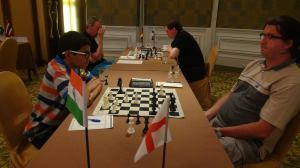
- 2011
-

- 2013 or thereabouts
-
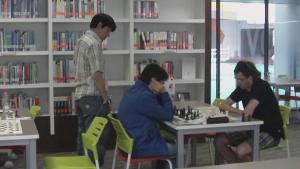
- 2010
-

- 2017
-
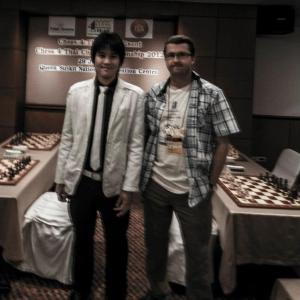
- 2014?
-
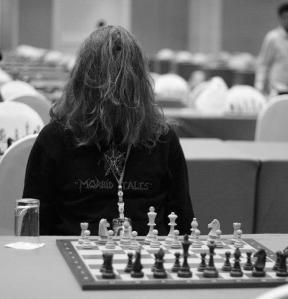
- 2010
-
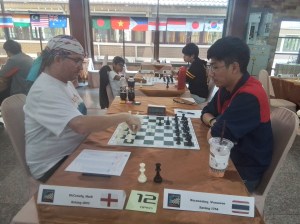
- 2024
-
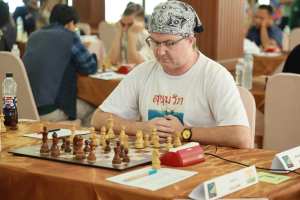
- 2024
-

- 2024
-
-
To add comments, please see the bell at the top of the page.

 McCreadyandChess