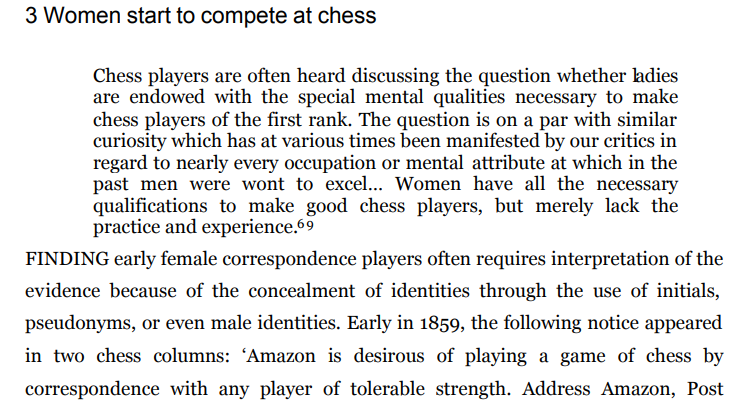
In Reading Timothy Harding’s doctoral thesis ‘correspondence chess in Britain and Ireland, 1824-1914, a social and cultural history‘, which may be found online here Thesis, I learnt that Befordshire made an appearance on pg. 283.
Victorian England is the context, the chapter pertaining, documenting some of the difficulties and challenges female players faced back then in much detail. Fellow county chess players, if you look through what has been posted on this site, you will note that, locally, women were never written about regarding chess in Bedfordshire, however, this does not mean that chess was not played by women in Bedfordshire but rather that it was more likely played at home rather than at a club as was commonplace back then, the author claims. The post-modern historian Jenkins once wrote in his publication Re-thinking history that ‘history and the past are categorically distinct’, herein lies evidence and argument to that effect. Put more simply, just because something has been left undocumented, it doesn’t mean it did not happen.
You may find what is linked below of further interest.
When I undertook a Masters degree in Philosophy, I once asked my lecturer a question concerning Dennett’s account of consciousness that he could not answer.
Here Dennett offers an account of chess computers that may be seen by some as being outdated.
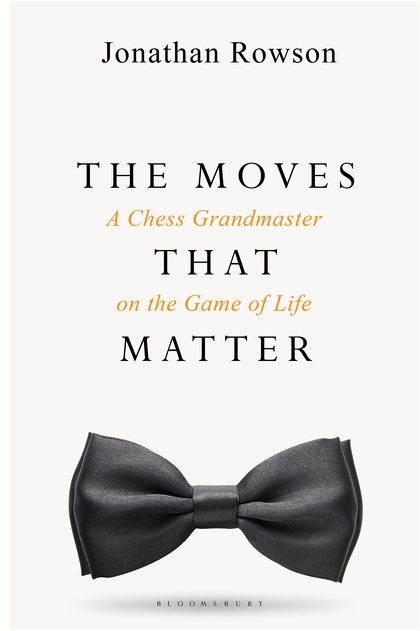
I did manage to read Rowson’s book The Moves that Matter, carefully enough. It took longer than it should but he does appear to have remained remarkably adept at giving you food for thought and time for digestion. He did come under some criticism as there are factual errors, and some points made are rather contentious. His account of chess in Georgia and the gap in strength between men and women remaining unchanged was disappointing to read given that the policy introduced to invoke change has already done so, hence the reason that the majority of Georgian world champions are female. The latter third of the book has a shift in style which indicates fatigue. Some parts are below par for him, and feel rushed or without the reflection we come to expect from Rowson. Still, it’s a great book and well worth a read. Perhaps a little too ambitious but at worst only very slightly falls short of what it should have been. Anyway, that is nothing more than my own uncontested opinion.
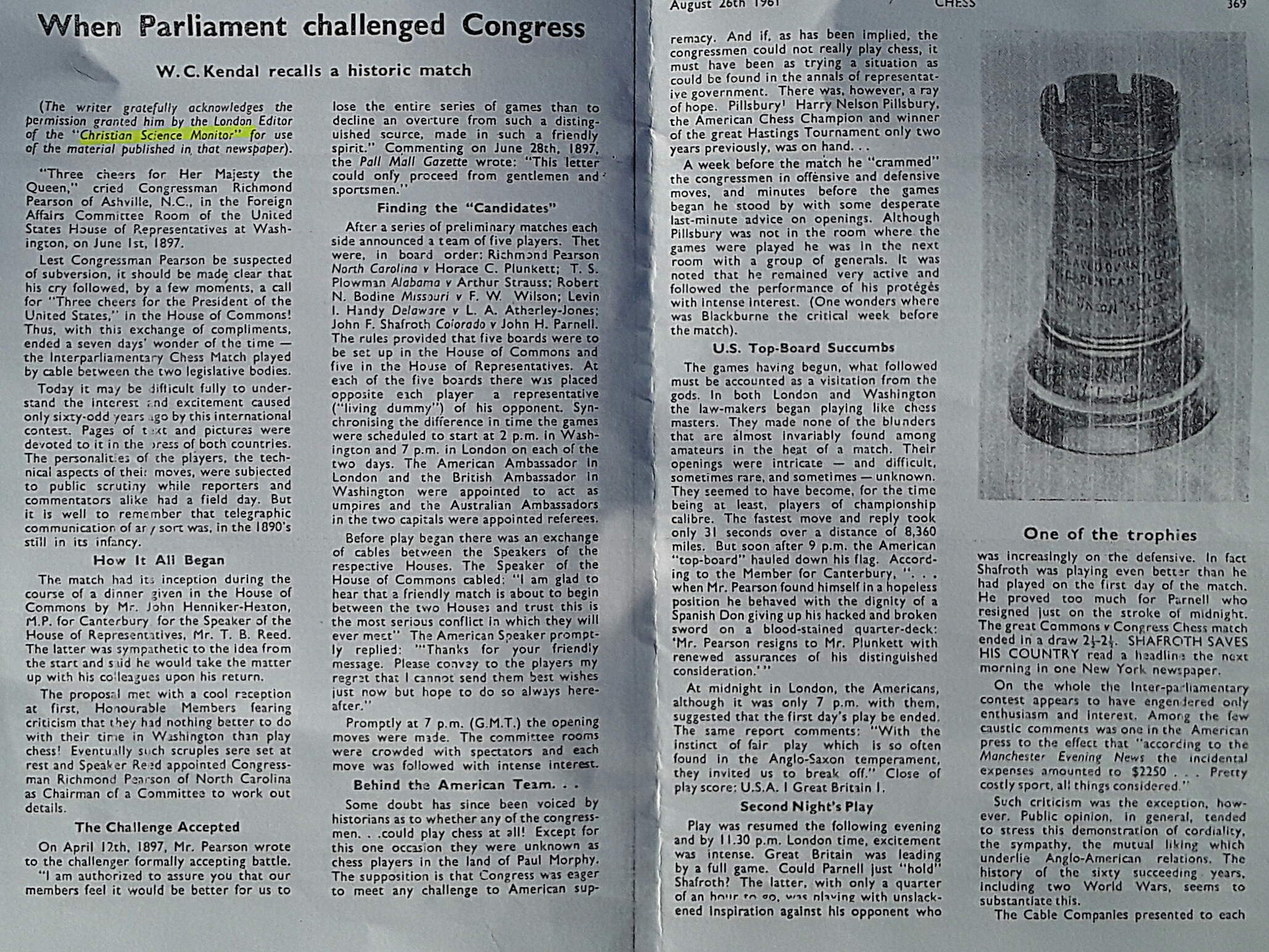
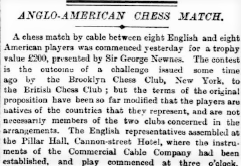
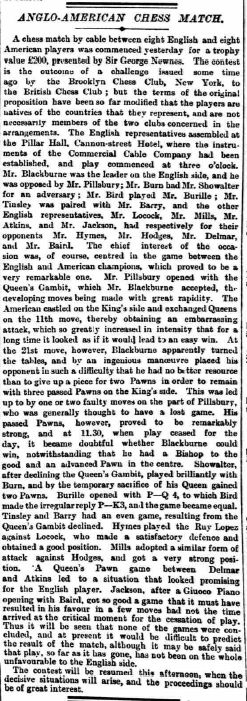
As I am learning, the Anglo-American cable matches which began at the end of the 19th century and lasted for fifteen years or so are much more of a challenge to research than I first thought. Cable matches were well in place by the time they started, and the original idea begun with developed significantly by parties on both sides of the Altantic and remained a source of constant revision throughout. It’s a thesis in itself and I’m sorry to say but I can’t dedicate myself to something of that size. What I can do is post some of the preliminary findings, which should give a sense of how news of it was handled in its day. Although I’ve established how the cables were laid and consisted of, that’s a separate topic altogether so I won’t be going into that. I thought it best to go to the source and establish how it began in the first place. It would appear there was a benefactor in place from the outset and that he was a distinguished and larger than life character, his name was Sir George Newnes. Although information can be found about him on wikipedia, it is inadvisable to refer to that for it is inaccurate and erroneous on a number of important points. It is safer to read the article on him in the Oxford Dictionary of National Biography if you can.
To begin with, the reportage below is from The Morning Post March 14th 1896.
Oh boy it gets so hard. The Westminster Gazette publishes something in full. The next day about six other newspapers follow suit. Do I assume they just copied? I’m an academic! I can’t just do that! It is as reprehensible as it is irresponsible. Ohhh, headache time… .
I have begun collating material for what is a second project but it may take some years but then of course it may only take months. Rather expensive it is and I’m sorry but reading through Victorian Newspapers isn’t as easy as you might think. Journalism back then was so very different to how it is today. I can assure you that in locating primary source material, what is read in today’s pamphlets and what is read on-line differs greatly to what was written then -lest must we not forget that history written by those with no real interest in it is going to be rather messy, to put it nicely… .
If the past is a foreign county (to refer to an article you might see sooner rather than later I sincerely hope) chess players with no background in history are its immigrants.
…on what this site initially became…on what this site is now becoming…on what this site cannot become…
On what this site initially became…
…once upon a time, the chess-related musings of an adrift academic were bound playfully and electronically in this online journal of sorts. They grew and grew as the decade did too. I kept on because I love to write whether I had much to say or not; therefore, being read by others was usually of little or no importance, comparatively speaking. Content was based on personal thoughts and experience on various topics with no intended audience borne in mind. With topics broadening, my own take on things always shaped the narrative I constructed: I often thought I was insightful but never that I was right. Sometimes imagination gave rise to originality: and of that I have always remained proud. I often introduced humour, believing that I am funnier than I really am. Sometimes, I found my own style antithetical to the conservatism I believe chess is plagued by -oftentimes that has put a gracious smile on my face… .
On what this site is now becoming…
…this site is now becoming a collaboration of chess in Bedfordshire: much more so of the past than the present -that has become the dominant trend. I document the history of chess in Bedfordshire as much as I can, and as time has passed I have become more thorough and resourceful. However, I am not a trained historian as my background lies principally in philosophy but yes it is true I did study some modules on history as both an undergraduate and a post-graduate too; furthermore, I have trained myself up, particularly in terms of postmodern history. Since 2015, I have only read history and historiography as well as those philosophers who have been so influential on postmodern history, such as Nietzsche (whom I once wrote a 19,000 word dissertation on, entitled: Can the Will to Power be Found in The Birth of Tragedy?), also Richard Rorty and Foucault and I suppose certain structualists such as Claude Levi-Strauss too. Regarding postmodernism, mostly I keep to Hayden White, Keith Jenkins and Alan Muslow.
Some friends and former playing partners back home describe me as the ‘go to guy’ for the history of chess in Bedfordshire. This compliment says more about the lack of interest in the subject than my own endeavour. As mentioned, I am too adrift from academia to feel chuffed by it. Rather, I tend to lament that my historical research, like my chess, just isn’t what it should be. Even though I may well have a broad understanding of Bedfordshire chess history courtesy of the volume of research put into it, all of which began in 2014, this is not something I am particularly proud of. Nonetheless, out of courtesy compliments are graciously received. If the truth be told, I just see it as my job and only that – after all someone’s got to do it and no one else is that interested!
Amongst the many others, I have created three categories: ‘Bedfordshire Chess’ and ‘History of Bedfordshire Chess’ and ‘Luton Chess Club’. This website is slowly moving towards a consolidation of those (all of which can be found in one of the toolbars to the right).
On what this site cannot become…
…I like to be both creative and amusing when I can be, factor in that playfulness has been an ever-present factor, the content of this site should be thought of as multifarious. It could be said I continue to enjoy undermining the conservatism I believe chess is underpinned by even after all these years, and often try to use humour to do it still, believing I have got better at it. Consequently, despite the general direction its going in, this site cannot only be about Chess in Bedfordshire and nor will it be. It may become noted for that yes -in fact that’s been the case for years already even by established historians, archivists, and whoever else. External factors aside, this site is titled McCreadyandChess. I cannot, nor will I not, remove my own personal thoughts and experiences of chess from the posts of this site -especially if I think they are funny or original for they constitute my writing at its very, very best. In addition, the number of categories alone tells you that breadth of content is important to me. I am proud of my site, it is identity conferring and that is how it shall stay -end of story. All you really have are: ‘Some thoughts on the beautiful game’, which, incidentally, just happen to be my very own; nothing more, nothing less, take of it whatever you please… .
A side note on how to read old Tom Sweby's columns
Not perhaps, but quintessentially, Old Tom Sweby is best thought of as a passionate devotee to the newspapers he wrote for. He was well read and knowledgeable of the Bedfordshire chess scene and well beyond, given that he was the president of the S.C.C.U. once upon a time. He was generally well-respected and rubbed shoulders with many, if not all, of those eminent within British chess circles. It would, however, be a critical mistake to see his column is primary source material entirely. That it is not. You will also find secondary source material quoted too, and the reliability of that is not quite as Tom hoped. Given that he wrote for decades, this is to some degree inevitable, and after all we are all prone to error whether we realize it or not. Thankfully, with regards to old Tom Sweby, they are infrequent and for the most part old Tom continued to document events and developments in the Bedfordshire league from the get go as best he could but, of course, everything lies open to interpretation. Despite this, and generally speaking. this does indeed make him informative and thus worth reading. Dare I say his columns constitute a narrative describing the latest developments, match reports and changing nature of the Beds league...he knew his audience and wrote according. This manifested itself over decades but brevity was always in play courtesy of the restictions imposed by writing a column. Should you wish to read a in instrumental figure of the Beds' league post WW2, you are quite welcome to peruse what has been posted here... . :-) I should, however, point out that as the decades wore on he gradually moved on away from narratives concerning the Bedfordshire league towards affairs both historical and international. The reasons for this are multifarous, old age was a predominante factor presumably, however, the bottom line is with regards to how the Bedfordshire chess scene developed post WW2: old Tom Sweby is your go to guy. He wrote more about chess in Bedforshire than anyone else did but given he was a Lutonian and writing for a Luton newspaper there is both bias and greater coverage of his hometown than the rest of the county.
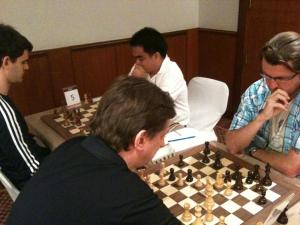
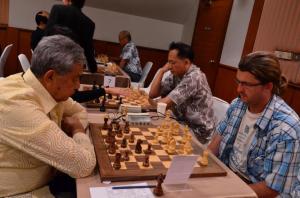
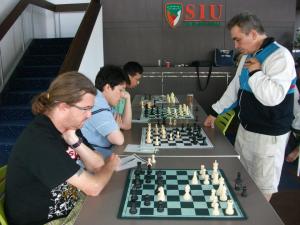
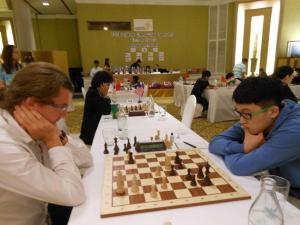
Gallery
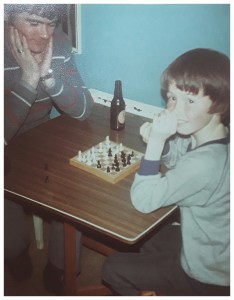
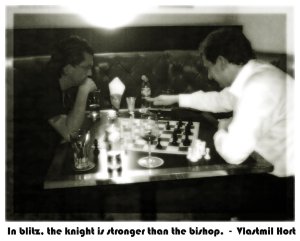
I’m either 10 or 11 here
1982, myself versus Brian from Sunderland.
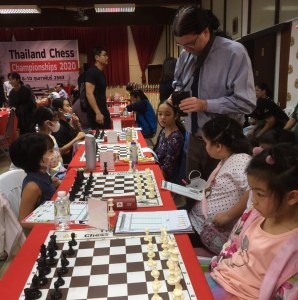
At the Thai Junior chess championships. My daughter of course.
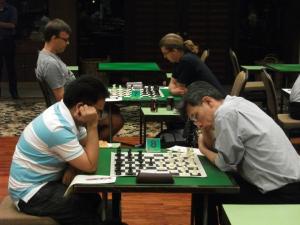
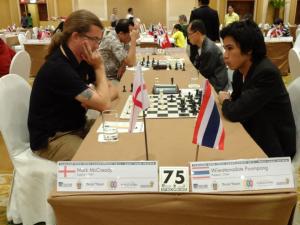
Pattaya 2011
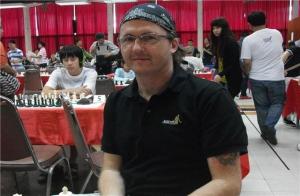
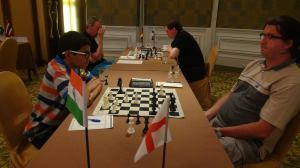
2011
Thai Junior Championships
2008
2011
Around 2011
2011
Pattaya 2009
2011
Kuwait 2008
2012
2012
2011 BKK Chess club
2011
2011 Thai Open
2011 Thai Open
2013 approx
Around 2014
2010
2012
Around 2011
2011
2011
2013
Around 2011
Around 2011
2020
2011
2008
2011
2013 or thereabouts
2010
2017
2014?
2010
2024
2024
2024
To add comments, please see the bell at the top of the page.