The ideas of the ruling class are in every epoch the ruling ideas: i.e the class which is the material force of society, is at the same time its ruling intellectual force. The class which has the means of material production at its disposal, has control at the same time over the means of mental production, so that thereby, generally speaking, the ideas of those who lack the means of mental production are subject to it.
Marx and Engels, The German Ideology, quoted by A. Giddins, The Class Structure of the Advanced Societies, London, Hutchinson, 1981 p.29

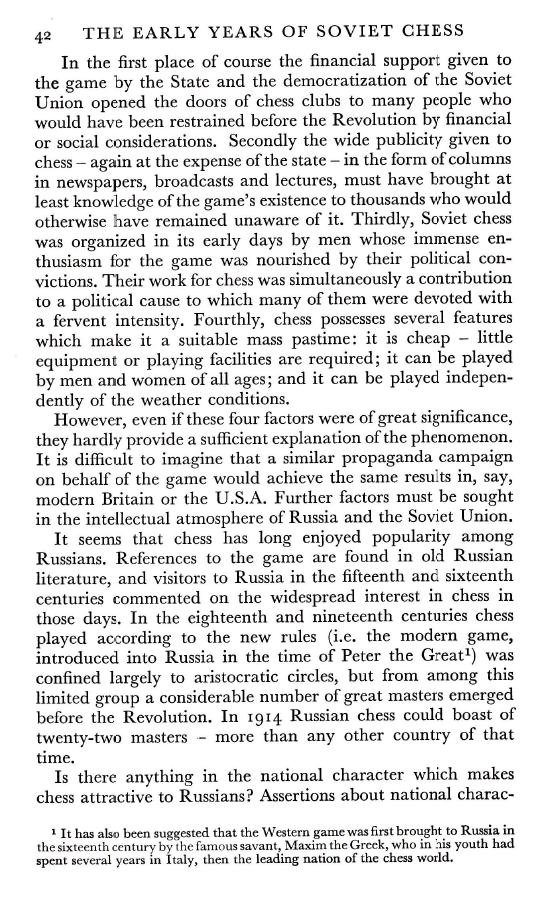
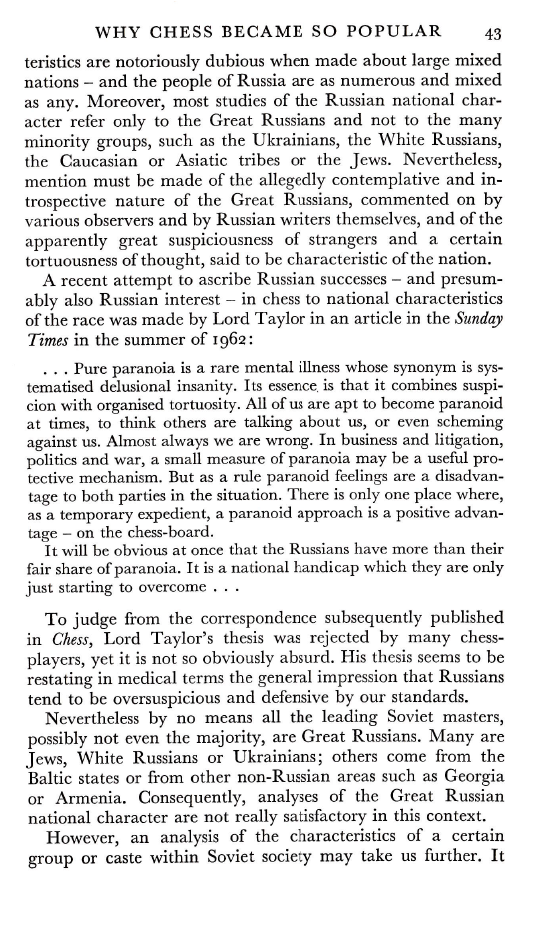
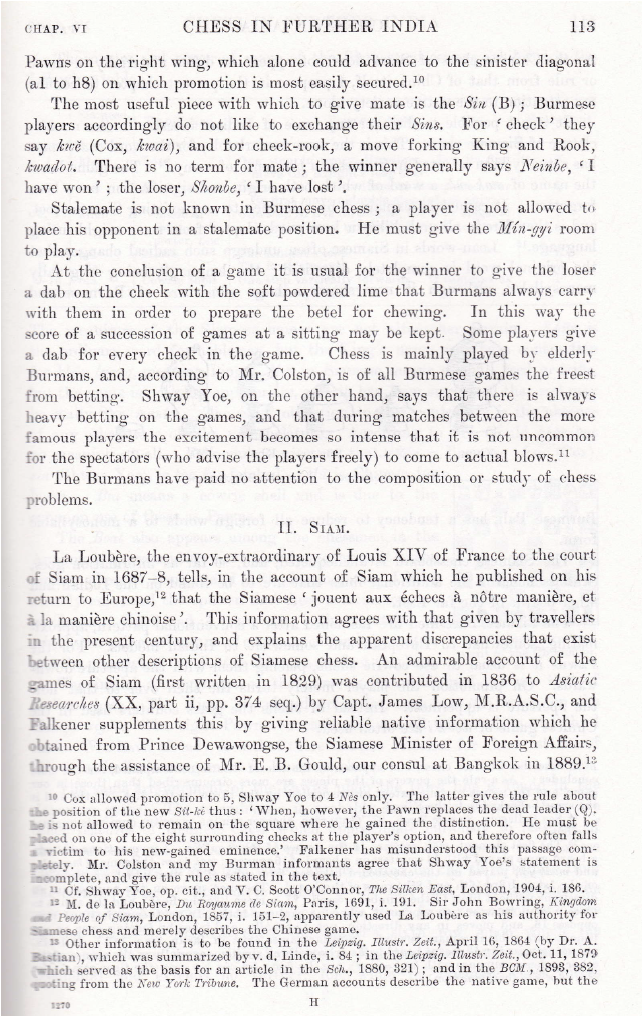
D. J. Richards, Soviet Chess, pg. 13, 1965, OUP
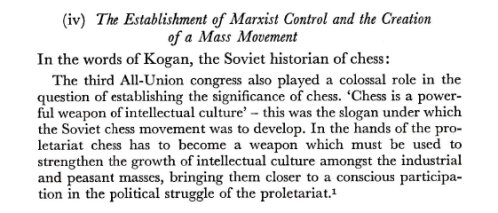
D. J. Richards, Soviet Chess, pg. 17, 1965 OUP
With some relief I am enjoying D. J. Richards’s (the former Exeter champion from the 60s and Russian lecturer at Exeter University) engaging narrative on Soviet Chess. When a publication is out of print for so long it can be a trifle difficult to establish why and whether the book is worth a read. But Richard’s Soviet Chess is considered by the informed few to be a seminal publication, and rightly so.
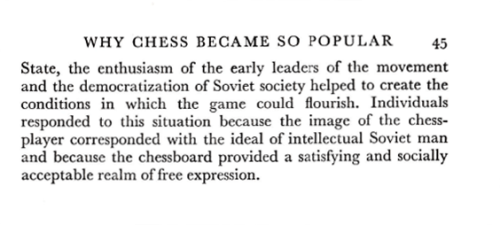
Here’s an example of his writing. I do need to add that it is the conclusion to the first chapter, and is hence an elucidation of points previously made. At present I have every single book ever written in English on Soviet Chess, and many of the biographies and autobiographies of its most noted practitioners too, Richard’s detailed account of Soviet Chess in the 1920s presents a more persuasive account than anything I have read so far.
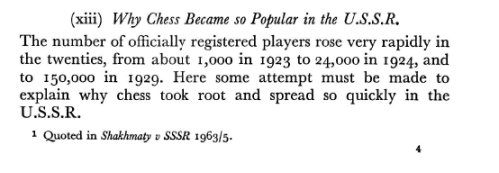


 Lastly, to understand the cultural and political developments that the Soviet Union underwent in its early years as a nation, you must of course, go beyond chess literature. I don’t recommend that you watch one of the many documentaries for help as they are often superficial and pummel you with glossy oversimplifications. I suggest that you start with the talented American Scholar Dr. Mark Steinberg his publications are all rich in insight. Also, it goes without saying that you must consult Noam Chomsky, and to do this you need only go to his great site https://chomsky.info/.
Read Full Post »