It’s taken years to find this. Finally here it is. Viz at its finest. Enjoy.

Posted in Viz inspired material on December 25, 2023| Leave a Comment »
Posted in History of Bedfordshire Chess on December 22, 2023| Leave a Comment »
More than a few players who have emerged from the Bedfordshire Chess League have gone onto bigger and better things, GM James Plaskett being the most obvious example. That’s not exactly breaking news. But what about those who remained registered as a Bedfordshire based player and also achieved greatness in the modern era? Has anyone done anything of note against the very best? Oh yes indeedy.
So let’s take it from the top then. In terms of results, there is one that stands above all others. GM Michael Adams is considered to be the strongest player England has ever produced, usually because he’s won the British Championships more than anyone else (8 times), achieved a higher rating than anyone else (ELO 2761), was number 4 in the world for quite some time, and in 2004 reached the final of the FIDE World Championships, narrowly losing to Uzbek Rustam Kasimdhanov. What results do our players have against him? Has England’s very best ever lost to anyone in our league?
One GM Plaskett did beat him in a rapid in Leeds, 1986 but James wasn’t registered in our league then and had long since left it.
Two IM Andrew Ledger, whilst playing for Bedford, very nearly did in Hitchin 1990 round 2. I watched that game unfold closely. Andy was a piece up but fell into time trouble and looked visibly stressed from it to put it mildly. Sadly for us, he fell for a very clever back rank mate and lost the game.
Three FM Gary Kenworthy did beat him in a quick play in Spalding (location may be incorrect) 92. His comments on that game -courtesy of our online chat- are as follows: ‘…the won the world blitz title the month before -current BCM cover-I used the BCM to rest my scoresheet for recording the game -the title “mega bucks Mickey” he was 263 BCF, I was 213 BCF, so a rating more than 40 point difference – hence I only got +90 i. e. 303 BCF points not 313 BCF, next round – final round, I played GM J D M Nunn who was upfloated to me…he was in the world’s top 20’. Gary was participating in our league at the time for Milton Keynes, and so in terms of achievements for someone registered in our league, I don’t believe this can be beaten. I am sorry to inform you that at the time of writing Gary is unable to locate the game score. Should that change and it falls into my hands, I shall post it here.
MJM
Posted in History of Bedfordshire Chess on December 20, 2023| Leave a Comment »
Let’s go back to when chess exploded in Bedfordshire as it did across the rest of our beloved nation. Who were our top three players that decade? And just how good were they then?
In @ number 1 IM Sergio Mariotti (Vauxhall Luton)
According to Bedfordshire’s Paul Habershon, Sergio played in our Division 2 in the 1970-71 season. His brother Paolo also played in our league whilst he worked as an engineer in Dunstable. Sergio was a strong IM whilst he played in our league and became the first titled player to grace us with his presence. His tournament performances whilst in England can be found on Britbase here 1 showing he was rated ELO2520/240BCF that year. However, it should be pointed out that in the 1970/71 Grading List he is rated as 230, and ranked 3rd in the country.

In 1974 he went on to become Italy’s first GM, one year later in Milan he held world champion Karpov to a draw most impressively.2
I sent him an email some time back asking him what he remembered about his time in Bedfordshire. Sergio informed me that he was no longer able to remember anything about his life before his heart operation. None of his games in our league have survived.
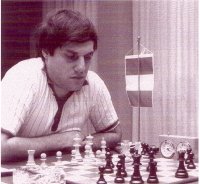
In @ number 2 James Plaskett (B.M.S)
James Plaskett was a pupil at Bedford Modern School and showed very serious talent there. So much so that when he entered the British Championship in Ayr 78 he went and finished 2nd! He drew with the winner Jonathan Speelman and even beat former British champion Jonathan Mestel along the way 3. This is the first instance of a player based in Bedfordshire at the time defeating a former British champion. By the end of the 70s James was still untitled but winning tournaments often and ranked 14th in the country. Here 4 he is rated at ELO 2410 and retained a presence in Bedfordshire still, entering local tournaments and performing simuls according to Tom Sweby.
James left our county around the end of the decade and went onto bigger and better things. In 1981 he became an IM, then in 1985 a GM. James went on to become British Champion in 1990, becoming the only player ever to emerge from our county to do so. He played amongst the very best in the world throughout the 80s and informed me that he has plus scores against the following GMs: Plus 6 Vs Wells, Plus 2 Vs Short, Plus 2 Vs Anand, Plus 1 Vs Vaganian, Plus 1 Vs Larsen, Plus 1 Vs Kamsky, Plus 1 Vs Ivkov, Plus 1 vs Sax. A most impressive win against Anand can be found here 5

In @ number 3 Michael MacDonald-Ross (Bletchley/Milton Keynes)
I asked GM Plaskett who was the strongest player he came up against in the Beds league and he informed me it was Michael MacDonald-Ross, who for the most part played for Milton Keynes (as I remember). Obtaining information on Michael has been more difficult than I anticipated, however, he can be found participating in tournaments such as the Lloyds Bank Masters in the late 70s, which show him as rated ELO 2265 6. In his youth he encountered Luton’s hotshot from the 50’s Dennis Victor Mardle at the 1965 British Championship, the result being a draw 7. Some eleven years later Michael defeated Rising star Murray Chandler at the British 8. Formidable yes and agreed upon as one of the very strongest in our league that decade by many who faced him.

So there you have it, comparative strengths in the 70s discussed. I put quite a bit more into that than it may appear and had to consult several prominent figures within our county to get answers, so I think I got it spot on. Many thanks to Paul Habershon and GM James Plaskett for their assistance.
MJM
Posted in History of Bedfordshire Chess on December 19, 2023| Leave a Comment »
Former Luton Grammar school pupil Dennis Victor Mardle, by far Tom Sweby’s favourite topic and former playing partner, who once contracted Polio at Luton Town football ground after he drank from a cracked cup whilst 15, only to receive a C. B. E in the 1988 New Year’s Honour’s list for his work on the very same illness decades later, won several national tournaments in the late 50’s and early 60’s, and made a name for himself on the British chess circuit. Once a stalwart at Luton Chess Club he played at Hastings in 64/65, where he met a certain Paul Keres, a certain Svetor Gligoric, and the then current women’s world champion Nona Gaprindashvili.
Details of this can be found in John Saunders truly excellent site Britbase, here is the link https://www.saund.co.uk/britbase/pgn/196412hast-viewer.html
I don’t want to add diagrams or any annotation to any games because Mardle’s performance in the tournament was described as blunder prone, and if you look at his games, that was the case. But it is worth drawing attention to the fact Mardle played Keres as it was the first instance of a former Bedfordshire based player coming up against truly world class opposition since J. M Craddock dispatched of Mir. Sultan Khan some 30 years or so previously…it’s just a shame he wasn’t at his best and was instead far from it.
Posted in History of Bedfordshire Chess, Life beyond the chess board on December 17, 2023| Leave a Comment »
‘…most information about the past has never been recorded and most of the rest was evanescent…no account of the past can recover the past because the past was not an account but events, situations, etc. As the past has gone no account can ever be checked against it but only against other accounts….there is no proper history that, deep down, allows us to check all other accounts against it, there is no fundamentally correct text which other interpretations are just variations; variations are all there are…no matter how verifiable, how widely accepted or checkable, history remains inevitably a personal construct, the manifestation of the historian’s perspective as a narrative…the historians viewpoint and predilections will shape the choice of historical materials…’
K. Jenkins, Re-thinking History pg. 14

This concise summarization concerning the formation of our county association comes from the 1933 publication ‘Chess in Bedfordshire’ thus is consistent with it. You can find it here1. And although some mention of club matches are made in the following pages of Fulton’s publication, and their rather sporadic ad-hoc nature eluded to, it does not delve further into them, and does not discuss the historical significance they may, or may not, have had before our league established itself, and our own league was put into play. But I have already done that with a certain match in particular2. I do, however, have minor corrections to add. Since I wrote that post, I have more concrete evidence of Ward’s birthplace and baptism.
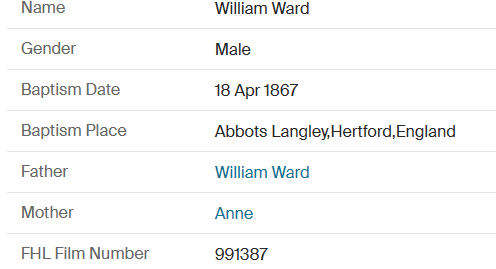

It is clearly documented in the footnote above that Major Harry Duhan of Bedford went on to become the champion of South Africa, which was reported in the British Chess Magazine that year (as linked above), his games are illustrated too (as shown above). More about his life can be found here3. This achievement is significant for our purposes because it exemplifies the first instance of a Bedfordshire based player achieving documented international success. Regarding the match in question, he suffered a 0-2 loss to Ward of Luton. But why was he beaten in both games? What did he losses tell us about his opponent?
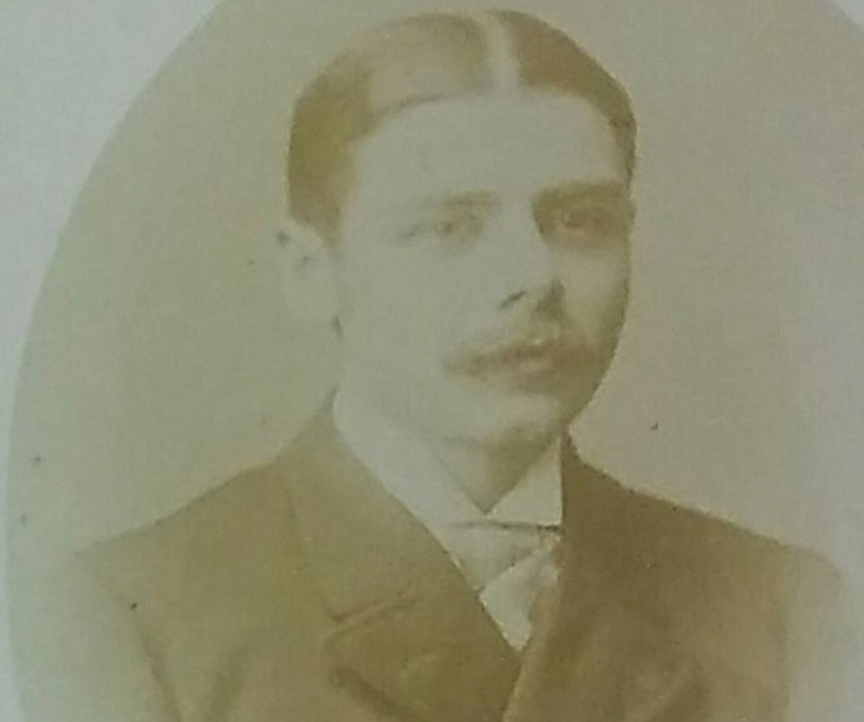
Although we could begin with something trite like: Ward, who occasionally played for Luton, finished 3rd in the British Championships in 1905, second in 1908, then 3rd in 1909 as well as become the champion of the City of London chess club 6 times between 1902-1911, West London chess club in 1907 and champion of Middlesex in 1909 when it was the strongest county across our sceptred isle. -this antiquated approach simply won’t do4.
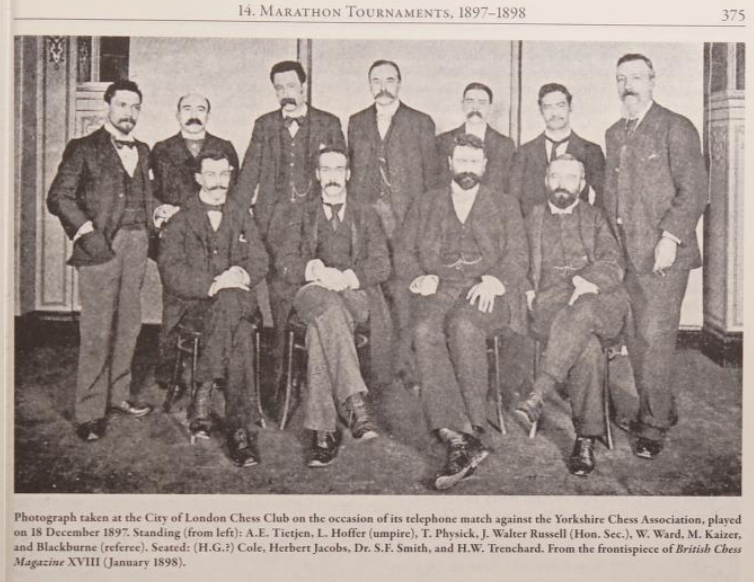
Yes the paragraph above is well corroborated but more importantly it is synchronic. Firstly, it is necessary to corroborate our own claims further and enter into discourse about them. I am not the only person to have written about William Ward. Author Richard James has done so too. You may find the links to his work here5. We are clearly in agreement that William Ward lived in and around Luton, where his family moved to, although where we differ is that author James gives a more compelling account of how transient his life was, it should also be noted that James does not show Ward did in fact play for Luton where as I have shown he did play at least twice, and in all probability, many undocumented times more since he was based outside the town for a small part of his life. Ward achieved almost all his success some years after in London. Prior to that there are pertinent questions to be answered, such as ‘How strong was Ward when he defeated Duhan in our league in 1896?’ This question is problematic because the ‘evidence’ pertaining to his ability then is rather depressing without gamescores. Yes two years’ later he did become joint champion of the S.C.C.U as James clearly illustrates. And we also have material we can utilize for narrative purposes to construct a strong argument as to why. If we embrace the entrusted EDO Historical Chess Rating site, which is generally considered reliable, then we can indeed find Mr. William Ward placed at number 131 in the world in 1896, with an estimated rating of 2315 and then in 1898 with an estimated rating of 2360, still keeping him ahead of future world champion Capablanca by some 56 rankings. In today’s market that would put him at FM level. His opponent, Harry Duhan (later to be known as Major Harry Duhan or Major Duhan) does not appear in the estimated ratings of that year but can be found for the years 1910-1912. How reliable this can be some 14-16 years after they played is difficult to be sure of but if you play through Duhan’s games in the link concerning a clash of future champions, they suggest to me he was not equipped to compete against someone of Ward’s caliber. Why do I say this? Because, as stated by historian and celebrated author Dr. Timothy Harding, there is evidence that in December 1897 he participated in the Yorkshire v City of London Chess Club match by telephone. This is significant for our purposes because the City of London Chess Club was the biggest in the country at the time, some of its members were world class. How could Ward represent the largest club in the country so soon if he was not already very strong? A group photo with him in it can be found below.
By 1900 Ward had established himself as a strong amateur in London and was selected for the Anglo-American cable matches. He was also invited to participate in the City of London Tournament, where a select few of the world’s best were pitted against some of the best amateurs on our shores6. Details of this can be found here 7. As you can see, Ward not only drew with Mason but beat Blackburne and finished above him in the tournament. The following year he was pushed up the team in the Anglo-American cable match from board 9 to board 7 and beat Frank Marshall too, making him the first documented Bedfordshire based player to beat world class opposition. His retrospective rating for 1901 was 2372, making him 86th in the world, placing him above future world champion Capablanca (2359).8. His draw against Mason and victories against Blackburne and Marshall can be found below. Only now can we see why Ward went on to nearly win the British Championship on more than one occasion before the decade was out! In 1904 he had an estimated rating of 2414 and was rated as 60th in the world, ahead of many more famous than him, such as Isidor Gunsberg, Eugene Znosko-Borovsky, Karel Treybal, and Dawid Przepiórka.
‘A historical narrative is thus necessarily a mixture of adequately and inadequately explained events, a congeries of established and inferred facts, at once a representation that is an interpretation and an interpretation that passes for an explanation of the whole process mirrored in the narrative.’
Hayden White, Interpretation in History, pg. 1
The draw against Mason, City of London Club Invitational, April 20th 1900, Round 6
1.d4 d5 2.c4 e6 3.Nc3 Nf6 4.Bg5 Be7 5.Nf3 Nbd7 6.e3 O-O 7.Bd3…
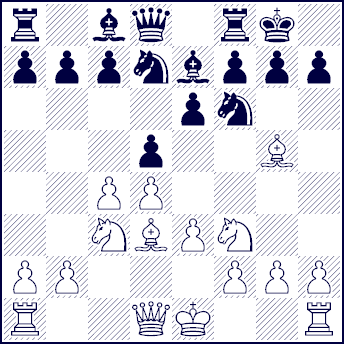
… dxc4 8.Bxc4 Nb6 9.Bd3 Nbd5 10.O-O Nxc3 11.bxc3 Nd5 12.Bxe7
Qxe7 13.Qc2 g6 14.Rab1 b6 15.Rfe1 Bb7 16.e4 …

… Nf4 17.Re3 f6 18.Bc4 Kh8 19.Rbe1 e5 20.Bf1 g5 21.d5 Bc8 22.c4 …

… Bd7 23.Rd1 Qe8 24.Qb2 c5 25.Rb1 Rf7 26.Ne1 h5 27.g3 Ng6 28.f3 Qb8 29.Nd3 Qd6
30.Bg2 Rg8 31.Rf1 Rh7 32.Rf2 h4 33.g4 Ne7 34.h3 Nc8 35.Bf1 Qe7
36.Ne1 Nd6 37.Ra3 Ra8

38.Nc2 Rf7 39.Ne3 Rff8 40.Qc1 Rfb8 41.Rb2 Rb7 42.Qb1 Qd8 43.Ra6 Bc8 44.Nd1 Rab8 45.Nc3 Rc7 46.Ra3 Bd7 47.Rab3 Qe8 48.Qc2 Kg7 49.Ra3 Qe7 50.Nb1 Qe8 51.Nd2 Rd8 1/2-1/2

https://www.chessgames.com/perl/chessgame?gid=17169688
Ward v Blackburne City of London Club Invitational, April 26th 1900, Round 9
1.d4 d5 2.c4 dxc4 3.Nf3 c5 4.e3 cxd4 5.Bxc4 Nc6 6.exd4 e6
7.O-O Nf6 8.Nc3 Be7
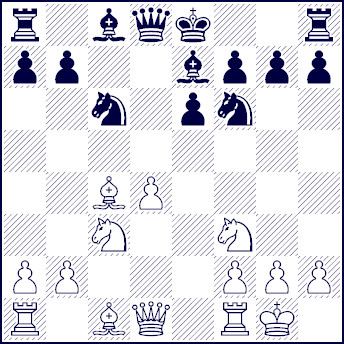
9.Ne2 O-O 10.Be3 Qa5 11.Ng3 Rd8 12.Qe2 a6
13.a3 Nd5 14.Rfd1 Nxe3 15.Qxe3 Qb6 16.Rd2 Bf6 17.Rad1 g6
18.Ne4 Bg7 19.b4 Ne7

20.Nc5 Nd5 21.Bxd5 exd5 22.Re1 a5 23.Rde2
axb4 24.axb4 Bg4 25.Qc3 Bxf3 26.gxf3 Rac8 27.Qd2 Bf8 28.Kg2
Rb8 29.Re5 Qf6 30.Qa2 Qc6 31.Qb3 Bg7 32.b5 Qb6 33.Rxd5 Bxd4
34.Nd7 Rxd7 35.Rxd7 Qf6 36.Qd5 Bc3 37.Ree7 Rf8 38.Rxb7 Qf4
39.b6 h5 40.Re4 Qf6 41.Ree7 Bb4 42.Red7 h4 43.h3 Be1 44.Rxf7
Rxf7 45.Qxf7+ Qxf7 46.Rxf7 1-0


https://www.chessgames.com/perl/chessgame?gid=1029429
Marshall v Ward, 6th Anglo-American Cable Match, April 19th 1901
1.d4 d5 2.c4 e6 3.Nc3 Nf6 4.Bg5 Be7 5.Nf3 Nbd7 6.c5 …

… c6 7.e3 e5 8.dxe5 Ne4 9.Bxe7 Qxe7 10.Nxe4 dxe4 11.Nd2 Nxc5 12.Nc4 O-O 13.Qd6 Re8 14.O-O-O Be6 15.Qxe7 Rxe7 16.b4 Na4 17.Rd4 Bd5

18.Nd6 Bxa2 19.Bc4 Bxc4 20.Rxc4 Nb6 21.Rxe4 Nd5 22.Kb2 b5 23.Rc1 Rc7 24.Rd4 Ne7 25.Nxb5 Rb7 26.Nd6 Rb6 27.Kc2 Rab8 28.Kd1 a6 29.Ra1 Nd5 30.Nc4 Rxb4 31.Rxa6 Nc3+ 32.Kc2 …

32. … c5 33.Rh4 Nd5 34.Rc6 R4b5 35.Kd2 Ne7 36.Rc7 R8b7 37.Rxb7 Rxb7 38.Ke2 Rb4 39.Kf3 …
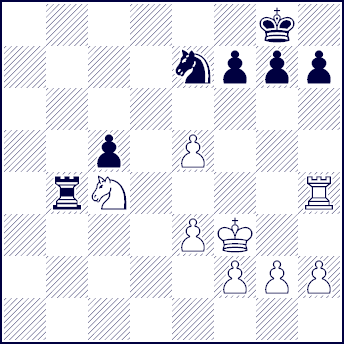
39. … Ng6 40.Re4 Rxc4 41.e6 Rxe4 42.exf7+ Kxf7 43.Kxe4 Ke6 44.f4 Ne7 45.g4 Nd5 46.f5+ Kd6 47.g5 c4 48.f6 gxf6 49.gxf6 Nxf6+ 50.Kd4 Ng4 51.Kxc4 Ke5 52.Kd3 Nxh2 53.Ke2 Ke4 54.Kf2 Ng4+ 55.Kg3 Nxe3 56.Kh4 Kf5 57.Kh5 Nd5 58.Kh4 Nf4 59.Kg3 Kg5 60.Kf3 h5 61.Kg3 h4+ 0-1
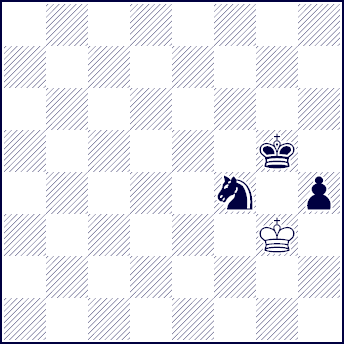
https://www.chessgames.com/perl/chessgame?gid=1094493
‘It is dates, he (Claude Levi-Strauss) says, which justify the historian’s search for “temporal relationships” and sanction the conceptualization of events in terms of “the relation of before and after.’ Hayden White, Interpretation in History, pg. 289
My dear fellow countymen, to continue with Levi-Strauss, ‘history is never history…but history-for’. For our purposes, I have constructed a narrative which shows William Ward played chess in Bedfordshire in his early years and had multiple successes thereafter in London. He was the first to encounter and beat world class opposition, or masters as they were known back then, shortly after his time in Bedfordshire. Although Ward’s most noted achievements came nine years and more after he left our county, I have chosen to focus on his performances before as they give us a clearer indication of his ability around the time he left our county.
Posted in History of Bedfordshire Chess on December 17, 2023| Leave a Comment »
J. M. Craddock the schoolboy champion who took down those bigger than he
“History is on every occasion the record of that which one age finds worthy of note in another.” J. Burckhardt
There is no record uncovered where a Bedfordshire based player achieved recognition or success on a national or international level between 1910 and 1950. The only attention our county drew was courtesy of the chess scene in Luton and the high-profile simuls they arranged, attracting the likes of Blackburne (1905), Lasker (1908), Meises (1913) Tartakower (1918), Capablanca (1918), and Reti (c.1922). Yes its true a few of our homegrown talent achieved victories but this is hardly noteworthy (should you be interested you can find some of those victories on my site). But in the 50’s, according to our local columnist Tom Sweby, a certain J. M. Craddock was based in Dunstable and played board 1 for Bedfordshire (see fig 18. ‘Bedfordshire chess in the 70’s; its past and its future’). Who was J. M. Craddock? Once again there is a paucity of information, however, both Britbase and the ECForum enable us to fill in the blanks somewhat. The following is from Britbase:
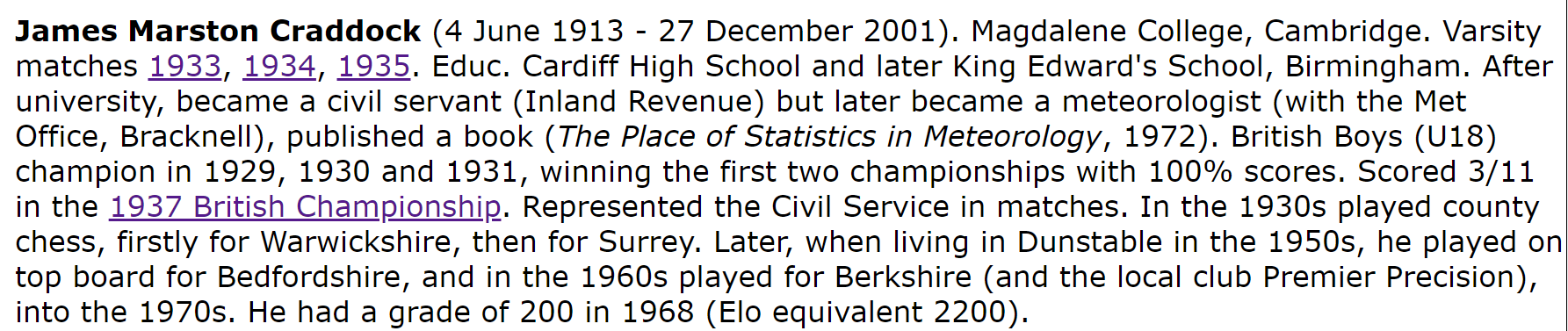

We only have one game surviving from his time in Bedfordshire, comments are from Tom Sweby.
‘When Bedfordshire played Oxfordshire in the Counties Chess Championship in January a much-admired victory was that of Beds leader, J. M. Craddock, over R. J. A. Persitz, the Israeli international and Oxford first board. Craddock, who was Cambridge University champion in 1934, and who now lives at Dunstable, has again shown his strength by beating Raaphi Persitz in the Counties’ Correspondence Championship. As Mr. Craddock rarely plays nowadays, few outside his Bedfordshire colleagues would have anticipated this fine “double” and the accuracy of his play brought from Persitz the comment “Very well played!” (I am indebted to W. G. Everitt for the score of the game which went 1. c4 c5 2. Nc3 Nf6 3. g3 d5 4. cd5 Nd5 5. Bg2 Nc7 Craddock played his own 6. f4 (see diagram) and in view of Black’s subsequent difficulties it seems that in this line he should fianchetto his KB on moves 3 and 4 and avoid the central thrust, at least until White plays Nf3 [Up to this point the game had followed one between Kirilov and world champion Botvinnik. In that White continued 6. Nf3 Nc6 7. 0-0 e5]

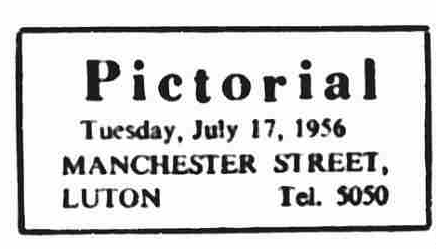
6… g6 7. b3 Bg7 8. Bb2 0-0 9. Na4 Nba6 10. Bxg7 Kxg7 11. Qc2 Ne6 12. Nf3 Bd7 13 f5 gxf5 14 Qf5 f6 15. Qe4 b5 16. Nc3 b417. Nd5 Kh8 18. Nh4 Nac7 19. Qe3 Nd4 20. O-O Nce6 21. Qh6 Rg8 22. Ne7 Ne2 23. Kh1 Qe7 24. Ba8 Qf8 25. Qf8 Rf8 26. Bd5 N6d4 27. Kg2 f5 28. Rf2 f4 29. Nf3 Bb5 30. Nd4 cd4 31. Bc4 Bc4 32. bc4 d3 33. Rf3 Rc8 34. Rd3 Rc4 35. Re1 Source: Beds and Herts Pictorial – Tuesday 17 July 1956
With regards to retrospective ratings, we can find J. M. Craddock here,1. Craddock is remembered most for his achievements in the 30’s, some 20 years or so before he represented Bedfordshire. His victory over Mir. Sultan Khan in 1933 was rather daring in play it must be said!
Mir. Sultan Khan v J. M. Craddock
Imperial CC v Cambridge University, London
November 25th, 1933
1. e4 e6 2. d4 d5 3. Nc3 Nf6 4. Bg5 Be7 5. e5 Nfd7 6. h4

a6 7. Qg4 h5 8. Qf4 c5 9. dxc5 f6

10. exf6 gxf6 11. Bh6 e5 12. Qd2 Nxc5 13. Be2 Bg4 14. f3 Be6 15. O-O-O Nc6 16. g4 d4
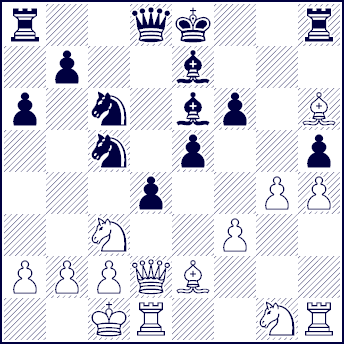
17. Ne4 Nxe4 18. fxe4 hxg4 19. Rf1 Rc8 20. a3 Qb6 21. Bg7 Na5
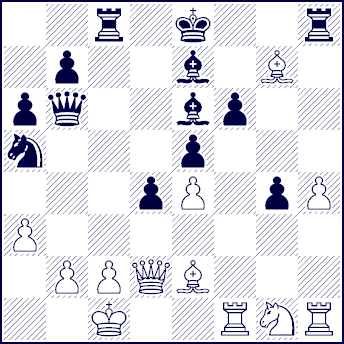
22. Qd3 Rg8 23. Bh6 Nb3+ 24. Kd1 Nc5 25. Qd2 Nxe4 26. Qd3 f5 27. Bc1 Bc4
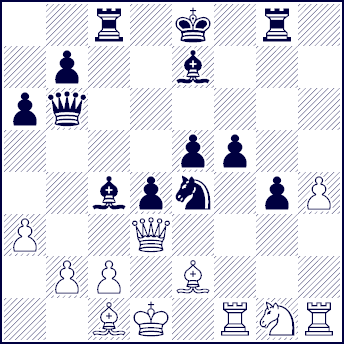
28. Qxc4 Rxc4 29. Bxc4 Rh8 30. Rh2 f4 31. Re1 g3 32. Rhe2 Nf2+ 33. Kd2 e4

34. Rxe4 Nxe4+ 35. Rxe4 d3 36. Nh3 Rxh4 37. Ng5 Rh2+ 38. Kxd3 Qd6+ 39. Kc3 Qf6+ 40. Kb3 Qxg5 41. Bxf4 Qg4 42. Bd6 Qd1 0-1
https://www.chessgames.com/perl/chessgame?gid=1956229
Update with reportage on Craddock’s time in Bedfordshire.

Posted in My daughter, My own endeavours on December 17, 2023| Leave a Comment »
“Education is teaching our children to desire the right things.” Plato
One platitude I ascribe to is ‘Home is where the heart is’, and although I am so very proud of where I am from, unintentionally or otherwise, it stopped being home a long time ago; partly because year twenty-four of not living there is rapidly approaching, and partly because priorities change as we age whether we like it or not.
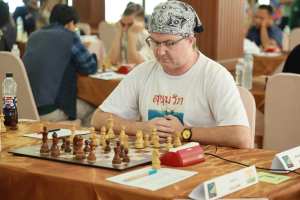
Chesswise I am most certain more years as an active member of Bangkok Chess Club (10-20 on & off) than Luton Chess Club (around 10) have now amassed. With many more friends based in Bangkok than its predecessor, I do see its chess club as my home club, and have done so for quite some time…you could say ‘somehow it just went that way’. Being housed in a pub is always an improvement as you can’t beat a cold pint of cider or six whilst you play OTB.
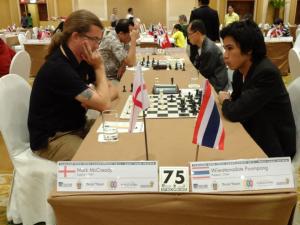
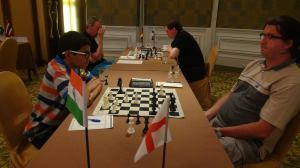
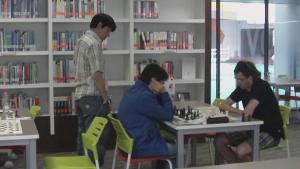
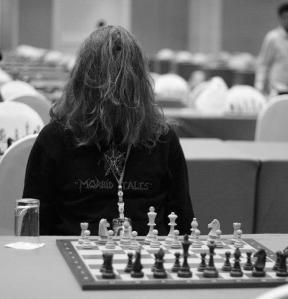
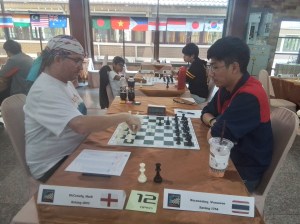
It’s been 6 months since I last played chess -no I don’t miss it. Online chess has been outlawed then got slapped with a lifetime ban. Yes I have even thought about stopping completely and giving the game up again, just like I did back in the 90s. But it is my every intention to take my daughter to Bangkok Chess Club on the fifth day of the next month. I want to see friends and socialize with them, and the more exposure my daughter has to chess the better. Most probably I will play her to see how much she remembers, as she has lost interest and become inactive. It might be the case that I just hang out, drink some cider, chat with friends and play no more than the odd game or two. However, I may elect to play in a blitz tournament though, and most probably will.
So I shall not go 7 months of no chess but its the overall experience of being amongst old friends that is important, and as mentioned, reacquainting my daughter with the game too: it has got nothing to do with wanting to play chess, which is not in play this time around. The arbiter, and old friend, who runs the club and organizes the Bangkok Open is the same person who employed my ex-wife -that’s how we met. He was instrumental in us hooking up, our child was soon to follow – and visit her in hospital when she was born he did. Had he not given me her mother’s details when I asked who she was at the chess club, there would be no Grace McCready. And that very place we played in then, is the same place we play in now. My heart is with my daughter and home is where the heart is -so I shall break my 6-month duck @Bangkok Chess Club, and my daughter gets to go to the very place where her father asked about her mother for the first time, and was given her contact details as a result -the rest is just history. Pics, videos and report to follow.
A side note on how to read old Tom Sweby's columns
Not perhaps, but quintessentially, Old Tom Sweby is best thought of as a passionate devotee to the newspapers he wrote for. He was well read and knowledgeable of the Bedfordshire chess scene and well beyond, given that he was the president of the S.C.C.U. once upon a time. He was generally well-respected and rubbed shoulders with many, if not all, of those eminent within British chess circles. It would, however, be a critical mistake to see his column is primary source material entirely. That it is not. You will also find secondary source material quoted too, and the reliability of that is not quite as Tom hoped. Given that he wrote for decades, this is to some degree inevitable, and after all we are all prone to error whether we realize it or not. Thankfully, with regards to old Tom Sweby, they are infrequent and for the most part old Tom continued to document events and developments in the Bedfordshire league from the get go as best he could but, of course, everything lies open to interpretation. Despite this, and generally speaking. this does indeed make him informative and thus worth reading. Dare I say his columns constitute a narrative describing the latest developments, match reports and changing nature of the Beds league...he knew his audience and wrote according. This manifested itself over decades but brevity was always in play courtesy of the restictions imposed by writing a column. Should you wish to read a in instrumental figure of the Beds' league post WW2, you are quite welcome to peruse what has been posted here... . :-) I should, however, point out that as the decades wore on he gradually moved on away from narratives concerning the Bedfordshire league towards affairs both historical and international. The reasons for this are multifarous, old age was a predominante factor presumably, however, the bottom line is with regards to how the Bedfordshire chess scene developed post WW2: old Tom Sweby is your go to guy. He wrote more about chess in Bedforshire than anyone else did but given he was a Lutonian and writing for a Luton newspaper there is both bias and greater coverage of his hometown than the rest of the county.
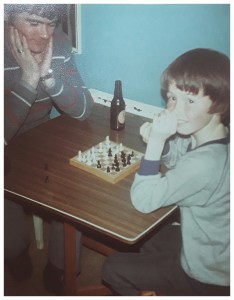


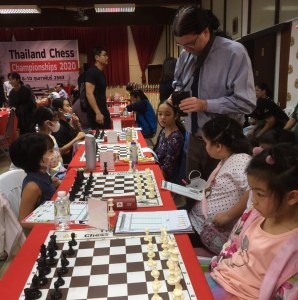















To add comments, please see the bell at the top of the page.
 McCreadyandChess