If you delve into chess played back in Victorian times -to use an English term- more work is involved than you may think: some would argue the further back in time you go the more cumulative this becomes. Not yet aghast? You may even discover that sometimes a spiffing Englishman come up against a chap from a former colony of ours and gets a tonking over the board -just imagine that!
In those heady days chess was bereft of ratings and titles only categories were used for classification; differing among nations in terms of criterion and meaning since they weren’t universal and subject to revision and misreportage also.
Today, some just go on the name of a player alone just to estimate their strength. But of course you can always compare ability by matching up these greats of the past. Look at the example below to see what I mean. Let’s look at a position and ponder a move first before playing through the game.
Everything is open to interpretation, so make of it what you will. It looks to me like there is a serious gulf in class here. This appears to be substanitated by their results.
Speaking from experience, I suspect their priorites may change or be altered with chess getting less time than it previously did. A celebration of life itself should always triumph over celebrations achieved in a board game right?
Fellow Bedfordshire chess players: the only player who emerged from the Bedfordshire league and went on to become a GM was James Plaskett, and thereafter British champion in 1990 in sunny Eastbourne.
But just how good was he whilst still playing in the Beds. league? Well, he did finish second in the British championship in 78, however, that is just a statistic, so can hardly be classified as being heuristic for the average club and county player if drawing direct comparisons is the name of the game. What if I said his rating in the 1979 B.C.F list was 222, of further help? Let’s shift the goalposts somewhat.
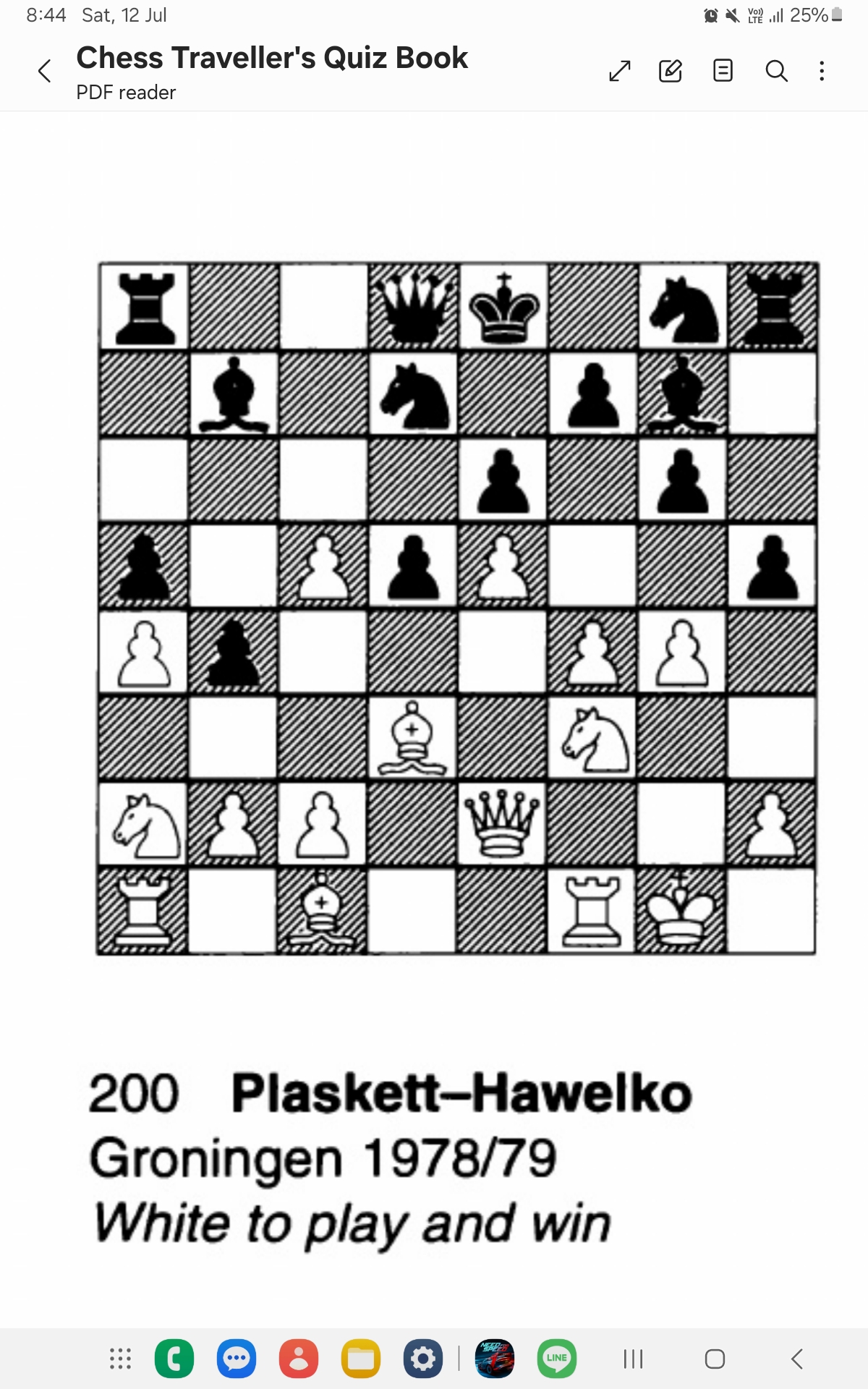
In completing Norwood’s spiffing The Chess Traveller’s Quiz Book, I did notice that the very last puzzle comes from one of GM Plaskett’s games; an impressive victory accomplished while he was still playing in the Beds. league at the time. If you fancy it, I suggest you try to solve it, then decide for yourself how graspable it is, or is not! From that you should be able to deduce any disparity in ability there may be between yourself and that of a young Plaskett’s. You should bear in mind it is the very last puzzle of the book thus the hardest, (unsurprisingly, I couldn’t even get the first move right!). It is hoped that such endeavour should offer up some indication of his strength comparatively but do bear in mind this pertains to solving a puzzle, so you know something is afoot in the postion. That said, may I suggest you set aside a good few minutes for this if not more and, perhaps, put the right sort of thinking cap on? I should also add the solution to the puzzle is below.
Solution is below. Please refrain from reaching for it initially as it is somewhat self-defeating. Unhelpful clue -as I found out to my surprise, the first move is not Bxg6!
For further information on the game it should be pointed out that it was played in the European Junior Chess Championship, and that GM Plaskett finished 3rd, behind Soviet Union GM Sergei Dolmotov (2nd) and Dutch GM Jon Van Der Wiel. Some information can be found in the following link. https://www.olimpbase.org/~~V/ind-eicc/eu20b-1979.html?__r=5.8830a57d4c3c59c6d5e85f1c4c551575
NB. Comments placed on this site along the lines of ‘What in the devil’s name was the point in asking me to try and solve that!’ I shall not reply to. Praise along the lines of ‘Ah thanks, so that’s how good one of our own once was while still playing for Bedfordshire’ shall be welcomed.
“The Eleven Home Counties, which are thought in Land Taxes to pay more than their proportion, viz. Surrey with Southwark, Hertfordshire, Bedfordshire, Kent, Essex, Norfolk, and Suffolk, Berks, Bucks, and Oxfordshire.“
An Essay upon Ways and Means of Supplying the War, 1695 Charles Davenant
This is rather unimpressive and untypical too because of white’s early d5 push and several sub-optimal moves played by white. But I do like that I did play in the spirit of the Dutch and siught counterplay to grab the draw.
DISCLAIMER: as insomniac author of this post, I take no responsibility for any electronic device, laptop or PC blown up by running the game linked below through an engine you have installed.
Reading and writing go hand in hand, of this we know: both are art forms, that most don’t. An advantage of academia is that you encounter texts which require being read critically and many times over in parts, you therefore develop a natural inclination to return to texts repeatedly in order to increase your understanding of them. This may assist you in establishing the importance of a text or a passage whereas simply reading for pleasure is less, or much less, likely to do so.
Knowing what to read in chess is becoming increasingly more difficult for numerous reasons, one of which being an ever-increasing selection of texts to choose from, not to mention all that pulished online on various types of websites and social media platforms with or without the help of AI.
I don’t wish to cast judgement on such matters but would rather refer to that which I found highly engaging when it was published some sixteen years back. That was the 25th anniversary of New In Chess. We can, I think, argue that which is published in the press is more likely to be of higher quality than that which is posted on the internet, generally speaking. We may also argue that an anthology carries greater prestige than the latest publication, since the author is more selective over the material chosen, opting for that considered to be best by readers, writers, editors and reviewers. Quality, then, takes precedence over that which is current. Since it is possible to be both biased and right, or so I believe, my views on the publication this post is about, is that finding anything better is both a hard task ahead and a good path to go down. I cannot help but recommend it for it contains much first rate journalism -of that you can be sure.
So there you have it. Reticent I am not; so I recommend what I am presently re-reading I do, and believe myself justified in doing so thoroughly I do too…hardly synchronic, happily arranged, hurriedly off with a bang -a damn good read indeed it be!
Courtesy of old friend Damon D’Cruz – a true chess addict in his younger years- in the spring of 95, I was encouraged to participate in the Nottingham Open with him. I have many memories of that tournament but one that stands out as being different was the journey up there.
When we reached Nottingham, there was a pop concert in town which we happened to drive past, and there I saw Tori Amos giving a fan an excited autograph. How often do you see famous pop stars en route to a tournament?
This was the song that propelled her into the big time.
…on what this site initially became…on what this site is now becoming…on what this site cannot become…
On what this site initially became…
…once upon a time, the chess-related musings of an adrift academic were bound playfully and electronically in this online journal of sorts. They grew and grew as the decade did too. I kept on because I love to write whether I had much to say or not; therefore, being read by others was usually of little or no importance, comparatively speaking. Content was based on personal thoughts and experience on various topics with no intended audience borne in mind. With topics broadening, my own take on things always shaped the narrative I constructed: I often thought I was insightful but never that I was right. Sometimes imagination gave rise to originality: and of that I have always remained proud. I often introduced humour, believing that I am funnier than I really am. Sometimes, I found my own style antithetical to the conservatism I believe chess is plagued by -oftentimes that has put a gracious smile on my face… .
On what this site is now becoming…
…this site is now becoming a collaboration of chess in Bedfordshire: much more so of the past than the present -that has become the dominant trend. I document the history of chess in Bedfordshire as much as I can, and as time has passed I have become more thorough and resourceful. However, I am not a trained historian as my background lies principally in philosophy but yes it is true I did study some modules on history as both an undergraduate and a post-graduate too; furthermore, I have trained myself up, particularly in terms of postmodern history. Since 2015, I have only read history and historiography as well as those philosophers who have been so influential on postmodern history, such as Nietzsche (whom I once wrote a 19,000 word dissertation on, entitled: Can the Will to Power be Found in The Birth of Tragedy?), also Richard Rorty and Foucault and I suppose certain structualists such as Claude Levi-Strauss too. Regarding postmodernism, mostly I keep to Hayden White, Keith Jenkins and Alan Muslow.
Some friends and former playing partners back home describe me as the ‘go to guy’ for the history of chess in Bedfordshire. This compliment says more about the lack of interest in the subject than my own endeavour. As mentioned, I am too adrift from academia to feel chuffed by it. Rather, I tend to lament that my historical research, like my chess, just isn’t what it should be. Even though I may well have a broad understanding of Bedfordshire chess history courtesy of the volume of research put into it, all of which began in 2014, this is not something I am particularly proud of. Nonetheless, out of courtesy compliments are graciously received. If the truth be told, I just see it as my job and only that – after all someone’s got to do it and no one else is that interested!
Amongst the many others, I have created three categories: ‘Bedfordshire Chess’ and ‘History of Bedfordshire Chess’ and ‘Luton Chess Club’. This website is slowly moving towards a consolidation of those (all of which can be found in one of the toolbars to the right).
On what this site cannot become…
…I like to be both creative and amusing when I can be, factor in that playfulness has been an ever-present factor, the content of this site should be thought of as multifarious. It could be said I continue to enjoy undermining the conservatism I believe chess is underpinned by even after all these years, and often try to use humour to do it still, believing I have got better at it. Consequently, despite the general direction its going in, this site cannot only be about Chess in Bedfordshire and nor will it be. It may become noted for that yes -in fact that’s been the case for years already even by established historians, archivists, and whoever else. External factors aside, this site is titled McCreadyandChess. I cannot, nor will I not, remove my own personal thoughts and experiences of chess from the posts of this site -especially if I think they are funny or original for they constitute my writing at its very, very best. In addition, the number of categories alone tells you that breadth of content is important to me. I am proud of my site, it is identity conferring and that is how it shall stay -end of story. All you really have are: ‘Some thoughts on the beautiful game’, which, incidentally, just happen to be my very own; nothing more, nothing less, take of it whatever you please… .
A side note on how to read old Tom Sweby's columns
Not perhaps, but quintessentially, Old Tom Sweby is best thought of as a passionate devotee to the newspapers he wrote for. He was well read and knowledgeable of the Bedfordshire chess scene and well beyond, given that he was the president of the S.C.C.U. once upon a time. He was generally well-respected and rubbed shoulders with many, if not all, of those eminent within British chess circles. It would, however, be a critical mistake to see his column is primary source material entirely. That it is not. You will also find secondary source material quoted too, and the reliability of that is not quite as Tom hoped. Given that he wrote for decades, this is to some degree inevitable, and after all we are all prone to error whether we realize it or not. Thankfully, with regards to old Tom Sweby, they are infrequent and for the most part old Tom continued to document events and developments in the Bedfordshire league from the get go as best he could but, of course, everything lies open to interpretation. Despite this, and generally speaking. this does indeed make him informative and thus worth reading. Dare I say his columns constitute a narrative describing the latest developments, match reports and changing nature of the Beds league...he knew his audience and wrote according. This manifested itself over decades but brevity was always in play courtesy of the restictions imposed by writing a column. Should you wish to read a in instrumental figure of the Beds' league post WW2, you are quite welcome to peruse what has been posted here... . :-) I should, however, point out that as the decades wore on he gradually moved on away from narratives concerning the Bedfordshire league towards affairs both historical and international. The reasons for this are multifarous, old age was a predominante factor presumably, however, the bottom line is with regards to how the Bedfordshire chess scene developed post WW2: old Tom Sweby is your go to guy. He wrote more about chess in Bedforshire than anyone else did but given he was a Lutonian and writing for a Luton newspaper there is both bias and greater coverage of his hometown than the rest of the county.
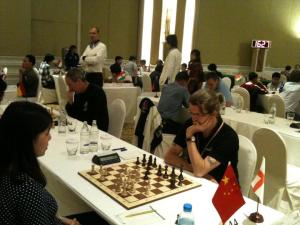
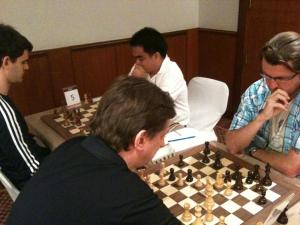
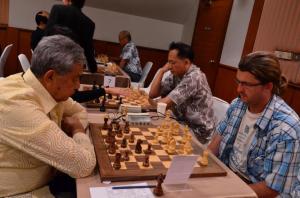
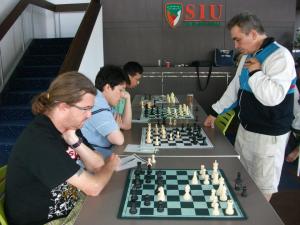
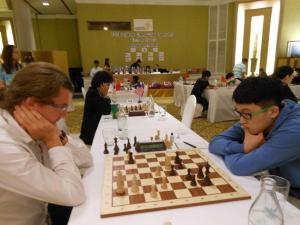
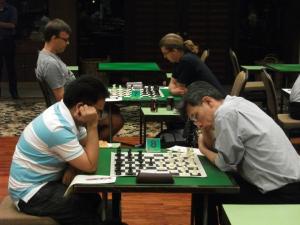
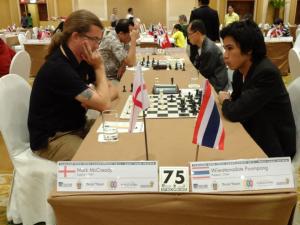
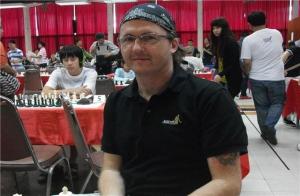
Gallery
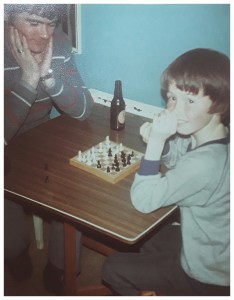
I’m either 10 or 11 here
1982, myself versus Brian from Sunderland.
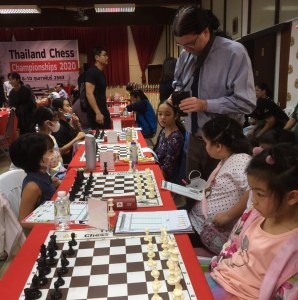
At the Thai Junior chess championships. My daughter of course.
Pattaya 2011
2011
Thai Junior Championships
2008
2011
Around 2011
2011
Pattaya 2009
2011
Kuwait 2008
2012
2012
2011 BKK Chess club
2011
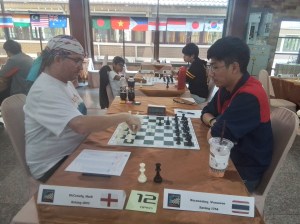
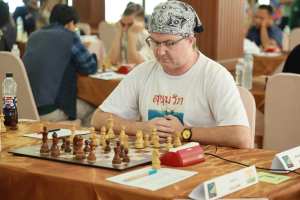
2011 Thai Open
2011 Thai Open
2013 approx
Around 2014
2010
2012
Around 2011
2011
2011
2013
Around 2011
Around 2011
2020
2011
2008
2011
2013 or thereabouts
2010
2017
2014?
2010
2024
2024
2024
To add comments, please see the bell at the top of the page.




















 McCreadyandChess