I think we can safely say that with the vast majority reverting to the internet for chess instruction it has, invariably, become something of a free for all. Youtube has many channels, and is in all probability the best place to go, but how much of what is on offer is worth watching? Not much, I can assure you.
But in recent months I have noticed that the Americans are getting some things not just right but spot on…for what it’s worth, the following two channels are thoroughly recommended.
Before chess became the obsession that took centre stage back in 1987, I loved board games of all kinds. But there was one I liked especially because its similarity to chess. This held true particularly in the early teen years, and here it is.
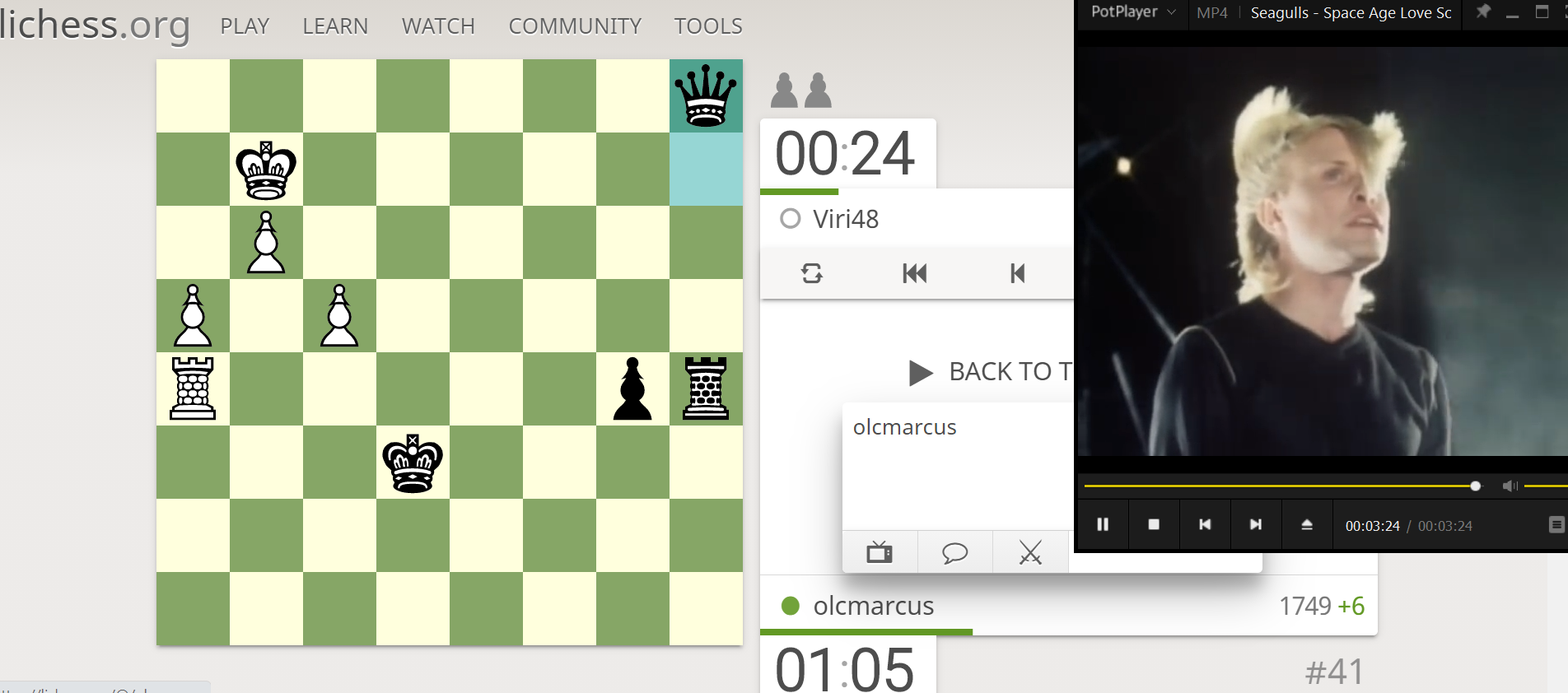
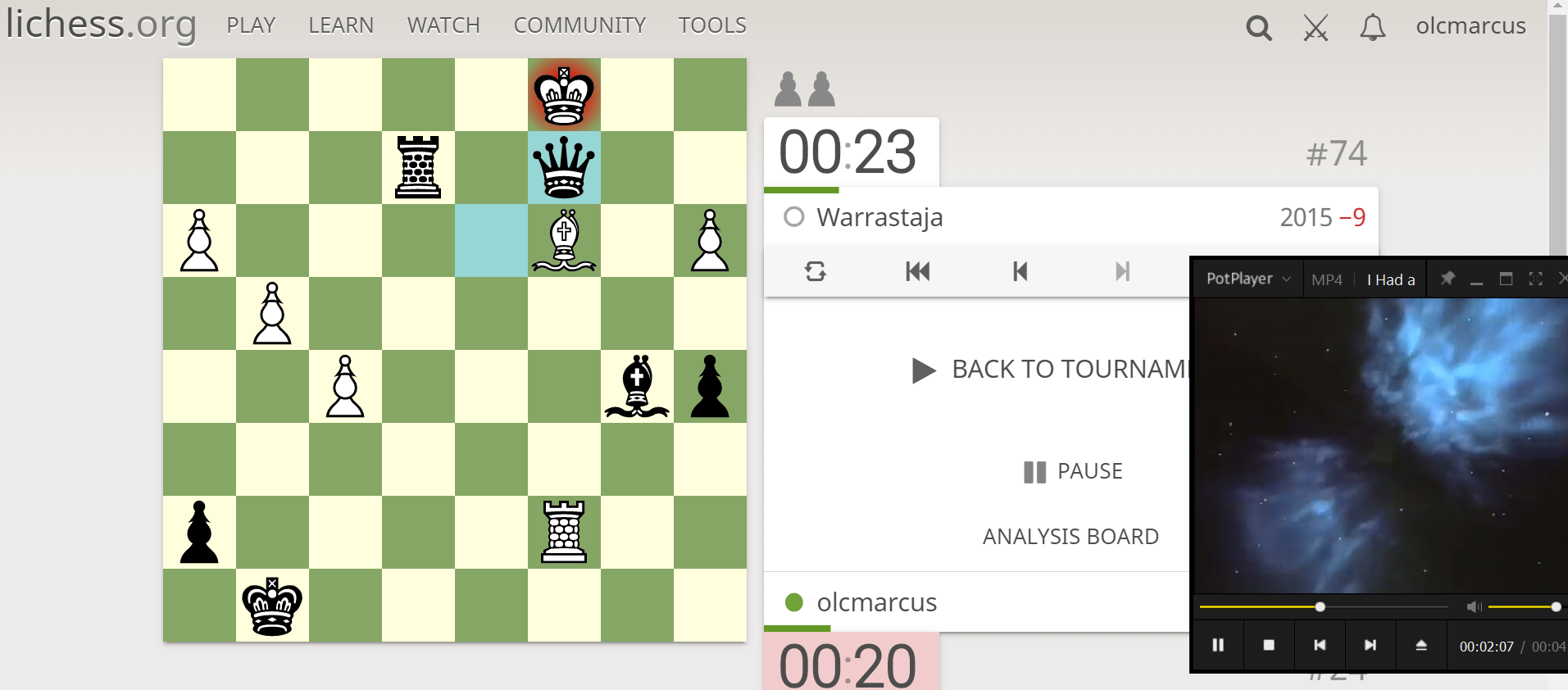
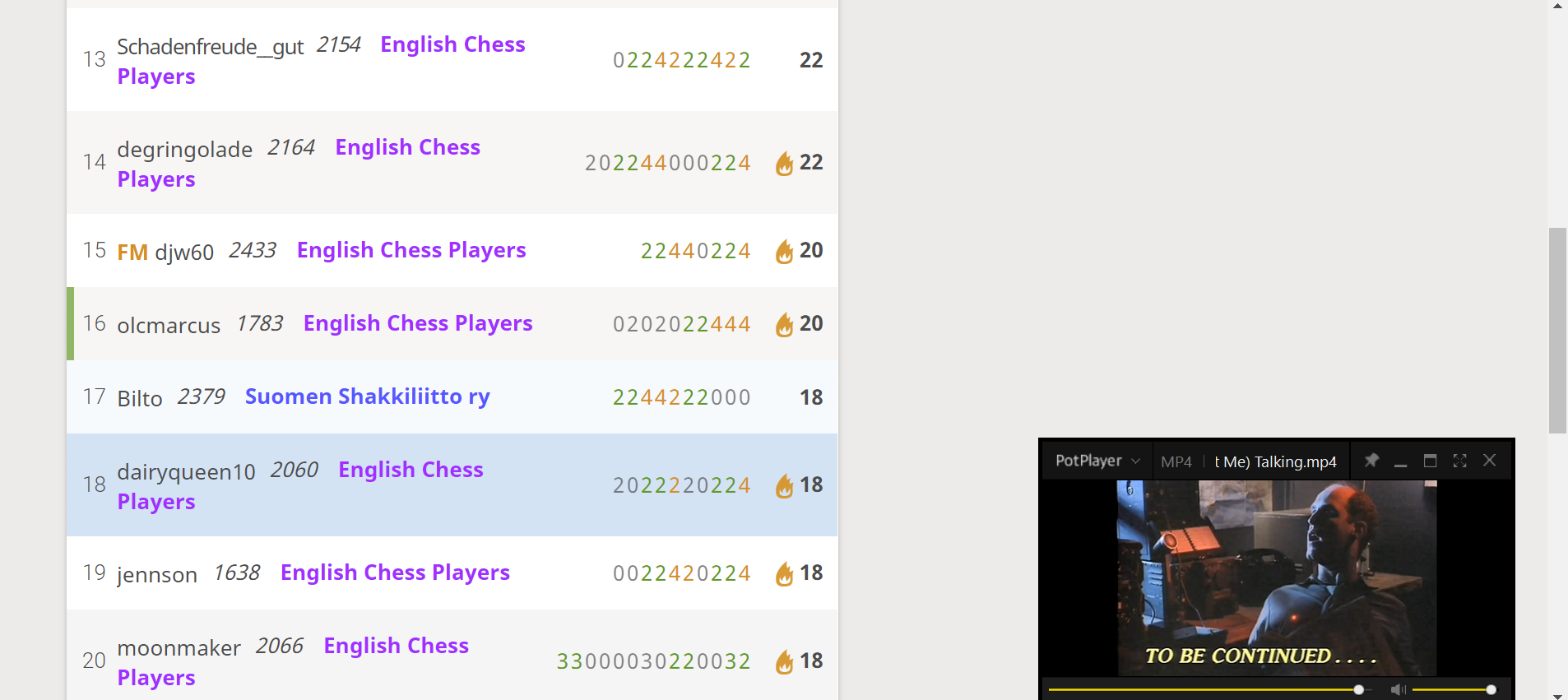
For the first time last night I represented England. A match against Finland was held. Of the 81 participants, around 30 were titled, of course there were Grandmasters playing. The time frame was 1h 20m, games were set at 3m, 2s increment. I won almost every game I played, held firm in joint 11th for the most part then slipped up in my final game to someone rated 2227. I finished 16th out of 81 even though those finishing both above and below me were on average 300-500 points above me. I punched well above my weight and feel proud of myself for stepping up to the mark against very strong opposition. England gave Finland a sound beating and I did my country proud by sticking in earbuds and bopping away with my favourite 80’s band (A Flock of Seagulls) as I blitzed my way up the leaderboard. All music video images in the screenshots below are of A Flock of Seagulls, the first one being from the song ‘The More you Live The More you Love’. I don’t know about you but the more I live the more I love playing chess.
The match was commentated upon. Rather amusingly it begins with comments of mine where I boast about drinking beer when I studied The Philosophy of Science in Finland as an undergrad back in Autumn 96; when I once beat a Finnish FM with 1.f4 down the pub named The Three Beers in Turun Yliopisto.
Meretricious and mangled.
Super-silly stuff.
There’s two videos from me and now two videos I will bop away to quite happily if given the chance.
Got to Number 8 in the US charts.
I cannot stop myself from singing this every time I hear it, and it’s been like that most of the year.
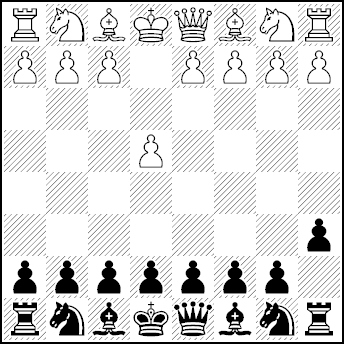
Carlsen plays a number two and wins in the endgame. I have to admit, the losing move is an absolute shocker for someone with such a high rating -even I could see straight away it was wrong, as well as what he should have played. To what extent this victory exemplifies the fear factor in play when endgames arise in his games I don’t know but he clearly was aware that he was much stronger in the endgame than his opponent (and just about everyone else!). Maintaining the distant opposition in king and pawn endgames is a basic principle we all know but it just goes to show we are all fallible when under pressure. In the thumbnail below white has just played Kd3, allowing black to win with Kd6. Kd2 was the move that would have drawn the game.
Nine years ago today, I posted the image below on my fb account.
‘The magic of Karpov who is white to play against Uhlmann. He plays g4 here, the rationale being to cut of retreat squares for the black bishop, and help give the better ending.’
I’m in a state of sworn silent swinehood, being well and truly disgruntled! Why? Because I am learning the hard way that starting competitive chess at 0030, six hours ahead of your opponent is massively disadvantageous. Maintaining your highest level of concentration at 2-3 am -the wee hours as they are known colloquially -is a very big ask even for those saddle sore with hyper mania. Don’t get me wrong, the normative aspects of daily life are…are fatigue-free but to raise the bar at that time -no way! And for the second time consecutively, I could neither raise my game nor play as directly as I normally do. Common sense dictates to play at your peak, play during the afternoon or early evening. Don’t leave it until past midnight, that’s time for hours of sleep not hours of competitive chess. From last night I learnt that tiredness over-simplifies your decision making process. If your thought process becomes less robust, errors creep in because you become less diligent and aren’t checking as much as you should be. In sum, that’s the principle reason why I lost: whilst sleepy I became sloppy. Ah well, I tried at the end of a long day but it just wasn’t quite enough. At least after I realized I had made a mistake, I went on the front foot. Credit to my opponent for making my kingside attack look rather flimsy. I lost but learnt from it -a pyrrhic victory of sorts you could say… .
With seven hours to go only, I am quite excited about representing the South of England as we compete against the North of England, a match which last occured 126 years ago. Given the current climate, the match has to be held on-line, and once again I am six hours ahead, meaning I will most likely be playing at gone 3am again.
With 107 boards that means 214 English men will compete against each other. The North of England is the slightly stronger team, with an overall average rating of 139, given that the South of England has an overall average rating of 132. There’s a noticeable difference between the two teams on the top ten boards but it evens out the further down you go. My opponent’s rating being exactly the same as mine on board 51. Seven points is not a big difference but perhaps the strength at the top is what will bring home victory for the North of England.
There are four players from Bedfordshire competing, I have the black pieces and am sincerely hoping for 1. e4, in which case my opponent is in for quite a shock! It’s a very passive opening I play but being played by a southern softy it’s not. I know it very well and know what to target, how to transpose and when, if necessary. There is, in fact, very little left to learn regarding that opening, so in all probability I will come out of the opening with a slightly better position or one relatively equal but leading to a type of middlegame I have much more experience with than him.
Whether he remains a happy mathematician should he see this played against him remains to be seen!
Like all young players growing up with chess, there were many past masters I liked and played through the games of. At 16, Morphy was most certainly the first, the other two I was an awe of most of all being Capablanca and Fischer. But the first player whose edifice of work I laboured over was Nimzowitsch. In retrospect this has become something I lament because in trying to mimic or copy him, which I did to considerable degree, I found myself embroiled in positions too complex for my level, and often too obscure to benefit from also. I liked the obscurity of some of his moves and often found it mystifyingly enthralling. Sadly I confess, in the following position, Nimzowitsch played precisely the sort of move only he played, which in my youth I found most impressive -the writing was on the wall methinks.
Mannheimer – Nimzowitch, Frakfurt 1930
Here Nimzowitsch plays Qh8!! If you can explain why, I am all ears.
I am at present giving The Catalan a good look. It’s right for me but perhaps I have bitten off more than I can chew there. Nonetheless I read the following:
A good book for club players.
In written chess theory, every once in a while you get that jaw hits floor feeling. Or in my case both eyebrows raised fully, then remained fully raised for some time they did. A sentence began with a phrase that related to a concept rather above and beyond my own head. I have attached the page, see if you can guess what the four word phrase is, shouldn’t be too hard…think it took about an hour for the eyebrows to return to their resting places.
In our modern high-tech society it has become possible to lose games in a manner previously unheard of. It involves a procedure developed technologically, one which is antithetical to the concept of chess itself and the manner in which it is played. If used even a world class player runs the risk of losing to a complete beginner. Are you wondering what on earth I am talking about? I am talking about ‘pre-move’. In bullet chess, the most absurd form of competitive chess ever created, you have the option of ‘pre-move’. In other words, making your next move before your opponent has made his based on what you assume he will do next. But if you get that wrong it can cost you the game instantly, as can be seen in the video below. I always thought that chess was a game where players thought deeply over their opponent’s last move and then via a complex decision making process made a move once a decision of their own making had been reached. More or less that’s how we play. To decide on your next move before you know what your opponent is going to play is not progress. It’s a dumbed-down version of chess that masters from the past would find demeaning and want no part of. GM Danny King calls the video below comedic. I’d call it tragic for this is an example of regression not progression. To call it chess is undignifying. To call it pointless, mindless entertainment for a mass media driven society is more to the point. The competitors will think of the money involved, the public will wonder what is wrong with the modern game and I will stop writing.
…on what this site initially became…on what this site is now becoming…on what this site cannot become…
On what this site initially became…
…once upon a time, the chess-related musings of an adrift academic were bound playfully and electronically in this online journal of sorts. They grew and grew as the decade did too. I kept on because I love to write whether I had much to say or not; therefore, being read by others was usually of little or no importance, comparatively speaking. Content was based on personal thoughts and experience on various topics with no intended audience borne in mind. With topics broadening, my own take on things always shaped the narrative I constructed: I often thought I was insightful but never that I was right. Sometimes imagination gave rise to originality: and of that I have always remained proud. I often introduced humour, believing that I am funnier than I really am. Sometimes, I found my own style antithetical to the conservatism I believe chess is plagued by -oftentimes that has put a gracious smile on my face… .
On what this site is now becoming…
…this site is now becoming a collaboration of chess in Bedfordshire: much more so of the past than the present -that has become the dominant trend. I document the history of chess in Bedfordshire as much as I can, and as time has passed I have become more thorough and resourceful. However, I am not a trained historian as my background lies principally in philosophy but yes it is true I did study some modules on history as both an undergraduate and a post-graduate too; furthermore, I have trained myself up, particularly in terms of postmodern history. Since 2015, I have only read history and historiography as well as those philosophers who have been so influential on postmodern history, such as Nietzsche (whom I once wrote a 19,000 word dissertation on, entitled: Can the Will to Power be Found in The Birth of Tragedy?), also Richard Rorty and Foucault and I suppose certain structualists such as Claude Levi-Strauss too. Regarding postmodernism, mostly I keep to Hayden White, Keith Jenkins and Alan Muslow.
Some friends and former playing partners back home describe me as the ‘go to guy’ for the history of chess in Bedfordshire. This compliment says more about the lack of interest in the subject than my own endeavour. As mentioned, I am too adrift from academia to feel chuffed by it. Rather, I tend to lament that my historical research, like my chess, just isn’t what it should be. Even though I may well have a broad understanding of Bedfordshire chess history courtesy of the volume of research put into it, all of which began in 2014, this is not something I am particularly proud of. Nonetheless, out of courtesy compliments are graciously received. If the truth be told, I just see it as my job and only that – after all someone’s got to do it and no one else is that interested!
Amongst the many others, I have created three categories: ‘Bedfordshire Chess’ and ‘History of Bedfordshire Chess’ and ‘Luton Chess Club’. This website is slowly moving towards a consolidation of those (all of which can be found in one of the toolbars to the right).
On what this site cannot become…
…I like to be both creative and amusing when I can be, factor in that playfulness has been an ever-present factor, the content of this site should be thought of as multifarious. It could be said I continue to enjoy undermining the conservatism I believe chess is underpinned by even after all these years, and often try to use humour to do it still, believing I have got better at it. Consequently, despite the general direction its going in, this site cannot only be about Chess in Bedfordshire and nor will it be. It may become noted for that yes -in fact that’s been the case for years already even by established historians, archivists, and whoever else. External factors aside, this site is titled McCreadyandChess. I cannot, nor will I not, remove my own personal thoughts and experiences of chess from the posts of this site -especially if I think they are funny or original for they constitute my writing at its very, very best. In addition, the number of categories alone tells you that breadth of content is important to me. I am proud of my site, it is identity conferring and that is how it shall stay -end of story. All you really have are: ‘Some thoughts on the beautiful game’, which, incidentally, just happen to be my very own; nothing more, nothing less, take of it whatever you please… .
A side note on how to read old Tom Sweby's columns
Not perhaps, but quintessentially, Old Tom Sweby is best thought of as a passionate devotee to the newspapers he wrote for. He was well read and knowledgeable of the Bedfordshire chess scene and well beyond, given that he was the president of the S.C.C.U. once upon a time. He was generally well-respected and rubbed shoulders with many, if not all, of those eminent within British chess circles. It would, however, be a critical mistake to see his column is primary source material entirely. That it is not. You will also find secondary source material quoted too, and the reliability of that is not quite as Tom hoped. Given that he wrote for decades, this is to some degree inevitable, and after all we are all prone to error whether we realize it or not. Thankfully, with regards to old Tom Sweby, they are infrequent and for the most part old Tom continued to document events and developments in the Bedfordshire league from the get go as best he could but, of course, everything lies open to interpretation. Despite this, and generally speaking. this does indeed make him informative and thus worth reading. Dare I say his columns constitute a narrative describing the latest developments, match reports and changing nature of the Beds league...he knew his audience and wrote according. This manifested itself over decades but brevity was always in play courtesy of the restictions imposed by writing a column. Should you wish to read a in instrumental figure of the Beds' league post WW2, you are quite welcome to peruse what has been posted here... . :-) I should, however, point out that as the decades wore on he gradually moved on away from narratives concerning the Bedfordshire league towards affairs both historical and international. The reasons for this are multifarous, old age was a predominante factor presumably, however, the bottom line is with regards to how the Bedfordshire chess scene developed post WW2: old Tom Sweby is your go to guy. He wrote more about chess in Bedforshire than anyone else did but given he was a Lutonian and writing for a Luton newspaper there is both bias and greater coverage of his hometown than the rest of the county.
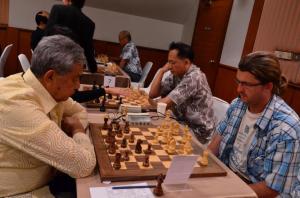
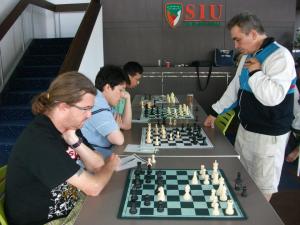
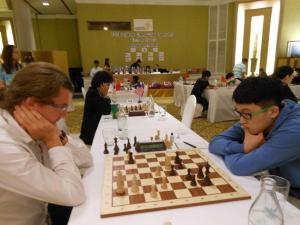
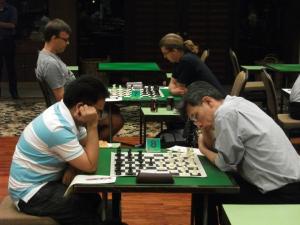
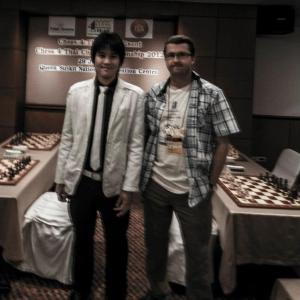
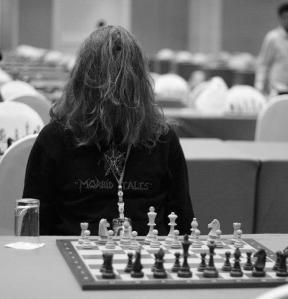
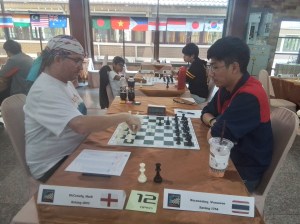
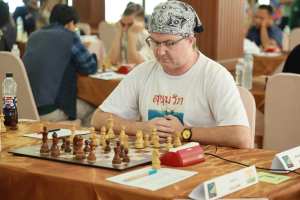
Gallery
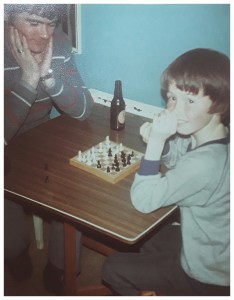
I’m either 10 or 11 here
1982, myself versus Brian from Sunderland.
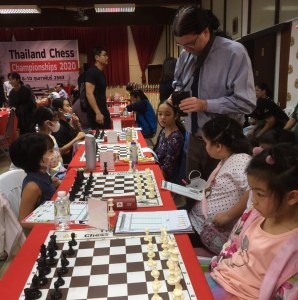
At the Thai Junior chess championships. My daughter of course.
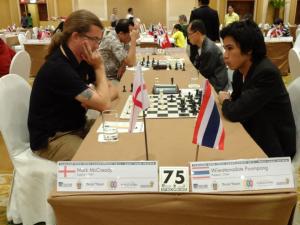
Pattaya 2011
2011
Thai Junior Championships
2008
2011
Around 2011
2011
Pattaya 2009
2011
Kuwait 2008
2012
2012
2011 BKK Chess club
2011
2011 Thai Open
2011 Thai Open
2013 approx
Around 2014
2010
2012
Around 2011
2011
2011
2013
Around 2011
Around 2011
2020
2011
2008
2011
2013 or thereabouts
2010
2017
2014?
2010
2024
2024
2024
To add comments, please see the bell at the top of the page.