Archive for the ‘History of Bedfordshire Chess’ Category

Diggle, who in a -news- flash has become my favourite chess writer, spent at least four years living in my home town just before the war, I was pleased to recently learn. There he befriended the ever-smiling Tom Sweby – Bedfordshire’s principle post-war chess representative, and a man I had the pleasure of meeting as a once promising junior, long, long ago. It would appear that he also knew the esteemed Secretary of Luton Chess Club Brian Cox too. (see Part 5 of https://mccreadyandchess.com/2015/06/05/bedfordshire-chess-in-the-70s-its-past-and-its-future/). Here is Diggle’s take on the unlikely duo and my home town. (Reminiscences of a Badmaster [Vol.1])

                                34. Grandmaster Mecca

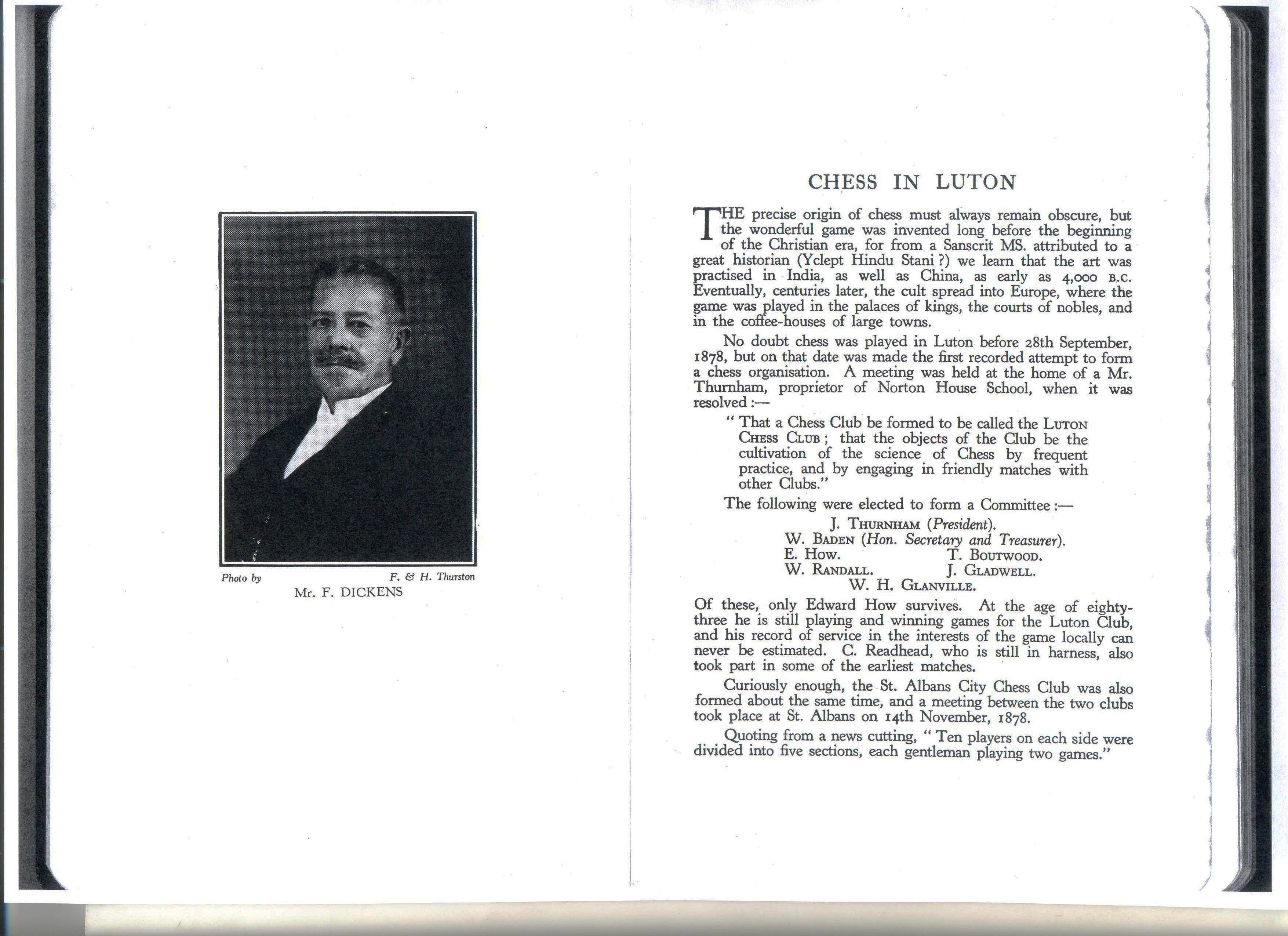
The Luton Chess Club (of which the BM has pleasant memories from 1935-1939) celebrates its Centenary this year. Among generations of its stalwarts, two great figures in particular bestride the Century. In a match played in 1931 between Luton and Northampton, we find on adjacent boards the names of Edward How and T.W.Sweby. The former, then 83 years of age, playing in his last match, had been a founder member in 1878, Hon. Sec. for over 30 years, and President thereafter. The latter, playing in his first match, was destined after a long stretch as ‘general factotum’ to ‘stagger along’ (his own expression) as President (which he still is) for the ensuing quarter of a century. In How’s time Luton was visited by Blackburne, Zukertort, Lasker, Capablanca, Reti, and Alekhine; in Sweby’s (during the past decade alone) by Larsen, Keene, Hartston, Wade, Tal, Glogoric, Suttles, Korchnoi, Petrosian and Hort. The popularity of Luton as a ‘Grandmaster’ Mecca can be ascribed partly to the organising genius and dynamism of a remarkable Secretary (Brian Cox) and partly to the hospitality of its President and his charming wife. One cam almost believe that Grandmasters (after the manner of tramps) inscribe mysterious signs on the front gate of the ‘White House’ when departing, to notify those that follow that they will find the place ‘a bit of alright’.

The younger generation of Luton chessplayers , however, may be surprised to hear that in his earlier days, ‘T. W. S.’ [Diggle is referring to how Sweby signs his Luton News Column] (who now ‘leaves all the organization to Michael’) himself embarked on chess ventures, some of a peculiar kind [of course, those of us who knew Tom Sweby would not be surprised at all, being the great raconteur that he was]. On one occasion eight local players received ‘top secret’ letters instructing them  to be at the front entrance of the Midland Hotel at a certain hour – they would then be ushered in to take part in an eight round ‘Mystery Lightening Tourney’ against eight ‘Invisible Masters’! Another eight Luton chessists each received a similar letter, except that their venue was another entrance round the corner. The two parties (in the custody of T. W. S. and the BM respectively) were smuggled up different staircases and via separate doors into opposite halves of a large room divided by a high folding partition; each half contained a row of eight boards. Play then commenced T. W. S. calling out ‘over the wall’ the first move made by his No.1 Board and the BM making it at once on the corresponding No.1 and so on to No.8, then the process was reversed, the BM calling the replies and the T. W. S. making them. At the end of each round, one contingent ‘moved one up’ as in the Mad Hatter’s tea-party – the other lot sat still. Though all combatants had been enjoined to observe the strictest silence each set of ‘Invisible Masters’ rumbled the other (collectively) in no time, the rot being started by a well-known character with a notorious high-pitched cough which he suddenly emitted during the second round. Thereafter, the announcements of the moves were punctuated by derisive comments from the performers: P-KR3 ‘I bet that’s Joe, the cautious old bastard’ or ‘Resigns’ (loud laughter) ‘that’s Len’s cackle but he sounds three boards off me’. By a masterstroke of timing the last round terminated at 9.30 pm and was followed by a general stampede to the bar – where the ‘first round’ started!

z1

12091178_607357609405597_4381037998926246791_o

Luton in Diggle’s days. Note that the ‘Midland Hotel’ (painted white) can be seen to the left.

Read Full Post »

More from the irrepressible Badmaster (G.H. Diggle) here:

18. Blake’s deaf ear

The Badmaster (though on principle he never draws attention to his own errors when he has not been found out) thanks Messrs John Beach and J.C.Calvert for setting him right over H.E. Atkins. As Mr. Beach adds in his most interesting letter, the old lion lived to be over 90. Another famous chess nonagenarian was the redoubtable J.H. Blake. After retiring from serious play, Blake was in his later year Secretary of the aristocratic City of London Chess Club, which flourished between the wars at the imposing address of ‘Wardrobe Court, Doctors Commons’ (between St.Pauls and Blackfriars bridge). The club was on a first floor and occupied two spacious rooms on either side of the landing, one for match play, the other more of a lounge, with a refreshment bar and many portraits of masters on the walls, like the ‘Long Room’ at Lords. Occasionally the match room was let by concession for County Matches, and ‘Beds’ sometimes played ‘Berks’ there, the former team including R.H Rushton, T.W. Sweby, the Badmaster, ‘and others’. On one occasion the clans duly gathered for the fray, but remained for a time huddled together on the landing, as no one seemed to know who had the key. Through the frosted glass on the other side we could dimly make out several eminent club Members such as R.C.J. Walker and J.M. Bee (the Chess Editor of the ‘Sunday Times’) reclining at their ease in the ‘lounge’. After a while, the ‘the people began to murmur against Moses’, and a general air of ‘Why are we waiting?’ (though no one ventured to burst into song in that hallowed spot) pervaded the assembled warriors, until finally the venerable Blake himself (having been apprised of the situation) sailed into port and opened Sesame. At this point one of our more forthright lower Boards ( a hardboiled Lutonian),  who thought Blake was the caretaker, expressed (not too inaudibly) the view that ‘Old Rip van Winkle was past his job’. ‘T.W.S’ and the badmaster exchanged glances of inexpressible horror, but luckily Blake had suddenly grown very deaf… .

Read Full Post »

The so-called ‘historical method’ [implies the avoidance of] imaginative excess (i.e enthusiasm) at any price.

Hayden White, Tropics of Discourse, Johns Hopkins, University Press, 1978 p. 126

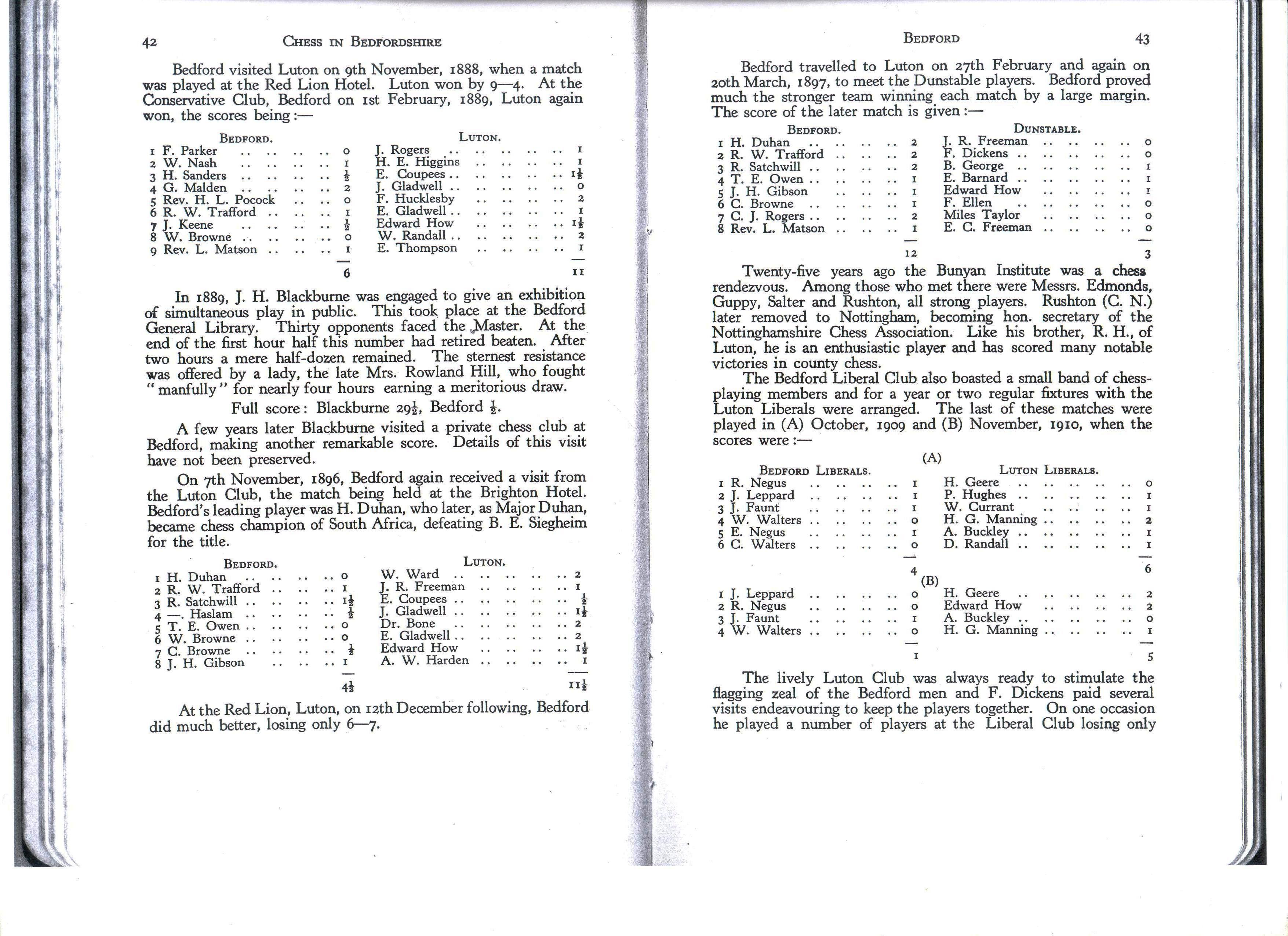
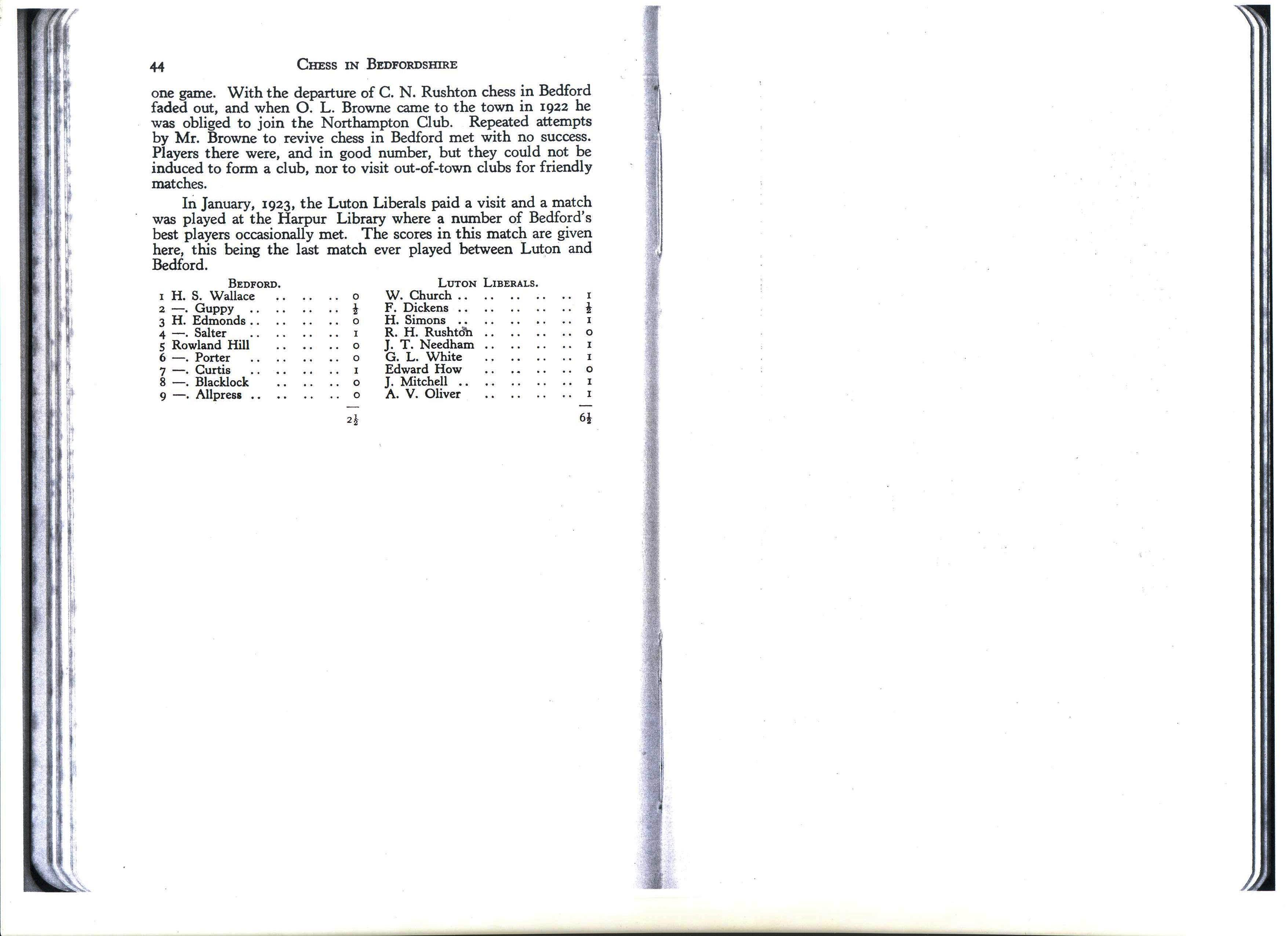
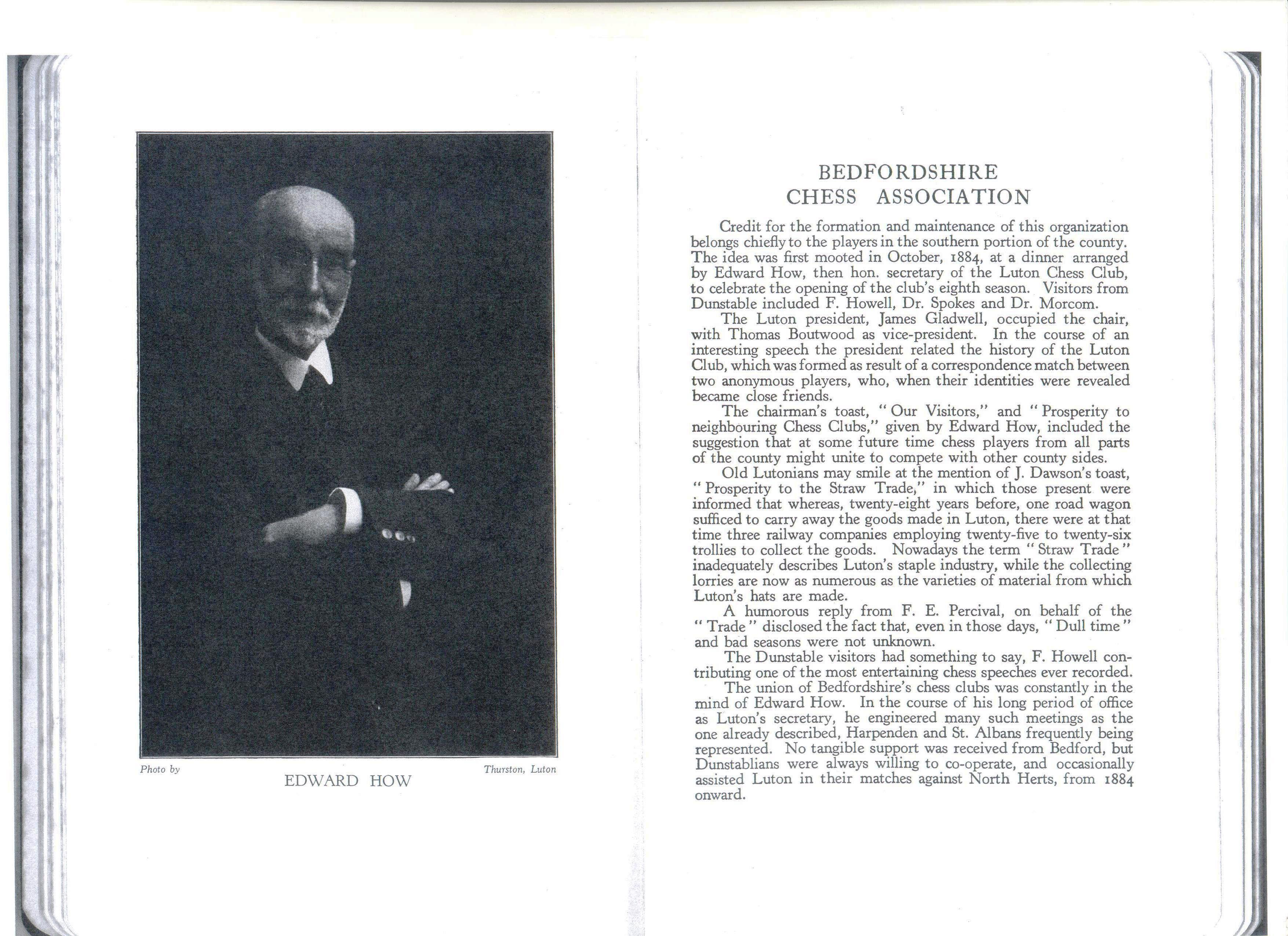
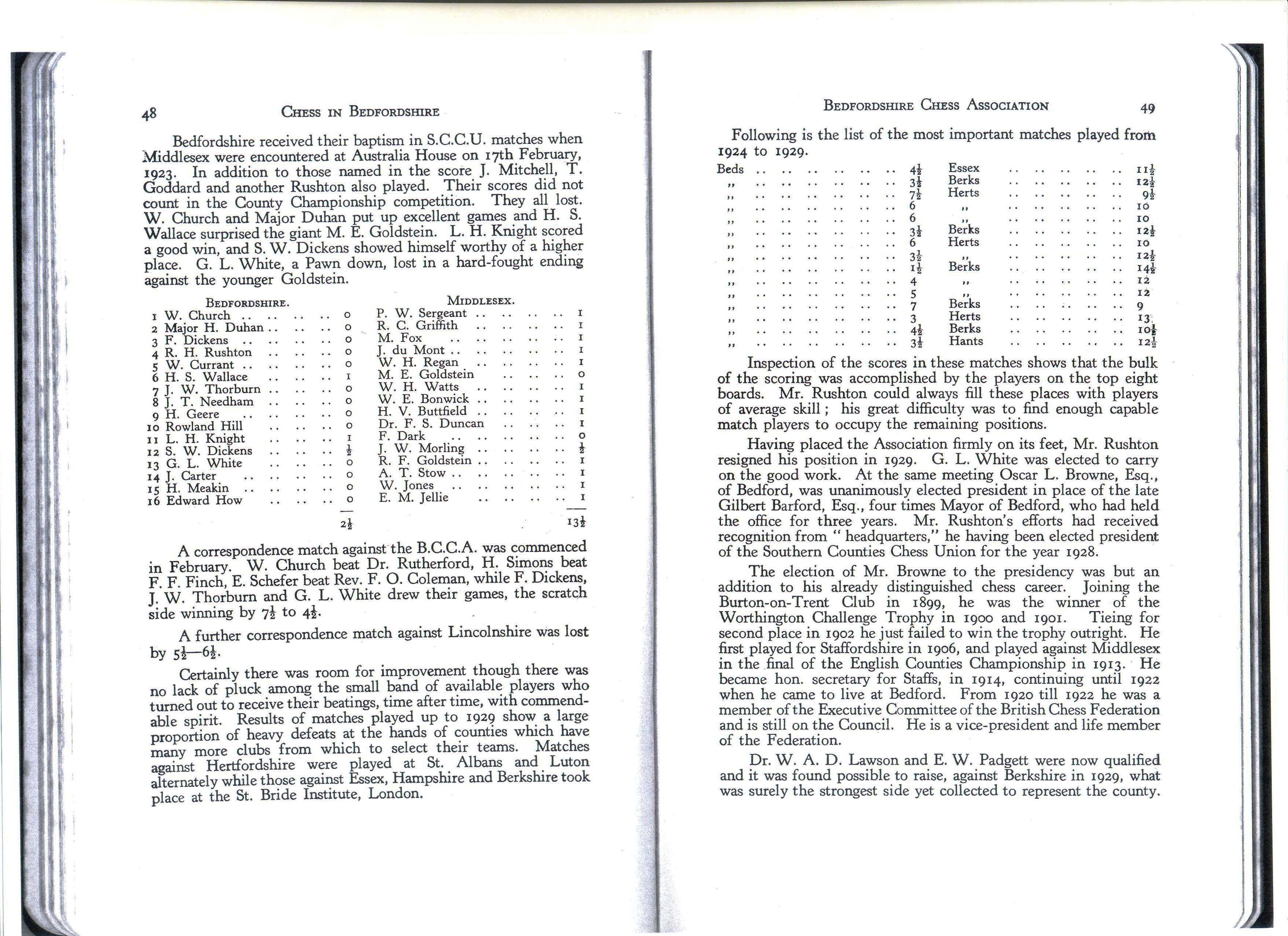
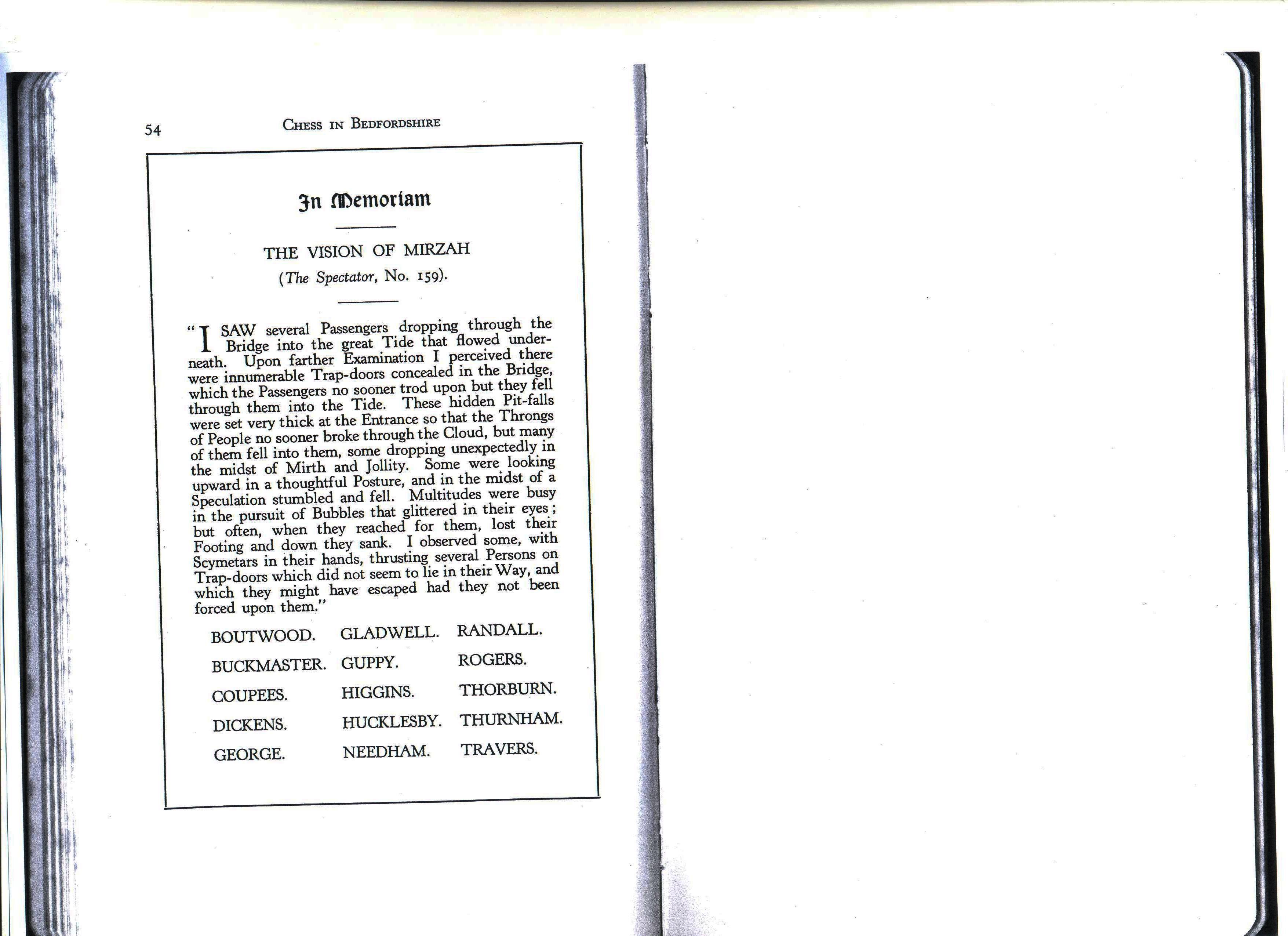
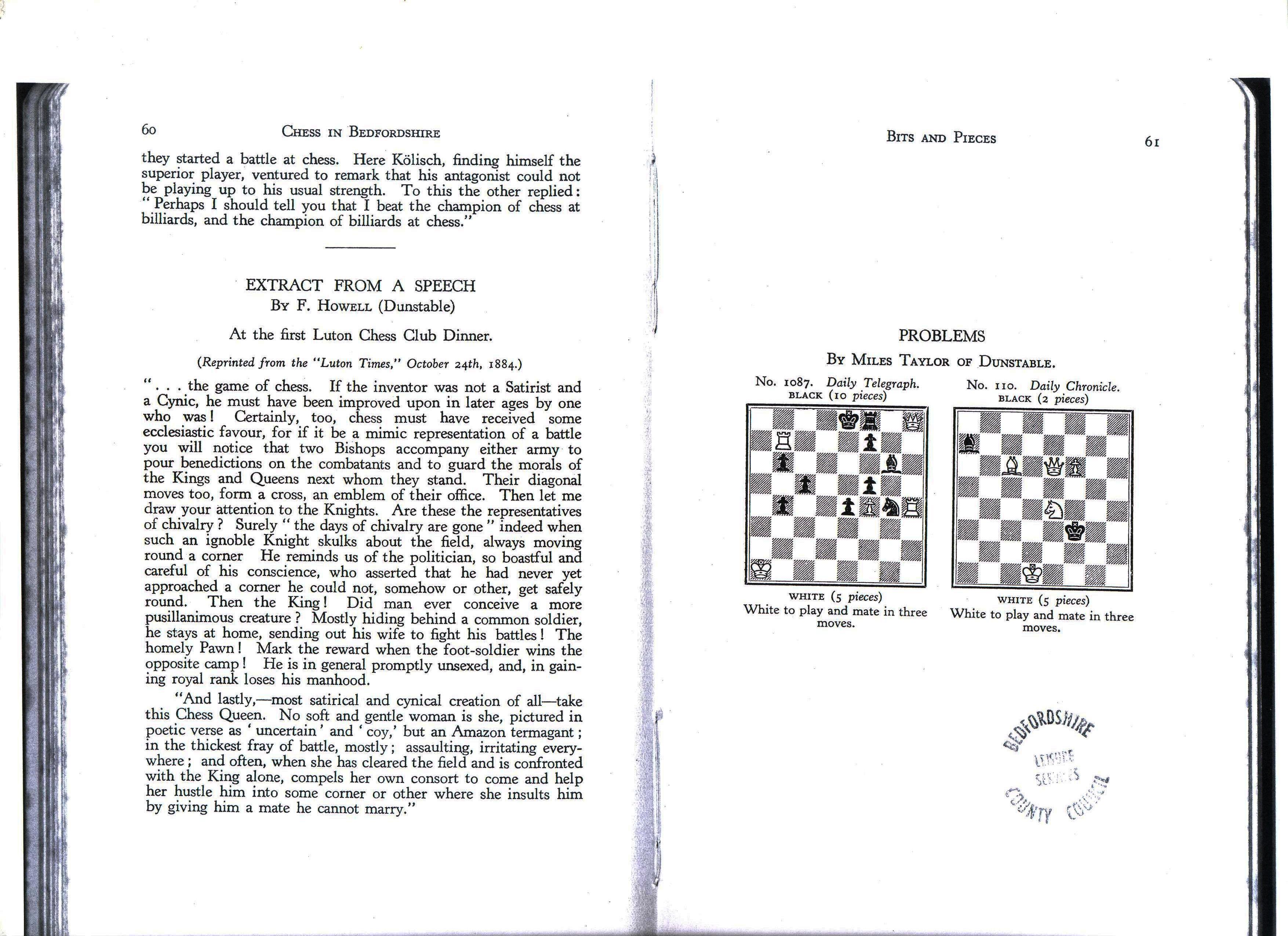
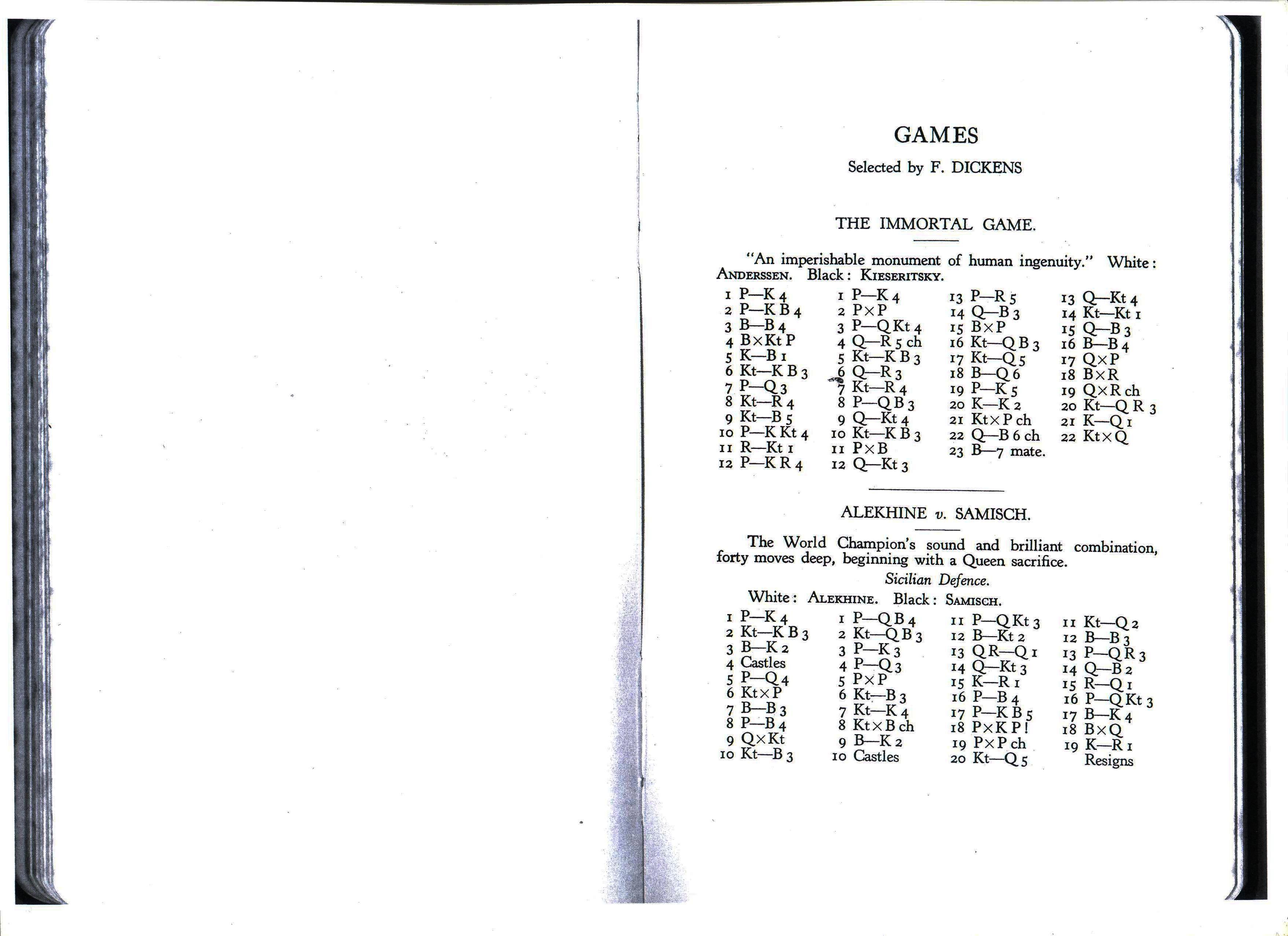
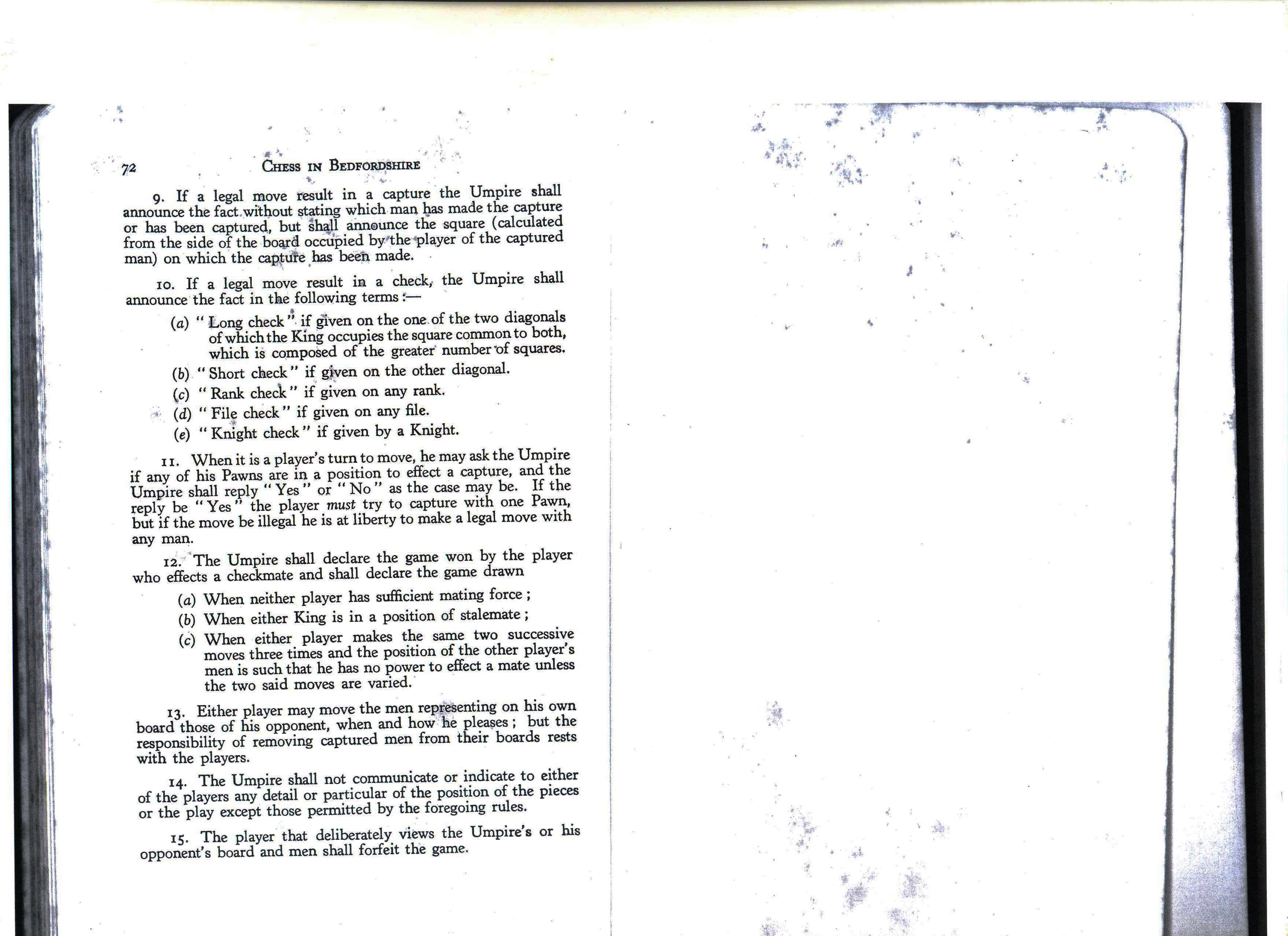
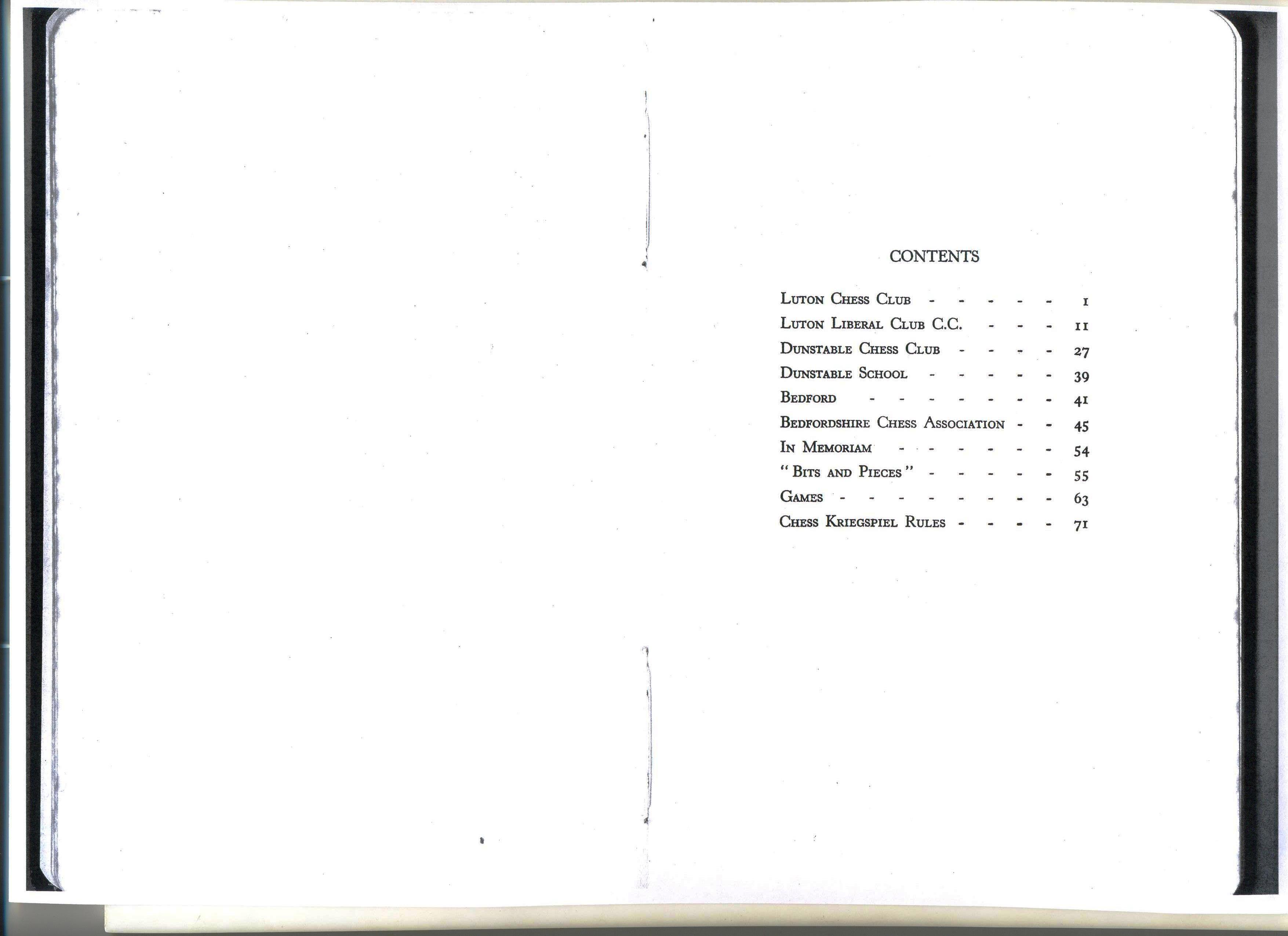
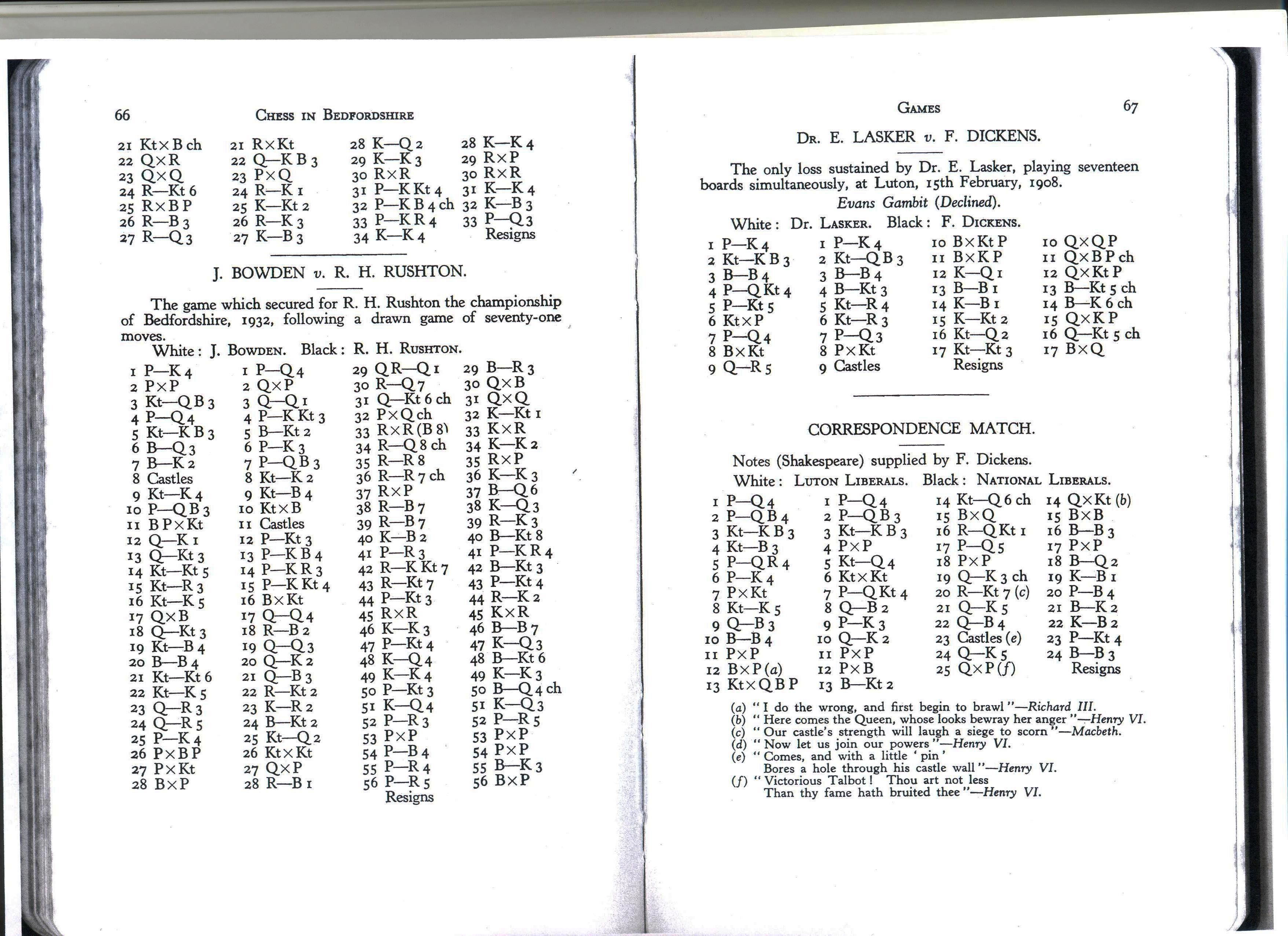
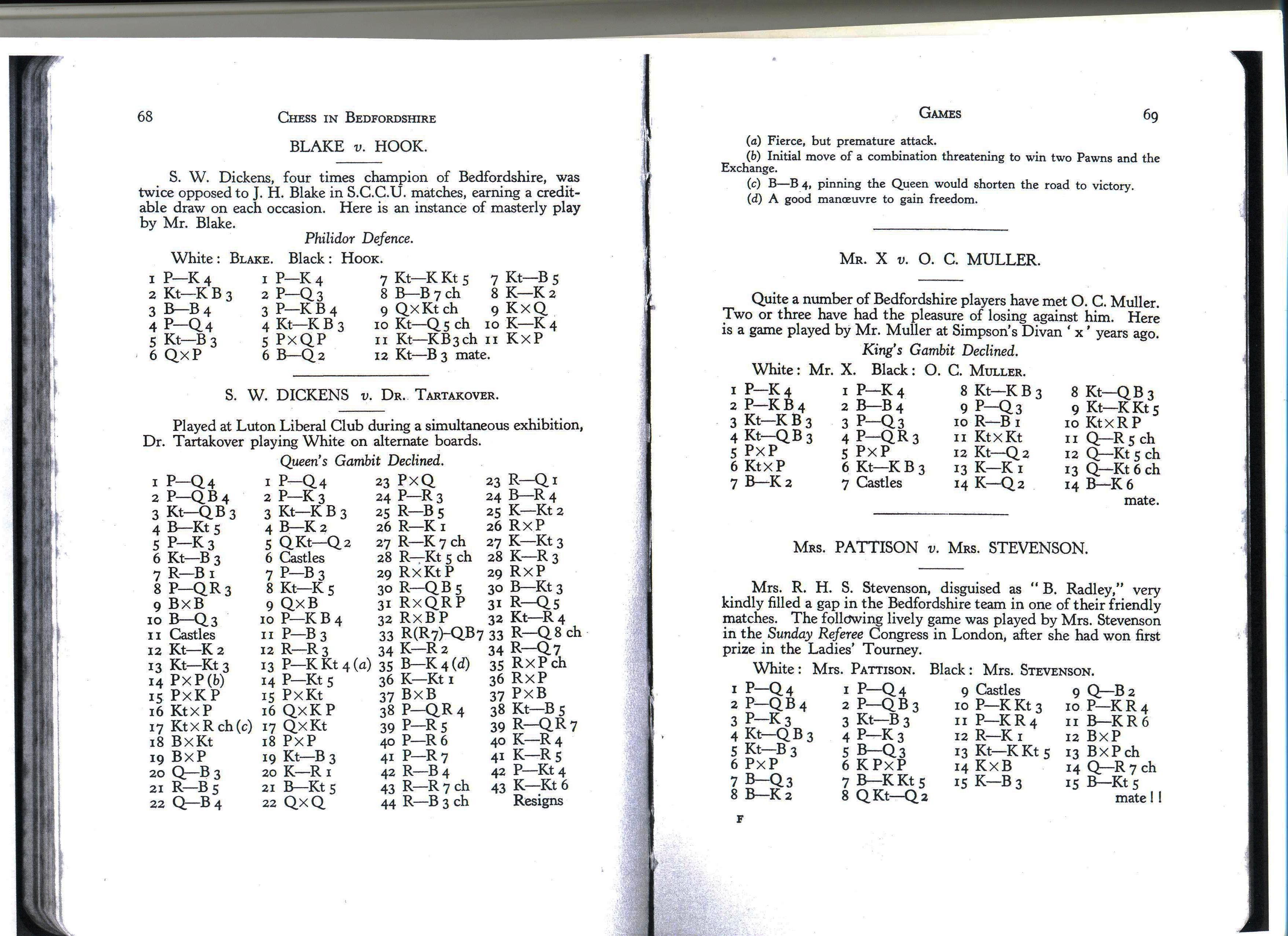
In this post you can find the 1933 classic Chess in Bedfordshire (F.Dickens & G.L White: Leeds Whitehead & Miller). It’s a rare book but can be found in Bedford library. When I can free up my work schedule I will write about it in more detail as the (heavily flawed) approach by the authors, which G.L. White explains in the Foreword has a number of significant historiographical ramifications; with the exception of a brief mention on page 42, they have -believe it or not- omitted Bedfordshire’s first internationally recognized player…more on that when I can find the time, until then enjoy reading… .
a b c d e f g h i j k l m n o p q r s t u v w x y z za zb zc zd ze zf zg zh zi zj zk zl zm zn

Read Full Post »

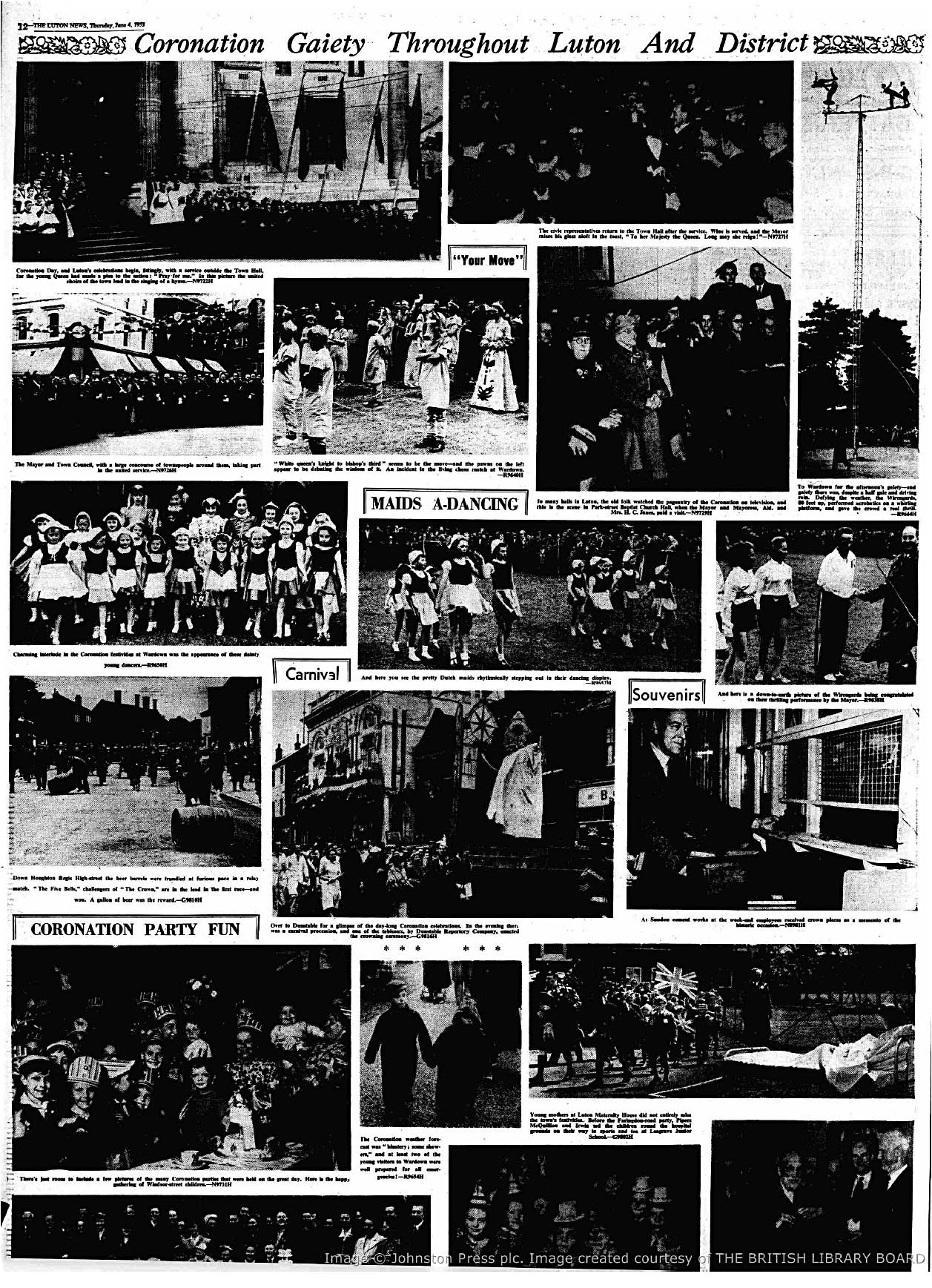
I have found an image of the ‘living game of chess’ played to celebrate the coronation of Queen Elizabeth II in Wardown Park, Luton. It is described in detail in the following post (https://mccreadyandchess.com/2015/06/05/bedfordshire-chess-in-the-70s-its-past-and-its-future/).

Here it is, you may click on the image for a better view.

coro

Second row, second image from the left.


Read Full Post »

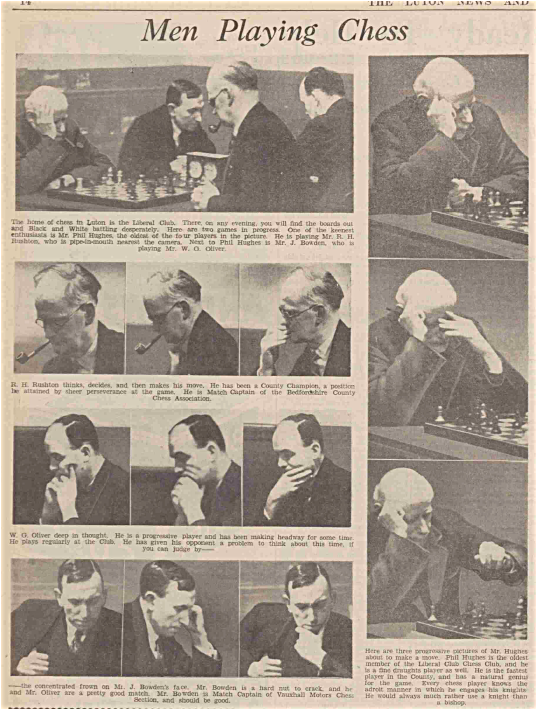
The excerpt below taken from The Luton News and Bedfordshire Advertiser, Thursday Jan 20th 1939 depicts what the general public (and its journalists) still consider chess to be, that being a genteel affair played by the patriarchs of society, as the misinformed BBC recently confirmed: http://www.bbc.com/sport/0/olympics/33109003

luton1

It is no longer 1939: this is how chess is presented by those within the game in 2015.

What a contrast indeed. Unfortunately for you younger guys, the cute Sopiko Gurumishvili is coupled to Dutch hipster and superstar GM Anish Giri. She’s also rated around the 2400 mark, so you’ll have trouble impressing her over the board also.

That aside Chess24.com offers the most interactive chess platform on-line and is so far ahead of everything else that endless hours of entertainment await you, a far cry from our bygone days indeed… .
Read Full Post »

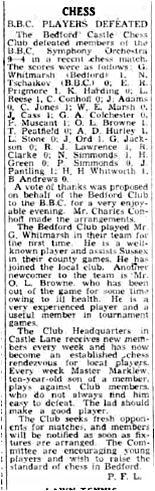
In 1944, the newly formed Bedford Castle Chess Club played a match against the BBC Symphony Orchestra and beat them, see below for details: bedsv4 bedsv3 Next up ISIS, or should I say ‘The ISIS’, an old rival. What is interesting to note from the following excerpt is that more information is provided about the mystery chess player who spent time in a concentration camp where he used bread to make his pieces and pawns according to a previous report:bedsv2bedsv1Here is another account of our mystery man. (https://mccreadyandchess.com/2015/06/09/what-to-do-in-a-concentration-camp/)

The old 'ISIS' Chess Club, Bedford.

The old ‘ISIS’ Chess Club, Bedford.

Read Full Post »

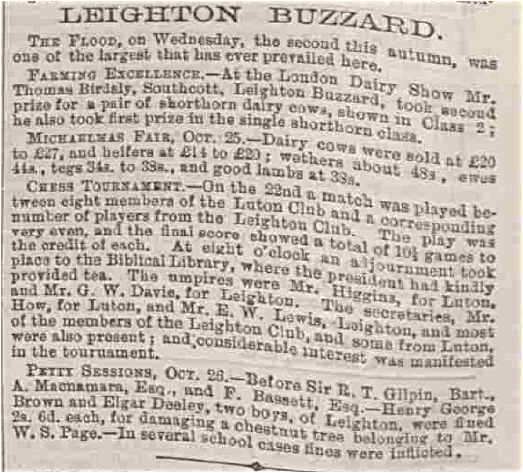
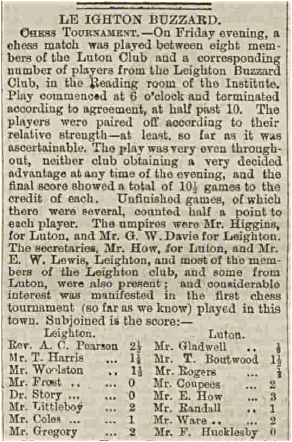
Those of you outside of Bedfordshire perhaps know Leighton Buzzard from its connection with the great train robbery of 63. That caper aside, the quiet Bedfordshire town has been known to become chess champions of Bedfordshire on more than one occasion. Below can be found evidence that in Victorian times, it had a thriving chess club too, drawing with Luton on one occasion. Note that the term ‘Arbiter’ is not used by the reporter in Fig. 4, ‘Umpire’ (a cricketing term) is used instead.

lei2

Fig. 1

lei1

Fig. 2 (Don’t go damaging any chestnut trees now!)

Here, the match is described in more detail locally.

leig4

Fig. 3

leig3

Fig. 4 

Read Full Post »

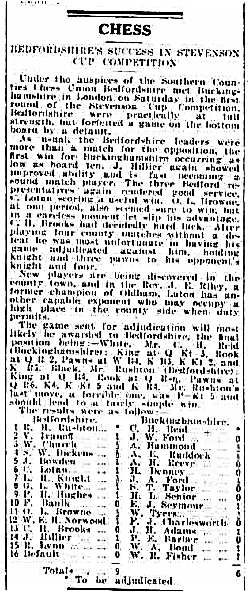
Some rather blasé journalism can be found in ‘A Chess Move’, which I feel gives an unfair account of the state of chess in Bedford at the time. If you’ve read ‘Chess in Bedfordshire’ (1933), you will most likely suspect that the author of ‘A Chess Move’ is following the book without performing adequate research.  Please click on the images for a better view.

beds1

beds2

The aforementioned Stevenson Cup and the match played that season can be found here:

beds3

beds4

The player on board 2 Ivanoff is mentioned by G.H. Diggle in Newsflash in Feb. 83. Edward Winter, has added it to his wonderful site on the following page, http://www.chesshistory.com/winter/winter85.html, scroll down to 7223.

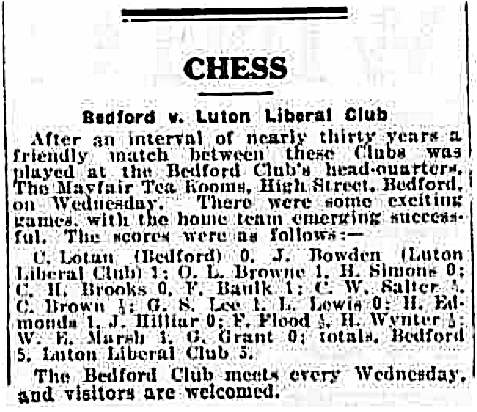
Bedford weren’t as weak as was suggested in ‘A Chess Move’, is made out as is shown below.

beds6

beds5

Read Full Post »

Here’s a snippet from The Beds Advertiser and Luton Times April 29th, 1910

f.d

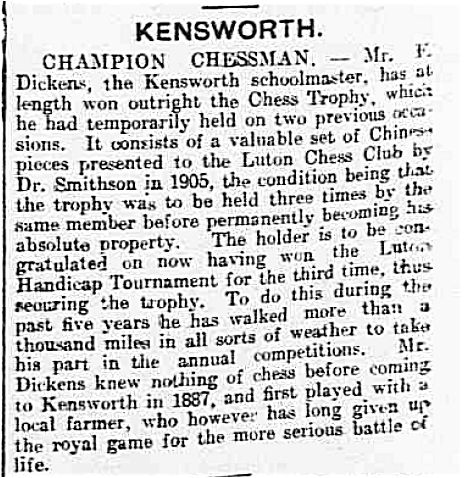
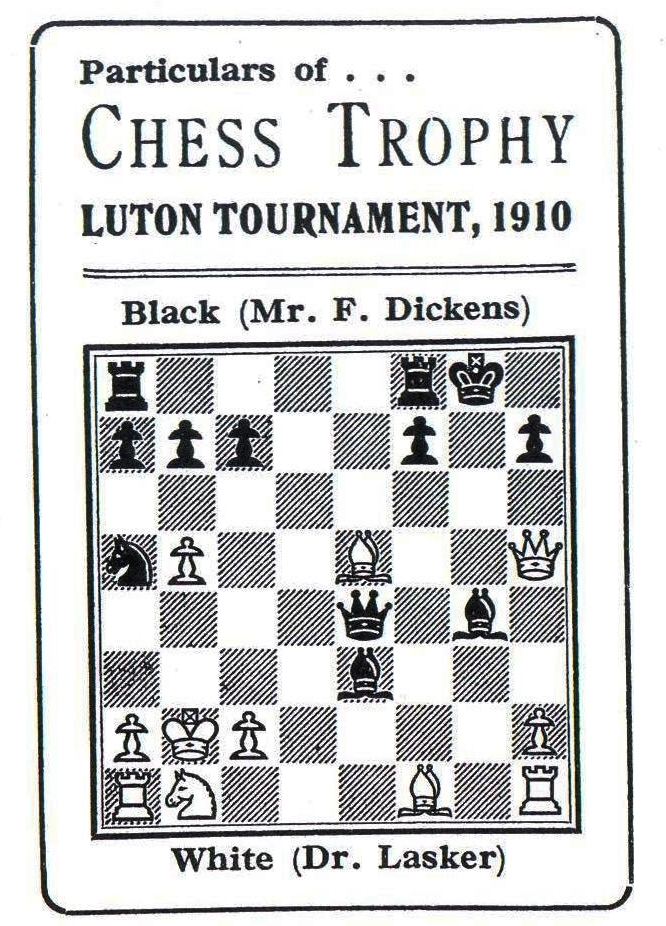
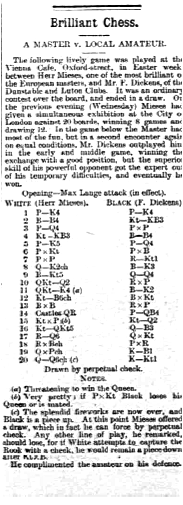
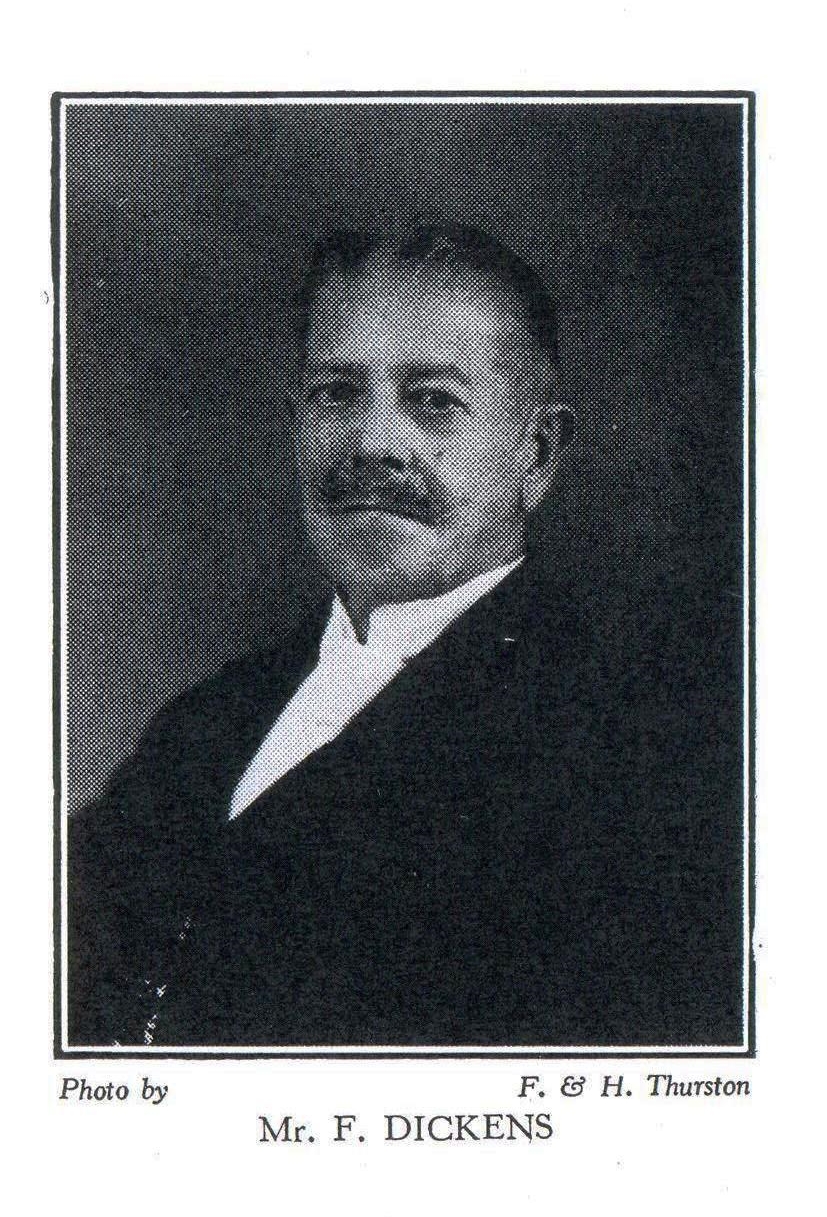
Those of us local, with an interest in our history know just how important author F.Dickens was. Did the man who trounced Lasker (albeit in a simul) and had Jacques Meises scrambling for a draw really learn how to play chess as an adult from a local farmer? I wonder if the comments reported above really are true? There is no word on who the reporter is and how he acquired such ‘information’.

e-crop

Chess in Bedfordshire (F.Dickens & G.L. White, Leeds 1933), pg.3

It should be noted that the Luton/Dunstable chess scene was exceptionally strong at that time, drawing in the world’s greatest players for simuls with ease on a regular basis, such as Blackburne the great simul master who was unable to beat F.Dickens. To go from a non-playing adult to top board in a blisteringly strong Luton side is possible but improbable unless you are exceptionally talented.

f-crop

dickens 2

dickens meisis

Note the mis-reportage in the final paragraph (above the game)

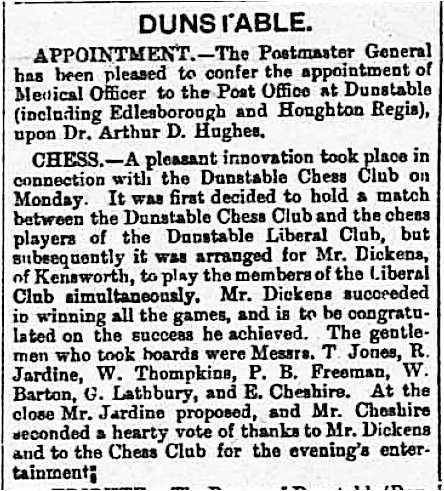
Here’s another snippet, this time from The Bedfordshire Advertiser Dec 9th, 1904.

dunst

d-crop

zf-crop

Advice from F.Dickens on how to play the game of chess.

zg-crop

Read Full Post »

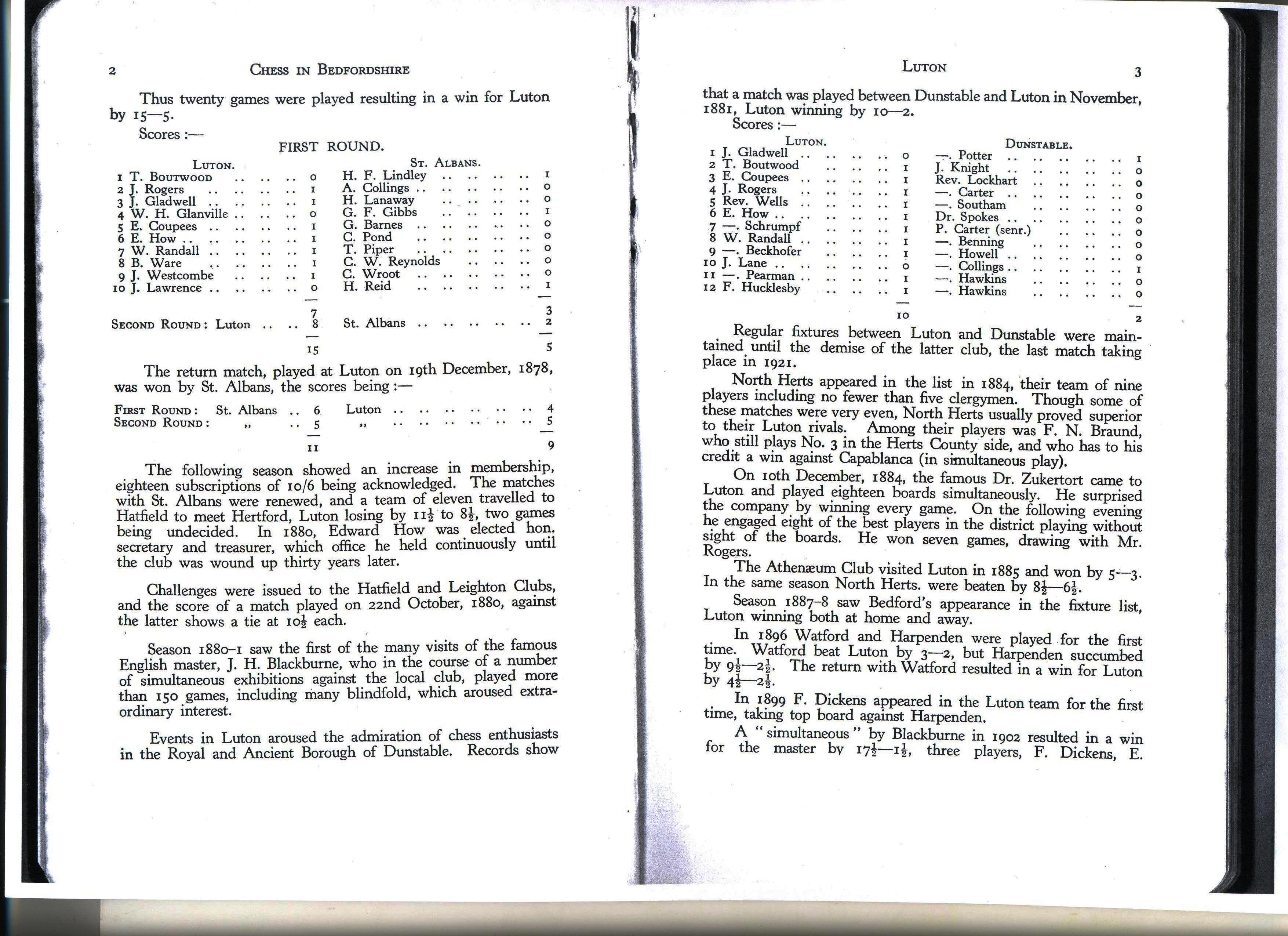
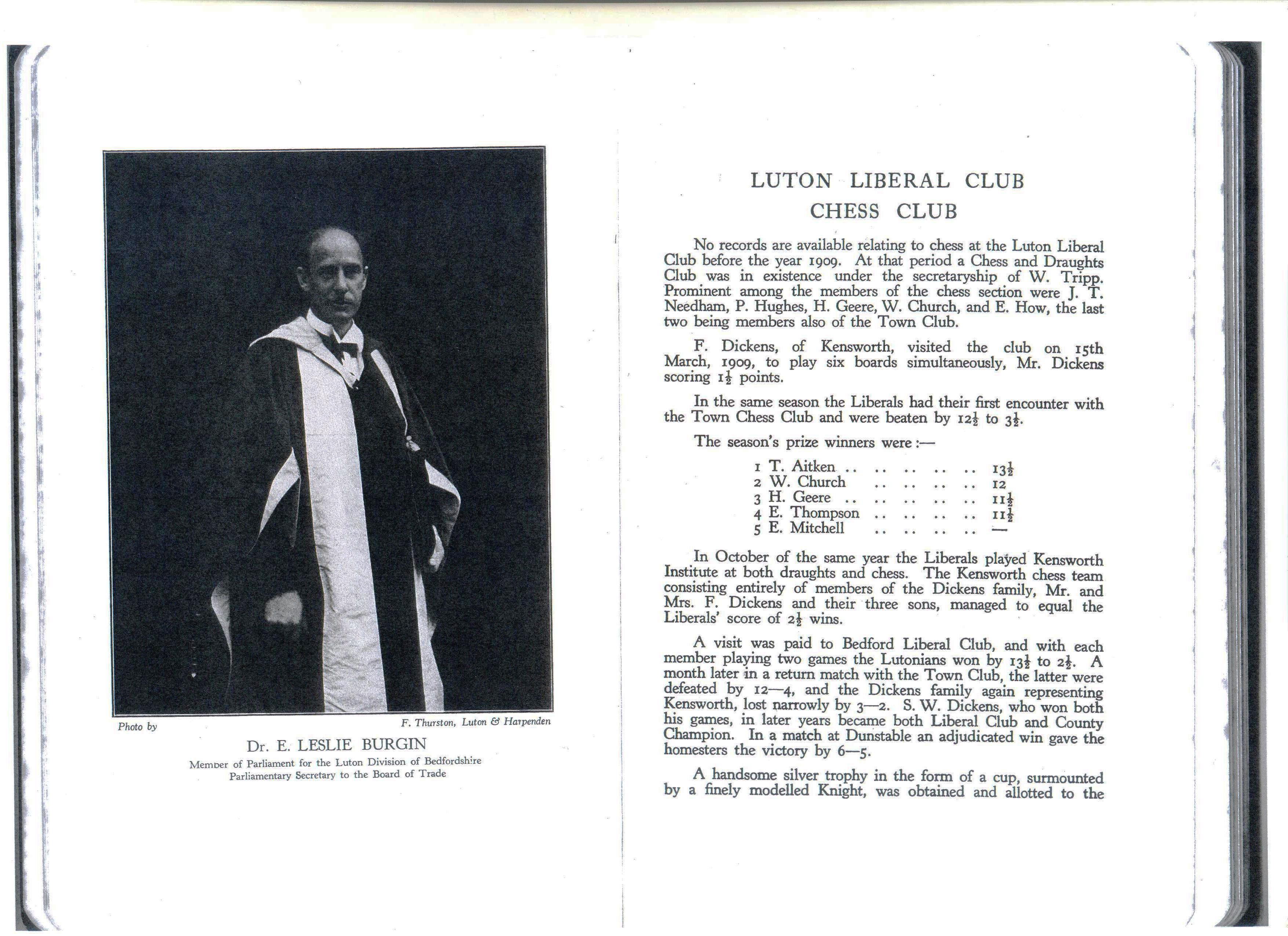
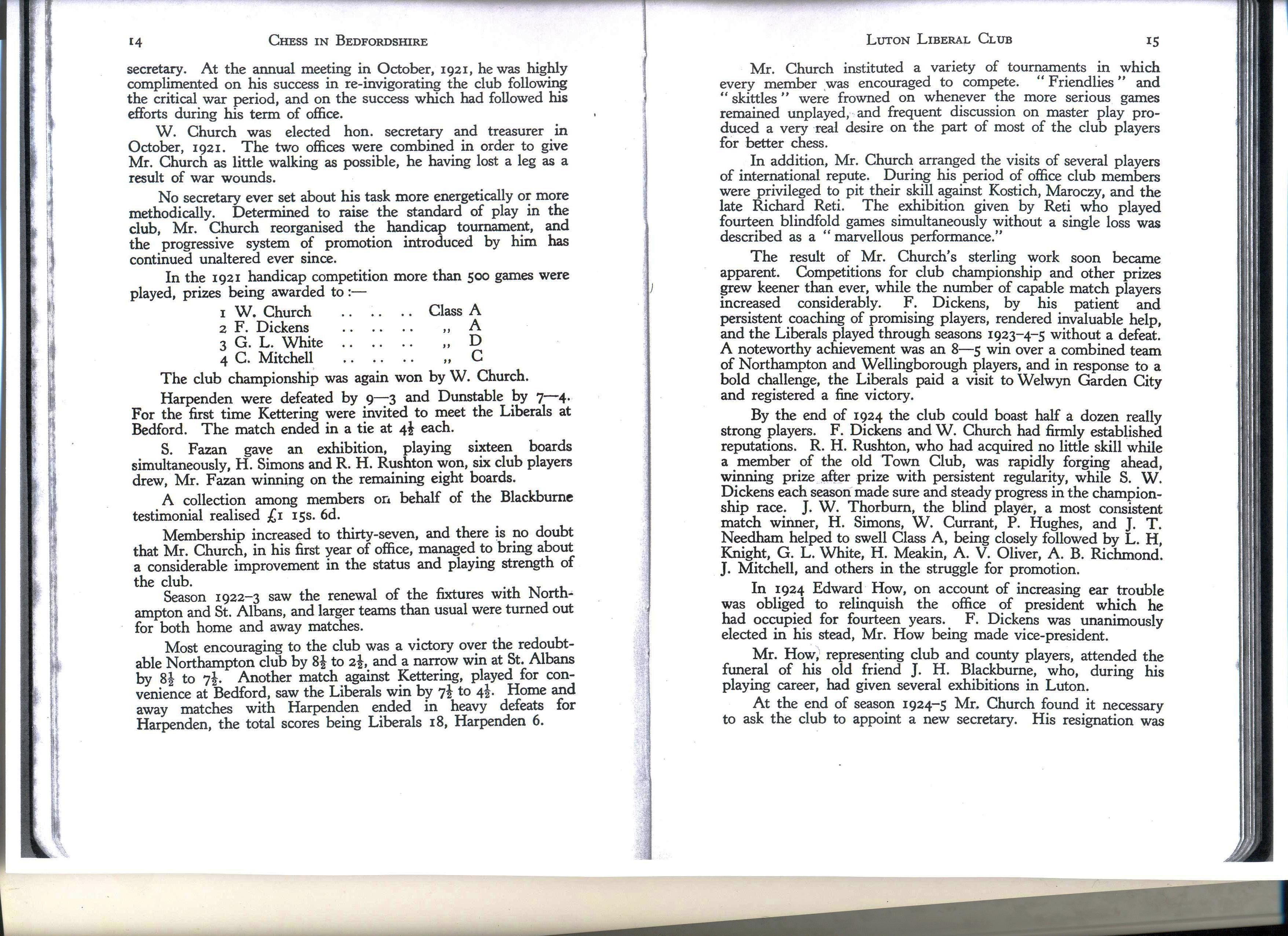
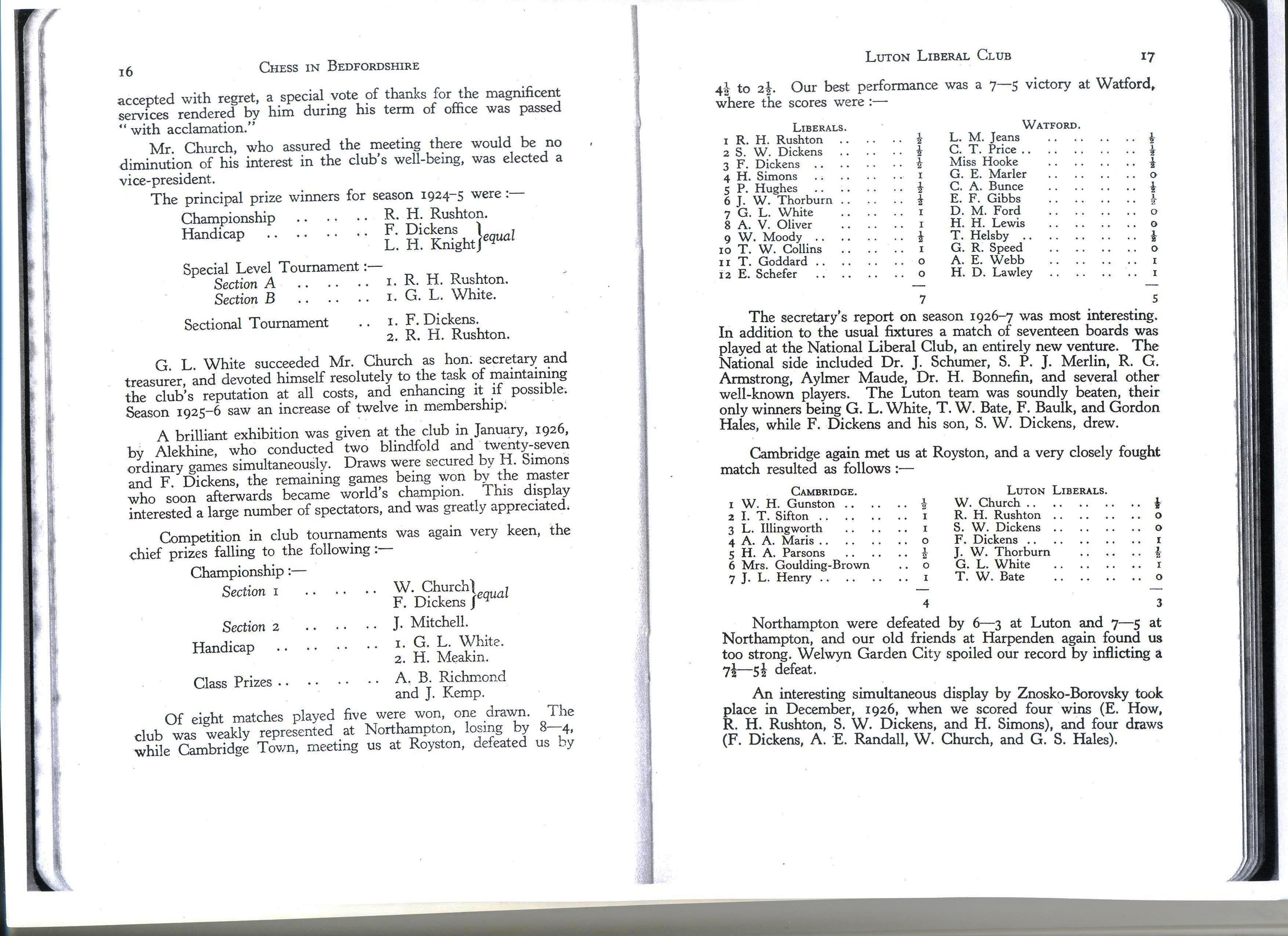
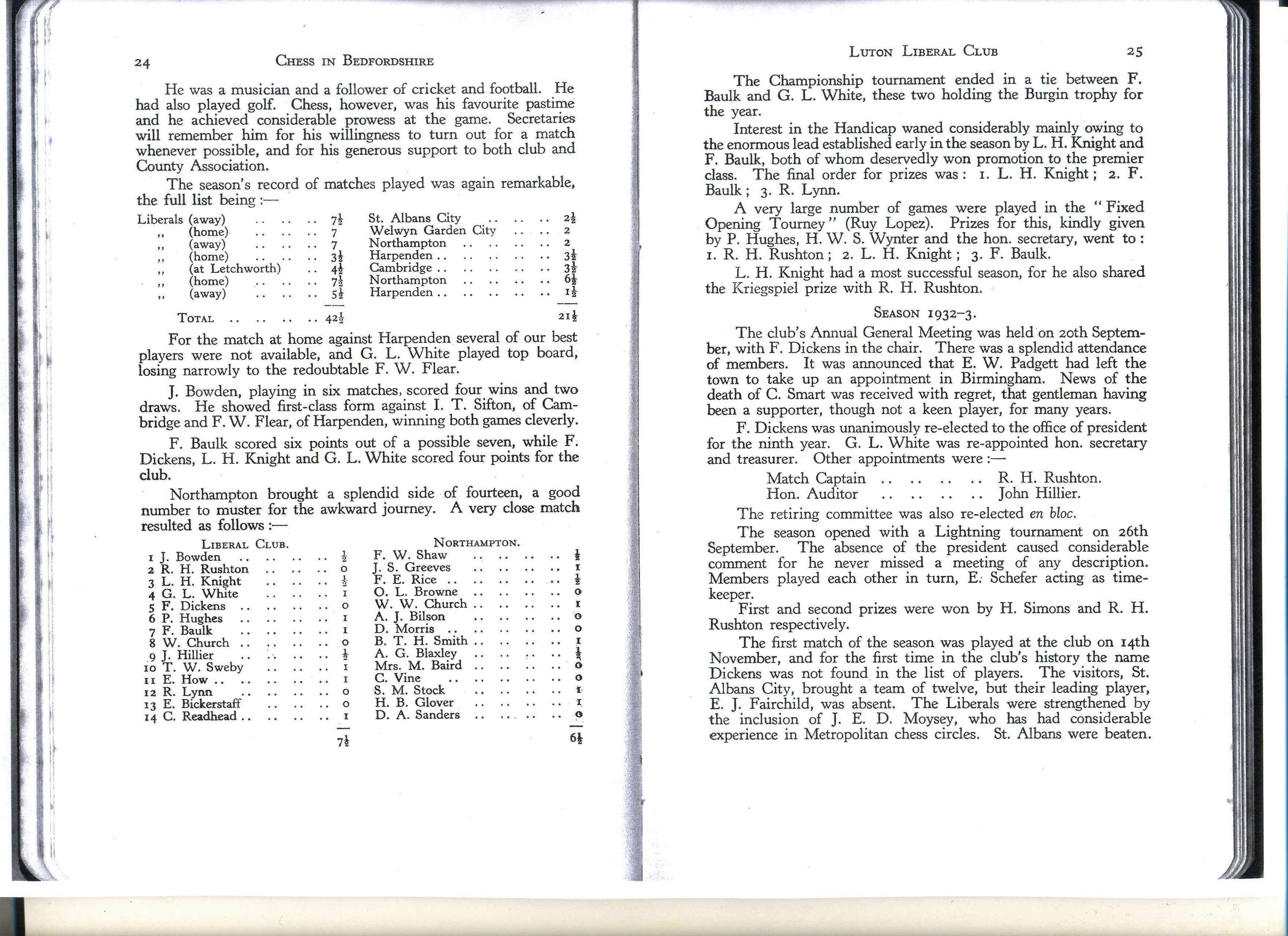
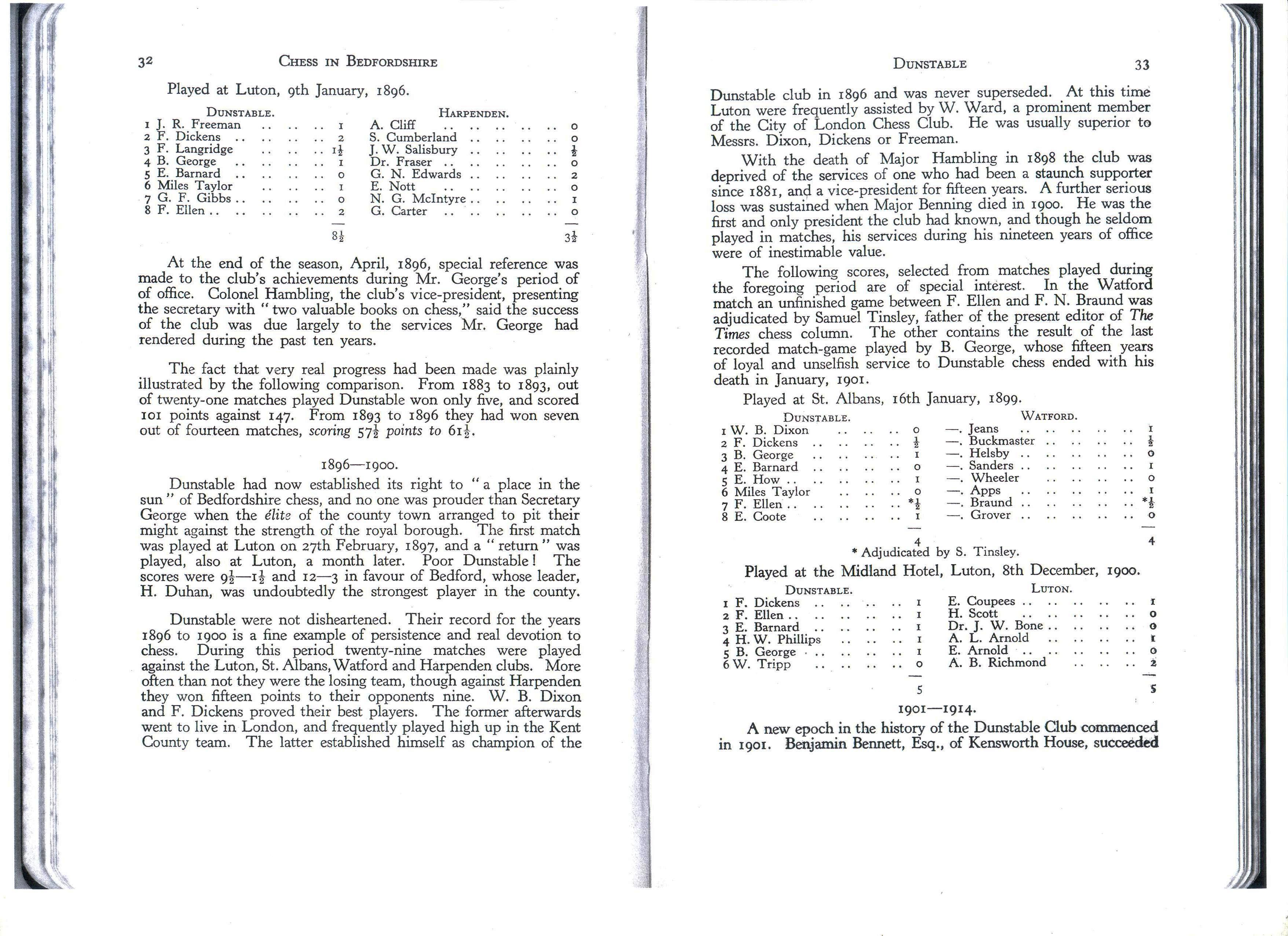
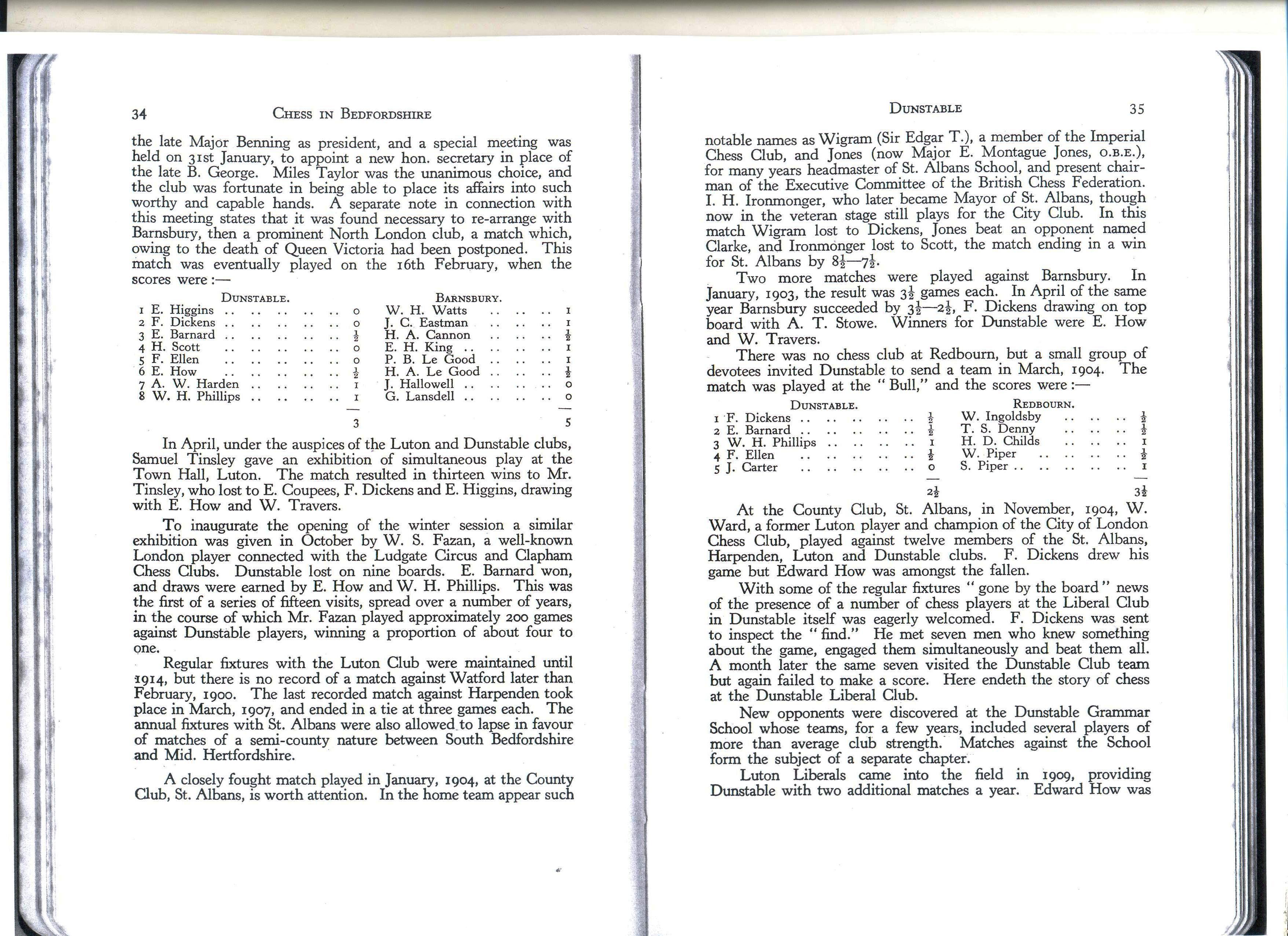
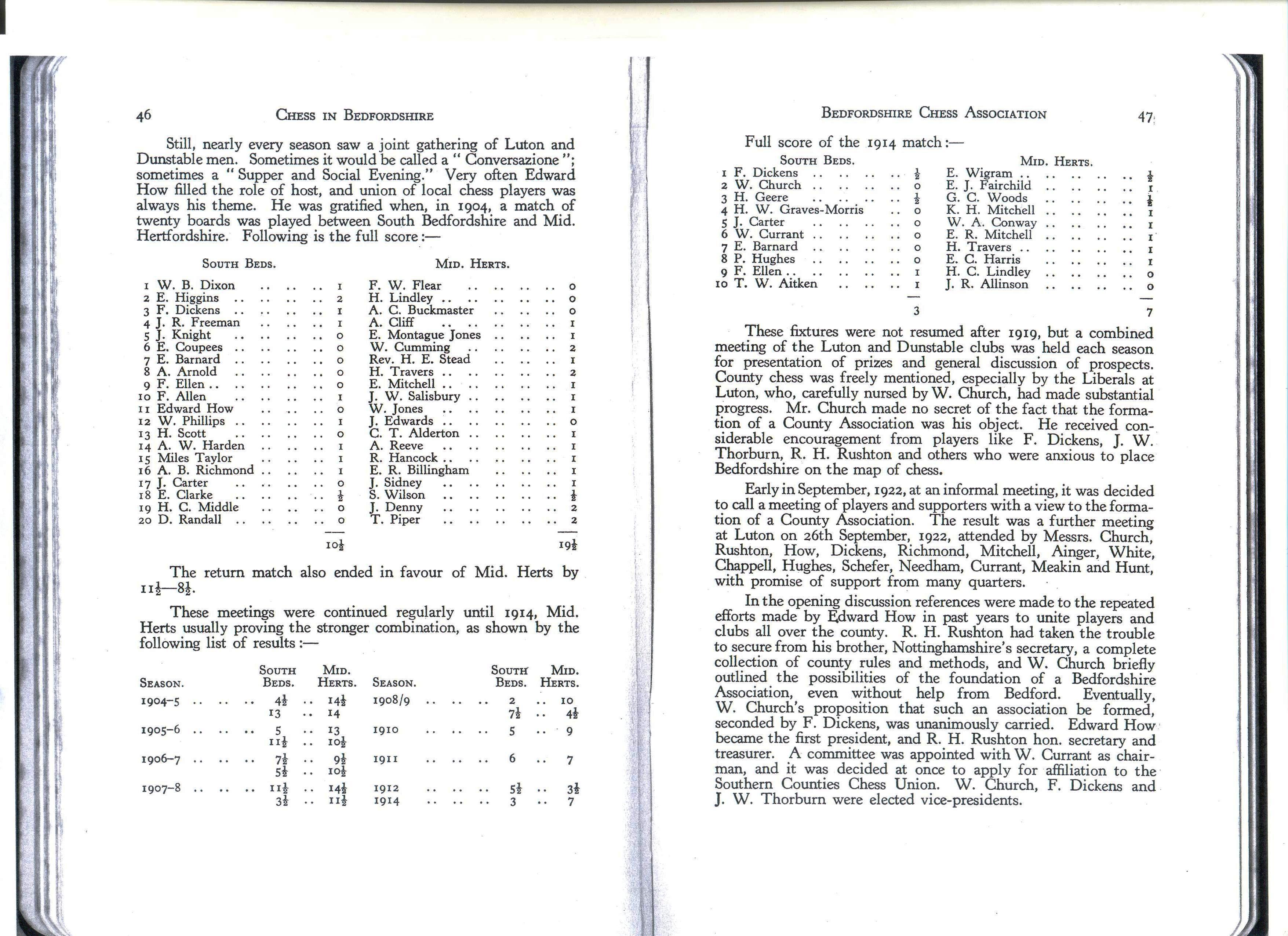
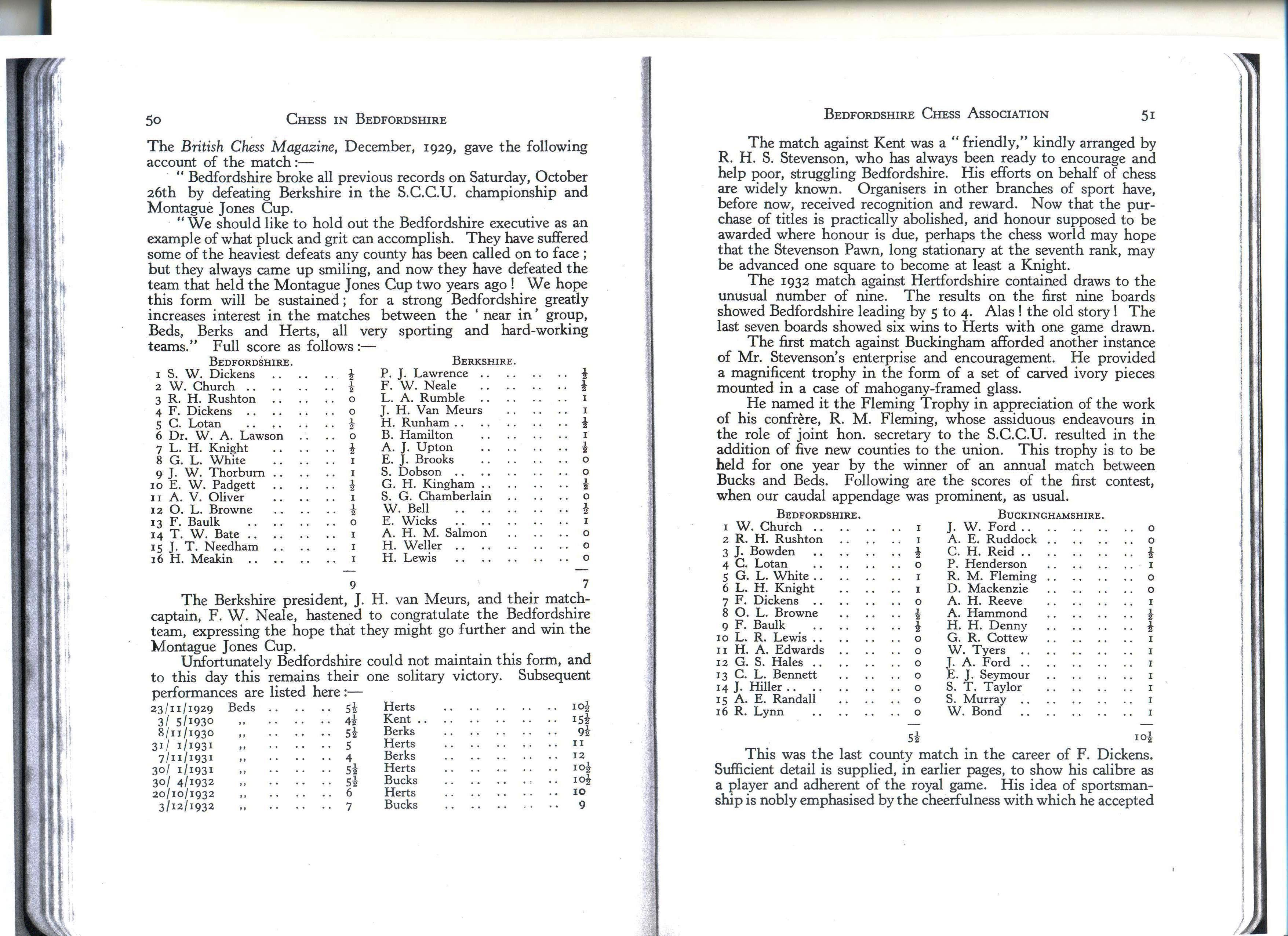
Bedfordshire’s very first county matches have been documented in the book Chess in Bedfordshire, F.Dickens and G.L.White (Leeds 1933) see below:

za zbzc zd

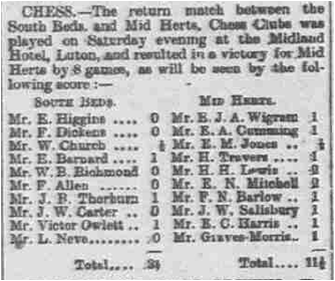
For detail, I have added newspaper reports detailing some of the matches described.

1908 return match Beds Advertiser and Luton Times Fri Mar20

1908 return match Beds Advertiser and Luton Times Fri Mar, 20

The Bedfordshire Advertiser  Friday March 11th 1904

The Bedfordshire Advertiser Friday March 11th, 1904

The Beds Advertiser and Luton Times Feb 22nd. 1907

The Beds Advertiser and Luton Times Feb 22nd. 1907

bed008

Old Bedford Road, Luton

Read Full Post »

« Newer Posts - Older Posts »