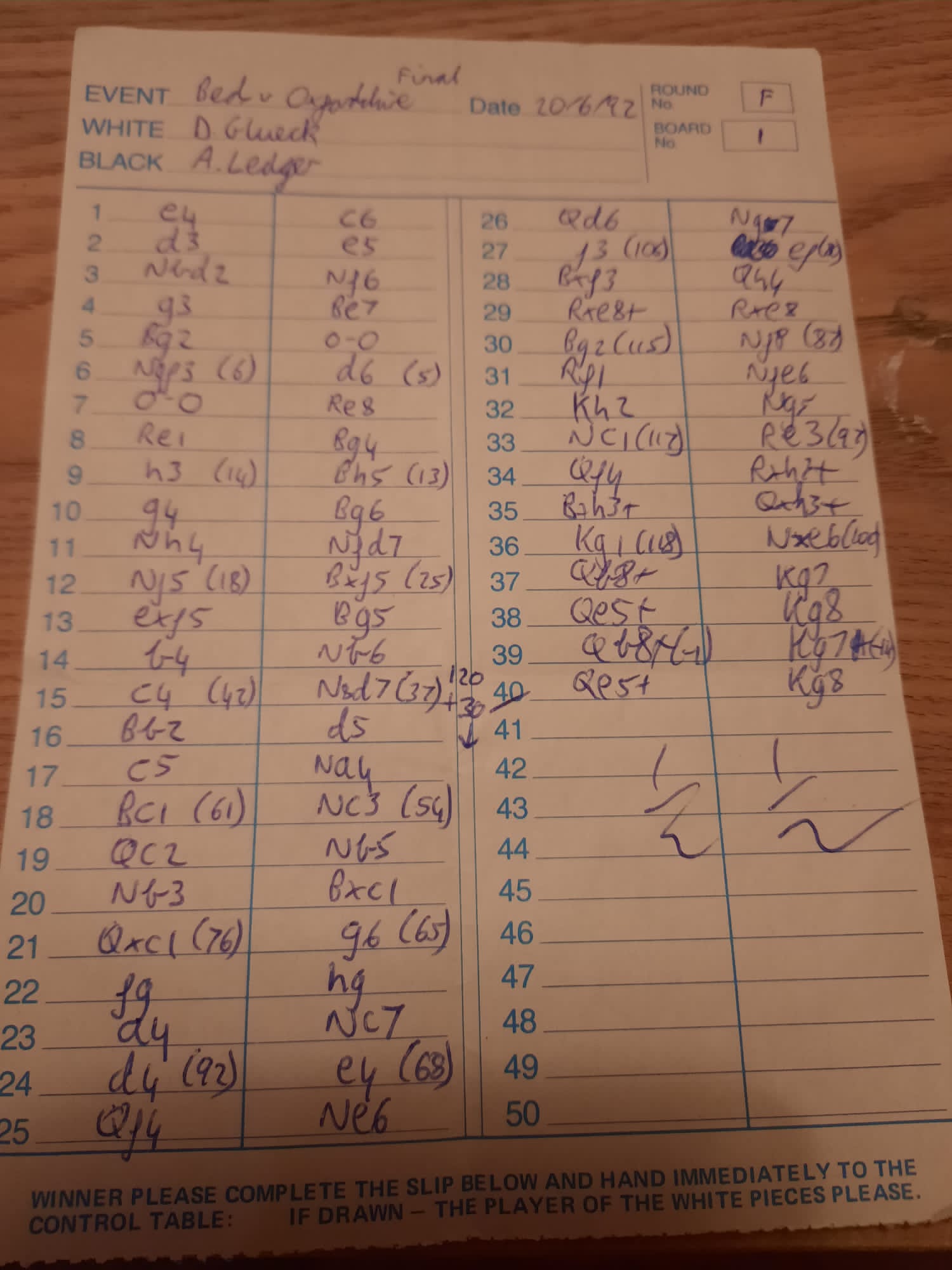
When the county first team won the minor section of the national county championships on June 20th 1992, IM Andy Ledger was on board 1 for our county. Courtesy of former team mate and county captain Kevin Williamson, I have procured his game as well as information concerning his opponent. The source can be found here 1, the scoresheet is below, it’s quite an interesting game.
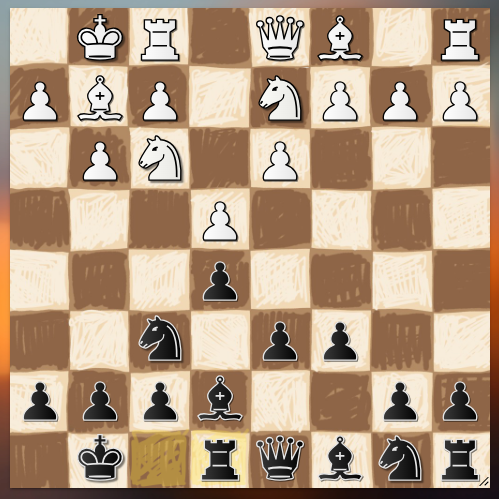
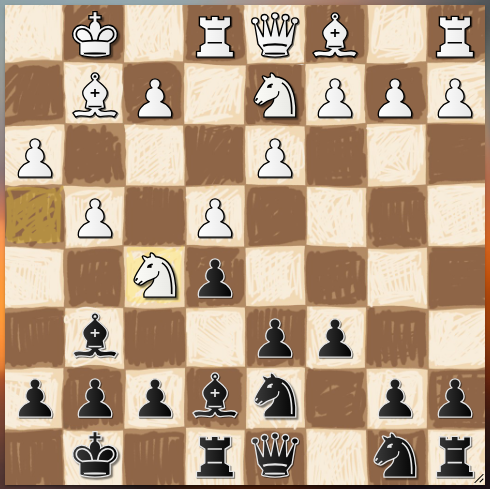
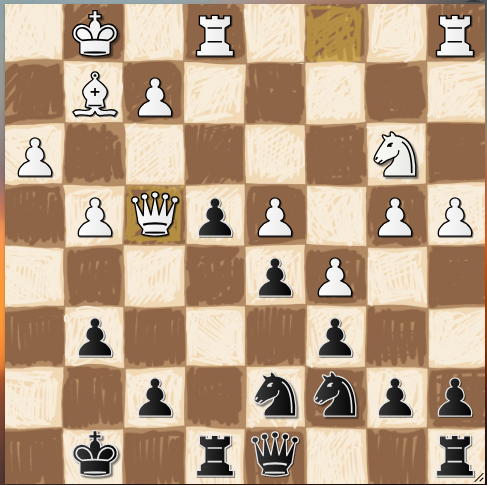
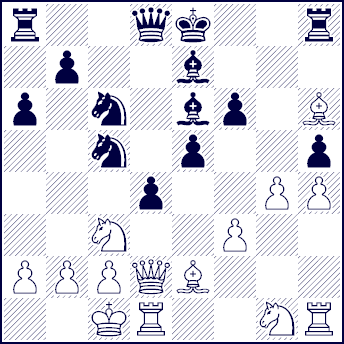
Let’s have a brief overview of a few positions:
We have the Breyer variation with e5 (not the main response).
After 7. …Re8, not your average Caro-Kann position.
Here Andy plays 12. ….Bxf5. There’s no immediate threat since the position is closed but definitely understandable as who would want that Knight to sit there on f5?
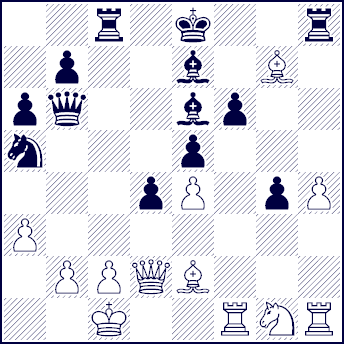
18. … Nc3. This lone attacker isn’t likely to win the game but is, perhaps, eyeing up d4 after being shunted from b6.
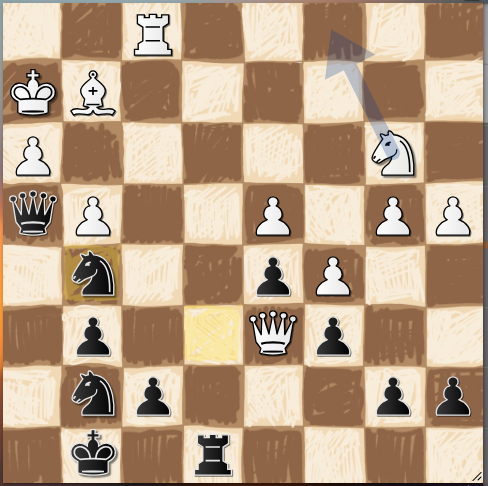
Andy plays 28. … Qh4. I’ve run it through the engines, which assess the position as -2.2, and yes his opponent’s next two moves are computer approved.
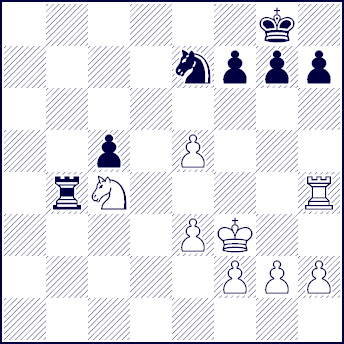
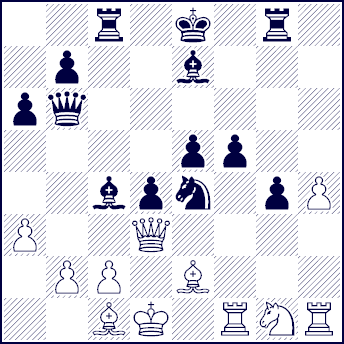
After 32. Ng5, the LiChess engine I am using assesses the position as -3.0 and recommends 33, Nc1 (which Andy’s opponent plays)…thankfully white is about to go awry.
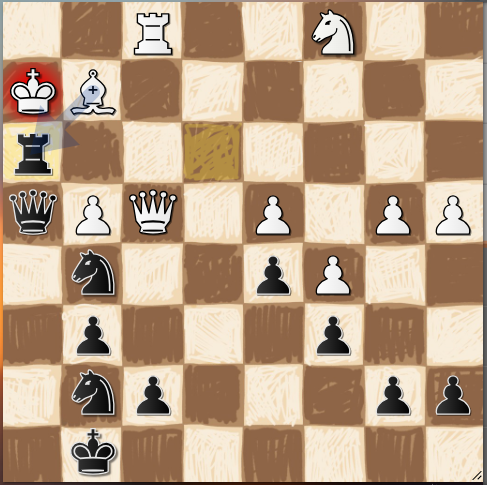
Lichess thinks white slipped up with 34. Qf4 and that 34. …Rxh3 secures the draw. Hey presto, a draw by perpetual check is indeed soon to follow.
“The beast lives unhistorically; for it ‘goes into’ the present, like a number, without leaving any curious remainder.”
― Friedrich Nietzsche, On the advantage and disadvantage of history for life
Old Tom Sweby’s former playing partner, friend, and team mate Dennis Victor Mardle, was the first from Bedfordshire to represent England, and the only from Luton. Even though William Ward, who participated in the (1896-1911) Anglo-American cable matches numerous times did indeed play for Luton before moving to London, he is in fact from Abotts Langley, Hertfordshire.
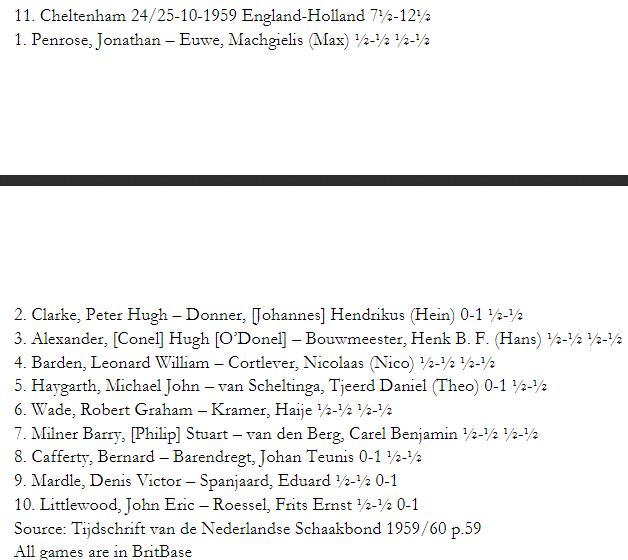
Once again I am indebted to John Saunders and his excellent site Britbase for the latest discovery, and indeed it does appear that on the back of Mardle’s success on the circuit in 59, come late October, he was asked to step up to the mark and play for England in a match against the Dutch, please see below:
You may find the link here 1. Please note that Dennis Mardle is well documented on this site and for further information, please follow the instructions below.
Go to Categories on the right-hand side of the site, select the option highlighted below:
Past his prime, but not by much in terms of his results, Mr. William Ward (previously of Luton) has had his 1911 City of London Championship success, his sixth at that club, documented on the glorious website Britbase, you can find the exact page here1. For those of you who do not know who he was, please look to the right of my site, click on Category History of Bedfordshire Chess on my site (see below: highlighted option).
Back in the 90s the word on the street across Bedfordshire was that Luton’s most handsome chess player was myself and that Luton’s best player was Andrew Perkins. This is probably true (though unconfirmed). However, I can confirm Mr. Perkins appears in the 1973 BCF rating list, which at the very least shows how strong he was in his youth:
This tells us there were 21 players rated 187 in 1973.
I believe this tells us his previous rating was 180.
More than a few players who have emerged from the Bedfordshire Chess League have gone onto bigger and better things, GM James Plaskett being the most obvious example. That’s not exactly breaking news. But what about those who remained registered as a Bedfordshire based player and also achieved greatness in the modern era? Has anyone done anything of note against the very best? Oh yes indeedy.
So let’s take it from the top then. In terms of results, there is one that stands above all others. GM Michael Adams is considered to be the strongest player England has ever produced, usually because he’s won the British Championships more than anyone else (8 times), achieved a higher rating than anyone else (ELO 2761), was number 4 in the world for quite some time, and in 2004 reached the final of the FIDE World Championships, narrowly losing to Uzbek Rustam Kasimdhanov. What results do our players have against him? Has England’s very best ever lost to anyone in our league?
One GM Plaskett did beat him in a rapid in Leeds, 1986 but James wasn’t registered in our league then and had long since left it.
Two IM Andrew Ledger, whilst playing for Bedford, very nearly did in Hitchin 1990 round 2. I watched that game unfold closely. Andy was a piece up but fell into time trouble and looked visibly stressed from it to put it mildly. Sadly for us, he fell for a very clever back rank mate and lost the game.
Three FM Gary Kenworthy did beat him in a quick play in Spalding (location may be incorrect) 92. His comments on that game -courtesy of our online chat- are as follows: ‘…the won the world blitz title the month before -current BCM cover-I used the BCM to rest my scoresheet for recording the game -the title “mega bucks Mickey” he was 263 BCF, I was 213 BCF, so a rating more than 40 point difference – hence I only got +90 i. e. 303 BCF points not 313 BCF, next round – final round, I played GM J D M Nunn who was upfloated to me…he was in the world’s top 20’. Gary was participating in our league at the time for Milton Keynes, and so in terms of achievements for someone registered in our league, I don’t believe this can be beaten. I am sorry to inform you that at the time of writing Gary is unable to locate the game score. Should that change and it falls into my hands, I shall post it here.
Let’s go back to when chess exploded in Bedfordshire as it did across the rest of our beloved nation. Who were our top three players that decade? And just how good were they then?
In @ number 1IM Sergio Mariotti(Vauxhall Luton)
According to Bedfordshire’s Paul Habershon, Sergio played in our Division 2 in the 1970-71 season. His brother Paolo also played in our league whilst he worked as an engineer in Dunstable. Sergio was a strong IM whilst he played in our league and became the first titled player to grace us with his presence. His tournament performances whilst in England can be found on Britbase here 1 showing he was rated ELO2520/240BCF that year. However, it should be pointed out that in the 1970/71 Grading List he is rated as 230, and ranked 3rd in the country.
In 1974 he went on to become Italy’s first GM, one year later in Milan he held world champion Karpov to a draw most impressively.2
I sent him an email some time back asking him what he remembered about his time in Bedfordshire. Sergio informed me that he was no longer able to remember anything about his life before his heart operation. None of his games in our league have survived.
Sergio Mariotti 1976.
In @ number 2 James Plaskett(B.M.S)
James Plaskett was a pupil at Bedford Modern School and showed very serious talent there. So much so that when he entered the British Championship in Ayr 78 he went and finished 2nd! He drew with the winner Jonathan Speelman and even beat former British champion Jonathan Mestel along the way 3. This is the first instance of a player based in Bedfordshire at the time defeating a former British champion. By the end of the 70s James was still untitled but winning tournaments often and ranked 14th in the country. Here 4 he is rated at ELO 2410 and retained a presence in Bedfordshire still, entering local tournaments and performing simuls according to Tom Sweby.
James left our county around the end of the decade and went onto bigger and better things. In 1981 he became an IM, then in 1985 a GM. James went on to become British Champion in 1990, becoming the only player ever to emerge from our county to do so. He played amongst the very best in the world throughout the 80s and informed me that he has plus scores against the following GMs: Plus 6 Vs Wells, Plus 2 Vs Short, Plus 2 Vs Anand, Plus 1 Vs Vaganian, Plus 1 Vs Larsen, Plus 1 Vs Kamsky, Plus 1 Vs Ivkov, Plus 1 vs Sax. A most impressive win against Anand can be found here 5
Mr. Plaskett in his Bedfordshire days.
In @ number 3Michael MacDonald-Ross(Bletchley/Milton Keynes)
I asked GM Plaskett who was the strongest player he came up against in the Beds league and he informed me it was Michael MacDonald-Ross, who for the most part played for Milton Keynes (as I remember). Obtaining information on Michael has been more difficult than I anticipated, however, he can be found participating in tournaments such as the Lloyds Bank Masters in the late 70s, which show him as rated ELO 2265 6. In his youth he encountered Luton’s hotshot from the 50’s Dennis Victor Mardle at the 1965 British Championship, the result being a draw 7. Some eleven years later Michael defeated Rising star Murray Chandler at the British 8. Formidable yes and agreed upon as one of the very strongest in our league that decade by many who faced him.
A recent picture of Michael Macdonald-Ross.
So there you have it, comparative strengths in the 70s discussed. I put quite a bit more into that than it may appear and had to consult several prominent figures within our county to get answers, so I think I got it spot on. Many thanks to Paul Habershon and GM James Plaskett for their assistance.
Former Luton Grammar school pupil Dennis Victor Mardle, by far Tom Sweby’s favourite topic and former playing partner, who once contracted Polio at Luton Town football ground after he drank from a cracked cup whilst 15, only to receive a C. B. E in the 1988 New Year’s Honour’s list for his work on the very same illness decades later, won several national tournaments in the late 50’s and early 60’s, and made a name for himself on the British chess circuit. Once a stalwart at Luton Chess Club he played at Hastings in 64/65, where he met a certain Paul Keres, a certain Svetor Gligoric, and the then current women’s world champion Nona Gaprindashvili.
I don’t want to add diagrams or any annotation to any games because Mardle’s performance in the tournament was described as blunder prone, and if you look at his games, that was the case. But it is worth drawing attention to the fact Mardle played Keres as it was the first instance of a former Bedfordshire based player coming up against truly world class opposition since J. M Craddock dispatched of Mir. Sultan Khan some 30 years or so previously…it’s just a shame he wasn’t at his best and was instead far from it.
‘…most information about the past has never been recorded and most of the rest was evanescent…no account of the past can recover the past because the past was not an account but events, situations, etc. As the past has gone no account can ever be checked against it but only against other accounts….there is no proper history that, deep down, allows us to check all other accounts against it, there is no fundamentally correct text which other interpretations are just variations; variations are all there are…no matter how verifiable, how widely accepted or checkable, history remains inevitably a personal construct, the manifestation of the historian’s perspective as a narrative…the historians viewpoint and predilections will shape the choice of historical materials…’
K. Jenkins, Re-thinking History pg. 14
The Southern Counties Chess Union – a retrospective, pg. 135 Anthony Fulton
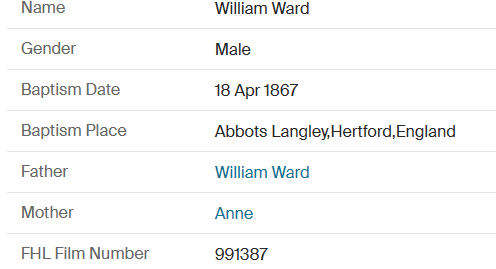
This concise summarization concerning the formation of our county association comes from the 1933 publication ‘Chess in Bedfordshire’ thus is consistent with it. You can find it here1. And although some mention of club matches are made in the following pages of Fulton’s publication, and their rather sporadic ad-hoc nature eluded to, it does not delve further into them, and does not discuss the historical significance they may, or may not, have had before our league established itself, and our own league was put into play. But I have already done that with a certain match in particular2. I do, however, have minor corrections to add. Since I wrote that post, I have more concrete evidence of Ward’s birthplace and baptism.
The date of his baptism.
The census from 1871 shows he was still in Abbots Langley. In the following censes he can be found in King’s Langley, just outside Luton. In the 1891 census he is still in King’s Langley and in the 1901 census, he is shown as a resident of Luton. (many thanks to Richard James for his assistance)
It is clearly documented in the footnote above that Major Harry Duhan of Bedford went on to become the champion of South Africa, which was reported in the British Chess Magazine that year (as linked above), his games are illustrated too (as shown above). More about his life can be found here3. This achievement is significant for our purposes because it exemplifies the first instance of a Bedfordshire based player achieving documented international success. Regarding the match in question, he suffered a 0-2 loss to Ward of Luton. But why was he beaten in both games? What did he losses tell us about his opponent?
Although we could begin with something trite like: Ward, who occasionally played for Luton, finished 3rd in the British Championships in 1905, second in 1908, then 3rd in 1909 as well as become the champion of the City of London chess club 6 times between 1902-1911, West London chess club in 1907 and champion of Middlesex in 1909 when it was the strongest county across our sceptred isle. -this antiquated approach simply won’t do4.
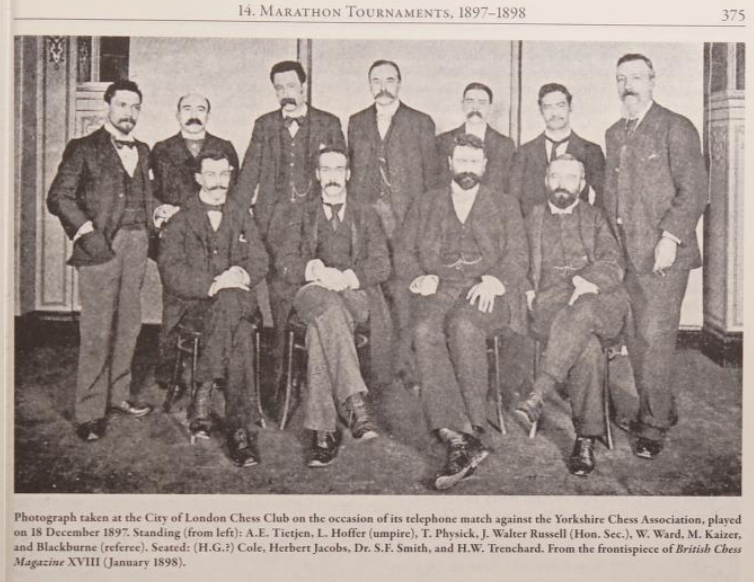
Yes the paragraph above is well corroborated but more importantly it is synchronic. Firstly, it is necessary to corroborate our own claims further and enter into discourse about them. I am not the only person to have written about William Ward. Author Richard James has done so too. You may find the links to his work here5. We are clearly in agreement that William Ward lived in and around Luton, where his family moved to, although where we differ is that author James gives a more compelling account of how transient his life was, it should also be noted that James does not show Ward did in fact play for Luton where as I have shown he did play at least twice, and in all probability, many undocumented times more since he was based outside the town for a small part of his life. Ward achieved almost all his success some years after in London. Prior to that there are pertinent questions to be answered, such as ‘How strong was Ward when he defeated Duhan in our league in 1896?’ This question is problematic because the ‘evidence’ pertaining to his ability then is rather depressing without gamescores. Yes two years’ later he did become joint champion of the S.C.C.U as James clearly illustrates. And we also have material we can utilize for narrative purposes to construct a strong argument as to why. If we embrace the entrusted EDO Historical Chess Rating site, which is generally considered reliable, then we can indeed find Mr. William Ward placed at number 131 in the world in 1896, with an estimated rating of 2315 and then in 1898 with an estimated rating of 2360, still keeping him ahead of future world champion Capablanca by some 56 rankings. In today’s market that would put him at FM level. His opponent, Harry Duhan (later to be known as Major Harry Duhan or Major Duhan) does not appear in the estimated ratings of that year but can be found for the years 1910-1912. How reliable this can be some 14-16 years after they played is difficult to be sure of but if you play through Duhan’s games in the link concerning a clash of future champions, they suggest to me he was not equipped to compete against someone of Ward’s caliber. Why do I say this? Because, as stated by historian and celebrated author Dr. Timothy Harding, there is evidence that in December 1897 he participated in the Yorkshire v City of London Chess Club match by telephone. This is significant for our purposes because the City of London Chess Club was the biggest in the country at the time, some of its members were world class. How could Ward represent the largest club in the country so soon if he was not already very strong? A group photo with him in it can be found below.
Joseph Henry Blackburne: A Chess Biography by Dr. Tim Harding, pg. 375
By 1900 Ward had established himself as a strong amateur in London and was selected for the Anglo-American cable matches. He was also invited to participate in the City of London Tournament, where a select few of the world’s best were pitted against some of the best amateurs on our shores6. Details of this can be found here 7. As you can see, Ward not only drew with Mason but beat Blackburne and finished above him in the tournament. The following year he was pushed up the team in the Anglo-American cable match from board 9 to board 7 and beat Frank Marshall too, making him the first documented Bedfordshire based player to beat world class opposition. His retrospective rating for 1901 was 2372, making him 86th in the world, placing him above future world champion Capablanca (2359).8. His draw against Mason and victories against Blackburne and Marshall can be found below. Only now can we see why Ward went on to nearly win the British Championship on more than one occasion before the decade was out! In 1904 he had an estimated rating of 2414 and was rated as 60th in the world, ahead of many more famous than him, such as Isidor Gunsberg, Eugene Znosko-Borovsky, Karel Treybal, and Dawid Przepiórka.
‘A historical narrative is thus necessarily a mixture of adequately and inadequately explained events, a congeries of established and inferred facts, at once a representation that is an interpretation and an interpretation that passes for an explanation of the whole process mirrored in the narrative.’
Hayden White, Interpretation in History, pg. 1
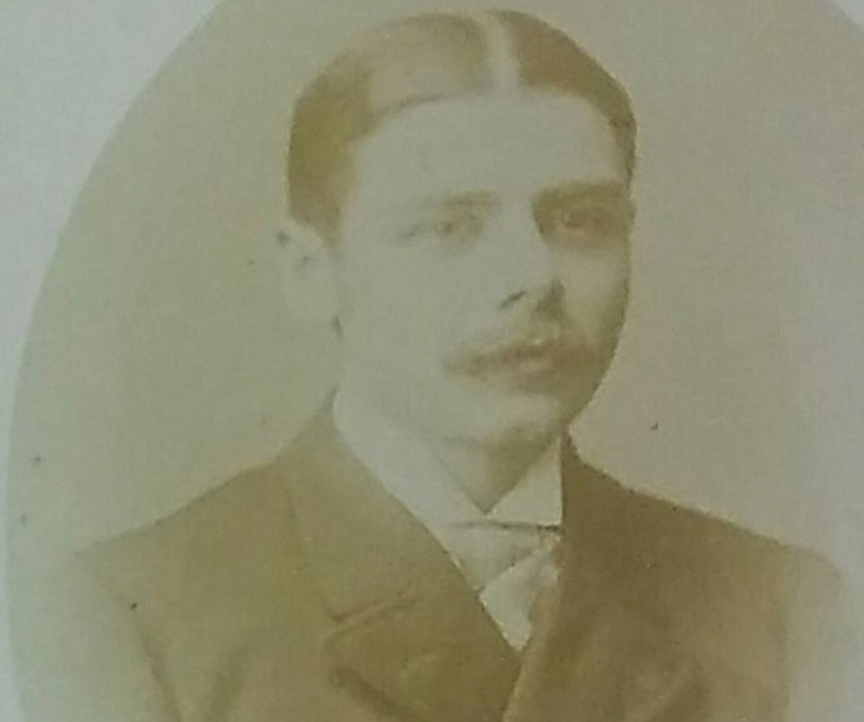
William Ward
The draw against Mason, City of London Club Invitational, April 20th 1900, Round 6
‘It is dates, he (Claude Levi-Strauss) says, which justify the historian’s search for “temporal relationships” and sanction the conceptualization of events in terms of “the relation of before and after.’ Hayden White, Interpretation in History, pg. 289
My dear fellow countymen, to continue with Levi-Strauss, ‘history is never history…but history-for’. For our purposes, I have constructed a narrative which shows William Ward played chess in Bedfordshire in his early years and had multiple successes thereafter in London. He was the first to encounter and beat world class opposition, or masters as they were known back then, shortly after his time in Bedfordshire. Although Ward’s most noted achievements came nine years and more after he left our county, I have chosen to focus on his performances before as they give us a clearer indication of his ability around the time he left our county.
I am not some forlorn devotee of Leopold Ranke who wishes to bang on about ‘the facts, the facts, the facts’ so I can tell it ‘the way it really was’. It’s not the 1860s anymore, it is presently 2023, and we have already encountered Hegel, Droysen, Nietzsche, and Croce to name but a few who revolted against the movement Ranke once found himself at the centre of. As Camus once said ‘Purely historical thought is nihilistic’. ↩︎
J. M. Craddock the schoolboy champion who took down those bigger than he
“History is on every occasion the record of that which one age finds worthy of note in another.” J. Burckhardt
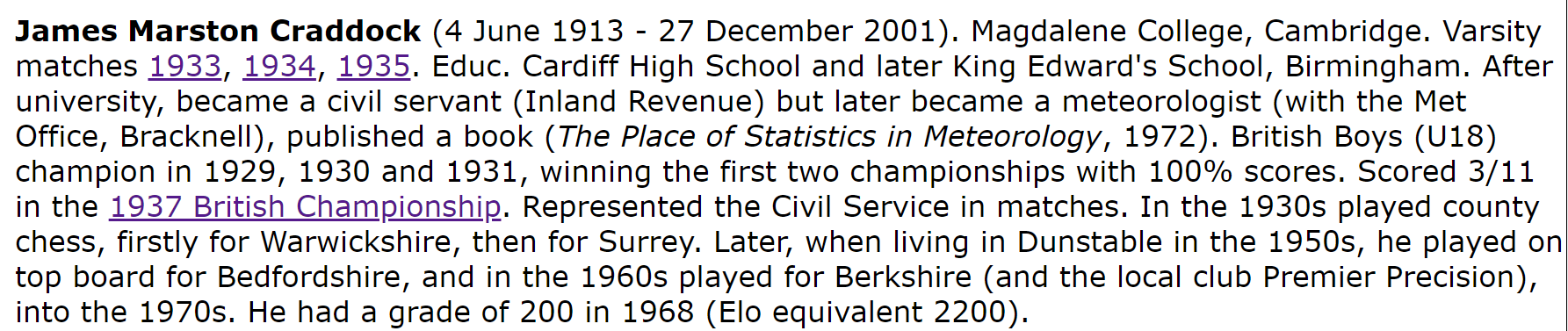
There is no record uncovered where a Bedfordshire based player achieved recognition or success on a national or international level between 1910 and 1950. The only attention our county drew was courtesy of the chess scene in Luton and the high-profile simuls they arranged, attracting the likes of Blackburne (1905), Lasker (1908), Meises (1913) Tartakower (1918), Capablanca (1918), and Reti (c.1922). Yes its true a few of our homegrown talent achieved victories but this is hardly noteworthy (should you be interested you can find some of those victories on my site). But in the 50’s, according to our local columnist Tom Sweby, a certain J. M. Craddock was based in Dunstable and played board 1 for Bedfordshire (see fig 18. ‘Bedfordshire chess in the 70’s; its past and its future’). Who was J. M. Craddock? Once again there is a paucity of information, however, both Britbase and the ECForum enable us to fill in the blanks somewhat. The following is from Britbase:
We only have one game surviving from his time in Bedfordshire, comments are from Tom Sweby.
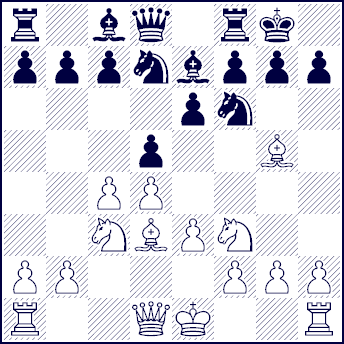
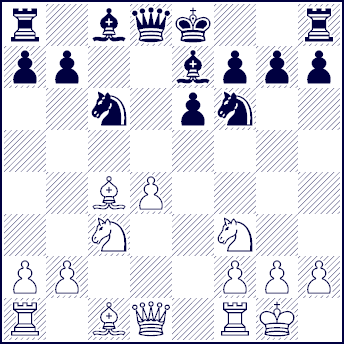
‘When Bedfordshire played Oxfordshire in the Counties Chess Championship in January a much-admired victory was that of Beds leader, J. M. Craddock, over R. J. A. Persitz, the Israeli international and Oxford first board. Craddock, who was Cambridge University champion in 1934, and who now lives at Dunstable, has again shown his strength by beating Raaphi Persitz in the Counties’ Correspondence Championship. As Mr. Craddock rarely plays nowadays, few outside his Bedfordshire colleagues would have anticipated this fine “double” and the accuracy of his play brought from Persitz the comment “Very well played!” (I am indebted to W. G. Everitt for the score of the game which went 1. c4 c5 2. Nc3 Nf6 3. g3 d5 4. cd5 Nd5 5. Bg2 Nc7 Craddock played his own 6. f4 (see diagram) and in view of Black’s subsequent difficulties it seems that in this line he should fianchetto his KB on moves 3 and 4 and avoid the central thrust, at least until White plays Nf3 [Up to this point the game had followed one between Kirilov and world champion Botvinnik. In that White continued 6. Nf3 Nc6 7. 0-0 e5]
With regards to retrospective ratings, we can find J. M. Craddock here,1. Craddock is remembered most for his achievements in the 30’s, some 20 years or so before he represented Bedfordshire. His victory over Mir. Sultan Khan in 1933 was rather daring in play it must be said!
…on what this site initially became…on what this site is now becoming…on what this site cannot become…
On what this site initially became…
…once upon a time, the chess-related musings of an adrift academic were bound playfully and electronically in this online journal of sorts. They grew and grew as the decade did too. I kept on because I love to write whether I had much to say or not; therefore, being read by others was usually of little or no importance, comparatively speaking. Content was based on personal thoughts and experience on various topics with no intended audience borne in mind. With topics broadening, my own take on things always shaped the narrative I constructed: I often thought I was insightful but never that I was right. Sometimes imagination gave rise to originality: and of that I have always remained proud. I often introduced humour, believing that I am funnier than I really am. Sometimes, I found my own style antithetical to the conservatism I believe chess is plagued by -oftentimes that has put a gracious smile on my face… .
On what this site is now becoming…
…this site is now becoming a collaboration of chess in Bedfordshire: much more so of the past than the present -that has become the dominant trend. I document the history of chess in Bedfordshire as much as I can, and as time has passed I have become more thorough and resourceful. However, I am not a trained historian as my background lies principally in philosophy but yes it is true I did study some modules on history as both an undergraduate and a post-graduate too; furthermore, I have trained myself up, particularly in terms of postmodern history. Since 2015, I have only read history and historiography as well as those philosophers who have been so influential on postmodern history, such as Nietzsche (whom I once wrote a 19,000 word dissertation on, entitled: Can the Will to Power be Found in The Birth of Tragedy?), also Richard Rorty and Foucault and I suppose certain structualists such as Claude Levi-Strauss too. Regarding postmodernism, mostly I keep to Hayden White, Keith Jenkins and Alan Muslow.
Some friends and former playing partners back home describe me as the ‘go to guy’ for the history of chess in Bedfordshire. This compliment says more about the lack of interest in the subject than my own endeavour. As mentioned, I am too adrift from academia to feel chuffed by it. Rather, I tend to lament that my historical research, like my chess, just isn’t what it should be. Even though I may well have a broad understanding of Bedfordshire chess history courtesy of the volume of research put into it, all of which began in 2014, this is not something I am particularly proud of. Nonetheless, out of courtesy compliments are graciously received. If the truth be told, I just see it as my job and only that – after all someone’s got to do it and no one else is that interested!
Amongst the many others, I have created three categories: ‘Bedfordshire Chess’ and ‘History of Bedfordshire Chess’ and ‘Luton Chess Club’. This website is slowly moving towards a consolidation of those (all of which can be found in one of the toolbars to the right).
On what this site cannot become…
…I like to be both creative and amusing when I can be, factor in that playfulness has been an ever-present factor, the content of this site should be thought of as multifarious. It could be said I continue to enjoy undermining the conservatism I believe chess is underpinned by even after all these years, and often try to use humour to do it still, believing I have got better at it. Consequently, despite the general direction its going in, this site cannot only be about Chess in Bedfordshire and nor will it be. It may become noted for that yes -in fact that’s been the case for years already even by established historians, archivists, and whoever else. External factors aside, this site is titled McCreadyandChess. I cannot, nor will I not, remove my own personal thoughts and experiences of chess from the posts of this site -especially if I think they are funny or original for they constitute my writing at its very, very best. In addition, the number of categories alone tells you that breadth of content is important to me. I am proud of my site, it is identity conferring and that is how it shall stay -end of story. All you really have are: ‘Some thoughts on the beautiful game’, which, incidentally, just happen to be my very own; nothing more, nothing less, take of it whatever you please… .
A side note on how to read old Tom Sweby's columns
Not perhaps, but quintessentially, Old Tom Sweby is best thought of as a passionate devotee to the newspapers he wrote for. He was well read and knowledgeable of the Bedfordshire chess scene and well beyond, given that he was the president of the S.C.C.U. once upon a time. He was generally well-respected and rubbed shoulders with many, if not all, of those eminent within British chess circles. It would, however, be a critical mistake to see his column is primary source material entirely. That it is not. You will also find secondary source material quoted too, and the reliability of that is not quite as Tom hoped. Given that he wrote for decades, this is to some degree inevitable, and after all we are all prone to error whether we realize it or not. Thankfully, with regards to old Tom Sweby, they are infrequent and for the most part old Tom continued to document events and developments in the Bedfordshire league from the get go as best he could but, of course, everything lies open to interpretation. Despite this, and generally speaking. this does indeed make him informative and thus worth reading. Dare I say his columns constitute a narrative describing the latest developments, match reports and changing nature of the Beds league...he knew his audience and wrote according. This manifested itself over decades but brevity was always in play courtesy of the restictions imposed by writing a column. Should you wish to read a in instrumental figure of the Beds' league post WW2, you are quite welcome to peruse what has been posted here... . :-) I should, however, point out that as the decades wore on he gradually moved on away from narratives concerning the Bedfordshire league towards affairs both historical and international. The reasons for this are multifarous, old age was a predominante factor presumably, however, the bottom line is with regards to how the Bedfordshire chess scene developed post WW2: old Tom Sweby is your go to guy. He wrote more about chess in Bedforshire than anyone else did but given he was a Lutonian and writing for a Luton newspaper there is both bias and greater coverage of his hometown than the rest of the county.
Gallery
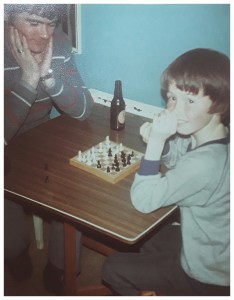
I’m either 10 or 11 here
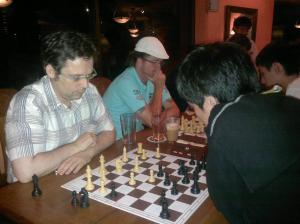
1982, myself versus Brian from Sunderland.
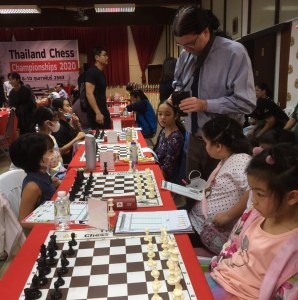
At the Thai Junior chess championships. My daughter of course.
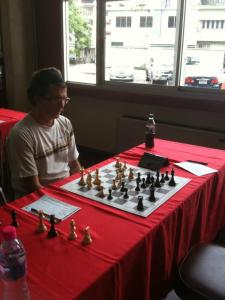
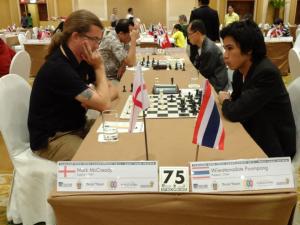
Pattaya 2011
2011
Thai Junior Championships
2008
2011
Around 2011
2011
Pattaya 2009
2011
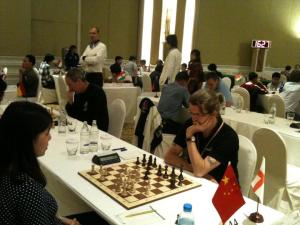
Kuwait 2008
2012
2012
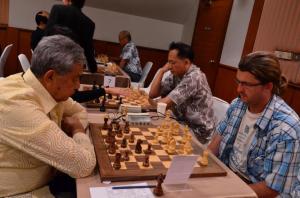
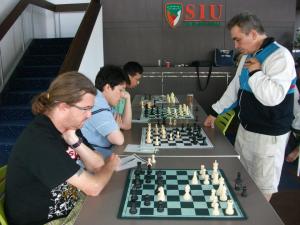
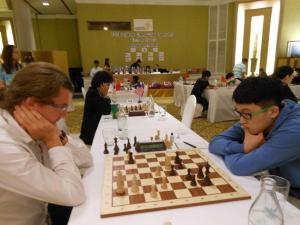
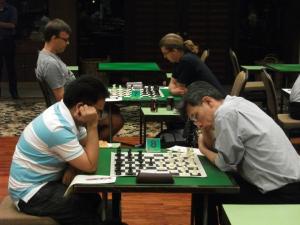
2011 BKK Chess club
2011
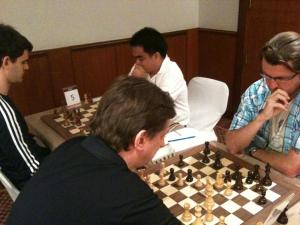
2011 Thai Open
2011 Thai Open
2013 approx
Around 2014
2010
2012
Around 2011
2011
2011
2013
Around 2011
Around 2011
2020
2011
2008
2011
2013 or thereabouts
2010
2017
2014?
2010
2024
2024
2024
To add comments, please see the bell at the top of the page.

































 McCreadyandChess