‘…in the meanwhile there is a terrible cycle, the symptoms of depression cause depression; loneliness is depressing but depression also causes loneliness, if you cannot function, your life becomes as much of a mess as you supposed it was.’
Andrew Solomon –The Noonday Demon
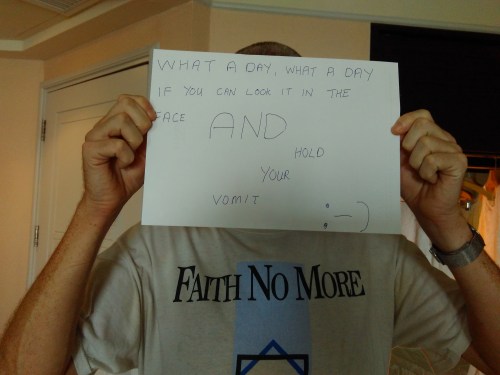
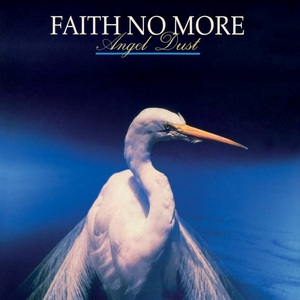
I wore this shirt the day my daughter was born, underneath comes the slogan ‘We Care A Lot’. Take note of the band for the purposes of the post.
UPDATES: the previous post asserts my fatal demise in some detail after I was struck at speed and smashed unconscious on the road then dragged, robbed, and left for dead. Upon regaining consciousness after an operation that surprisingly saved my life, updates have arrived: the updates form only the beginnings of this post and nothing more, it is hoped that this post will inspire you if read it from top to bottom, and more importantly, listen to the music videos attached, given how great they truly are.
‘A wet sneeze and a no left turn. A row teeth and an encouraging word. Beneath a mile of skin. I should’ve noticed it, I should’ve noticed it, I should’ve noticed it before.’
To begin, I regret to say three days ago I was once more rushed into hospital because I have severe brain damage and was prescribed Tramadol, amongst an amount of medication approximately 10 times greater than anything previously prescribed. However, I kept collapsing, losing my vision and ability to walk and was thus taken off it and instead given the most powerful painkillers ever manufactured.
‘Kill the body and the head will die. They’re laughin’ at me. I should’ve learned it. I should’ve learned it. I should’ve learned it before.’
Although I was informed that I will be killed instantly if I accidentally overdose on the painkillers, and that I am losing my hearing because an enormous hole was drilled into my brain just above my right ear, causing it damage which is both implacable and deeply depressingly, such issues paled in comparison to the announcement that I have neurological damage and may lose use of my arms if the damage to the nerves in the back of my neck does not heal…hmm, well as ridiculous as the following assertion is, none of the aforementioned matters for the simple reason that I finally felt alive once my medication was changed -I can now think. I’m back to my life. Myself again!
“The real cycle you’re working on is a cycle called yourself.”
― Robert M. Pirsig, Zen and the Art of Motorcycle Maintenance: An Inquiry Into Values
Though the change in medication instantiated this, the song I posted at the end of the previous post rapidly became epiphenomenal. That which I once adored, cherished and was shaped by became identity-conferring, teaching me who or what I used to be.
‘When you want to ask the question… “what is man?”, all you’ve got is history.’ – Hayden White
So I rediscovered everything and became myself by returning to the music I loved so much. Of course you do know that the greatest band still around is Faith No More, who are far greater than any band in history and one million years from now will obviously be regarded as still the greatest band ever. You must surely also know that singer Mike Patton is by far the most handsome man the world has ever seen not to mention the greatest singer also. But I doubt you know in the 90s just how much I modeled myself on him, admired his obscurity and charisma so much that I fell in love with him given that he is very, very, very, very, very, very, very, very, very, very different to everyone who has ever walked this earth. Even that charming and well-educated American woman from Cheshire, Connecticut whom I once had the pleasure of knowing was rather taken aback by my affection shown in the discovery of them whilst perusing a rack in one of the HMV stores in St. Albans on Oct 30th 1998 just before she went in search of those jellybeans she was so fond of. As sophisticated as her interest in music undeniably was, I drew her attention to FNM only because I liked Mike Patton so much, however, she was unpersuaded by what I felt…hmm. In retrospect, upon your first visit to such a bustling, medieval market town already a millennium pultchritudinous, and graced with historical glamour, perhaps it took centre stage better than Mr. Patton ever could, and when someone of intellectual demeanour is elated by her environment perhaps who or what is directly in front of them renders music briefly inessential given that the present is always more important than the past. Concerning the future: well, to this day those jellybeans I was introduced to just after dusk had fallen that day are still so god damn delicious as both myself and my daughter can courteously confirm, every time we see them on sale a speedy exit from the supermarket is soon made, both of us with a broad smile and a bouncing jelly-like belly. It is unlikely but should my child ever ask who fashioned the legacy of JellyBelly which she has become a part of, I may well teach her where that charming person introduced daddy to them for the first time by showing her on google earth where it took place. Should she smile -as is almost always the case- then ask if that nice person was from there too, I will tell her not and show her exactly where she came from in hope that Grace can improve her geography and smile with gratitude, to some degree feeling indebted and thankful. http://www.jellybelly.co.uk/.
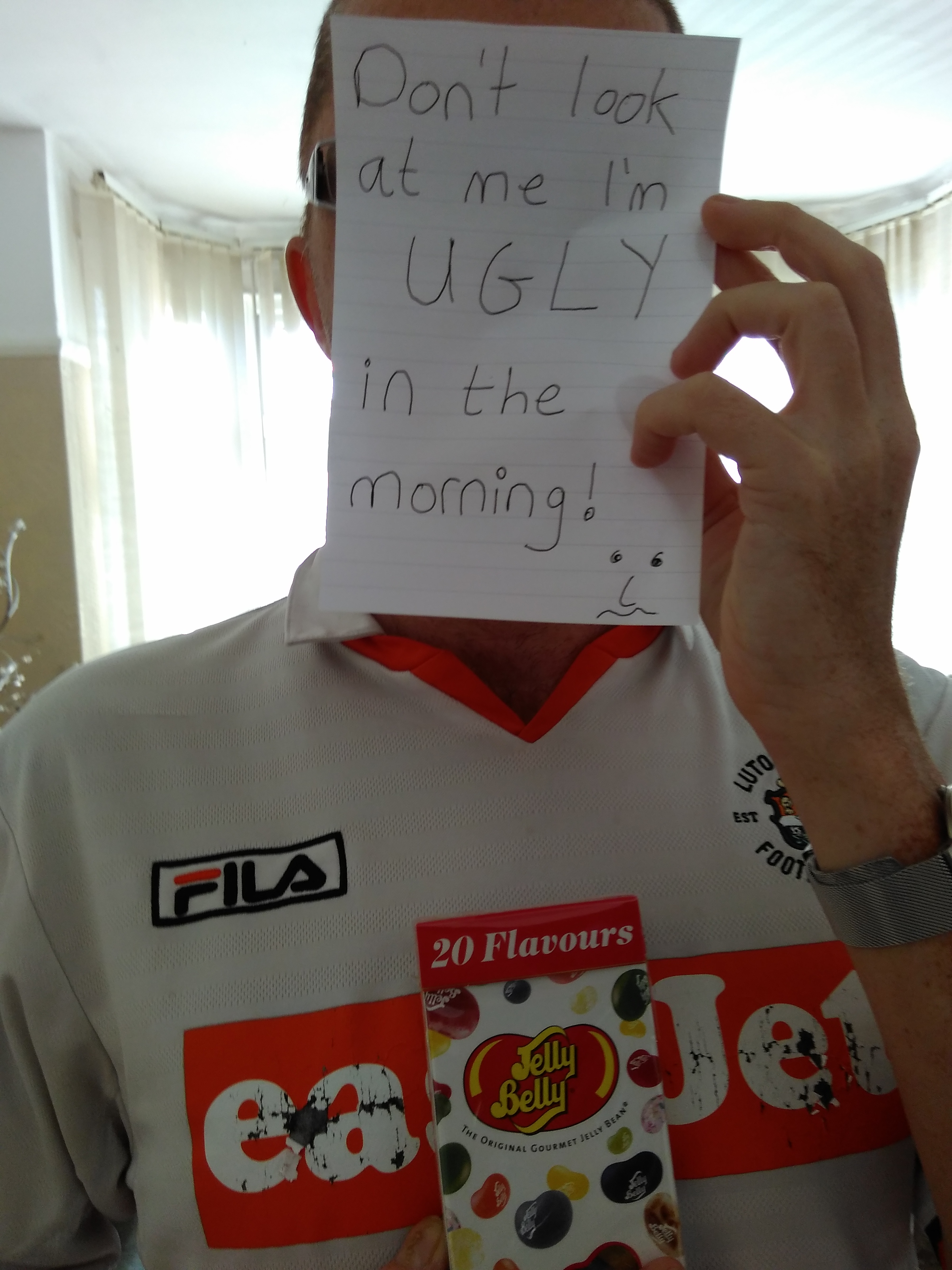
No daughter with me, so daddy gets to guzzle by himself this morning. Looking forward to Blueberry, my second favourite fruit behind Passion Fruit, which in juice form is fantastic. Any thoughts about the writing on the paper and which album it can be found upon?
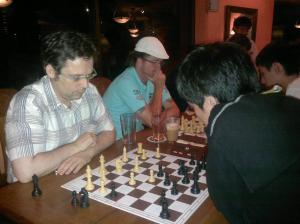
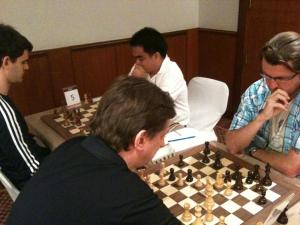
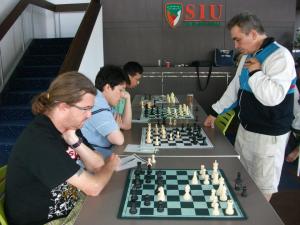
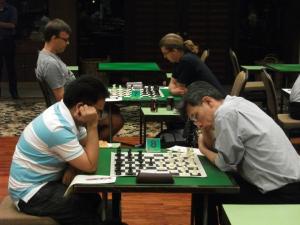
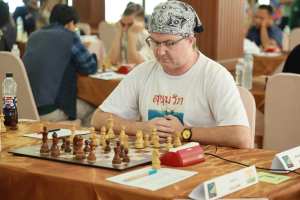
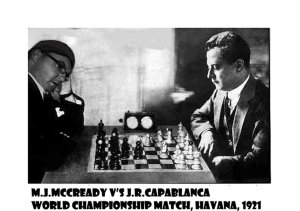
Time for some chess updates
Unable to function well, I sent a short mail to two gents from the Bedfordshire Chess Association stating that a return to the fold was dependent upon my recovery, as I didn’t even know what my name was let alone play chess but having gone into overdrive after the proximity to death was suddenly under siege by a life force which heralded a smiling return to life. I opened up Lucas chess program to see if I could remember how to play chess. I knew that I had climbed up the table of engines to Chispa 4.0.3, rated 2227ELO, and lost every game against it although my Dutch Defence nearly got me a draw once.
‘Smiling with the mouth of the ocean. And I’ll wave to you with the arms of the mountain.’
So the very strange thing that occurred was that I had not played for many weeks, due to being unconscious and so very, very close to death, and was clearly unable to defeat an engine with an ELO rating above 2200, but I had the white pieces in a 10 minute game and didn’t just beat it but outplayed it the entire game and entered into an endgame where my repositioning of my minor pieces was so astute that the engine was absolutely obliterated by my perfected endgame play! In total disbelief my analysis of my play put my playing strength at something like 2400ELO! That’s great news for my home town and county…er, if I don’t drop dead en route home that is (which in my opinion is possible).
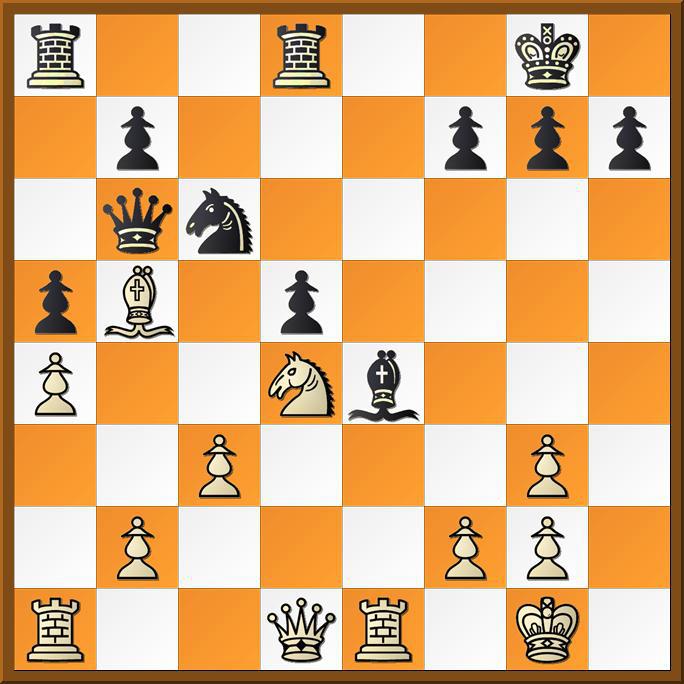
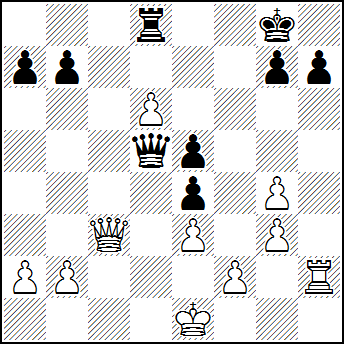
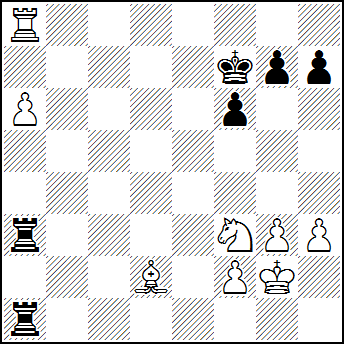
Positions from the manner in which I shot Chispa down in a blaze of glory
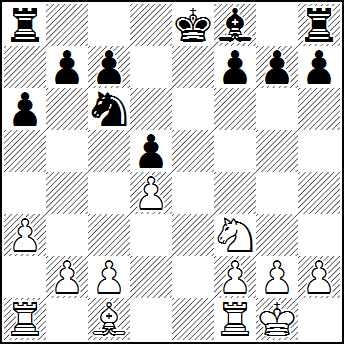
White (that’s me folks) now plays 13 Re1+. Ladies and gents, I had to delete the things I thought as play unfolded because the number of expletives is shocking!

White (once again that’s me folks) now plays 21. f3 and went on to win 27 moves later. At this stage of the game I know how to gain a one pawn advantage on the kingside, which will force the opposition in my favour some moves later and guarantee victory. And guess what, even Fritz confirmed I played the endgame perfectly!
‘I want them to know its me, its on my head.’

Nasty eh? That is me my friends. I can’t put into words how intense the pains that soar across my brain and skull are. It is often the case that I lose my vision and hearing. Rest assured that whilst outside this causes problems that are unsolvable.
‘A piece of mail. A letter head. A piece of hair. From a human head.’
How did this happen on a road less traveled so late in the evening? Why was I targeted and so nearly killed? What about the road not taken, you know, the one you usually take?
The Road Not Taken – Robert FrostTwo roads diverged in a yellow wood,And sorry I could not travel bothAnd be one traveler, long I stoodAnd looked down one as far as I couldTo where it bent in the undergrowth;Then took the other, as just as fair,And having perhaps the better claim,Because it was grassy and wanted wear;Though as for that the passing thereHad worn them really about the same,And both that morning equally layIn leaves no step had trodden black.Oh, I kept the first for another day!Yet knowing how way leads on to way,I doubted if I should ever come back.I shall be telling this with a sighSomewhere ages and ages hence:Two roads diverged in a wood, and I—I took the one less traveled by,And that has made all the difference.
My friends, sometimes I am so somber, having never been so very close to death (Erm Mark, I am not sure that is entirely true. Have you forgotten that in April 2008 the evening before trekking in Pokhara, Nepal commenced you were driven at full speed across the city to a clinic kilometers away, through a raging storm which took out the power everywhere, blackening the streets between the lightening bolts blinding the driver because you had e-coli, a temperature of 42.6C and were weak but writhing in agony, barely conscious? Don’t tell me you’ve forgotten that almighty panic the doctors flew into before battle to keep you alive commenced? That aside, how on earth could you forget the force the rain came down upon you whilst you were carried out of the car under a grey blanket, pounding upon your closed eyes, drenching you within a second! Have you forgotten getting 5 weeks off work fully paid too?). I was a poet in my youth, please allow me to replicate what has been my favourite poem since 1994 because as I lay on my hospital bed I had a near death experience, and then as I almost swallowed my tongue during a seizure, blood poured out of my mouth during a spasm, thereafter, as I lay oh-so nearly dead, my past began fading as if I was about to enter sleep and never awaken, which I have learnt is exactly how death feels like as I had another 5 seizures that day, although thankfully after the second one I could no longer retain consciousness…I do hope you read it. It is so heart-felt, well written, and well structured -it really is. The fact that he was a soldier in WW1 where he lost his life, should give you an idea about the title.
Lights Out – Edward ThomasI have come to the borders of sleep,The unfathomable deepForest where all must loseTheir way, however straight,Or winding, soon or late;They cannot choose.Many a road and trackThat, since the dawn’s first crack,Up to the forest brink,Deceived the travellers,Suddenly now blurs,And in they sink.Here love ends,Despair, ambition ends;All pleasure and all trouble,Although most sweet or bitter,Here ends in sleep that is sweeterThan tasks most noble.There is not any bookOr face of dearest lookThat I would not turn from nowTo go into the unknownI must enter, and leave, alone,I know not how.The tall forest towers;Its cloudy foliage lowersAhead, shelf above shelf;Its silence I hear and obeyThat I may lose my wayAnd myself.
Isn’t that so poignant and truly touching? And it is time we upped the tempo isn’t it? So it is, so listen to what’s below but be so careful, the last 17 seconds are out of this world! It’s live but man-o-man do they really go for it! It’s definitely Faith No More so very close to being at their very best. Please listen to from start to finish because as always Mike is so very strange but inspirational. The chorus is phenomenal, have a sing -a-long and start bouncing up and down why don’t you? The chorus is as follows, ‘What a day, what a day if you can look it in the face and hold your vomit! Ever seen that before anywhere? I suspect you might have 🙂
Okay, so am I right to suspect you love me now and worship the path I walk along with such an unfurled daydreamy existence or am I wrong? In any event, now watch what’s next. In this video Mike Patton is so handsome it is impossible not to fall head over heals in love with him irrespective of your gender and sexual orientation. In addition, the track is so wonderful you will drool for days on end, thereafter you’ll spend the rest of your life wishing you were as handsome as Mike, like I have done, and of course, everyone who has watched his suave and charismatic performance go way beyond anything ever recorded.
Although I am at present alive, I will possibly drop dead later this week even though the antithesis between life and death is much less pronounced than the week before, and at times, seemingly fallacious…so many people have told me I am the greatest and most loving father they have ever seen, so I will battle on and outplay the grimreaper or will I? Of course I will… .
‘Give the same to me then I’ll be closer, closer. Give the same to me then I’ll be closer, closer.’
…I don’t quite know who I am at present but I do want to tell you that a principle reason underlying my survival and recovery is that before the accident that so nearly killed me I was much fitter than I have ever been in my entire life. This year so far: cycling approximately 7000 km (across countries into others even!), running approximately 900 km. My body is still incredibly muscular despite being unable to function for more than a few hours each day for weeks now. The last cycle trip I took to the temples north of the city I live in, I did in two hours even though I cycled around 65-70km. I felt disappointed at the end because it was so easy and effortless….so keep fit and keep your brain active as my lifelong commitment towards study has improved my speed of recovery so I have been told…so once again should I die then all the best with your life…would you mind if I made the effort to make you even happier?
(Drum roll please) The top three vids are as follows!
First, Caffeine
‘Believe anything anyone ever tells you. It’s not funny any more. It’s thing you hate the most. The thing you hate the most. The thing you hate ALMOST.’
Mike is menacing in his vocals and almost psychotic at times whilst in character only. It’s still my favourite song because the video shows Mike at his greatest ever.
Second, Everything’s Ruined
‘A shiny copper penny.’
I got my daughter dancing to this early this morning, and she found the video really funny! We had a little dance together but not the whole song.
Third, Ricochet
‘One day a wind will come up, and you’ll come up empty again, and who’ll be laughing then, you’ll come up empty again.’
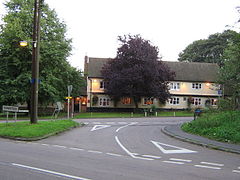
My friends, in early May 95 I was so far adrift from the world around me, still 22 months away from the end of an eight year period of depression, which liberating myself from entirely has become a life-long battle, which has long since been lost. In that month I had Ricochet and the rest of that album on my Walkman in cassette form. In the evenings I used to cycle into Hertfordshire, just like I did when I was a child. One evening, at the junction pictured below.

Slip End, a frontier of Bedfordshire
I stopped by the roadside and stared down the road into Pepperstock, see below.
Pepperstock, a hidden entrance to Hertfordshire
I was on my old black BSA Racer, which I dashed across my county oh-so-often, and so I stopped, staring towards Pepperstock, listening to Ricochet in the dark, the wind, and light rain, staring into the headlights of oncoming traffic with glazed eyes for hours because beyond the music nothing else mattered -so depressed was I. Though it rained I did not do up my jacket. Feeling the rain fall on me was necessary because my being could absorb elements of the countryside into it -which was life-affirming and thus an avenue out of depression. The smell of grass and trees that carried in the wind from the winding country lanes, unlit thus pitch black entranced me into adoration also. So there I sat on my saddle for hours, my eyes always glazed but my persona enraptured by Ricochet. I was well and truly alone, no one mattered no longer, only nature, its elements, then their absorption into my being did… .
‘Do you have something to tell me? Say something. Anything.’
Farewell and good luck my privileged friends, and once again, should I die this weekend, which I fear is possible, good luck in life…but just before I die, I want to say if you search for then read the post Malpractice which I adore far more than any other I wrote, you might notice that the influence of Faith No More is stupendous, and in fact, more prevalent in this site than anything else. This is my way of bringing my blog to a close because I fear death is approaching at pace… .
‘What remains unclear is when depression triggers life events and when life events trigger depression. Syndrome and symptom blur together and cause each other; bad marriages cause bad life events, cause depression causes bad attachments which are bad marriages. According to studies done in Pittsburg, the first episode of major depression is usually closely tied to life events, the second somewhat less, and by the fourth and fifth episodes life events seem to play no part at all. [George] Brown agrees that beyond a certain point depression takes off on its own steam and becomes random and endogenous, dissociated from life events.’
Andrew Solomon – The Noonday Demon.
The menace within Mike’s vocals is unparalleled and can never be surpassed, nor can the collective brilliance of the album -it simply isn’t possible.

























 McCreadyandChess