
Who is better and why? Hot Tip: the white pieces are handled by a certain endgame expert named Mr. J. Capablanca
Posted in Life beyond the chess board on August 22, 2016| Leave a Comment »
Who is better and why? Hot Tip: the white pieces are handled by a certain endgame expert named Mr. J. Capablanca
Posted in Life beyond the chess board on August 15, 2016| Leave a Comment »
I decided last year to stop playing at the ICCF for the simple reason that far too many players use computers either to find their moves or as a blunder checker. If you go to their site you will see that there is nothing in the rules to prevent this as controlling it is practically impossible. I really don’t see the point in paying to enter a tournament only to use computers but whatever…. . Some players, who don’t use computers, also show bad etiquette with slow-play when they lose interest in the game from falling behind in it.
It took almost one year to defeat a certain cheeky Scottish chappie who sent the message “well-played” upon his resignation in our game. With the tournament waiting an eternity for our game to finish, I no longer have any games to play and have cancelled my account with them, having found their on-line ‘support’ not very supportive also. Anyway, my opponent steadily fell behind in the game only commit a mistake which would put him into an endgame which he could not save. Let’s pick up the game late on.
35. Qa7 Rf8 have just been played. What should white play next?

Scroll down slowly for the answer.
Keep scrolling.
Nothing to see just yet.
Okay, the cheeky Scottish chappie I had the pleasure of beating played the mistaken 35. … Rf8. White can simply play 36 Rxf7 with a winning endgame to come.

47. f6 Resigns.
My moment of freedom from the ICCF -hurrah!
Posted in Life beyond the chess board on August 9, 2016| Leave a Comment »
Ever wanted to make your own set? Just follow the 20 million or so simple steps in this video. The knight was particularly fascinating I thought.
Ever wanted to make your own board? Great viewing once again, such skill and craftsmanship on show. A few million less simple steps to follow here I think.
Posted in Life beyond the chess board on August 9, 2016| Leave a Comment »
Have a look at the position below. The players were two of the strongest from the 70s, Korchnoi and former world champion Petrosian. I think we can agree that black has gone wrong already, see if you can decide who plays which colour and how the game proceeded, it is white to play. I have linked the game below. The sense it left me with was how the world’s No. 2 could play like that. Unconvincing stuff indeed considering the status of the players.
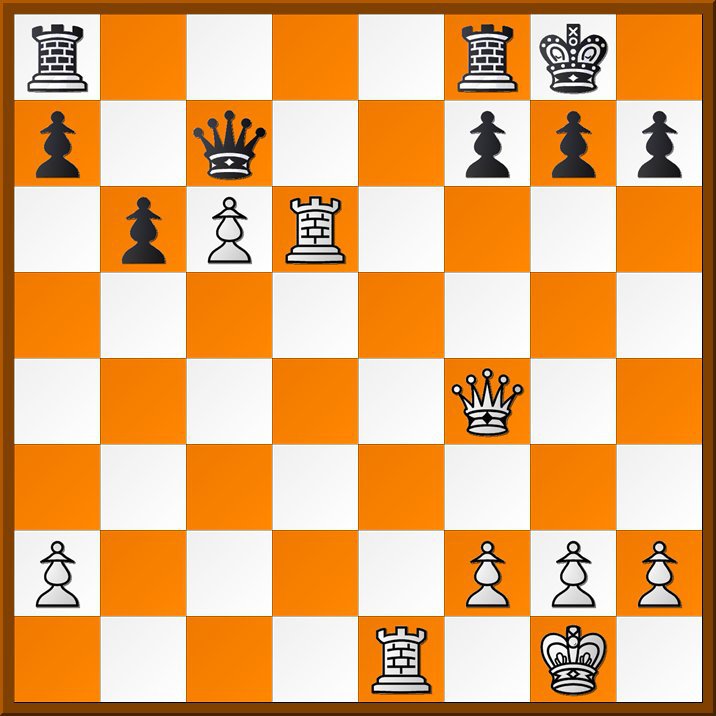
After 21. …Qc7. What does white play and how should he proceed?
Posted in Life beyond the chess board on August 1, 2016| Leave a Comment »
Sometimes Grand masters do strange things. They can make very basic errors that even a beginner wouldn’t make, which can be very difficult to understand. The reasons will differ according to the position and most relevant factors in the game but often they think too deeply or focus only on deep strategical concepts and then miss something very simple or play a move that looks so bad defeat will surely soon follow.
For example the following game recently played between Popiliski rated a mere 2542, probably able to make it into the top 300 if he played for Bedfordshire…well maybe, and the more well-known Gata Kamsky, rated a mere 2660 but far more respected whilst middle-aged than in his youth courtesy of his over-zealous father. The game has just started and Kamsky, with his decades of experience plays a move that made me laugh when I saw it. On Twitter Chess24 described it as ‘not one of his better moves’. Well I’ve never had any interest in any his games but I suspect they may well be right there. Amusement lies ahead, anyone who can offer any explanation will be applauded.

7. …Ng8 was now played. The distinction between the professional and the amateur player is somewhat artificial as no one knows very much about chess. Some know a bit more than others, that’s all. White has just played 7. e5, which in my limited understanding of the Sicilian is one of white’s trump cards if he can get it in, will generally have the better game. Something looks wrong before black plays his next move, that being the wild (ly perplexing) 7. …Ng8. One of those’too amusing for analysis moves ‘perhaps? Is moving to h5 so bad? I suppose one advantage of the move played was that it must have gained Kamsky a good hour plus on the clock as I’m sure it took quite some time for his opponent to believe what he was seeing.
You can find the game here, https://chess24.com/en/watch/live-tournaments/calgary-international-2016/7/1/2 unsurprisingly a massacre soon ensues.
Posted in Life beyond the chess board on July 27, 2016| Leave a Comment »
The dullest game I ever played was against a young N. Pert at the Hitchin Open in 1991 rated 144 at the time I think. After a ponderous beginning, a forcing line in the 3. …c5 line of the French Tarrasch quickly centered around the elimination of the black IQP. Pert managed to exchange it off but drew everything else on the board into the action and created an almighty exchange-fest in a turbo-charged two seconds, leaving a completely symmetrical king and pawn ending, that could not have looked anymore drawn. I still remember the brief eye contact we exchanged after the game -a true wtf? moment we both acknowledged. An on-looker, who called himself ‘supra-super multi-ball Marvin’ a self-proclaimed pinball champion said at his best he can handle 18 balls even with his eyes closed but the pace the pawns and pieces came off the board during the game was far beyond his capability. Whilst standing side by side taking a piss together in the bog he asked me if I had super natural powers whilst breathing in some of the steam I released at the urinals, wanting to know how I could capture minor pieces with such speed without them.
By far the most pointless game I ever played, I always laughed at the breakneck speed it suddenly ended in the most dead drawn position imaginable -it was impossible not to laugh at it. We both played to win, a truism no chess player alive could ever be convinced of if they were able to play through the game -hopefully long since lost by both players.
More recently, I’m informed that Ncholas Pert inadvertently entered the Guinness Book of Records during his handling of the Caro-Kann against Peter Batchelor when over half a million chess computers around the world were blown up by the obscurity of the line he chose and position he reached on move 11. I’m sure once you’ve had a look yourself you’ll understand why.
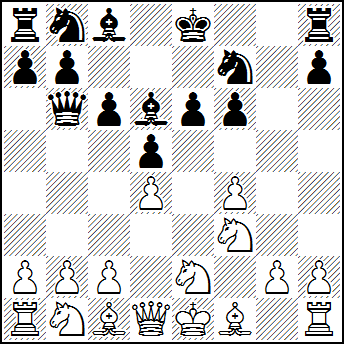
Last moves were 11. Ngf3 Bd6
What on earth has white achieved here? GM N. Pert showing that as an adult the wtf? play which I noted when he was a child is in evidence still. I suspect white’s moves freaked out our gadgets so much, malfunction was inevitable.
Posted in Life beyond the chess board on July 7, 2016| Leave a Comment »
Another position posted many years ago comes with the game to follow. Again its from Kotov’s ‘Think like a Grandmaster’, which though a dated and criticized work in our modern age, contains many interesting positions and studies of a more classical nature.
Here’s one from Kotov’s own games, its Kotov V Steiner, 1955 U.S.S.R V U.S.A, and its white to play and formulate a winning plan. There is no winning move as such, just a winning plan to be found.
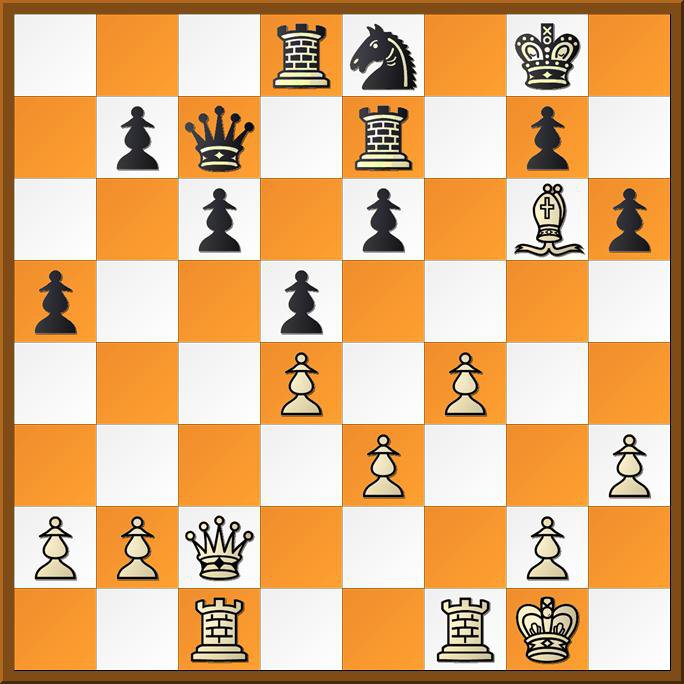
You can find the game here to see how white continued.
Posted in Life beyond the chess board on June 25, 2016| Leave a Comment »
I don’t play much chess these days and hardly ever against computers but I decided to give Lucas Chess a few games, as I noticed many updates to the software were now available, the latest version being 9.08 https://www-lucaschess.rhcloud.com/#
I usually play against Chispa (ELO 2227) which is a bit of a struggle so opted for a softer option around the 1900 mark.
I played the Sicilian Sveshnikov and gained the initiative in the middle game. I then reached the following position which contains a move that wins outright. Can you find the move that black (me) must play which is decisive?
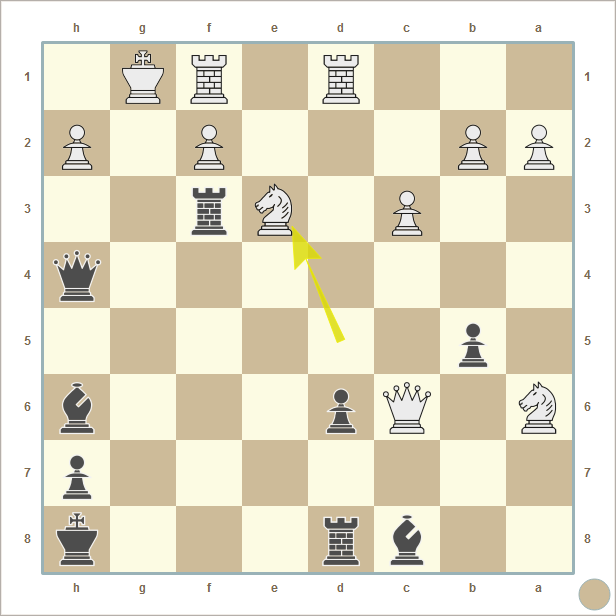
White just played Nxe3, hence the arrow.
Scroll down slowly for the answer:
Black has several options but h2 is unguarded, so Bf4 wins on the spot.
Posted in Life beyond the chess board on June 14, 2016| Leave a Comment »
The position below is quite famous, it is from Lasker – Capablanca Moscow 1935. White to play and formulate a winning plan. When I first saw this position I had no idea of how white could win but if you look a little deeply, there are serious weaknesses in black’s position.

You can find the full game here. http://www.chessgames.com/perl/chessgame?gid=1258185
Two things stand out to me; Lasker doesn’t play like someone who became 67 years old that year, secondly, Capablanca’s passive play with a Winawer of all things -he wouldn’t stand a chance against today’s super GMs playing like that.
Posted in Life beyond the chess board on June 10, 2016| Leave a Comment »
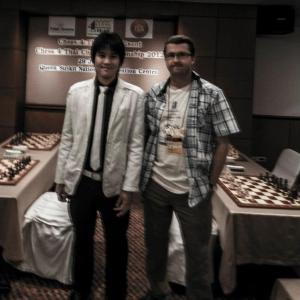
My morning has been filled with memory from Penang. Facebook claims that on this day I posted the following on my wall 5 years ago:

Rossolimo vs Nestler, Venice 1950. A double exchange sacrifice by white has lead to a complex position. Black must defend the threat against his queen but how should he continue? The recommended amount of time for this position is 30 minutes by Kotov.
I imagine it comes from Kotov’s ‘Think like a Grandmaster’ which I once had a re-read of when I visited Penang, Malaysia the month before. I remembered this position when I saw it again but not as well as the Indian food I’d had in Georgetown that same day which was exceptional… .
I should add that the solution is rather difficult. You can find the game here.
A side note on how to read old Tom Sweby's columns
Not perhaps, but quintessentially, Old Tom Sweby is best thought of as a passionate devotee to the newspapers he wrote for. He was well read and knowledgeable of the Bedfordshire chess scene and well beyond, given that he was the president of the S.C.C.U. once upon a time. He was generally well-respected and rubbed shoulders with many, if not all, of those eminent within British chess circles. It would, however, be a critical mistake to see his column is primary source material entirely. That it is not. You will also find secondary source material quoted too, and the reliability of that is not quite as Tom hoped. Given that he wrote for decades, this is to some degree inevitable, and after all we are all prone to error whether we realize it or not. Thankfully, with regards to old Tom Sweby, they are infrequent and for the most part old Tom continued to document events and developments in the Bedfordshire league from the get go as best he could but, of course, everything lies open to interpretation. Despite this, and generally speaking. this does indeed make him informative and thus worth reading. Dare I say his columns constitute a narrative describing the latest developments, match reports and changing nature of the Beds league...he knew his audience and wrote according. This manifested itself over decades but brevity was always in play courtesy of the restictions imposed by writing a column. Should you wish to read a in instrumental figure of the Beds' league post WW2, you are quite welcome to peruse what has been posted here... . :-) I should, however, point out that as the decades wore on he gradually moved on away from narratives concerning the Bedfordshire league towards affairs both historical and international. The reasons for this are multifarous, old age was a predominante factor presumably, however, the bottom line is with regards to how the Bedfordshire chess scene developed post WW2: old Tom Sweby is your go to guy. He wrote more about chess in Bedforshire than anyone else did but given he was a Lutonian and writing for a Luton newspaper there is both bias and greater coverage of his hometown than the rest of the county.
















To add comments, please see the bell at the top of the page.
 McCreadyandChess