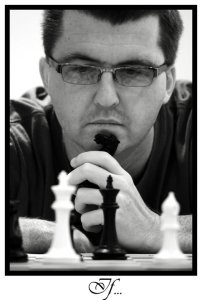
Jeremy James, presenter of the BBC’s avant-garde show The Master Game, has sadly passed away. An obituary can be found here: http://www.theguardian.com/media/2015/oct/28/jeremy-james-obituary
Posted in Life beyond the chess board on November 7, 2015| Leave a Comment »
Jeremy James, presenter of the BBC’s avant-garde show The Master Game, has sadly passed away. An obituary can be found here: http://www.theguardian.com/media/2015/oct/28/jeremy-james-obituary
Posted in Life beyond the chess board on November 6, 2015| Leave a Comment »
The following game can be found on pg. 34 of The quickest chess victories of all time by Graham Burgess.
R. Djurhuus – F. Liardet
Santiago 1990

1. Nc3 – Kramnik once played this.
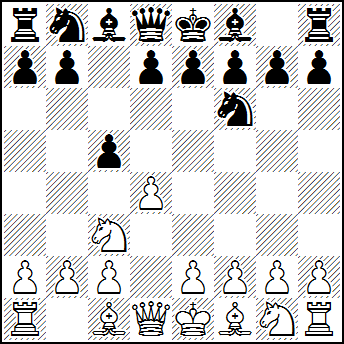
1. … Nf6 2. d4 c5

3. Nf3 cxd4. Looks like a reversed Mexican Defence.

4. Nxd4 d5. Nothing too unusual so far.
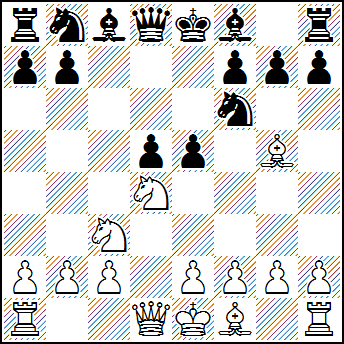
5. Bg5 e5. Black’s last move looks a little suspicious to me.

6. Ndb5 a6??. As the author says, black is playing by analogy and runs straight into trouble.
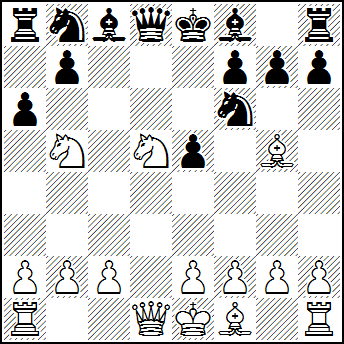
7. Nxd5!
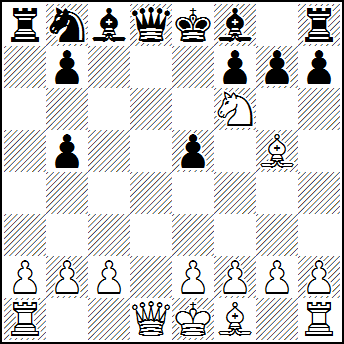
7. … axb5 8. Nxf6 1-0. If only all our opponents could be so accommodating!
Posted in Life beyond the chess board on October 31, 2015| Leave a Comment »
It is claimed that black’s next move was the best move of the 20th century, the game is, of course, Topalov – Shirov, Linares 98.
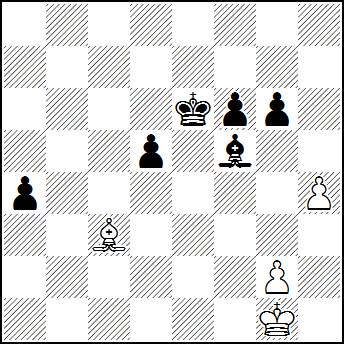
White has just played 47. Kg1, what should black play next?
Here’s the game if you want the answer.
Posted in Life beyond the chess board on October 30, 2015| Leave a Comment »
More needs to be said regarding the way it computes, nevertheless an interesting development.
Posted in Life beyond the chess board on October 29, 2015| Leave a Comment »
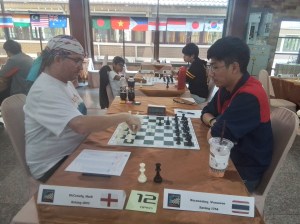
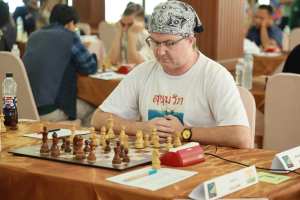
Whilst visiting a retired friend in Cha am, Thailand a few years back, he told me that he once beat his fellow compatriot and the current world champion Magnus Carlsen as we played a few friendly games in his lovely house. With Carlsen being quite young at the time, only 10 years old in fact, the game is something of a Pyrrhic victory for my old playing partner…not that he was boasting or anything like that of course. Anyway, here is their game:
http://www.chessgames.com/perl/chessgame?gid=1394407
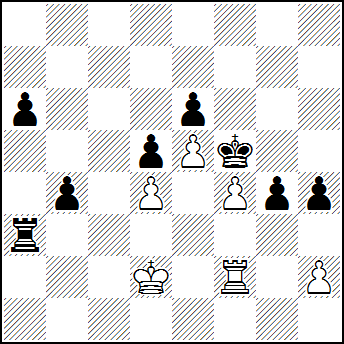
The final position after 52. … Ra3.

Cha am. A quiet resort, popular among Thais.
Posted in Life beyond the chess board on October 27, 2015| Leave a Comment »
GM Michael Adams, arguably England’s greatest ever player, won a game in fine style against GM Maxim Matlakov at he European Club Championship with a deep move that had chess-playing friend Peter Frost in awe.

White (GM Adams) has just played 27 Bb3, a very deep move allowing a loss of material as well as structural damage.
You can play out the rest of the game here -Mickey at his best.
Posted in Life beyond the chess board on October 27, 2015| Leave a Comment »
Someone once said ‘When I give check, I am never afraid’. Apart from the fact that the counter-check can give mate, it’s generally not a good idea to stop thinking in chess. Here’s an example of just that from the hallowed antiquity of 1987, taken from Burgess’s ‘Quickest Victories of all time’ (1998)
R.Huque – J.Hodgson London ‘Chess for Peace’ 1987
1 d4 Nf6
2 c4 c5
3 Nf3 cxd4
4 Nxd4 e5
5 Nb5 d5?!

6 cxd5 Bc5
7 d6? Ne4
8 Nc7+??

Instead of gaining a tempo, white now loses on the spot. Can you find the winning move?
8. … Qxc7!
9 Qa4+ Qc6 0-1
Posted in Life beyond the chess board on October 25, 2015| Leave a Comment »
As you might expect, the well-oiled machine that is http://www.chess24.com has brought us yet another wonderful video to watch. In the European Club Championships a non-European, namely Nakamura, is defeated handsomely by Swiss legend GM Pelletier, rated some 200 points plus below. Naka plays his familiar King’s Indian Defence and is lost before he knows what to do against a very clever piece sacrifice. An entertaining and instructive game is analyzed and explained in the vernacular by the multi-lingual, multi-talented GM Jan Gustafsson. Here it is, enjoy:
Posted in Life beyond the chess board on October 23, 2015| Leave a Comment »
More from GM Nunn here. Who wouldn’t play Ke5? (Note that white has a peak rating of 2732 and even he got it wrong!)

Posted in Life beyond the chess board on October 16, 2015| Leave a Comment »
Here’s an interesting read from a great book.
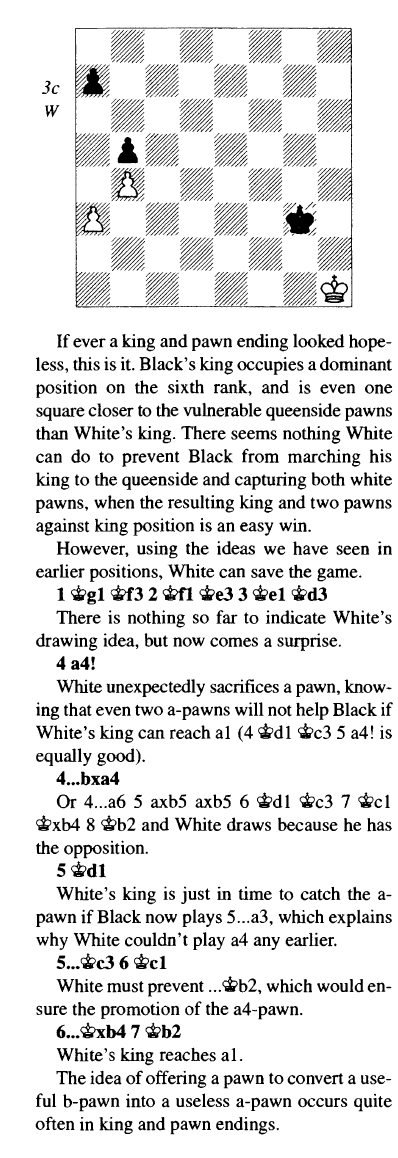
Understanding Chess Endgames, Dr.John Nunn (2009) pg. 13
| M | T | W | T | F | S | S |
|---|---|---|---|---|---|---|
| 1 | 2 | 3 | 4 | 5 | ||
| 6 | 7 | 8 | 9 | 10 | 11 | 12 |
| 13 | 14 | 15 | 16 | 17 | 18 | 19 |
| 20 | 21 | 22 | 23 | 24 | 25 | 26 |
| 27 | 28 | 29 | 30 | |||
A side note on how to read old Tom Sweby's columns
Not perhaps, but quintessentially, Old Tom Sweby is best thought of as a passionate devotee to the newspapers he wrote for. He was well read and knowledgeable of the Bedfordshire chess scene and well beyond, given that he was the president of the S.C.C.U. once upon a time. He was generally well-respected and rubbed shoulders with many, if not all, of those eminent within British chess circles. It would, however, be a critical mistake to see his column is primary source material entirely. That it is not. You will also find secondary source material quoted too, and the reliability of that is not quite as Tom hoped. Given that he wrote for decades, this is to some degree inevitable, and after all we are all prone to error whether we realize it or not. Thankfully, with regards to old Tom Sweby, they are infrequent and for the most part old Tom continued to document events and developments in the Bedfordshire league from the get go as best he could but, of course, everything lies open to interpretation. Despite this, and generally speaking. this does indeed make him informative and thus worth reading. Dare I say his columns constitute a narrative describing the latest developments, match reports and changing nature of the Beds league...he knew his audience and wrote according. This manifested itself over decades but brevity was always in play courtesy of the restictions imposed by writing a column. Should you wish to read a in instrumental figure of the Beds' league post WW2, you are quite welcome to peruse what has been posted here... . :-) I should, however, point out that as the decades wore on he gradually moved on away from narratives concerning the Bedfordshire league towards affairs both historical and international. The reasons for this are multifarous, old age was a predominante factor presumably, however, the bottom line is with regards to how the Bedfordshire chess scene developed post WW2: old Tom Sweby is your go to guy. He wrote more about chess in Bedforshire than anyone else did but given he was a Lutonian and writing for a Luton newspaper there is both bias and greater coverage of his hometown than the rest of the county.
















To add comments, please see the bell at the top of the page.
 McCreadyandChess