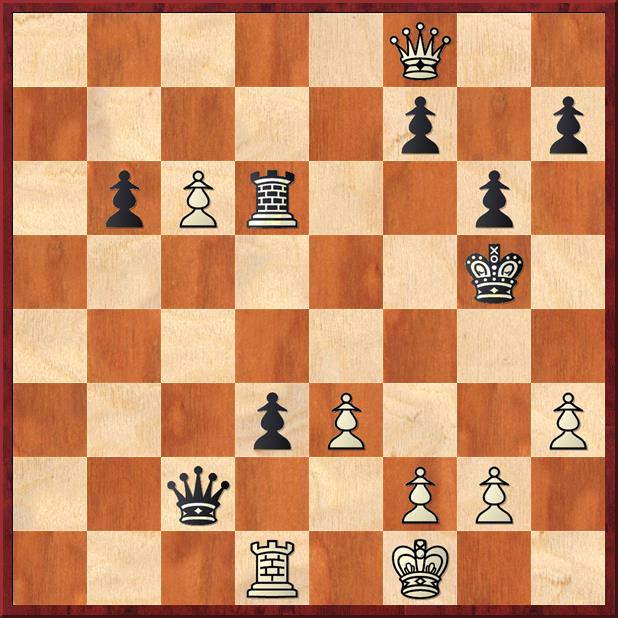
I found the position below on a recent Chessbase post. It is from GM Khismatullin v GM Eljanov from round ten of the European Championship.
White plays 44 Kg1!! To which black plays 44…Qxd1+. What an amazing move Kg1 is. The purpose, of course, is to put the queen onto the worst square on the board, leaving black completely helpless to the numerous threats of mate that will come. Being a rook up, it is unsurprising that black thought he has at best a draw, which is not the case.
White has a 13 move forced win. It’s actually not as difficult to find as you might think owing to the poor position of the black king. It’s a pleasant way to spent 20 minutes by tuning up your skills of analysis. Can you find the winning line?
You can play through the whole game here if you cannot.
The Chessbase package ‘Fritz & Chesster’ is now free for all http://fritzandchesster.chessbase.com/. Those who have used it can tell you how effective it is. An absolute must for any teacher or parent who wants to teach their pupil/child chess, I haven’t found anything that can come close to it. Just bear in mind that you will still need a board to put the content into practice. As great as the program is, it can’t do all the work for you I’m afraid. If you like the software and plan to use it extensively, it might be better to purchase it anyway to avoid dependency on secure internet connections.
After failing to return the grand total of 160 pounds, which is a lifetime of chess earnings for the average amateur player, an English chess player has found himself in court.
As I write from behind the former iron curtain it is past midnight. The streets below my window are bitterly cold and quiet now. The 50 kmh winds blowing across Baku bring the temperature down to below -20. Work has been closed. Twelve hours of snow are forecast, it will feel like -30 tomorrow they said on the radio. I do not have to wake up early the next day. My wife and daughter are fast asleep. There is time to write. Many candles are lit. Let us begin.
In my distant homelands there is momentum to bring chess into schools in the hope that, one day, every child in England will play chess at school. Should that ever become a reality, then its popularity might give rise to the many forms of our beautiful game now rapidly becoming obsolete. Living chess, where actual people participate as pieces/pawns could capture the imagination of the nation, and like in the army, a form of national conscription may one day exist, where all members of the public are commandeered, just like in the tv show linked below. Should you ever find yourself in such an unlikely situation, you might want to know which piece/pawn has the highest survival rate on the board. By that I mean which piece/pawn is least likely to be captured (Kings excluded of course). Even if you’re not a life-long day-dreamer like myself, you can rate your chances of survival more effectively by clicking on the following link: http://www.quora.com/What-are-the-chances-of-survival-of-individual-chess-pieces-in-average-games.
Do you know who the actor is in the centre of the shot?
If you’ve ever been lucky enough to watch a game of living chess ‘live’ as it were, then you’ll know how great it can be. If you haven’t, then you could click on the link below to see a dramatized version of it. However, young readers should note that the show might be too retro for them, and lovers of mainstream media should note that the show is a cult classic. It is Patrick McGoohan’s ‘The Prisoner’ from the 60’s, episode 8 entitled ‘Checkmate’. It’s one that he wrote himself as he too was a chess lover. It’s very heavy on metaphor and a little difficult to follow if you aren’t familiar with the concept of the show, so my advice is look into it first if you haven’t watched it before. I did a photo shoot there once, the village is as beautiful now as it was then I can confirm. The iconography in the show is fascinating and the production crew were highly accomplished but its certainly not for everyone.
Anyway, its been a long day and its nearly one am now, I’d best get to bed and hope the heating doesn’t fail…enjoy.
I found the following problem on a chessbase post, where they claim it appeared in Shakhmaty V SSSR 1935. It’s white to play and win, chess artistry at its finest.
The latest attempt to create an on-line chess platform can be found here, https://chess24.com/. It is, of course, the eagerly awaited Chess24 site. Whilst photographing an event last year, I spoke to GM Jan Gustaffsen about it, he mentioned that a tremendous amount of money and effort had gone into developing it. I have to say, they’ve found a winning formula with it, almost immediately it becomes obvious that it is vastly superior to anything that has gone before it. It’s multi-platform, with too many options to document here. The main ones being; however, a playing arena with a variety of time controls, live broadcasts of major tournaments with commentary from the very best in the world, video series from some of the top names of the chess world, tactics trainers, specifically designed courses, and even a news feed, everything’s there all in one site! You’ll need to register but its very simple. The basic membership is free and adequate enough but you can go Premium for $99 a year, which I plan to do shortly. I only play 30 minute games, my user name being mccreadyandchess, my rating is around the 2100 mark at present. If time allows, I’m always up for a game….merry xmas.
It’s so cold outside and there’s nothing to do so here’s a few thoughts from last month… .
On the coldest day of the year, which had now reached early November, it rained in Baku without stopping. As I left work, I rode through the slippery cobbled streets of the old city, and when I passed through the ancient ‘goshagala’ (double gate) I was wet through to the skin already. Broad and straight, Azerbycan Prospetki, was under heavy cloud and slow with traffic, and to make matters worse, my phone had no credit. I had to call my wife to see if she was home.
Through the pouring rain I cycled, looking for a roadside kiosk, in hope I would see a pay phone amongst the grimacing piyada. It was not until I reached the chess club at the end of the prospekti that I did, though in truth I must have passed many before that. It would not accept the Qepik I used, and with the rain becoming heavier, I took refuge inside the chess club. The heating and lights were on full as a tournament was in progress. Remembering to put my phone on silent, I did not distract anyone when my wife finally called to say she could not leave her friend’s apartment because of the weather…it meant I had some free time to watch the play unfold whilst drying off.
The tournament organizer was a very kind old gentleman, who being intrigued by his foreign visitor, invited me to play in the following round. It began the following day at three, so I had to decline due to work commitments but he was good enough to teach me a few things whilst I was there. I now know the names of the chess pieces in Azeri, and they are as follows:
pawn – piyada (pedestrian)
knight – at (horse)
bishop – fil (elephant)
rook – top (gun/canon)
queen – fazir (advisor)
king – shah (king)
If you are a frequent flyer, you might ask yourself on arrival at your destination: ‘What is the greatest game of chess ever played in the city I am now in?’ Located in Baku, I believe I know the answer to that question. It took place in a building I recently had the pleasure of visiting whilst the 2014 Grand Prix was played out. The majestic cultural center on Rashid Behbudov street – or ‘the great composer from the east’ as he was once affectionately known as. The game in question is between the lesser known Rashid Nezhmedtinov, and Mikhail Tal from 1961. It is, if I may say so, an absolute cracker of a game. You can watch it below on kingcrusher’s very good youtube channel.
Rashid, from what is now Kazakhstan, is to the left. He was one of many Soviet players who liked to play for the win…I suppose when you are playing amongst the very best in the world and aren’t quite there yourself, that’s the best way, especially when rating points aren’t up for grabs from draws.
You can find the conclusion (pgs. 195 – 196) to Richard Eales’s ‘Chess: The History of a Game’ below. It was written in 1985.
It is not primarily the task of the historian to make predictions. The history of chess is long and instructive, but it does not enable us to visualize where the game will stand a decade or a generation ahead with any confidence. Already there are new influences to take into account, such as the development of sophisticated computer chess programs. Computing will not make the chess player redundant, but its association with chess may well change attitudes to the game and its popular appeal (as well as providing competition for it in the form of new ‘computer games’). Nevertheless, some qualities of chess have been so persistent through the long history outlined in this book that they are likely to exercise a continuing influence over the development.
What are these qualities? First, as a complex game: chess has proved extraordinarily stable. Hundreds of years have passed, bringing with them new patterns of thought and leisure, and yet the rules of chess have altered hardly at all. In a thousand years of well-documented history there has only been one such major change, the one which took place c. 1475-1495. The game has moved geographically from culture to culture and remained similarly impervious; hence it was played in almost an identical way across the great expanse of the divided Christian and Muslim civilizations in the middle ages. Variant forms of chess have grown up in China, Japan and parts of south India and south-east Asia, but hardly at all elsewhere. With these exceptions, chess has remained essentially a single game, and has not been fragmented into many games each with its own local currency. This fixity of rule must testify to a constant element in the appeal of chess, something it has always been: an intriguing puzzle. Yet though chess has shown great stability as a game, even in different surroundings, its outward form – that of the conflict between two forces, both with a complex hierarchy of different pieces- has proved almost equally open to having external cultural meanings read into it. The chessmen symbolized the major elements of an army in early India and Islam; the ranks and degrees of feudal society and the state in the western middle ages. More recently some Soviet ideologists have seen in chess-playing a model for the ideal qualities of socialism and socialist man. In contemporary thought, interest in chess is polarized in different directions: towards psychologists and psycho-analysts or philosophers who find in the game evidence for the structure of human thought and motivation, or towards computer designers and programmers who have used it as a test in the development of artificial intelligence. This chameleon-like adaptability as a focus of cultural interest perhaps explains the historical popularity and importance of chess almost as much as its enduring game qualities.
In recent times though, competitive chess has been stripped of some of its ambiguities. Though it sometimes retains in the popular mind the image of a highbrow and exclusive mystery, it is increasingly treated as a treated high-brow and exclusive mystery, it is increasingly treated as a variant of a more familiar modern institution: the organized sport. Press and media portrayals of ‘typical’ chess players have abandoned the once popular stereotype of the eccentric old gentleman, lingered fondly over the newsworthy attractions of monomanic or cold warrior (Fischer, Korchnoi), before settling down to show simply competitive people who happen to be good at chess rather than tennis, swimming or something else. Many of the world’s leading chess players, it must be admittedly, are so incorrigibly ordinary that it would be hard to portray them in any other way. But the status of chess as a sport raises another major theme in the game’s history: the interrelation between popularity (‘quantity’) and technical and competitive progress (‘quality’) in its development. An obvious example is economic a professional players provide entertainment and instruction for an audience of less serious players, receiving support and patronage in return. Historically, the relationship has always been more complex than this, and it is often very hard to say why the game has been popular in one place or time rather than another. Certainly a chess master’s career can be frustrated by lack of a sufficiently numerous or educated public, just as much as that of an artist. It has been said that a great novelist should himself ‘create the taste by which he is appreciated’, and build up his own following, but often this is simply not possible, in chess even Morphy or Fischer (or the promoters of the Russian chess movement after 1917) needed a favourable environment in which to work if their individual examples were to have a lasting effect.
Arpad Elo’s correlation of recent international chess federation statistics on the number of masters and registered players in different countries provides no definitive answer to such problems, but it does show clearly that there are now more players and more and more very strong players than in the whole previous history of the game. This is not just a reflection of increases in national populations. Chess has spread rapidly outside its previous heartland of eastern Europe and the industrialized countries into the rest of the world. So far at least its involvement with computing has only aided its growth: computer programs have attracted new players without becoming so strong as to inspire the discouraging thought that the machine is unbeatable. At the time of writing, the higher reaches of competition are still well outside the computer’s range. The world champion is now firmly again in Russian hands, but after Fischer’s success in 1972 western opposition has been much stronger than in the 1950s and 1960s. In almost every respect, chess is better established now than ever beforein the paradoxical position it occupies in modern life: the only generally acknowledged sedentary (and cerebral) sport.
Dominic Lawson’s latest attempt to popularize chess can be found here: http://www.bbc.co.uk/programmes/b04njstc . As was the case with the first series, a pleasant 15 minutes or so can be spent whilst listening, its usually helpful to play through the games too, all of which can be found on the BBC website. There’s something for everyone in the five episodes but I thought the last of the five was by far the most interesting in terms of the conversation and play over the board.
…on what this site initially became…on what this site is now becoming…on what this site cannot become…
On what this site initially became…
…once upon a time, the chess-related musings of an adrift academic were bound playfully and electronically in this online journal of sorts. They grew and grew as the decade did too. I kept on because I love to write whether I had much to say or not; therefore, being read by others was usually of little or no importance, comparatively speaking. Content was based on personal thoughts and experience on various topics with no intended audience borne in mind. With topics broadening, my own take on things always shaped the narrative I constructed: I often thought I was insightful but never that I was right. Sometimes imagination gave rise to originality: and of that I have always remained proud. I often introduced humour, believing that I am funnier than I really am. Sometimes, I found my own style antithetical to the conservatism I believe chess is plagued by -oftentimes that has put a gracious smile on my face… .
On what this site is now becoming…
…this site is now becoming a collaboration of chess in Bedfordshire: much more so of the past than the present -that has become the dominant trend. I document the history of chess in Bedfordshire as much as I can, and as time has passed I have become more thorough and resourceful. However, I am not a trained historian as my background lies principally in philosophy but yes it is true I did study some modules on history as both an undergraduate and a post-graduate too; furthermore, I have trained myself up, particularly in terms of postmodern history. Since 2015, I have only read history and historiography as well as those philosophers who have been so influential on postmodern history, such as Nietzsche (whom I once wrote a 19,000 word dissertation on, entitled: Can the Will to Power be Found in The Birth of Tragedy?), also Richard Rorty and Foucault and I suppose certain structualists such as Claude Levi-Strauss too. Regarding postmodernism, mostly I keep to Hayden White, Keith Jenkins and Alan Muslow.
Some friends and former playing partners back home describe me as the ‘go to guy’ for the history of chess in Bedfordshire. This compliment says more about the lack of interest in the subject than my own endeavour. As mentioned, I am too adrift from academia to feel chuffed by it. Rather, I tend to lament that my historical research, like my chess, just isn’t what it should be. Even though I may well have a broad understanding of Bedfordshire chess history courtesy of the volume of research put into it, all of which began in 2014, this is not something I am particularly proud of. Nonetheless, out of courtesy compliments are graciously received. If the truth be told, I just see it as my job and only that – after all someone’s got to do it and no one else is that interested!
Amongst the many others, I have created three categories: ‘Bedfordshire Chess’ and ‘History of Bedfordshire Chess’ and ‘Luton Chess Club’. This website is slowly moving towards a consolidation of those (all of which can be found in one of the toolbars to the right).
On what this site cannot become…
…I like to be both creative and amusing when I can be, factor in that playfulness has been an ever-present factor, the content of this site should be thought of as multifarious. It could be said I continue to enjoy undermining the conservatism I believe chess is underpinned by even after all these years, and often try to use humour to do it still, believing I have got better at it. Consequently, despite the general direction its going in, this site cannot only be about Chess in Bedfordshire and nor will it be. It may become noted for that yes -in fact that’s been the case for years already even by established historians, archivists, and whoever else. External factors aside, this site is titled McCreadyandChess. I cannot, nor will I not, remove my own personal thoughts and experiences of chess from the posts of this site -especially if I think they are funny or original for they constitute my writing at its very, very best. In addition, the number of categories alone tells you that breadth of content is important to me. I am proud of my site, it is identity conferring and that is how it shall stay -end of story. All you really have are: ‘Some thoughts on the beautiful game’, which, incidentally, just happen to be my very own; nothing more, nothing less, take of it whatever you please… .
A side note on how to read old Tom Sweby's columns
Not perhaps, but quintessentially, Old Tom Sweby is best thought of as a passionate devotee to the newspapers he wrote for. He was well read and knowledgeable of the Bedfordshire chess scene and well beyond, given that he was the president of the S.C.C.U. once upon a time. He was generally well-respected and rubbed shoulders with many, if not all, of those eminent within British chess circles. It would, however, be a critical mistake to see his column is primary source material entirely. That it is not. You will also find secondary source material quoted too, and the reliability of that is not quite as Tom hoped. Given that he wrote for decades, this is to some degree inevitable, and after all we are all prone to error whether we realize it or not. Thankfully, with regards to old Tom Sweby, they are infrequent and for the most part old Tom continued to document events and developments in the Bedfordshire league from the get go as best he could but, of course, everything lies open to interpretation. Despite this, and generally speaking. this does indeed make him informative and thus worth reading. Dare I say his columns constitute a narrative describing the latest developments, match reports and changing nature of the Beds league...he knew his audience and wrote according. This manifested itself over decades but brevity was always in play courtesy of the restictions imposed by writing a column. Should you wish to read a in instrumental figure of the Beds' league post WW2, you are quite welcome to peruse what has been posted here... . :-) I should, however, point out that as the decades wore on he gradually moved on away from narratives concerning the Bedfordshire league towards affairs both historical and international. The reasons for this are multifarous, old age was a predominante factor presumably, however, the bottom line is with regards to how the Bedfordshire chess scene developed post WW2: old Tom Sweby is your go to guy. He wrote more about chess in Bedforshire than anyone else did but given he was a Lutonian and writing for a Luton newspaper there is both bias and greater coverage of his hometown than the rest of the county.
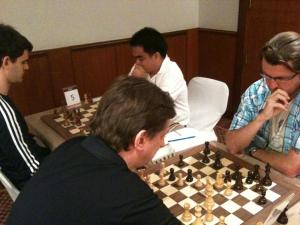
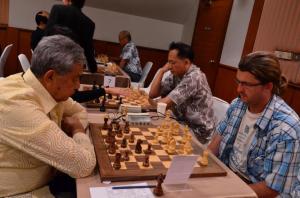
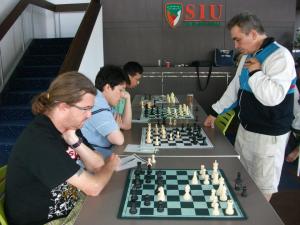
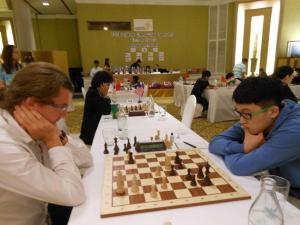
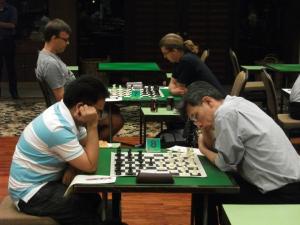
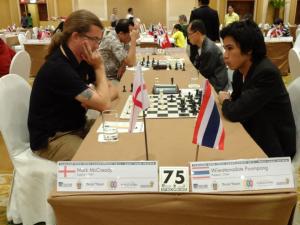
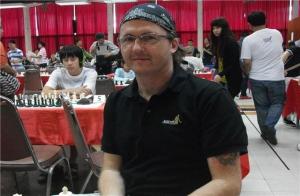
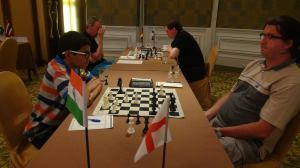
Gallery
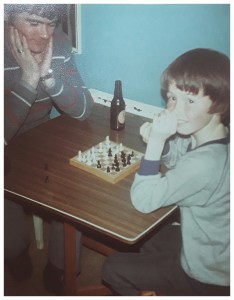
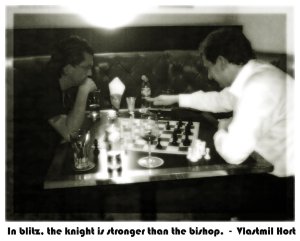
I’m either 10 or 11 here
1982, myself versus Brian from Sunderland.
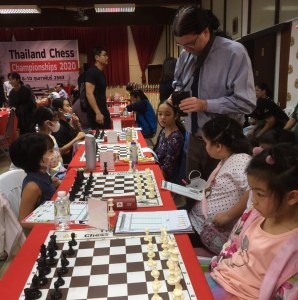
At the Thai Junior chess championships. My daughter of course.
Pattaya 2011
2011
Thai Junior Championships
2008
2011
Around 2011
2011
Pattaya 2009
2011
Kuwait 2008
2012
2012
2011 BKK Chess club
2011
2011 Thai Open
2011 Thai Open
2013 approx
Around 2014
2010
2012
Around 2011
2011
2011
2013
Around 2011
Around 2011
2020
2011
2008
2011
2013 or thereabouts
2010
2017
2014?
2010
2024
2024
2024
To add comments, please see the bell at the top of the page.


















 McCreadyandChess