Archive for the ‘Life beyond the chess board’ Category
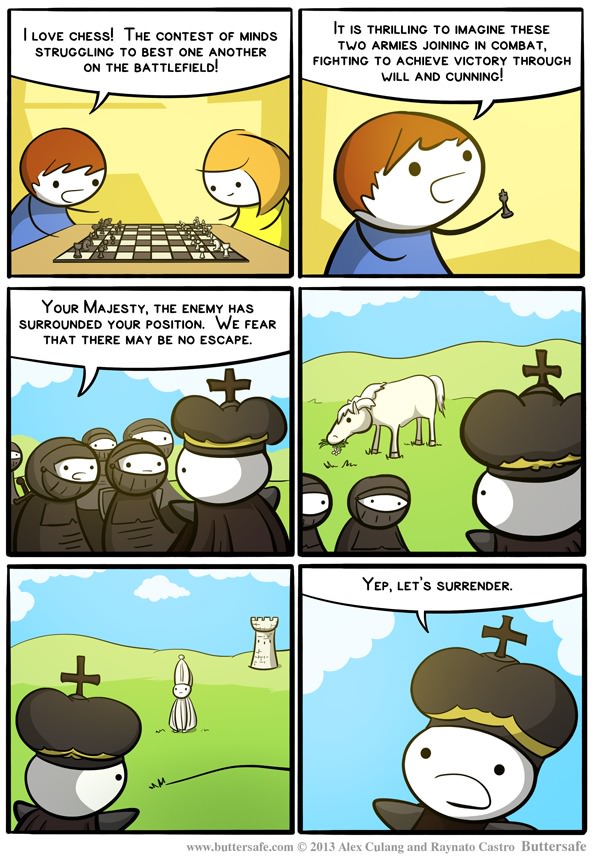
I Love Chess!
Posted in Life beyond the chess board on June 12, 2014| Leave a Comment »
Long Kasparov Interview
Posted in Life beyond the chess board, tagged kasparov interview on May 8, 2014| Leave a Comment »
If you are a Kasparov fan, you can find an interview lasting around 90 minutes here:
It’s from 2012 and worth a watch.
Premature resignations and a tricky mate in three.
Posted in Life beyond the chess board on May 3, 2014| Leave a Comment »
I was having another look of Invisible Chess Moves the other day and found an intriguing tale on page 109. In the position below, between Flohr and Grob 1953, white resigned but there is a defence. Can you see it?

This time we have Capablanca against George Alan Thomas, Hastings 1919 (pg.152)
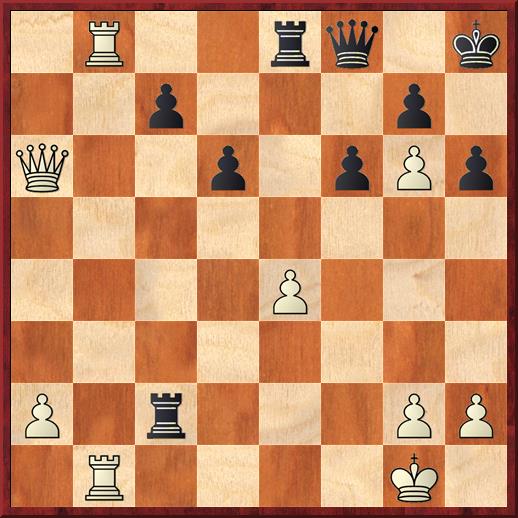
After 29 Qa8 black resigns although he has a perfectly playable move, which is what?
And lastly, (pg.147) there are many mates in four but only one in three, can you find it?

You can find the answers in the post below.
Chess News 4: Americans create million-dollar chess program.
Posted in Life beyond the chess board on May 3, 2014| Leave a Comment »
An interesting and well-written article concerning collegiate chess in the US has appeared in The Washington Post. Though the sums of money involved may seem ridiculously high, not everyone puts a price on success.
Answers to positions above:
1) Kh1. If Qf1 then Bg1!
2) Rxa2!
3) Rc3! If Kb8 then Kb6 with mate to follow.
Chess and E-mail
Posted in Life beyond the chess board, tagged International E-mail Chess Club on April 1, 2014| Leave a Comment »
War: what is it good for? Absolutely nothing…well according to Edward Starr, though I’d be curious to hear his take on why after 500 years of peace, all Switzerland ever invented was the cuckoo clock… but perhaps such comedic, undergraduate afterthoughts are best left for another time? How about the internet and its ensuing digital revolution: what is that good for? Absolutely nothing other than wasting a few hours everyday and winding up a few fellow chess players online? Not true. Although on-line chess certainly has its pitfalls. Personally, I avoid the main sites as the etiquette of many registered leaves a lot to be desired.
When chess was booming in the late 70’s and early 80’s, after the Fischer and Spassky match, correspondence chess was popular across the globe. Even the best literature of the day, such as Webb’s Chess for Tigers contains a highly useful chapter on it. But as the popularity of chess has waned since and sought electronic formats as well, correspondence chess has suffered accordingly, with only a few die hard fans propping it up these days. Our modern age offers a middle path though, chess by e-mail! If you click on the following link you can find the International E-mail Chess Club, of which I have been a member for about two years now. http://www.chess-iecc.com .
How it works is that you will be paired up with someone within 200 points of your rating. After that you correspond with your opponent and send each other a move within five days of the last. The website is for those who enjoy their chess. There are no annoying little kids, cheats, and people who become rude the second they start losing. There are no frills, its just solid chess for those who love their chess. The site is run efficiently, it is rare that a problem of any kind occurs.
However, I should point out that there are principal differences between chess by correspondence (electronic or otherwise) and over the board chess. I’m not a professional player by any means so I cannot talk at great length. The only advice I can give is to read Webb’s Chess for Tigers. The principle difference, I’ve noticed, is that there is no -real- time constraint as in over the board chess, so you should expect your poor moves to be punished, if you yourself do not use the time available to you. I’m constantly surprised by how consistent the play of my opponents is. Correspondence chess is great for tuning up your skills of analysis and many who play it regularly calculate well. One of the reasons for that is, I think, that you are working with a real board yourself rather than sitting staring at some snazzy interface: though as Webb mentions, an important caveat is when analyzing, its easy to set up the position wrongly if you have just spent days looking at sidelines…I think I’ve already lost 3 games through doing that because I was so caught up in my own analysis.
If you are uncertain of the importance of the digital revolution, then how about a short interview by Lucianio Floridi? An admirably self-confident man who I got to know for a short while whilst studying.
http://philosophybites.com/2009/06/luciano-floridi-on-the-fourth-revolution.html
Have you got five minutes to spare?
Posted in Life beyond the chess board on January 19, 2014| Leave a Comment »
A quiz which tests your ‘Chess Personality’ has appeared on the net. It’s a bit of fun for a few minutes and not much more. I got ‘mastermind’ whatever that is supposed to mean
Chess News 3: Chess venue turned into slaughter house after illegal move played
Posted in Life beyond the chess board on January 14, 2014| Leave a Comment »
Our Catholic friends are at it again. A hot-tempered Italian and an Irishman (probably drunk during play) played a late night game of chess, which resulted in a throat being cut open, many other knife wounds as well as other details that the police could not reveal. Even old King Canute never got that carried away… .
Ghastly stuff… .
http://www.theguardian.com/world/2014/jan/13/chess-murder-dublin
Across the Board
Posted in Life beyond the chess board, tagged across the board on January 5, 2014| Leave a Comment »
In general I consider that in chess everything rests on tactics. If one thinks of strategy as a block of marble, then tactics are the chisel with which a master operates, in creating works of chess art. – Tigran Petrosian
If like myself you are a bit of a cynic when it comes to journalism in chess, you may have developed an eye for that worthy of attention. If so, perhaps you noticed the BBC Radio 4 production Across the Board by Dominic Lawson?
The caliber of the journalism is high as you would expect. In each episode a game is played between Dominic and his interlocutor, during which discussion is held about chess and how it has changed the lives of his opponents. There are five episodes in total, with opponents ranging from Politicians to Boxers, Political Prisoners, and even a certain Women’s World Champion.
I found Across the Board to be engaging, carefully researched and deft in touch. Dominic’s style is to converse by expanding on a series on well-chosen questions. The first episode in particular was handled very sensitively and with great dexterity. It was interesting to hear Mr.Healy’s side of his treatment by Faber and Faber, and for me, completely believable. Perhaps a minor criticism may concern the suitability of Hou Yifan. As lovely as she is, I thought she was, perhaps, too young and inexperienced for such a thing -was her inclusion a tip of the hat to chess fans?
The link to all episodes is below in case you missed it. If you are reading this from Jan 2015 onwards, I’m afraid you’ll have to root them out elsewhere. I hope we see Dominic at next year’s Thai Open. Apologies if my daughter’s screaming put him off his pasta during lunch that time last year…hopefully Ms. Trouble won’t cause so much commotion if I can make it this time.
http://www.bbc.co.uk/programmes/b03pc5q9/episodes/guide
The tactician must know what to do whenever something needs doing;the strategist must know what to do when nothing needs doing. – Savielly Tartakower
Queen Sacrifice
Posted in Life beyond the chess board on December 31, 2013| Leave a Comment »
Queen Sacrifice is a short film that won many awards in its day. I remember it being shown on BBC 2 in the winter of 1989 but have not seen it since. Though, superficially, the work may appear utterly pointless it is quite a clever, light-hearted piece of work, the only real difficulty is working out if the writer is a chess player or not. The chess action is so quirky it’s hard to tell, though I suspect not.
MJM
Magnus on VGTV
Posted in Life beyond the chess board, tagged magnus, vgtv on December 30, 2013| Leave a Comment »
As 2013 comes to a close and my inability to book a train ticket to Tbilisi in time has scuppered my plans for the new year, I will use some of the break ahead to catch up on the many films and documentaries which have appeared on Chessbase recently, linking the best of them on this site. In this post, however, I’ve linked an interview with Magnus instead, as it is impressive on many levels and certainly worth a watch even if you are not an admirer.
Interviewing is an art in itself, and like top-flight chess requires much preparation and understanding of your subject/opponent, some creativity and an ability to seize the moment don’t go amiss also. What I particularly liked about this interview is that it is exemplifies both how to conduct an interview professionally and just how difficult it is to show chess players in a more revealing light. To do this, the interviewer probes the mind of Magnus for 30 minutes, and quite skillfully at times too. Even though some of the questions asked are a little uncomfortable for him, they are handled by his interlocutor with a level of sensitivity that allows the conversation to flow sufficiently. That may sound insignificant but its not. As you will see, Magnus cannot help but ponder or think deeply about even the most trivial of questions, thus getting the subject talking is a tough ask for our non-chess playing friends. Perhaps that was why I did notice the occasional lack of finesse too. Some of the earlier attempts to flatter Magnus weren’t effective and the question ‘What makes you cry?’ asked so directly, isn’t likely to get much of a reply from a shy 23 year old male on tv. You would never have seen Frost blunder like that in his heyday. Anyway, enjoy.
MJM
-
Recent Posts
April 2026 M T W T F S S 1 2 3 4 5 6 7 8 9 10 11 12 13 14 15 16 17 18 19 20 21 22 23 24 25 26 27 28 29 30 Archives
…on what this site initially became…on what this site is now becoming…on what this site cannot become…
Categories
- Academia
- Bedfordshire Chess
- Chess
- Chess in Thailand
- Dear Ken
- Documentaries
- FIDE
- History of Bedfordshire Chess
- Humour
- Kasparyan
- Life beyond the chess board
- Luton Chess Club
- Meme
- Moves I could never play
- My daughter
- My own endeavours
- My Own Games
- My own warped humour
- On-line journal
- Personal Interest & Experience
- Postmodern History
- Quaint Chess History
- Reflections
- Reviews
- Selected on-line games
- Sources of inspiration
- Tournament Chess
- Trivia
- Viz inspired material
- Who wants to be a millionaire chess special
- World Championships Analytics
Posts which McCready is mighty pleased with
Luton & The University of Bedfordshire Chess Club
01582 743921/07710036246 (Humuyan)Tuesdays from 7.30 pm, The Library, Ground Floor
Please go to:
https://www.lutonchessclub.com/Blog Stats
- 32,257 hits
-
Join 39 other subscribers
-
A side note on how to read old Tom Sweby's columns
-
Not perhaps, but quintessentially, Old Tom Sweby is best thought of as a passionate devotee to the newspapers he wrote for. He was well read and knowledgeable of the Bedfordshire chess scene and well beyond, given that he was the president of the S.C.C.U. once upon a time. He was generally well-respected and rubbed shoulders with many, if not all, of those eminent within British chess circles. It would, however, be a critical mistake to see his column is primary source material entirely. That it is not. You will also find secondary source material quoted too, and the reliability of that is not quite as Tom hoped. Given that he wrote for decades, this is to some degree inevitable, and after all we are all prone to error whether we realize it or not. Thankfully, with regards to old Tom Sweby, they are infrequent and for the most part old Tom continued to document events and developments in the Bedfordshire league from the get go as best he could but, of course, everything lies open to interpretation. Despite this, and generally speaking. this does indeed make him informative and thus worth reading. Dare I say his columns constitute a narrative describing the latest developments, match reports and changing nature of the Beds league...he knew his audience and wrote according. This manifested itself over decades but brevity was always in play courtesy of the restictions imposed by writing a column. Should you wish to read a in instrumental figure of the Beds' league post WW2, you are quite welcome to peruse what has been posted here... . :-) I should, however, point out that as the decades wore on he gradually moved on away from narratives concerning the Bedfordshire league towards affairs both historical and international. The reasons for this are multifarous, old age was a predominante factor presumably, however, the bottom line is with regards to how the Bedfordshire chess scene developed post WW2: old Tom Sweby is your go to guy. He wrote more about chess in Bedforshire than anyone else did but given he was a Lutonian and writing for a Luton newspaper there is both bias and greater coverage of his hometown than the rest of the county.
Gallery
-
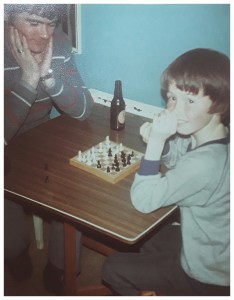
- I’m either 10 or 11 here
-

- 1982, myself versus Brian from Sunderland.
-

- At the Thai Junior chess championships. My daughter of course.
-

- Pattaya 2011
-

- 2011
-
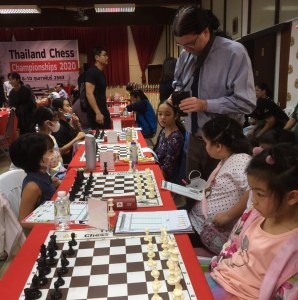
- Thai Junior Championships
-

- 2008
-

- 2011
-
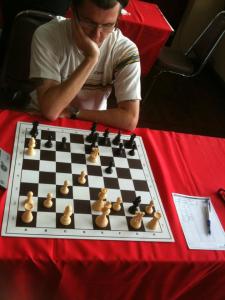
- Around 2011
-
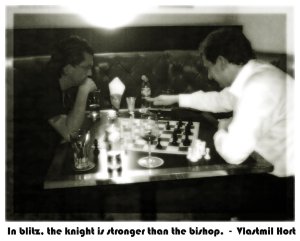
- 2011
-

- Pattaya 2009
-

- 2011
-

- Kuwait 2008
-

- 2012
-
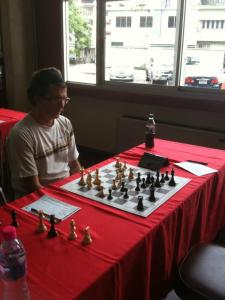
- 2012
-
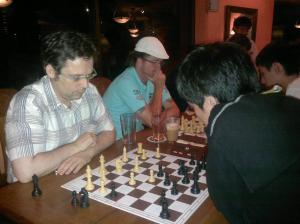
- 2011 BKK Chess club
-

- 2011
-

- 2011 Thai Open
-
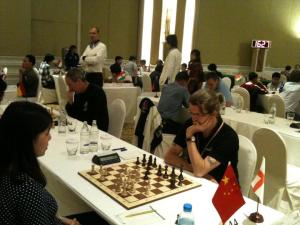
- 2011 Thai Open
-
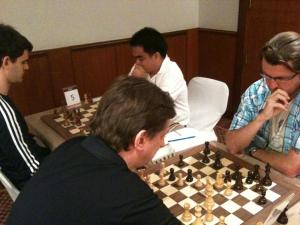
- 2013 approx
-
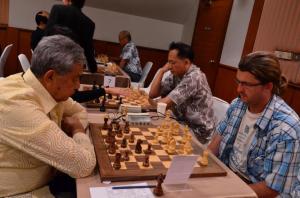
- Around 2014
-
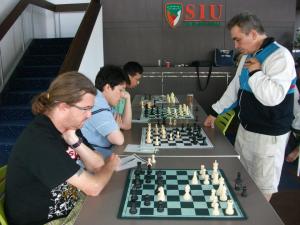
- 2010
-
- 2012
-

- Around 2011
-
- 2011
-
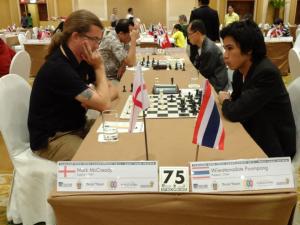
- 2011
-

- 2013
-

- Around 2011
-

- Around 2011
-

- 2020
-
- 2011
-

- 2008
-
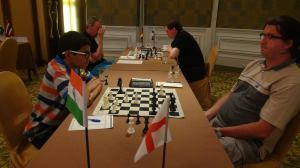
- 2011
-

- 2013 or thereabouts
-
- 2010
-

- 2017
-
- 2014?
-
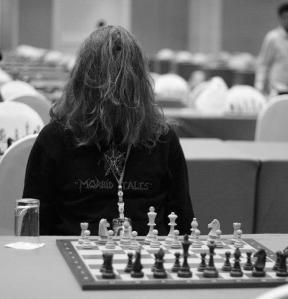
- 2010
-
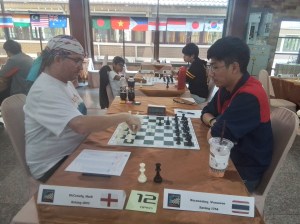
- 2024
-
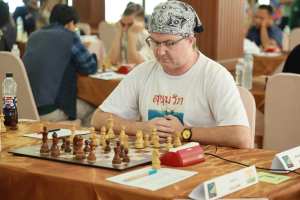
- 2024
-

- 2024
-
-
To add comments, please see the bell at the top of the page.
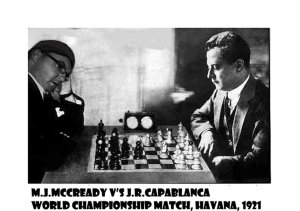

 McCreadyandChess