Did you know that a rain forest the size of Covent Garden is cut down everyday to make way for chess publications? Hundreds of species are reported to have lost their home, become untraceable (as no forwarding address was left) and even extinct occasionally. One species, it is said, secreted an oil which has soothing capacities for those in time-trouble, an indigenous GM from Brazil claimed. He added further that pre-match preparation rarely extended beyond incorporating the oil into a balm which would be rubbed into the shins during play. I wonder if chess will ever become partially responsible for environmental catastrophe -that is should such a thing be possible-hmm…perhaps I should stop buying hard copies and seek out the soft copy in a less guiltier fashion just in case?!

Not intentionally -and without guilt I might add- I recently picked up the publication that cost the most out of the 30-something books I’ve acquired this year. It’s not often that I pay over 40 quid for a book, in fact its only ever happened twice in my whole life. Being the most expensive chess book I’ve ever bought, perhaps it was inevitable that the publication would pop its way up the reading order somehow.

The book I am referring to is Edward Winter’s Chess Facts and Fables. which is a McFarland publication from deepest, darkest two thousand and six…or 2006 as its also known. Winter is known for his famous Chess Notes website. Like many, I have respect for its author, which is the primary reason why I bought the book. Specifically, I wanted to see how the published and on-line content differed, hoping the published material would be superior in content. Though there’s truth in that, the published material does not differ greatly in quality, though enough to justify purchase.

Some Comments

The purpose of the text is explained clearly in the preface:

‘Fact and fable are commonly intermingled, and chess historians have a hard time disentangling them, for the game’s literature is particularly blighted by untrustworthy assertions, rickety anecdotes and dubious quotes. The intention of the Chess Notes series, which began in 1982, is to sort out fact from fable and to present fresh, accurate material.’

Winter is not a distinguished player as such but a historian (not an historian given that it is currently 2012), meaning that the text is academic in approach and format. He is critical of chess literature on the whole, with the rigours of academia perhaps putting him at variance with literary conventions, or lack thereof, in chess literature. Before looking more closely at the text, I would like to reflect upon this potential variance with a pre-amble.

A Preamble

How do we make headway through the jungle of chess literature effectively? Is it a fundamental mistake to attribute blame towards a collective of individuals within chess, or are there issues within the literary culture of chess which are broader? Here’s some thoughts from William Hartston, taken from the August edition of the British magazine Chess:

“You have to separate the professional players who are actually making a living out of the game, and the professional players who are just layabouts who don’t do anything other than play chess of whom there are always lots” (pg.24) 

I would like to argue that Bill’s comments apply to literature in chess for a number of reasons. Without over-simplifying matters, there are many authors in chess who have a noticeable weakness in terms of distinguishing ability from knowledge, and in turn knowledge from the communication of knowledge. There’s often an underlying assumption amongst the guilty that being endowed with chess ability enables you to write & research competently, which are it seems, not skills in their own right. Instead, they are natural bi-products from chess ability and thus do not need to be practiced and mastered to the extent that chess does. Unfortunately, there is some justification here: if a literary genre is poor on the whole, why should anyone have to worry about the quality of their publications? Aren’t my mates the publishers? And won’t that uncritical reader Joe Public just buy anyway? However, should you want to achieve originality rather than mediocrity, then a more reflective approach is required. On page 132, Winter describes the writing of Reinfield and Golombek as being glib and portentous in its attempt to reveal the motivations of Botvinnik. I can’t reproduce the source as the quotation is lengthy, however, it is hard to disagree that what is reproduced appears fabricated rather than researched. On page 248, former world champion Lasker comes under scrutiny, appearing in an article named ‘Literary Controversies’

“An English edition of Dr.Lasker’s ‘Chess Manual had just come out to a most reverential reception by the critics. The Doctor, however, had by no means done his homework, and furthermore had indulged in some obscure philosophy and phoney eloquence which, had it come from anyone else, might have raised an awful whisper of waffle!”…

Personally, I’ve always found motivation to be a perpetual problem in chess literature, and that its vital -not necessary- to ask yourself what the primary purpose behind writing is: to educate or to supplement an income in a poor man’s game by making a name for yourself? Did the author actually enjoy the writing process, do they have the credentials to write effectively, and if so, exactly how much thought went into the construction of the text, given that incoherent analysis, incomplete sections, rushed, wrong format, contradictory, poorly researched, no substantiation of important points, can seem par for the course with certain publishers & authors? Winter, often appearing as a sniper, has an easy time taking such individuals to task, as we all have. However, it is important to remember that the relative structure of academia (where some of us do perform proper research) and publishing in chess differ greatly.

In broader terms, the problem of practitioners misapplying themselves to the craft of writing can be found in all sports & pastimes. It is not just chess that suffers from this problem as many distinguished sportsmen/women often turn their hand to writing, usually with negative results. Though, in my opinion chess literature is generally poor, there has been discernible improvement in the last ten-twenty years. Poker, the game of the day according to Kasparov, is another good example of game in which top players will write about how to improve your game, whilst lacking the skills to do so effectively. The author of this blog has delved into such publications, and can confirm that poker literature is in far worse shape than chess literature, generally speaking (but makes for a better xmas present).

The question of exactly who should and shouldn’t write is a complex one as many factors -most importantly profit-can dictate; having a name or a title, however, can create a false sense of security by offering opportunity where those more suitably qualified are overlooked. After all, why wouldn’t you want to hear directly from someone who has helped fashion history rather than some unknown academic or journalist, isn’t that how the story goes? Well you should at least question such an approach because the person who literally writes history with their achievement is rarely able to document it effectively. Sometimes, sound literary practice doesn’t even come in the window let alone go out it, what is produced is often questionable on a number of levels, as Winter mentions above. What I think is particularly frustrating about chess is that it is an intellectual pursuit, you -or at least I- don’t expect the craft of writing to be treated with such scant regard. Top chess players are noted for being bookish and intellectual yet they frequently contribute poor literature, completely lacking in inspiration and originality. Writing, like chess, is an art/science/skill, whatever you want to call it, that takes years to master. If you believe you can write effectively about something you do just like that with no real talent, training or application, then in my opinion, you have allowed either a need for money or a love of chess to blind you. There’s a saying which goes ‘Those who can, do, those who can’t teach’ In the context of the modern game I would modify that to ‘Those who can, do and write about it too, whilst those who can’t teach’. It shouldn’t be like that, pools of talent should be based on merit only and should remain separate from one another so that neither drags the other down. It’s only us who are rubbish at everything -my particular field of expertise-that should cross boundaries so willy-nilly, as no one cares what we say -right readers?

Once again my points are generic, I will refer more directly to examples as I encounter them. I should close by stating it is not my intention to review texts that are suspect, nor to criticize and offer solutions. This pre-amble was written to highlight issues that are apparent to me within chess literature and to reflect upon them, that’s all.

Content

Some points of personal interest within, starting with the Anglophile, Capablanca.

Chess by climate

It’s probably illegal for Cubans to dislike Capablanca and being a Brit I am compelled to say that I also enjoyed the Capablanca interview on page 89. I say this because of the close relationship Britain and Cuba have, ever since a bus route was constructed between the two, following this linked tv clip http://www.youtube.com/watch?v=Uc_NS_4QCWI. The tricky thing about interviews, however, is that the uncreative journalist can only publish what was said, they cannot publish what the interviewee thought of the interview or the interviewer. There are often good reasons for this, such as wanting to keep your job. But all this means that its difficult to ascertain the seriousness of what has been said. If the person being interviewed disregards the publication or doesn’t like the interviewer, the interview is often best ignored. Let’s look at a rather tongue in cheek Capablanca in transit from Havana to Moscow:

‘Climate, Capablanca said, has more to do with creating chessplayers than any other factor. He regards himself as an ‘accident’ in the chess world, as, he asserts, tropical or semi-tropical countries seldom produce a chessplayer…England, he thinks, produces excellent chessplayers because of its peculiarly raw climate, which drives men into indoor pursuits’.

Though he may have been able to support his views with statistical data, I would like to think his comments are somewhat light-hearted, perhaps inspired by a cuise-liner martini? Of course Capablanca wasn’t to know of the contribution chess has made towards environmental catastrophe and its impending doom, in which most countries will be either ‘tropical or semi-tropical’ as he put it.

More seriously, a serious attempt is made to document the often overlooked period of transition between Alekhine and Botvinnik. I found this to be section fascinating if somewhat incredible in places. Above all, I helped frame the difficulties F.I.D.E has had throughout its history, revealing that internal dissensions are precisely what gives F.I.D.E its name. It is a sad fact that 70 years on, little has changed. I don’t think we’ll ever be seeing GM Danny King applying his catch-phrase ‘Start-right’ to F.I.D.E.

An example of how easy Winter’s job is can be found on page 110. He addresses a misquotation by Chernev, concerning what is generally considered to be the worst advice in chess, that being the oft quoted ‘Great players never castle’. Winter is quick to point out that the original statement runs as follows ‘Good players seldom castle until the end of the game, and often never at all’. The alleged ‘worst advice in chess’ is in fact nothing more than a statement based upon the play of a few individuals.

On page 257, Mr Winter turns his attention to Kasparov’s work entitled ‘My Great Predecessors’ ??! –  a highly dubious publication. Though, admittedly, much of the content of Mr.Winter’s writing can appear a little obscure and perhaps even irrelevant, here is a topic which is of great importance for the modern chess player. The account provided is invaluable to any inquiring reader as so much can be learnt -and not learnt-from the collective effort which Mr.Kasparov has put his name to. The listed errors alone is off-putting, however, but for those of us who do enjoy writing for what it is can tell you, it is the construction of the text that is most revealing. What Mr.Winter has to say is important not only because it draws into question the text itself but also, to some degree, the literary circles within which the text appeared. Those of us who have dared to delve into them know how abhorrent they can be…sadly we are in a small minority.

To conclude, reading Winter’s work is an education in itself. It questions the efforts of generations of chess players without being haughty or condescending. Given that it is the only text I have read which he has written, I do not wish to extend my comments to his more general aims for writing. It is true that there is a sense in which exemplifying the mistakes of others is an all-too-easy task, and at times I did wonder where it all leads, as defining what history is or what it involves for Mr.Winter is difficult to establish. I hope that I will one day find a definition of what history is according to Mr.Winter, because his efforts to establish truths in chess more often involve correcting others than constructing the past with his own voice.

Unfortunately, many regard the critic as an enemy, instead of seeing him as a guide to the truth …  –  Wilhelm Steinitz

The Genius and the misery of chess, I came across this text after reading several reviews on-line. It arrived in my hands just before I was about to order an Arrabbiata, at a local restaurant and being relatively small text, I began reading what at first appeared to be an entertaining, if somewhat superficial, account of genius and misery in chess, the purpose of the text being to account for both in chess, and perhaps reveal connections between them. The title and concept behind the book struck me as being not just intriguing but entirely sound, with the lives and characters of players ranging from As-Suli the exile (880-946) to Magnus Carlsen being covered. However, the final paragraph of the introduction reads as such “You won’t find full biographies here. What you will find is the essence of players, the triumphs and tragedies that shaped their lives. You will get a fascinating look at chess and chess players from a perspective you may never have considered before” (pg6) It is undeniably true that literature in chess is primarily theory orientated and that we often don’t know much about the lives of past and present practitioners. Whether or not the ‘essence’ of an entire career can be told in one or two pages is another issue. Personally, I think that’s stretching the concept a little, particularly when there is no methodological account of how the author arrived at his conclusions. Another compounding difficulty is that we are also denied the author’s sources. Though some scant referencing is in evidence, we do not have a bibliography and are thus unable to check whether the author has researched the subject sufficiently. Though this may sound pedantic, it is in fact essential; without such literary conventions in place, the reader is practically forced to go along with what the author says. Irrespective of how knowledgeable the author may feel, it is unscholarly to assume that what they say will be correct per se. Unfortunately, there are moments in the text where it becomes abundantly clear that the author isn’t correct (more on them to come). Though we are offered a list of Suggested Further Reading, it is far too thin for a work which covers so much ground. More worryingly, some texts directly contradict the author, and others are contentious to say the least, drawing much criticism from many within the game. Though I did gain some enjoyment from this lite-read, I found myself gradually losing more and more confidence in it, to the point where I stopped taking it seriously on any level. The author is an International Arbiter and has written over 30 publications yet what I found was someone with poor writing skills relying on his experience -and presumably contacts- within the game to sell the book. Though it could serve well for cross-referencing purposes, I concluded that the only real use of the text was to serve as a starting point of interest, in the same way that web-sites such as Wikipedia function. If trustworthiness isn’t top priority, and you need background info, then The Genius and the Misery of Chess, has a use. It could also serve well as a present for someone with a passing interest in the game. It took me 2 long days to get from cover to cover, which I felt obliged to do, seeing as I had bought the thing.

Some points:

Prior to this read, I’d never heard of Mongoose Press, and hopefully never will again. It’s claimed that there was a team of editorial consultants but I find that difficult to believe. The book was originally written in Russian and translated into English, though it’s not clear whether the translation is in-house or not. I noticed very early on that there are a number of issues concerning unnatural usage of English. Other issues concern paragraphing, which is completely random throughout, and tone which is frequently informal and at times conversational. In general terms, the writing displays a lack of craft and control. Serious issues arise concerning content, some of which, raises doubts that need answering. For example, (pg 25) :

“…he [Morphy] began his historic, triumphant journey around Europe, during which he defeated all the champions of England and France, and finished with the German Anderssen, the untitled chess king of the Old World.” 

What is the basis for this assertion? Why does he say this when it is common knowledge that Staunton avoided Morphy, and when the texts contained within the suggested reading support this view explicitly?

Most of the official world champions (presumably the most talented of their era) are missing from the text, there is no explanation why or those who have suffered a far more tragic end than many in the text are omitted too, the sad figure of Lembet Oll springs to mind. The section on Capablanca is incomplete, it cuts off half-way through his playing career. Though noted for his genius, the account of him reiterates that which has been documented countless times before, leaving us wondering why the section is there at all. A similar problem arises with Przepiorka. Again, much of what is said is superficial and not well-researched. There are uncommissioned documentaries on youtube which do a much better job of telling his tragic story. When literature has to succumb to amateur film-making for content, something is clearly not right. The section on Nigel Short is also incomplete and makes no effort to explain what became of his genius. We are left with the feeling that the author is over-reliant upon his own concept for the book and own understanding of chess history, without having the skills necessary to offer a more professional and thus credible account of what is presented. Though a chronology of players is offered, understanding the nature of the chronology presented is almost impossible, owing to the arbitrary selection of material chosen.

What did Bobby do wrong in the eyes of the author?

Some content suggests a lack of self-reflection in the work itself. The writing descends to a tone of hostility at times, and shows an uncritical bias towards the author’s origin. Rather than analyze Fischer’s claims that ‘The Russians’ (of which the author is one) conspired against him, he fires a cheap ad hominem against him and claims that ‘he [Fischer] even claimed the Russians of conspiring against him’. Those more professionally minded might see such material as an opportunity to explore, and potentially re-write history with evidence supporting their claims. Another issue concerning control arises, again concerning Fischer:

“…Bobby won by 17.5:12.5 and received $3.5 million.

And so ended the new chess fiesta in Robert James Fischer’s biography. It ensured him a proverbial place in the history of chess”

The style and content is simply too conversational. Apart from the lack of clarity regarding the terminology employed, a two-line paragraph beginning with a conjunction shows a lack of understanding behind the purpose of a paragraph. Further contempt towards Fischer is evident:

“But the 29-year old American Grandmaster was dissatisfied, so he began with his notorious tricks. The opening ceremony was postponed twice; there were rumours that the match was threatened by failure. However, Bobby had foreseen everything; at the critical moment, the news arrived that Slater had doubled the prize money.”

Context is essential 

Many great players died in poverty, some from incurable diseases. Given the era they played in there is, however, nothing exceptional about that. Without sounding cold, its not moving to learn that Rubinstein lost his mind in an age where diagnosis of mental illness was in its infancy or that a chess player died of an incurable disease. It stuck me that the fate of many great chess players was no different to many of their era. Of course it is sad that their lives and chess career were cut short but the circumstances surrounding such demise was not untypical. Cases where death came cruelly, such as Przepiorka, occupy only a fraction of the material covered.

Some points of interest

I did notice that the content showed greater insight towards the modern era, and that the author did have a much better understanding of the Russian players. The sections on Alekhine and Spassky appear sound, but again since we are denied the sources we cannot be sure, however, a degree of control appears which we don’t see elsewhere.

There isn’t too much chess in the publication but its there. Ignoring a few exceptions, I found the games included to be of much interest. The author sought out career-defining victories, though not necessarily those commonly found elsewhere. Pilsbury’s talents are exemplified well, and lesser known players such as Stolberg all have games to play through. This is a definite strength of the book, and in terms of aspect, comes closest to realizing the author’s aims. Games can shape careers more perspicuously than events can shape lives (anyone who has studied consequentialism in its modern form can attest to that).

To conclude, to me this text is an example of what is questionable about chess literature rather than what is great about it. It is an over-ambitious work that makes no real effort to account for historical events with any credibility, leaving the reader with the awkward dilemma of having to accept what is said unequivocally or treat the text with a general mistrust. I chose the latter and hope that the author confines himself to auto-biography in the future, where I am sure he has much to say. The content is really nothing more than oration, with a few literary practices dressing it up to appear as something else. Should it leave you feeling somewhat down, there’s always the following link to read, which addresses similar topics but more professionally, and hence with greater credibility http://chessbase.com/newsdetail.asp?newsid=8534 .

MJM

The hallmark of the artist is simplicity.  –  Larry Evans

Somewhat irrelevant introduction 

After an inordinate amount of time in the desert and an inability to find anything better to do than re-create a chess library -I say re-create because I stopped playing for well over a decade and threw out most of the books I had ages ago- I thought I’d work through what I bought on-line, starting with one of my favourites as a young player -Chess for Tigers.

Sadly, the author is no longer with us, after dying in tragic circumstances, (http://www.chessbase.com/newsdetail.asp?newsid=2277), so it was with some poignancy that I began reading a book which I had not come across since my teens.

I should point out that I could not get hold of the original Pergamon Edition and had to settle for the updated Batsford Edition. However, such details are trivial as the modifications to the second edition are minor, and do not really alter the book on the whole.

Basic Observations

First question, what is it that makes CFT (Chess for Tigers) a good read? The answer is twofold; firstly Mr.Webb is a good writer (rare in chess) his style is clear and concise, meaning that he is able to communicate effectively; secondly, also immediately apparent, is who the target audience is, and therein lies the real strength of the book. Unlike many writers and titled players, Webb has the ability to understand and explore the mind of the average player. Again, this is usually not the case in chess and in fact most areas of expertise. In order to achieve expertise it is necessary to overcome error and focus on perfection, therefore, when presented with error, an expert can easily become flummoxed by its presence, particularly when their area of expertise is more of a pastime than a profession per se, as is the case with chess. Even the greatest player of his day, irrespective of his era, would probably never be able to answer the question ‘Why did that amateur play that move?’ effectively. Understanding -the lack of ability- in others is a recherché artefact in chess literature and amongst titled players in general, an easy way to see this is to notice how GM’s sometimes take interest in the lower sections at tournaments. You may occasionally find one of them looking at a position with interest, however, you sense that they are not so interested in the play itself but are thinking more in terms of ‘How did that bishop get there?’ or ‘How did he end up with such bad pawns?’ or ‘Why doesn’t he just checkmate him?’ Sadly, I’ve had more than one top GM look at my score sheet and even return to my game, since the position was so irregular. For this reason, I would like to point out that I think this review of CFT may be more valid than others because I am precisely the type of player that the book was written for: I am not a tiger…well not yet anyway, I am an average club player whose love of chess blinds him towards certain practicalities, of which Mr Webb is unduly aware.

Second question, what is the purpose of the book? It is, according to the back cover, to move the club player away from the abstraction of aesthetics and towards the beastly brutality of winning at all costs. This overall objective is retained throughout, giving the book an even consistency. Mr.Webb had clearly thought about the ramifications of playing for a win at all costs before he put pen to paper, which cannot be said of all publications in chess.

I shall not go into great depth, instead I shall restrict myself to basic observations. First and foremost, even simple points made by Mr.Webb have a degree of practicality that is often overlooked by more modern, technical works. For example, in the chapter ‘How to Build an Opening Repertoire’ he suggests restricting yourself to an opening (line) as a main response and then choosing an alternative. Though simple enough, such advice is not always followed by club players. I know individuals that like to and do play just about everything they can, slavishly following the more modern GM professional approach, but the difference is that they are rated between 1800-2100 and are far from the level of those they imitate. Given the time and understanding that learning 1 d4, 1 e4, 1 c4 and all responses with black requires, I am more inclined to lean towards Mr.Webb’s advice. Obviously this does not apply to master level but for the average club player, it is simple and sound advice. As Mr. Webb put it ‘The main advantage in specializing in an opening line is that you obtain positions which suit you and which you are familiar with. If you play several different openings, you will find yourself having too many problems to solve at the board. and this will make you a less effective player than you ought to be.’ (pg36)

Another point I would like to draw attention to comes from the chapter ‘How to win won positions’, something which I am personally poor at. Mr.Webb offers four main points of advice, again, being simple but effective (1) Keep the Initiative (2) Give your opponent as little chance as possible (3) Check complications carefully but don’t be afraid of them (4) Don’t assume the position will win itself. Each piece of advice forms a sub-heading in which Mr.Webb goes into more detail and explains what he means. One of the things I like about CFT is how well backed-up his points are with examples, the games he offers to support his points do their job well too throughout, suggesting that great care and thought was put into the book, sadly I cannot find some of his games on-line, and cannot thus link them ( I will try to add them to chessgames.com and return at a later date).

Other points of interest include why playing the best move might not always be the best thing to do, how to swindle your opponent, and what to do in drawn positions. Should you wish to gain further insight into the mechanics of team-play or perhaps quick-play, you will find quality material inside that will help you in your play. Regarding team-play, issues such as the role of the captain are covered. Having been one myself for many years, I know how important the role can be, so it’s pleasantly surprising to see that it hasn’t been overlooked.

A potential criticism

Much of what Mr.Webb is anchored around the dichotomy play the man/board, with Mr.Webb suggesting that club players stick to playing the man. In truth I am not sure what to make of this. When I first read this book, back in 88, this was the chapter I spent the most time on, however, there are question marks regarding the antithesis itself. Computers have modernized the game in such a way that sometimes no man is present! So at the very least we should reflect upon a trichotomy ‘Play the man/board/computer’. But even without interference from AI, the concept of playing the man/board itself is in much need of clarification. How do we apply this to tactical play, for example, when our thought processes are direct and propositional in content, (If p then q [If the knight moves to d4 then I will capture it with the knight on f3]). Am I to believe that when calculating tactics I should be able to somehow introduce terms of reference with a qualitative change in meaning, one that can encapsulate a different approach altogether? For example If his knight moves to d4 then I will capture it with my knight on f3 ? There is no change in meaning here, what my opponent may or may not be thinking of is of no relevance. I may look to my opponent and his probable style for clues concerning strategic or positional play but that’s all -surely?

During tactical phases of the game play can go down forcing lines for a number of moves, isn’t this a critique of such advice? Under what circumstances are we playing the man when this occurs? Perhaps, then, we should think of Webb’s advice as being generic and nothing more than a practical approach towards the game. He cites world champions as being knowledgeable enough to prepare for their opponents, and mentions that club players may also know their opponent well but in my opinion these cases are peripheral in chess. More often we don’t know much or anything about our opponent, let alone the position we find ourselves in over the board. At lower levels players have a tendency to over-compensate and will ruin the balance within a position for the sake of general principles. If we become reliant upon what are essentially stereotypes in chess, such as ‘He’s Russian, he must be strong, or, he’s old so tactics won’t be his forte’ we are more likely to get it wrong than right. Ok, so your opponent is in his 60’s, so you want to play aggressively towards him but when do you play like that in the game? From the outset or do you wait? If you wait, how long for and why? What if the position becomes too unfamiliar? Do you -as Mr.Webb will also go on to suggest- strive towards a position you are more comfortable with or do you stick to playing your man regardless?

I think more needs to be said over what playing the board/man entails. Chess has become more professional since the 70’s, playing styles at the top level have become more concrete. In the recent Anand-Gelfand match neither was playing the other, both were following computer analysis for the most part. Most modern players would frown upon Mr.Webb’s advice in Chapter 2 of his great book, context however, allows us to refrain from criticism, given that it was written in 77, and that the primary objective of the book is to increase the practical winning chances an average player might get.

A Definite Criticism

If there’s one point in the book which personal experience won’t allow me to accept, it is the relatively minor point concerning ‘The Barrage Technique’, which for those who don’t know is a direct attempt to win on time when your opponent is in time trouble. Essentially it means storing up thinking time so that you can blast out at least 3 moves at once, thus causing your opponent to panic and use more time. Mr.Webb states quite clearly that this technique should not be used if you are in a winning position, however, its so risky really I don’t know if it should be used at all. Not only is it partly dependent upon a rule which is now illegal in chess, writing down your move first, it invites error all too easily as you yourself are just as likely to fall victim to your own strategy. To pull ‘The Barrage Technique’ off well, I think you need to be of a certain strength and constitution which most non-tigers cannot reach.

A Modern Discovery

Somewhat sadly, Mr.Webb’s attempts to modernize his classic text came a little too early. A shame because being such a great correspondence player, he has much to say on it, and much of that has found new meaning in the modern forms of the game. With e-mail chess becoming increasingly popular, and GM’s becoming more insistent upon viewers spending time over-the-board whilst analysing, CFT’s chapter 14 Correspondence Chess contains advice which has found new relevance. There are a number of certain errors which Mr.Webb tells us to look out for in correspondence chess which apply equally to e-mail chess, such as learning how to ensure you are analysing from the game position still and not from within your own analysis. Having done it countless times myself, I have returned to the board set-up, only to find I was analysing from the anticipated move rather than the actual move played, sometimes sending a reply from the wrong position. He is also quick to point out how your games are likely to contain a greater number of strong moves, and how this should impact upon your chess in that form of the game. All interesting stuff, I found.

To conclude, I did enjoy re-reading Chess For Tigers again. Mr.Webb writes well and encourages his readers to self-reflect, offering advice on what they should be looking for and why throughout. It is unashamedly autobiographical, which is how chess literature should be, rather than a mishmash of games and positions which the author will inadvertently or otherwise hijack with his own material and experiences, or pass off as his own when such is not the case. The book loses its way towards the end a little but remains entitled to being ‘A Chess Classic’, it is a great shame that Mr.Webb is no longer with us, I would have liked to have told him how much I like his style.

For those interested, below is his profile on chessgames.com. I will add games of his in due course.

http://www.chessgames.com/perl/chessplayer?pid=23327

In addition, here’s a link to his respected series, ‘How do chess players think?’

http://exeterchessclub.org.uk/content/how-do-chess-players-think

The pupil wants not so much to learn, as to learn how to learn.  – Samuel Boden

MJM

How does a world champion, who is by all accounts a quiet, courteous man, become embroiled in two of the bitterest rivalries in chess history? Even the KKK couldn’t conjure up anything nearly as nasty as the K-K-K (Korchnoi-Karpov-Kasparov) battles which dominated the chess world for well over a decade. In the following clip the trials and tribulations of being world champion are touched upon by Karpov, and then re-enforced by an ungentlemanly Korchnoi http://www.youtube.com/watch?v=WjLU03_KqbA&feature=plcp.

Are Karpov’s remarks equally valid in the context of the modern game? Probably not, since the title of World Chess Champion does not carry quite the same weight it once did. Not only have some of the top players dropped out of the world championship cycle of late, the rating system is now seen as a more reliable indicator of true playing strength. Anand recently defeated Gelfand yet the chess-playing public largely rejected the notion that the match would establish who the greatest player in the world was, since both competitors were both past their prime and ranked outside the top three. Concomitantly, the gradual dissolution of nationalism coincidently coupled with an ascent to global internationalism in chess, over more recent decades, has dampened or destroyed much of the dogmatism which underpinned many forms of rivalry at the top; the world champion, whoever he may be from now on, cannot be backed or used by a government in quite the same way as was the case in the 70’s, by this I specifically mean there is no back drop of the cold war intensifying measures over the board.

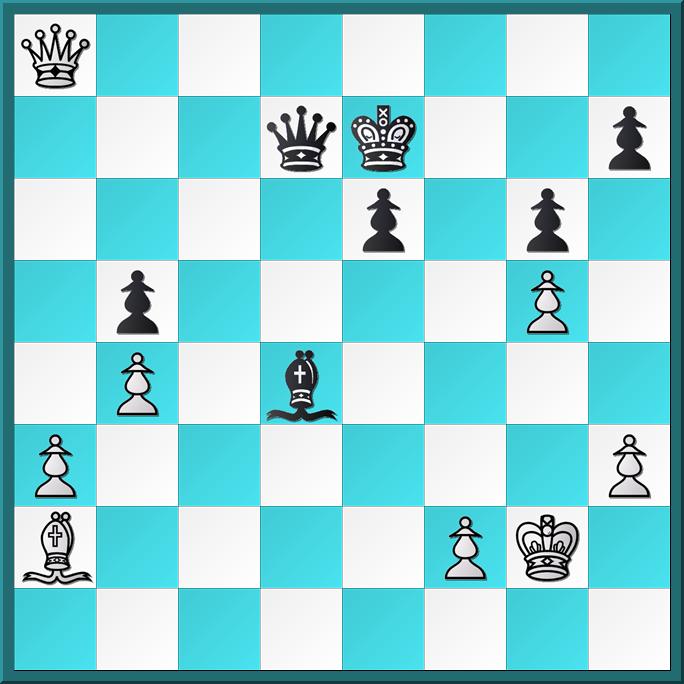
Moving on, the book ‘The Greatest Ever Chess Endgames’ by S. Giddins, contains a game between Kurajica & Karpov (pg.56) which is interesting on a number of levels, it can be found here.  (http://www.chessgames.com/perl/chessgame?gid=1067946)

Not only does the endgame have a beautiful and instructive winning procedure but Kurajica missed a drawing manoeuvre, thus exemplifying just how incredibly tough the endgame can be even for top players. In the following position, white must not allow black to break up his kingside pawns, which he will later do with a kingside pawn sacrifice. He must create a ‘fortress’ of some kind to stop the black king from invading and should play either h3 or g4. But as several annotators pointed out, placing the pawns on light squares was, psychologically, very difficult to do.

White played 34 g3 ?! here.

White played 34 g3 ?! here.

It is endgames like the one above that show how strong Karpov was around the time of his ascension to the throne of world champion. Would he have beaten Fischer had they played? Probably not but the match would have been close, with the determining factors being Fischer’s mental health and rustiness.

I must confess that when I studied the above game, I had absolutely no idea of how to win or hold the draw but then I have come to appreciate just how difficult it is to understand the play of a world champion. The disparity in levels between a club player and a world champion is so great that bridging it is a task that requires copious amounts of highly exact analysis as well as a number of well-timed, insightful remarks concerning more general considerations from a guiding author, on top of the obligatory ‘enormous’ commitment by yourself…but even then the most sufficient analysis can still leave a sense of magic untouched. For club players it is probably best not to study world champions, it is more pragmatic to study players around 2400. To contradict myself slightly, here is my favourite Karpov game. http://www.chessgames.com/perl/chessgame?gid=1022951&kpage=1#reply4

Here’s a clip of Karpov excelling in an area where ex-world champions are not famed for: http://www.youtube.com/watch?v=yQbhtNnlRIY . As one commentator says ‘The world would be a nice place if everyone were like Karpov’ -well said.

MJM

A player can sometimes afford the luxury of an inaccurate move, or even a definite error, in the opening or middlegame without necessarily obtaining a lost position. In the endgame … an error can be decisive, and we are rarely presented with a second chance.  – Paul Keres

An eight-month period away from the board is about to come to an end, here’s a few reoccurring thoughts whilst out of action:

1. The endgame offers the club player much profit.

The endgame is a place where wow factor and whizzbangers are scarce but winning chances are aplenty: if a titled player can go wrong on a regular basis in the final phase of the game, why won’t your untitled opponent against you? In truth he/she will probably offer you a smorgasboard of opportunity without even realizing it. All you need to do is capitalize. And to capitalize, all you need to do is merely dedicate yourself, and in doing so, an emerging love of the endgame will help reacquaint you with an old flame you may have forgotten about -good, old-fashioned elbow grease….or not, as the case may be.

But seriously, considering that chess is a balanced and solid game, you may not get winning chances against your closely matched opponent until the endgame. The endgame may be your best, or even only hope, of snatching victory: if like myself, you are a club-player, your opponent won’t have the knowledge to play the entire endgame accurately. It’s not like in the opening, where you can copy moves out of a book blindly, concrete knowledge of the endgame is much harder to come by. Go to move 23 of the following game http://www.chessgames.com/perl/chessgame?gid=1111742 . It looks drawish yet Larsen didn’t think so and he didn’t even need his opponent to make a mistake.

Lastly, I’m inclined to believe that the endgame is the area of chess where the literature has improved the most with some great writers, such as Dr. John Nunn, Muller and Mark Dvoretsky, raising the standard. Not just by offering improved analysis but by questioning the often elaborate publications of previous generations. I was one of the many who owned series such as Averbahk’s yet found the scope of material and attention to detail to be so great that far too much information was left ignored. In general, terms a shift away from covering every single aspect of the endgame towards the general and more practical has helped no end.

2. A more cautious approach towards chess literature has emerged.

Without parodying some authors I have recently encountered, I’ve had to distance myself from a great many books on chess theory, especially those with cheap, gimmicky titles such as ‘Secrets of crap chess books’ by GM Der Brain. In general I find them to be sloppy on too many levels. There is often a lack of distinction in such literature between ability and knowledge, and a prevailing assumption that one necessarily follows from the other. This is naive to say the least and rather damaging considering that chess is often defined as an intellectual pursuit. Some publishers are guiltier than others, I have been appalled by some Everyman Publications I’ve come across in the last few months but have gained respect for Gambit as well as Hardinge Simpole. Coming from an academic background, I find it hard to accept literature which has a bibliography you could write on the back of a stamp, if that, does not cite or reference correctly, if at all, and is saturated by lazy generalizations, incoherent analysis and poorly thought-out remarks. Many titled players are quite frankly, charlatans: great chess players they may be, but great writers, communicators, researchers, or even instructors, they are not. I don’t want to be overly critical, there are some great books out there but they are few and far between. Furthermore, it is too easy and unfair to attribute blame solely on certain individuals: the primary purpose of producing a book on chess is profit, publishers are partly responsible for publishing material which is inferior and in need of substantial revision, but ultimately, if anyone is to blame it is the chess-playing public for buying such literature in the first place. It would be nice to think that given some on-line content is not only free but qualitatively superior in many cases, that this would help push literature upwards…but perhaps it is me who is being naive here.

3. Chess is furnished with a lavish history.

To really understand who a player really is or was, it is necessary to leave chess theory and enter into biography and chess history. Games and analysis alone are too easily subject to misinterpretation and are often used to support pre-existing views of the player in hand. You might get a game showing the brilliance of Capablanca in the endgame and how effortless his play is but using games purely to support your own ideas doesn’t teach anything significant. If anything it only shows how unimaginative the writer is. Moreover, chess players often have interesting lives and careers. Quite often it isn’t possible to understand a player’s game or tournament when it has been taken out of context. An obvious example of that concerns Spassky’s demise in his match with Fischer. Clearly the circus going on around him had a massive effect on his play and generated an unparalleled drop in results in a world championship match. It is sad that more effort isn’t invested in the background surrounding play as it often provides important clues on how to read a game. There are many semi-retired players & historians that write well about the history of chess, this I have learnt. I look forward to reading the 15 books I have ordered on-line as they offer a feint pulse of professional writing in chess.

4. The predilections of the Arabs are not conducive towards proper chess play.

Earlier this year, whilst in Al Ain and then Abu Dhabi UAE, I was disposed to play some chess. I noticed that the heads of the kings had all been cut off on every single chess set in both clubs, presumably for appearing ‘Christian’. In Al Ain, the kings’ heads had been replaced by a star and a crescent moon, which I found to be rather distasteful. Given the number of arguments going on and total lack of respect for tournament regulations, I have concluded that chess is not played in the proper manner by the Arabs.

Dubai is frequented by the current FIDE president. In truth the club itself is enormous in its global stature as a number of regional officials have positions at the club. But what, if anything, do the Arabs have other than money? The FIDE president has been friends with a number of rulers in the area, Gaddafi and Saddam Hussein spring to mind initially, though I am sure there are others. Much of the chess world has failed to understand these friendships but when you consider the perennial lack of funding in chess, befriending those ruling opulent nations isn’t such a strange maneouvre. Political instability and human rights issues are part and parcel of every oil-rich nation, it is only a matter of time before FIDE courts controversy once more if it continues to operate from the region with such surety and regularity. A sad reflection on a global level but understandable, since greater financial stability in chess ranks more highly than the occasional question mark concerning personal loyalties. Regionally, this is all wonderful news for the aspirational youngsters who have already fallen in love with chess.

5. Absence makes the heart grow fonder.

I do not return to chess feeling rusty or out of sorts, I return with more confidence than before. A deeper appreciation of the subtleties of the game has emerged through a slower and more careful study of the game itself. Facing a wealth of on line resources, I have invested enormous effort into establishing my own personal library. Approximately half of the publications I found on-line, the other half I purchased. Experience is the best teacher in chess but given the theoretical nature of the game itself, study plays an essential supporting role. Study, though, is never solely about studying what has been played, it is also involves comprehension of what has been played, analysis itself in chess is tethered to self-examination…I do hope that ‘Chess For Tigers’, my once-upon-a-time favourite book, reconfirms this when it arrives through the post. With this in mind, I will end with the following quotation:

 “If approached with an open heart, chess can become a fascinating channel of self-expression and self-discovery.” -Josh Waitzkin

… in itself the title of world champion does not give any significant advantages, if it is not acknowledged by the entire chess world, and a champion who does not have the chess world behind him is, in my view, a laughing-stock.  –  Emanuel Lasker

A week on from the conclusion of the Anand – Gelfand match I thought I’d pen a few thoughts on the matter… .

What we saw in Moscow was not a great advert for chess. Though Anand was the winner, Gelfand was not the loser…professional chess was and to a lesser extent F.I.D.E too. Gelfand, in fact, returned home as something of a hero http://chessbase.com/newsdetail.asp?newsid=8205, and Anand went into the record books.

The Drawn Games -what did they signify?

In the context of the modern game, the strings of eventless draws represented a paradox. On one level they did not signify anything, and on another told us everything we needed to know. Computer-aided preparation dominated affairs so greatly that few ideas were generated over the board. We saw a lot of defensive play but nothing bold or adventurous. Anand, especially at the London Chess Classic last year, (http://www.youtube.com/watch?v=GbGTDQ-P49E) defends the role of computers & preparation in the modern game, suggesting that they stimulate creativity as much as they take it away, so I was particularly disappointed by the long periods in the match where little effort was made to go outside preparation. We did see novelties early in the games but they were nearly always within drawish lines. Both players chose to play it safe for professional reasons; Anand is better at faster times controls and had a natural advantage going into the play-offs, plus he had a title to defend, Gelfand was the underdog and wanted to keep it tight in the beginning, and then push later in the match. The drawn games confirmed that the players were too similar in approach and style. The chess was subsequently lifeless, mechanical, and bereft of artistry…and in an art museum of all places! Nigel Short said on the first day that he particularly enjoyed reading the quotation in the museum by Marcel Duchamp that while ‘Not all artists are chess players, all chess players are artists’. The match that unfolded in Moscow was a counter-argument to such a claim.

Botvinnik once claimed that clash of individual style is of paramount importance for great matches. As the match unfolded I became more and more convinced of how right he was, and how the modern game lacks the characters of his generation. I kept asking myself if an Anand V Carlsen match up would have made much difference. If Botvinnik is correct in the sense that clash of style ranks more highly than quality of play, then probably not. For this reason, Anand’s match against Topalov is likely to stand out is the most inspiring match. Though Topalov was not his strongest opponent, they differed in style sufficiently to generate enough exciting chess.

Anand’s Loss -a surprise of sorts.

Fischer once said that he didn’t believe in psychology, he believed in good moves but before Anand played Qb8 in his loss to Gelfand, even an amateur psychologist could see he was giving off multiple signs of distress. He seemed to know he was in trouble early on, much passive play followed with a victory which seemed all too easy for Gelfand.

Gelfand’s Loss -a record breaker.

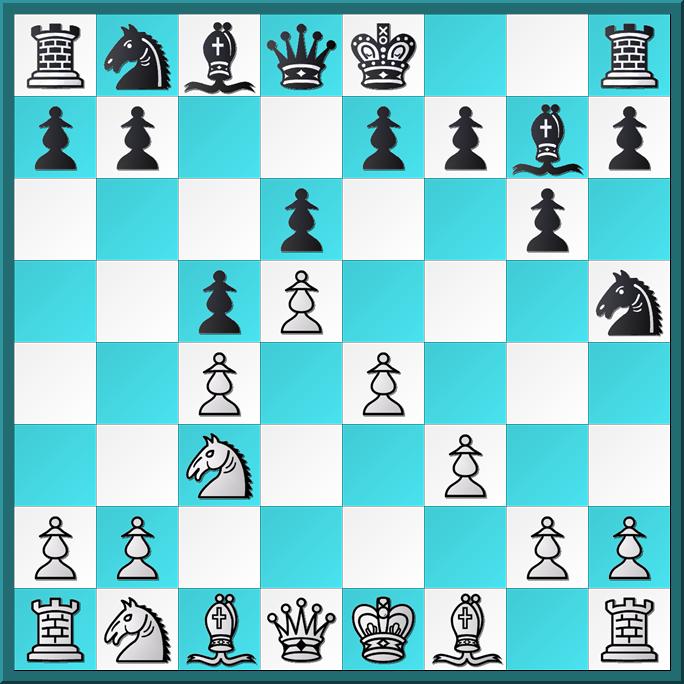
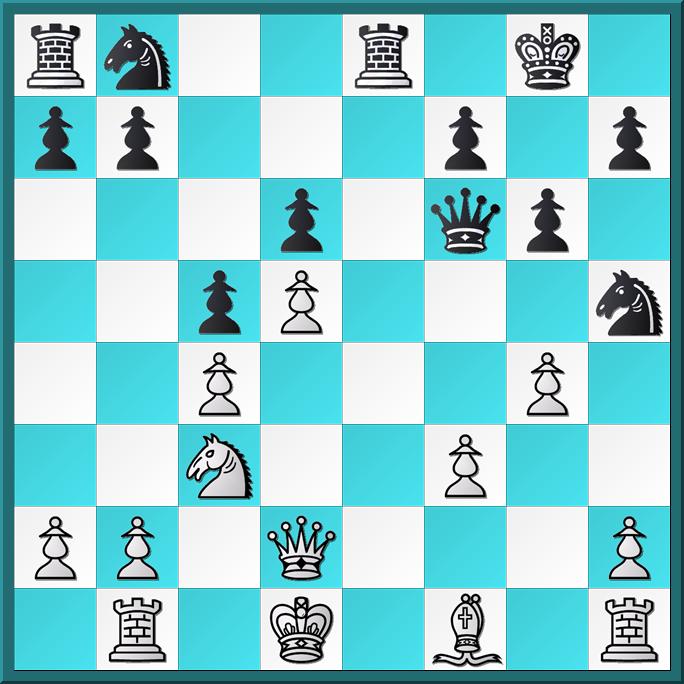
The history books tell us that the fastest loss ever in a world championship match wasn’t Euwe’s in the revenge return match against Alekhine http://www.chessbase.com/newsdetail.asp?newsid=8181 but it was Zukertort’s 1886 loss to Steinitz, as pointed out by flamboyant GM Danny King http://www.youtube.com/watch?v=TeAq7fzF2AQ&feature=player_embedded until the game in question that is. It’s easy to say what should have happened in retrospect, so I won’t say that Gelfand should have been more cautious but why did he choose the provocative Nh5, and go head-to head in this game?

It’s difficult to be sure but I wonder if he let his heart rule his head? He may have had a slight surge in confidence from taking the lead and thought that the match was there for the taking. In this post-match interview, http://chessbase.com/newsdetail.asp?newsid=8208, Anand does concede that he felt he was in trouble at that point, perhaps then, Gelfand sensed this and acted. Given that chess teaches you to control your emotions rather than act upon them, he shouldn’t have made a decision on that basis, if I am right that is. He should have remembered that Anand is a better tactician and been more cautious. The very strange thing about this game, which is the first time I have ever seen it live in a match of such stature is that Gelfand didn’t see that Qf6 was a blunder at any point.

The last few moves were played quickly but he should have told himself that world champions do not drop rooks early in the game, and that something MUST be afoot. A critical moment had clearly arrived, why couldn’t he act accordingly? I didn’t buy into the talk concerning this trap, it is a neat trap, Fritz blundered straight into along with Gelfand, but that’s hardly the point. Gelfand had enough experience to know he should have taken a very big step back. Watching it live I saw him arch over the board and go into a think. He saw a combination which he thought was winning, only to resign minutes later. The look on his face as he resigned said it all, he had been completely caught out. He didn’t see Qf2 but he really should have questioned the ease with which he was about to win the rook. How many candidate moves were chosen here? Yes Qf2 was hard to spot but this irrelevant. He did not give himself enough time to find it by half. His play was out of character a little, something slight had changed inside him. Perhaps it was merely pressure alone, perhaps his desire to become the world champion increased a notch after taking the lead, just enough to cause a change in approach which he himself was not quite ready for. The balanced play we had become accustomed to seemed to go straight out of the window in this game.

The play off’s -a sad end.

I don’t want to comment because I don’t believe that matches of that calibre should be reduced to rapid chess. Obviously Vishy took the lead, and also obviously, Boris had the chance to equalize. The only notable feature of them was that Vishy showed that he is clearly better at a faster time control.

The aftermath -welcome to Russia.

Leaving the disappointment of the chess aside, the media centre and live feeds were certainly….different? I was a little surprised to find that play was broken up by frequent adverts and long lectures on Russian art. As a lover of chess, I would have liked the option of watching the lectures at my own time, rather than be forced to sit through them. A number of crucial points were missed throughout the match, and much play was lost generally. We were lead to believe that the museum was a truly wonderful venue yet the playing hall was small and austere. You felt as though the price to pay for obtaining such a venue was was that chess itself was denied the centre stage, there was a sense in which being now entirely bereft of Communist ideals, Russia is no longer the home of chess. A heavy-handed commercial shove left chess as a side-show at times. Some of the lectures were an hour long, some of the ads for the museum went up to ten minutes at times, and what was that so called amphitheatre they played in, wasn’t it a broom cupboard in disguise…if Lenin were alive today, he’d be turning in his grave.

Another questionable facet of the match concerned the on-line relay in information. The commentators were usually between 1-3 minutes behind actual play, due to a lag, the screen above the players was also out slightly. This meant that at times, you had the board itself, the screen behind, and the analysis board in the commentary room out of synch and showing different positions for minutes on end. At times the players in the commentary room were completely in the dark over what had been played and were trying to guess the moves based on a panoramic overview of the theatre itself. How can such basic errors remain prevalent throughout a match of that calibre?

Concerning the commentary team, the editor of New In Chess Dirk van long Dutch name was a very good choice indeed, thoroughly professional. Many of the commentators were great too, Svidler was very interesting to listen to indeed, as were several others. The only thing to ponder was the freedom of speech they had. Debate and critique are always best yet nothing critical was said about the match itself on any level, though you many times felt it was coming. Given the number of commentators there were, it does beg the question whether they were asked to refrain from negative comments, which if so is a shame. It was only Kasparov who broke rank and spoke his mind at one point.

Kasparov’s comment – was this man really the World Chess Champion?

To begin, you can find it here, it’s worth a look http://www.youtube.com/watch?v=mMPbDJ5czTk&feature=related. I thought the whole issue concerning Kasparov’s visit to the match was badly handled. It wasn’t explained why Kasparov thought the Kramnik V Aronian match was such a big contribution to chess, and it wasn’t clear why he thought Anand had lost his motivation to play. Frankly I thought both comments were naive. Anand has had a dip in form, that is clear, but to claim it is down to a lack of motivation is highly questionable. Firstly, motivation is an internal phenomenon, results and play are external. Motivation doesn’t have to be directly manifest in any particular action, it can be an internal commitment towards something. Someone can be inwardly passionate about retaining their title, for example, whilst displaying a veneer of disinterest. They can choose to play quieter lines if they offer a greater chance of success generally. It’s precipitant to say that Anand has lost his motivation just because you cannot remember the last time he had won a tournament, and the chess so far was dull. In my opinion Anand became entirely focused upon the match many months before, and began making minor modifications in his general play and approach. If so then his commitment towards retaining his titled cannot be questioned and thus neither his motivation to remain at the top. The strange thing is that Kasparov lost his title to a similarly quiet strategical approach by Kramnik, who also sacrificed his own preferred style of play in favour of winning the title. Of course we know Anand to be tactically astute but if he assessed that quieter play in the classical phase of the match to be part of a more effective strategy, we should not be too critical. Personally I found the Azerbaijani anti-hero to be off the mark there.

Concerning the players, I don’t want to blame the players as the qualifying matches were no better, instead some thought should be given to the direction chess is going. On the whole, I thought this match exemplified how creativity has become stifled by ‘professionalism’  in the modern game. It was a poor advert for our game, and had I gone along and bought a ticket, I would be asking for my money back. We weren’t provided with a chess spectacle, rather a reduction of chess. Anand was Anand: he was conservative, quiet in method and professional, he seems to have -temporarily- lost the cutting edge to his play but did what he needed to do; paradoxically, it was what he didn’t do that showed us what is great abut him. He is the first Asian world champion, and thus more measured and pragmatic than certain ‘Great Predecessors’. It would have been easy for him to react to Kasparov’s comments at the time but given the turmoil that has surrounded the game at the top level over the last few decades, having a conservative world champion isn’t so bad in some respects. Instead of reacting, Vishy remained true to his quiet, title-orientated strategy, the kind that Kramnik used effectively against Kasparov himself.

Gelfand was Gelfand: a slight -not big- underdog (apologies for the insert of a poker term), he lost his cool in one of the classical games but stabilized immediately. His etiquette left a lot to be desired at times, trying to stare-down (once again apologies for the poker term [though much more popular, poker is a vastly inferior game and does not deserve a mention by jealous chess players] Vishy seemed inappropriate and you couldn’t help but wonder whether the primary motivation for the blind over-the-board analysis was to distract. I knew very little about him before the match, given that I am not a fan of the modern game, that is precisely how it will stay: his play is the embodiment of the strengths and weaknesses of the modern professional game.

To conclude, there wasn’t much to get your teeth into. The only thing that was really talked about was the quick loss Gelfand suffered. The expectations were low for the match, and in retrospect, justifiably so. Anand did what he needed to do, Gelfand didn’t quite do enough, all in all the match will be largely forgotten about.

He is not the most talented or the strongest player but certainly the most inconvenient player in the world! His ambition is not to play actively, but to paralyse his opponents’ intentions.  – (Botvinnik on Petrosian)

MJM

After a good week-long read of ‘New in Chess – The first 25 years’, I noticed that amongst the many interviews were some intriguing analogies to other sports by leading chess players; more often they functioned as a source of inspiration, but also as a mode of reference…with varying degrees of communicative success involved.

On page 62 on the ‘New In Chess -The First 25 years’, Spassky discusses his love of tennis, mentioning that the degree of similitude between chess and tennis has benefited his play in both activities. When asked to define what he meant, he said ‘Like chess [,] tennis is a game of balance, of equilibrium…Keres was a good tennis player…and so was Capablanca’. The history books tell us that if anyone ever cultivated their game so that balance and flexibility were a principle and defining aspect of it, it was surely Spassky. He qualified his remarks further by suggesting that Smyslov revealed a secret to him, that he played tournament chess like baseline tennis, ‘…he said that he used to play not with the head but with the hands. -Trusting his intuition? [Interviewer’s question]. ‘Yes because time-trouble doesn’t allow for serious analysis during the game. If you have an idea, just play it.’ We are left to ponder the significance of such remarks, which in retrospect seem more like afterthoughts than anything else. Can a world champion really find inspiration from an activity in which he is nothing more than a rank amateur…surely not?

Kramnik, also very well-rounded in his play (just check out his wins with the Sicilian Sveshnikov in the 90’s if you insist he is a dull, positional player) gives a curious, conceptual justification for the Berlin Defence in the section ‘Chess and the art of Ice Hockey’ (page 256):

‘[Interviewer] When did you decide on this generally defensive strategy? [Kramnik] I follow ice hockey a bit and the Czech national team has been winning everything in the last couple of years…they always win 2-0, 1-0, or 2-1 all the time. They don’t show any brilliance but they win all the events…the Czechs have a very solid defence. In fact there are some parallels with chess. They have a brilliant goalkeeper. In chess this is the last barrier, when you are on the edge of losing, but you sense very well exactly where this edge is. And then they go on the counter-attack. Their strategy is so clear. They have been doing this for 2 or 3 years but nobody can do anything. This idea occurred to me when they won another championship in May and I had already signed the contract to play Garry. I thought, okay it’s a different game but the approach is very interesting. And that’s how I chose this defensive approach. You need to be sure that you will be strong enough to hold. If you are not sure you can hold worse positions, this strategy makes no sense.’

What makes this point even more interesting is that Kramnik claims he hated playing the Petroff…it’s quite astonishing how someone can become respected for playing something they came to loathe so much -that is the essence of professionalism I suppose.

Lastly, on page 312, the ex-F.I.D.E world champion Rustam Kasimdzhanov refers to the following song about high-jumping:

‘-What is your favourite Vissotsky line? [Kasimdzhanov] It’s difficult to translate it into English. It was what struck me during the sixth game against Adams. He has a song called “The song of the high-jumper”. He jumps and he doesn’t quite manage. He wanted to make 2.12 and fails. And he says, I will let you in on a small secret: such is the life of a sportsman or woman. You are at the highest point for only a moment, and then you fall down again. When I played Qg8 and thought I was losing, this immediately ran in my ears. You are at the highest point only for a moment’

White plays Qg8, though it took Fritz less than a second to find Qe4, which is winning.

That familiar sinking feeling, thought of here in terms of a descent. Not a bad analogy in terms of a career but in a game your opponent influences the direction you move in just as much as you do in chess, especially if they blunder.

MJM

“I personally never stood out amongst my contemporaries, because I always had to progress by hard work. Tal, on the other hand, there is an example of someone who did not have to work at it.” Botvinnik

I recently stumbled upon the commemorative edition ‘ New In Chess. The first 25 years’, which was published in 2009. It offers almost 400 pages of quality reporting and interviews with the top names in chess. It begins with an interview with Botvinnik ‘The Patriarch’, who discusses amongst other things, the upcoming match between Karpov and Kasparov (their 84 match). Speaking as an ex-world champion himself and a tutor to both, he has an interesting take on affairs: ‘The match between Karpov and Kasparov will be very different from the usual title contests. From a creative standpoint, it will be the third top class match of this century.’ (pg. 15) The two preceeding matches, which he goes onto mention were Capablanca/Alekhine and Botvinnik/Tal. It’s worth asking at this point, why does Botvinnik think of chess this way when most think in terms of the calibre of participants and quality of play? He claims that the match itself won’t reveal who the better player is, but will reveal which approach to chess is more valid. (pg.13) His view rests upon a dichotomy which is, sadly, over-simplified, and in our modern age is something of an anachronism; namely, that there are two kinds of player in chess, the practical player, which includes Capablanca, Tal and Karpov, and the researcher which includes Alekhine, Botvinnik and Kasparov. Botvinnik goes on to claim that: ‘…the theorist (he interchanges this term with “researcher” throughout the interview) will always have an advantage over the practical player. Because when the researcher takes his place at the board, he knows not only himself, but his opponent inside out’ (pg.14). Once again, these comments were made well before the advent of databases in chess.

Thinking about matches in terms differences in approach to chess or clashes in style, caused me to think more deeply about the Anand/Gelfand match, which is only weeks away now. Like many others, I noted a general lack of excitement over Gelfand’s achievement, and though I am very excited about the match myself, I don’t think Botvinnik would claim it to be another top class match from ‘a creative standpoint’, as he put it. Gelfand is a solid player, Anand too, though perhaps with more attacking flair. Given the similarity in age and approach to the game, the prospects don’t bode too well for an exciting match. With this said, there are two points that need to be taken into consideration; firstly, this is surely Gelfand’s one and only chance to become world champion, so we should expect him to give it everything he’s got, and secondly, there is a strong chance that we will see sharper opening play than in the previous world championship match. In the Anand-Topalov match 1 e4 didn’t occur once, however, Anand’s results on the white side of the Sicilian (as pointed out in the following post by GM Nigel Davies http://chessimprover.com/?p=792) are very good, Anand will surely play 1 e4 at least once to see whether Gelfand is still prepared to play the Sicilian against him, as refusing to enter the Sicilian would be a psychological defeat for Gelfand in itself. Here is, excluding blitz and blindfold, the last decisive game between Anand and Gelfand, its a Sicilian Nadjorf from six years back: http://www.chessgames.com/perl/chessgame?gid=1387996

Another point that Botvinnik makes which I found myself returning to with some interest, concerns a warning he gave to a young Gary (Garik) Kasparov: ‘As far as Garik was concerned, I immediately came to blows with him. For he first made a move and only then thought about it. While the proper order is, as you know, the other way around. ‘Watch out’, I used to say to him, ‘if you go on like this you’ll become a Taimanov or a Larsen. Garik’ (!?). These two were the same even when they were grandmasters -first move, then think. Now young Garik was very insulted by this, because he wanted to be an Alekhine’ (page13). I have to say, I find such remarks and reactions bemusing. Becoming either doesn’t sound like the grimmest fate in chess, that’s for sure! Here’s a hair-raising encounter between the two that may have led Botvinnik to such an assertion:

http://www.chessgames.com/perl/chessgame?gid=1138444

On a personal level, my own encounters with Botvinnik often involve the Dutch Defence.  There are many interesting features of the dutch. The main one, pointed out by GM Simon Williams in his book ‘Play the Classical Dutch’, is that it offers just as many winning chances for black as the King’s Indian Defence but doesn’t have the accompanying volumes of theory. One of the sadder points of that book is that once you go beyond the obligatory, Bogoljubow – Alekhine, Hastings 1922, which all books on the Dutch start with, there are almost no complete games, so we don’t see exactly how black converts the winning chances he creates.

Here’s an example I found of how Botvinnik defeated the classical Dutch with his own 7 b3 move. In this game, Kann under-estimates the danger of the a3-f8 diagonal, as well as the strength of the d5 push, the game illustrates how easily play on the flank can be defeated by play in the centre: http://www.chessgames.com/perl/chessgame?gid=1031746. Lastly, Botvinnik, some 20 years on, defeats Kann once more but with the Dutch this time. Note how, unlike Kann, Botvinnik strengthens his centre before conducting activities on the flank: http://www.chessgames.com/perl/chessgame?gid=1420763

“The player’s greatest art consists in exploring the possibilities of bringing the game to a position in which the normal relative values cease to exist.” Botvinnik


If you click on the link below, you will find the latest attempt by the mainstream media to connect with the chess playing world.

https://www.youtube.com/watch?v=Qc_v9mTfhC8

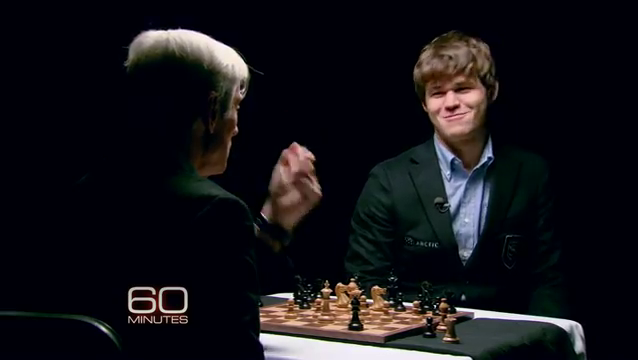
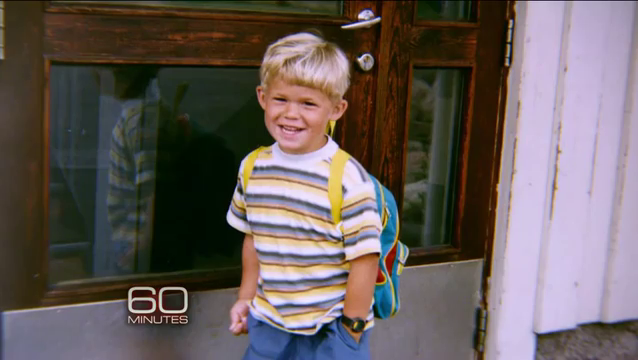
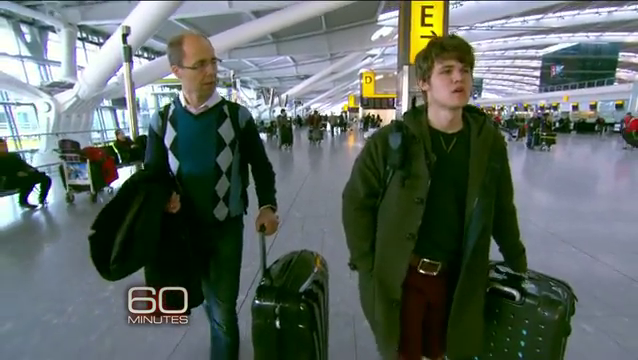
The focus is Magnus Carlsen, whom the 60 minutes crew entitle as the best in the world, claiming, amongst other things, that he ‘reigns supreme’. Leaving aside the questionable lack of respect for the title of Official World Champion (currently held by Vishy who has a strong plus score against Magnus), and the unrivalled prestige that the title naturally offers, Magnus is proclaimed as the best in his sport.

We’re then informed that at the top level the objective in chess is not to win but to ‘demolish your opponents‘, and that to do so you need ‘great endurance’ which is why the top players are so young! If you haven’t watched the interview yet, you’re probably thinking that I’m making this up, especially when I tell you that the intro concludes by claiming that Carslen’s ability ‘seems to come from another world which is why he’s become known as The Mozart of Chess’. At this point I would like to restate that I am not making this up, please watch the interview if you find this hard to believe. It’s important to remember that established programmes such as 60 minutes have their own slowly stylized approaches which, owing to the subject and their familiarity with it, may remove them from their source unintentionally. The last acquaitance 60 minutes had with chess was forty years ago with a certain Bobby Fischer, ( http://www.youtube.com/watch?v=mqBrfjHiNk0 ) who was famous -or infamous if you’re Russian- for making proclamations about demolishing opponents and so on. The intro was probably written with collated material borne in mind, and the same template from that famous interview.

Beyond the askew intro lies some well-edited material which brings us close to Magnus with the time-honoured assurance we have come to expect from 60 minutes over the years. An approach to chess full of reverence and interpreted enigma embodies the fascination that only non-chess players can have over our beautiful game. This stance works surprisingly well during the interviews conducted and catches Magnus off-guard several times, skilfully revealing that he is well-adjusted, and on one if not many levels, entirely normal. There is a nice touch three minutes in where Magnus gets the date of a famous position wrong, and laughs about it with the interviewer. Some important questions are then carefully addressed, perhaps most importantly, the subject of winning and losing is discussed. It’s often said that the desire to win and the contempt for losing are vital components of any rise to the top. The answer Magnus gives on this subject, though said with an unmistakeable Scandinavian melancholy, details the enjoyment he gets from watching his opponents suffer: as those of who have lived or studied in Scandinavia know, suffering is very much part of life  -just look at what being in Norway did to Wittgenstein- and so we should perhaps expect such replies.

Approximately half-way in the 60 minutes team give us a well-edited montage of Magnus’ youth which shows us that he had a normal upbringing and was not a ‘prodigy’ of any kind, unlike Mozart. The film making is continued with a concise account of what it’s like to be an IM at 13; the first meeting between Carlsen and Kasparov is shown, the footage contextualizes the game playfully with comics and ice-cream during and after the event. A distanced level of respect is retained throughout, resisting the urge to focus on any one point, leaving us with a well-measured approach.

The future of Magnus?

Towards the end of the footage, the narrator regains continuity by returning to Fischer directly. First, the tough lifestyle competitive chess demands; the need for constant travel, and an unwavering attitude towards an exercise regime are both shown as being essential, as was the case when they interviewed Fischer. The narrator then suggests that such a lifestyle is not without danger, showing a tense Magnus during play. Magnus’s father, quick to his son’s defence, points out though, that it is a fundamental mistake to judge chess players on how they come across during play, arguing that artists and writers also don’t look happy whilst they practice their art – a good point indeed. The last point of interest is Magnus’s comments concerning the fate of Bobby Fischer, and his depiction in the rather dubious documentary that came out about him last year. His answer is quite mature for his age, as is his retort to the comparison between himself and Mozart, who not by pure coincidence at all, and entirely like Carlsen, made no effort to describe his genius as an adult.

When I first saw the title, ‘The Mozart of Chess’, I did wonder what on earth the 60 minutes team were alluding to. Not only had I not heard the term before, but it sounded decidely corny. Given that Magnus displayed no interest in classical music, and that someone with genius rarely self-reflects upon the nature of it, I still think that the title, though clearly aimed at the general public could have been improved upon. Though the purpose of analogy may be to connect with something more familiar, which is important for topics or individuals that lie outside of mainstream media, such a narrow focus upon talent bypasses the more normative aspects of both individuals, which are things we can talk about and are thus much more interesting. Mozart himself is a notable absentee throughout, which given the fact that his childhood was radically different to Carlsen’s is perhaps prudent and doesn’t harm the production greatly.

Overall I enjoyed the 13 minutes 60 minutes offered. The film-making was more accomplished than we chess players are accustomed to, and I felt sad when it ended. I was impressed by the fact that complex topics are handled with a light touch successfully. As a chess player, it was clear to me that the production team were non-chess players but this in no way impairs the production, surprisingly, it improves it. We were spared from the pretence of ‘so-called experts’ and their dubious theorizing which has become an aperitif of so much contemporary film-making these days. It was a lesson in film-making professionalism, one that Carlsen, too, seemed to appreciate. The writing, though a little stale in places is honest, open and measured. Very little is said about what genius, or even genius in the context of chess is, but much is said about the conditions from which Magnus gained his, leaving enough food for thought. We are left to conclude that Magnus is in many respects entirely normal, and that he has a special talent which is not special to him at all.

MJM

‘It is a well known phenomenon that the same amateur who can conduct the middle game quite creditably, is usually perfectly helpless in the end game. One of the principal requisites of good chess is the ability to treat both the middle and end game equally well.’  –  Aaron Nimzowitsch

In Ancient Rome the legal concept ‘negligence’ was principally defined in two ways; ‘dolus’ for intentional damage, and ‘culpa’ for unintentional damage. In modern day Italy, Ivanchuk recently diplayed ‘dolus’ in Reggio Emilia, after self-destructing and giving away his queen, a rook and a bishop in consecutive moves, but how about ‘culpa’ in chess terms. Have you given the endgame the attention it deserves? Do you shy away from it, perhaps believing that games should be won and lost in the middlegame, or does its labyrinthine interrelation of general principles, nuances, finesses, and exceptions put you off? We all lose games in the endgame but in what sense are we culpable?

If you play for more than pleasure, you will to some degree, reflect upon the nature of defeat and why you encounter it. Of course, most of us have, at the very least, an acute awareness of what we do and don’t do well, but progress in chess is more demanding. Chess forces us to understand our strengths and weaknesses and explore their nature. This is true of all phases of the game, the endgame is no exception. Players -myself included- who do not attend to their own poor endgame play are like footballers carrying a niggle or nursing an injury, choosing to soldier instead of treating the problem instead. Even greats such Kasparov missed numerous wins and amassed a collection of questionable moves in the endgame. In his ‘How Life imitates Chess’  he points out that in some of his games he missed ‘a series of draws and wins, as did some of my opponents’. He wasn’t the only world champion to have known weaknesses in the endgame either. Fischer was known to be susceptible amongst his peers in certain positions, inadventently losing drawn positions almost throughout his career. What does all this mean for a mere club player? Isn’t weakness in the endgame nothing more than a forgiveable truth of chess? Not really: if you neglect the endgame, you will have weaknesses in your game, however, the purpose of this post is to try and readress the positives that endgame study can give by listing some of the benefits rather than dwelling on the doom and gloom of dystopian elements in endgame play. Lastly, I do not intend to become distracted by precise definitions over the endgame itself. Though there are phases of a game where it is unclear whether a transition between the middle & endgame has occurred, these are peripheral matters that uneducated Grandmasters like to quibble over in order to look clever. The core of endgame theory is uncontentious, that is the focus of this post.

1) An obvious advantage that studying the endgame offers is the increased length in calculation skills. Given that kings and pawns can only move one square at a time, calculations of 10 moves plus are not uncommon in the endgame. Since miscalculation often has catastrophic consequences in this phase of the game, such as your opponent’s pawn queening ahead of yours, work on the endgame improves calculation skills by its very nature alone. Regular studies and exercises should increase the overall ply in your calculations. This doesn’t mean that you will calculate with greater accuracy but it does mean your capacity to calculate further ahead will be increased.

2) Another important benefit that the endgame offers as that it shows you how to maximize the pieces. With so little on the board, what a piece can or can’t do becomes more defined. We can develop a greater understanding of how bishops can suffer or triumph over colour-complexes or how knights can use tempi to deliver checkmate, or see how a queen can be over-powered by two rooks. During the opening or middlegame pieces usually work in conjunction with one another. This happens in the endgame too, but their roles are more clearly defined and the freedom that the pieces have is much greater. Understanding such points can improve deployment of the pieces. This can be particularly useful when approaching the endgame as you will have a better sense of where to put the pieces in preparation for it.

3) The endgame improves your learning skills. By this I mean that the endgame teaches you when to adhere to and disregard ‘rules’; it parallels the necessity of both learning and unlearning more sharply than other phases of the game. Common (mis) conceptions are challenged and exposed readily in the endgame. Endgames which are commonly thought of as drawn, such as bishop of opposite colours, quickly become subject to a hierarchy of considerations, from which predicted outcomes can then, and only then, be made. Considerations such as material balance, space advantage, the relative position of the kings and pieces, or the nature of the pawns on the board, and so on. The endgame, then, requires a very active learning process. relying on cliches or vague principles about certain types of endgames won’t get you very far if you don’t have the skills required to play with accuracy, unlearning them often does.

4) Clock management. In theory, your clock management should improve for two reasons. Firstly, you should need less time in the endgame itself as you will have a better idea of what to do, and secondly, you will have a clearer idea of how much time you will need in the endgame prior to entering it. This second point should mean that from a middlegame assessment, you will be less inclined to slip into time trouble knowing how much work ahead of you is still needed. Whether this occurs in practice is a different matter but sound assessment of the type of endgame you are facing should enable you to establish the amount of time you need to play well in it.

5) Confidence. To some degree chess, like football, is a confidence game. When facing grave uncertainties and complications, we are more likely to retreat and play passively if low on confidence, and vice-versa if we are not. Improved endgame play should increase your confidence at the board, because you will have a better understanding of when and where to fight your opponent during the game, thus possessing a broader scope for victory then you previously had.

So there you have it, five good reasons to invest more time in the endgame. I would like to end with an important caveat. Be careful about using older endgame manuals. The analysis can be unsound and doesn’t compare the computer-assisted literature available today. Even greats such as Capablanca were guilty of flawed analysis, other greats, Keres and Fine immediately come to mind, produced literature awash with poor analysis. Since the advent of digitalization, endgame analysis has become far more concrete and reliable. Dvoretsky is testimony to that and a good starting point for anyone.

‘It is hardly useful if you trustingly play through variation after variation from a book. It is a great deal more useful and more interesting if you take part actively in the analysis, find something yourself, and try to refute some of the author’s conclusions.’  –  Mark Dvoretsky