DISCLAIMER: as insomniac author of this post, I take no responsibility for any electronic device, laptop or PC blown up by running the game linked below through an engine you have installed.
Reading and writing go hand in hand, of this we know: both are art forms, that most don’t. An advantage of academia is that you encounter texts which require being read critically and many times over in parts, you therefore develop a natural inclination to return to texts repeatedly in order to increase your understanding of them. This may assist you in establishing the importance of a text or a passage whereas simply reading for pleasure is less, or much less, likely to do so.
Knowing what to read in chess is becoming increasingly more difficult for numerous reasons, one of which being an ever-increasing selection of texts to choose from, not to mention all that pulished online on various types of websites and social media platforms with or without the help of AI.
I don’t wish to cast judgement on such matters but would rather refer to that which I found highly engaging when it was published some sixteen years back. That was the 25th anniversary of New In Chess. We can, I think, argue that which is published in the press is more likely to be of higher quality than that which is posted on the internet, generally speaking. We may also argue that an anthology carries greater prestige than the latest publication, since the author is more selective over the material chosen, opting for that considered to be best by readers, writers, editors and reviewers. Quality, then, takes precedence over that which is current. Since it is possible to be both biased and right, or so I believe, my views on the publication this post is about, is that finding anything better is both a hard task ahead and a good path to go down. I cannot help but recommend it for it contains much first rate journalism -of that you can be sure.
So there you have it. Reticent I am not; so I recommend what I am presently re-reading I do, and believe myself justified in doing so thoroughly I do too…hardly synchronic, happily arranged, hurriedly off with a bang -a damn good read indeed it be!
Courtesy of old friend Damon D’Cruz – a true chess addict in his younger years- in the spring of 95, I was encouraged to participate in the Nottingham Open with him. I have many memories of that tournament but one that stands out as being different was the journey up there.
When we reached Nottingham, there was a pop concert in town which we happened to drive past, and there I saw Tori Amos giving a fan an excited autograph. How often do you see famous pop stars en route to a tournament?
This was the song that propelled her into the big time.
In May I posted details of Bedfordshire’s baptism of fire in the S.C.C.U back in 1923. I drew attention to Middlesex’s board 3, pointing out that he beat two former world champions and drew with one, using that as an explanatory factor in the size of the defeat dished out, amongst others. The post is called Bedfordshire Outfoxed and can be found in the search bar.
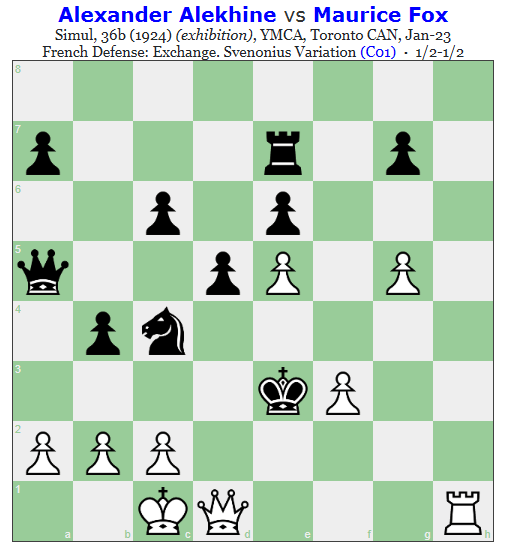
The post contains the aforementioned games but I felt drawn to his game against Alekhine in particular. Yes it was part of a simul with sacrifices galore, as so often happens in such events but upon looking at the game closely, I found one move in particular of Fox’s that I am rather fond of I must say. It was both brave and in the spirit of things or was it his saving grace instead? Let’s have a look:
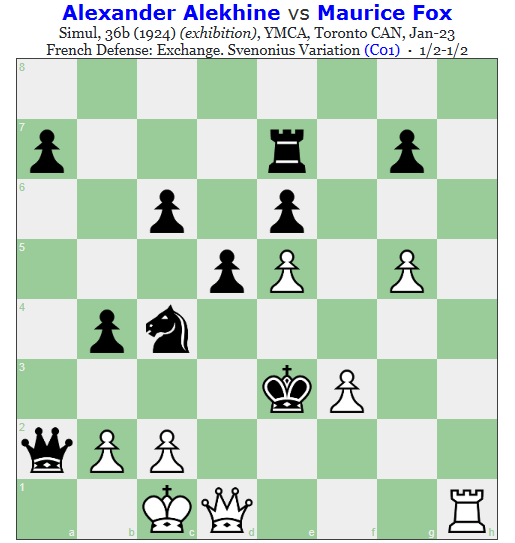
White has just played 29. dxe5. What would you play as black here? You can see what Fox played in the image below.
As much as I would love to paraphrase Kasparov in ‘How Life Imitates Chess’ I cannot. So I can’t say this exemplifies how ‘the best form of defence is attack’ for it is a counter-attacking move and doesn’t quite qualify. It is, however, unusual to see being mated averted by threatening mate in one yourself, if that’s the case of course. Since it is a simul, we don’t know how much time Fox had to make the move, probably not very long. Great move nonetheless. Here’s the game again.
Unlike the popular gameshow, features such as ‘ask the audience, phone a friend, and 50/50‘ are inapplicable here -sincere apologies. Unfortunately, there’s no money to be made from this also. However, do your best but do it alone please -no googling!
Question 1 £100
Which piece is sometimes mistakenly called the castle by beginners?
A: The Rook
B: The Queen
C: The Knight
D: The Bishop
Question 2£200
According to chess annotation, what does ?! signify?
A: Interesting move
B: Brilliant move
C: Blunder
D: Dubious move
Question 3£300
Who defected from the Soviet Union?
A: Karpov
B: Kasparov
C: Korchnoi
D: Kramnik
Question 4£400
The publication ‘Chess Praxis’ was written by whom?
A: Emmanuel Lasker
B: Aaron Nimzowitch
C: Jose Capablanca
D: Seigbert Tarrasch
Question 5£500
How many ply does a game of 40 moves amount to?
A: 20
B: 40
C: 60
D: 80
Question 6£1000
GM Richard Rapport is from which country?
A: Poland
B: Romania
C: Austria
D: Hungary
Question 7£2000
The term ‘fianchetto’ means what in Italian?
A: Little Flank
B: Long Diagonal
C: Enclosed Bishop
D: Strong piece
Question 8£4000
The 2018 Chess World Championship was held in which city?
A: New York
B: London
C: Dubai
D: Bangkok
Question 9£8000
Savielly Tartakower was born in which decade?
A: 1860s
B: 1870s
C: 1880s
D: 1890s
Question 10£16,000
The Australian Cecil Purdy was the first world champion at what?
A: Correspondence chess
B: Problem Solving
C: Fischer Random chess
D: Blindfold chess
Question 11£32,000
Which GM’s rating peaked at ELO 2817?
A: Maxime Vachier-Lagrave
B: Anish Giri
C: Vladimir Kramnik
D: Alexander Grishuk
Question 12£64,000
The ECO code E11 sginifies which defence in chess?
A: The Bogo-Indian Defence
B: The Nimzo-Indian Defence
C: The Queen’s Indian Defence
D: The King’s Indian Defence
Question 13£125.000
The 2022 World Team Chess Championships was held in which city?
A: Lucerne
B: Astana
C: Ningbo
D: Jerusalem
Question 14£250,000
Who was the first reigning world champion to win the Hastings Premier Event?
A: Euwe
B: Botvinnik
C: Capablanca
D: Alekhine
Question 15£500,000
What opening in chess is sometimes referred to as The Hungarian Opening?
A: Reti Opening
B: Kings Fianchetto Opening
C: Colle System
D: King’s Indian Attack
Question 16£1,000,000
The poem Caïssa or The Game at Chess was written by whom?
A: Artur Schopenhauer
B: Marvin Howard Alburt
C: William Jones
D: James Pierce
So there you are, well done if you did well. No money once again I’m afraid owing to being a poor English teacher. I do put thought into this, so if you got more than half right, you did well. Hope you enjoyed, you might even want to give it a shot yourself!
As I sat on a bus, new and red in colour, trundling across Bogota, whilst en route to a private lesson given to a student, I dipped into a favoured publication on puzzles -the appropriately named Chess Travellers Quiz Book by GM Hodgson. Certainly preferable to staring aimlessly out the windows, watching derelict buildings covered in graffiti roll by through the city’s sprawling, run down suburbs… .
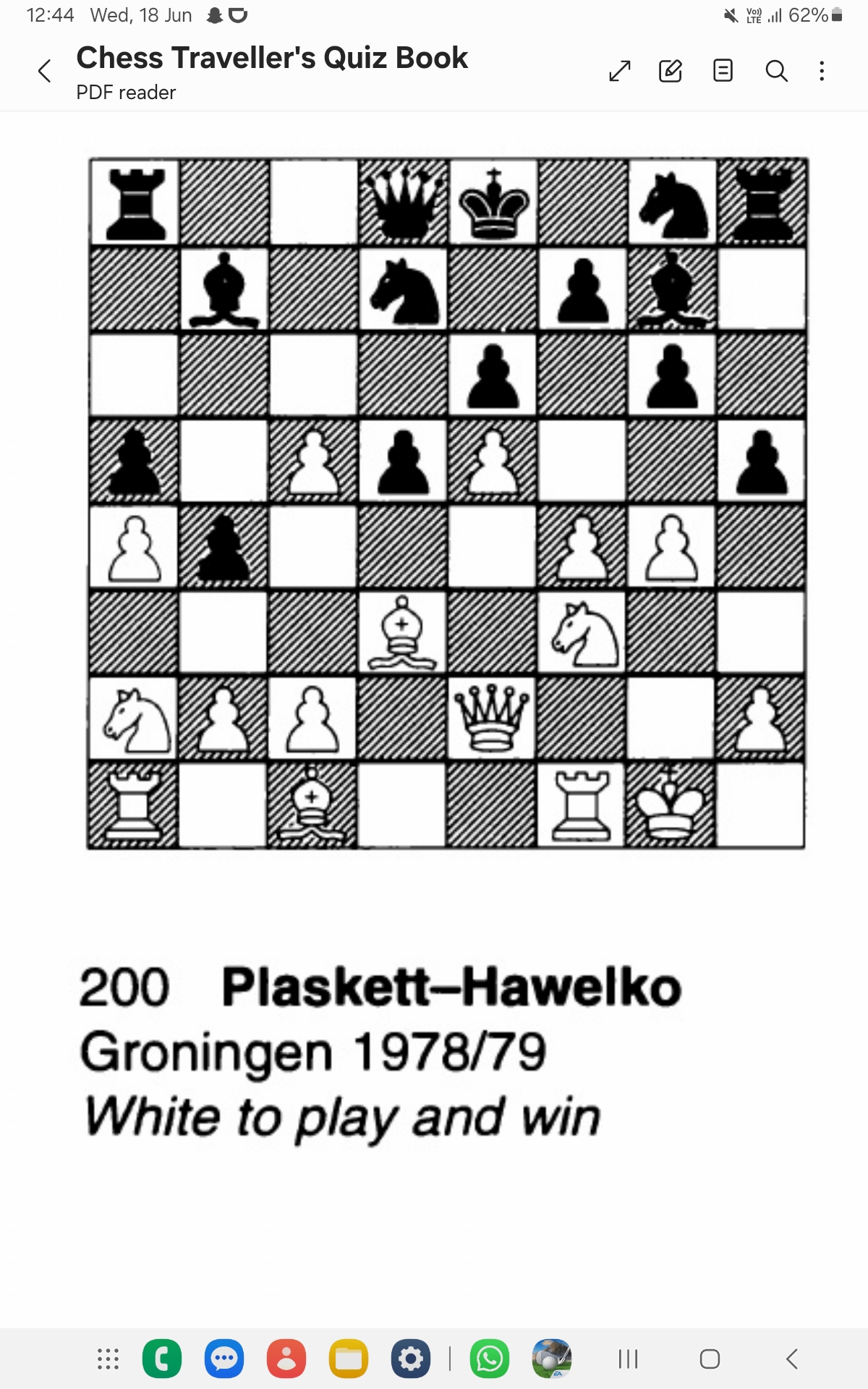
But this time I thought I’d read it backwards. A move more worthy of the annotation !? I remembered its alluring imagery of tourist attractions upon its dazzling white cover well, that there were 12 chapters in total too, but not so that some 200 puzzles in total were to be found within its covers. 200 puzzles in 12 chapters? ‘Most fitting’, I thought somewhat in jest, given that my playing strength in classical chess is usually estimated at around ELO 212 by my opponents after they have won easily yet again (although in truth it is a tad higher than that, say, ELO 214?) :-). Yes thats ELO rating not ECF rating. Jocularity aside, in finding puzzle 200 it was pleasing to see Bedfordshire’s strongest player of all time making a cameo. Attempt it I did as the bi-articulated bus I sat on approached the Zona Industrial stop, barely a kilometre or two from where I would soon embark unhurried… .
In truth, problem-solving is an aspect of chess I have never been too fussed over. That said, trying to find the solution to that above became illuminating upon reflection. Needless to say, I didn’t get very far, and had to question why. ‘White to play and win’ it says, this tells you that something is afoot but what? In OTB chess I tend to shy away from evaluating the positions I stumble across in my games because in GM Rowson’s inspirational book The Seven Deadly Sins of Chess, ‘wanting’ is the first addressed. There, he argues convincingly it is not only injudicious but more so a critical mistake to assess positions as winning or won. Better to think of them as strong/good/better/advantageous or something like that instead. An approach antithetical to problem solving indeed. Thus true to form, I couldn’t find a direct win and opted for moves that just looked good instead… .
After a few minutes, barely seconds before I got off at La estación sencilla Distrito Graffiti, as they say in this neck of the woods, I decided that white’s first move must be Bxg6, and that after fxg6, white probably follows up with Qd3 then Nd4, at which point black’s position looks precarious to say the least. Black’s g-pawn will be captured and the e-pawn probably too. Was I right or was I wrong? Alas, I am just not good enough to assess whether such moves lead to a winning attack or not, I also didn’t have enough time left of my journey to study the solution either, frankly. And like I said problems/puzzles aren’t my forte, so it mattered greatly not… .
Nonetheless, my brief, blank journey across Bogota was made more pleasant, despite the glaring disparity between Bedfordshire’s most successful player and the one most average at best who types these words, ending haplessly with me not daring to check the solution, aware even I had ample to do so upon arrival at the mall, after the fifteen minute walk there, should I want to. Instead, I just sat somewhere on that first floor people watching, clearing my thoughts, waiting for my student to arrive, which she did some thirty minutes or so later. Then the usual meet and greet ensued and two hours or so of instruction took precedence over time-killing, which made it easier to stave off boredom I guess. An impulse or two to write after all classes were completed later that day passed, then I wandered off home as rush hour hit, not really thinking about anything. Simple pleasures gave way to the formalities of business and the two rarely mix well, despite all our efforts. It led to a grey afternoon of sorts. Yes the interior design of the mall leant itself to grey marble I noted. Outside the sky was grey too I saw. The traffic now heavy as back it trudged towards downtown, made the air grey and pong of pollution; falling on the procession of reckless cyclists alongside it was light rain, and then after all that, on a yellow C-19 bus sat I no longer wanting to read, and sat like any vacuous amateur chess player would when reflecting on the lengths they must go to just to earn a crust, and lamentably, why their forays into chess are abstemious. The C-19 returned me to the stop named La estaciónFlores, a few minutes walk from where this post is being penned. When I got home I made dinner -it was rather English and rather bland. Then I slumped on this bed and watched youtube videos on how chess should be played. But I just watched while I ate and didn’t think too much about the moves being played. Then I fell asleep and a new day was born.
…on what this site initially became…on what this site is now becoming…on what this site cannot become…
On what this site initially became…
…once upon a time, the chess-related musings of an adrift academic were bound playfully and electronically in this online journal of sorts. They grew and grew as the decade did too. I kept on because I love to write whether I had much to say or not; therefore, being read by others was usually of little or no importance, comparatively speaking. Content was based on personal thoughts and experience on various topics with no intended audience borne in mind. With topics broadening, my own take on things always shaped the narrative I constructed: I often thought I was insightful but never that I was right. Sometimes imagination gave rise to originality: and of that I have always remained proud. I often introduced humour, believing that I am funnier than I really am. Sometimes, I found my own style antithetical to the conservatism I believe chess is plagued by -oftentimes that has put a gracious smile on my face… .
On what this site is now becoming…
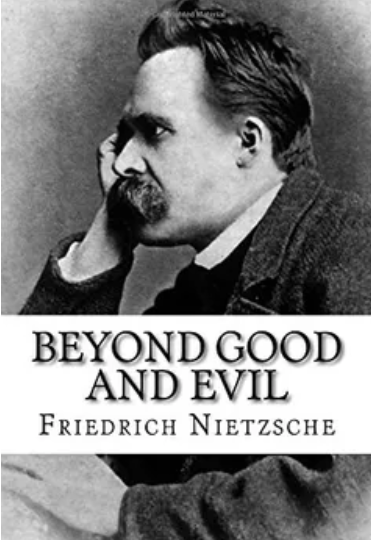
…this site is now becoming a collaboration of chess in Bedfordshire: much more so of the past than the present -that has become the dominant trend. I document the history of chess in Bedfordshire as much as I can, and as time has passed I have become more thorough and resourceful. However, I am not a trained historian as my background lies principally in philosophy but yes it is true I did study some modules on history as both an undergraduate and a post-graduate too; furthermore, I have trained myself up, particularly in terms of postmodern history. Since 2015, I have only read history and historiography as well as those philosophers who have been so influential on postmodern history, such as Nietzsche (whom I once wrote a 19,000 word dissertation on, entitled: Can the Will to Power be Found in The Birth of Tragedy?), also Richard Rorty and Foucault and I suppose certain structualists such as Claude Levi-Strauss too. Regarding postmodernism, mostly I keep to Hayden White, Keith Jenkins and Alan Muslow.
Some friends and former playing partners back home describe me as the ‘go to guy’ for the history of chess in Bedfordshire. This compliment says more about the lack of interest in the subject than my own endeavour. As mentioned, I am too adrift from academia to feel chuffed by it. Rather, I tend to lament that my historical research, like my chess, just isn’t what it should be. Even though I may well have a broad understanding of Bedfordshire chess history courtesy of the volume of research put into it, all of which began in 2014, this is not something I am particularly proud of. Nonetheless, out of courtesy compliments are graciously received. If the truth be told, I just see it as my job and only that – after all someone’s got to do it and no one else is that interested!
Amongst the many others, I have created three categories: ‘Bedfordshire Chess’ and ‘History of Bedfordshire Chess’ and ‘Luton Chess Club’. This website is slowly moving towards a consolidation of those (all of which can be found in one of the toolbars to the right).
On what this site cannot become…
…I like to be both creative and amusing when I can be, factor in that playfulness has been an ever-present factor, the content of this site should be thought of as multifarious. It could be said I continue to enjoy undermining the conservatism I believe chess is underpinned by even after all these years, and often try to use humour to do it still, believing I have got better at it. Consequently, despite the general direction its going in, this site cannot only be about Chess in Bedfordshire and nor will it be. It may become noted for that yes -in fact that’s been the case for years already even by established historians, archivists, and whoever else. External factors aside, this site is titled McCreadyandChess. I cannot, nor will I not, remove my own personal thoughts and experiences of chess from the posts of this site -especially if I think they are funny or original for they constitute my writing at its very, very best. In addition, the number of categories alone tells you that breadth of content is important to me. I am proud of my site, it is identity conferring and that is how it shall stay -end of story. All you really have are: ‘Some thoughts on the beautiful game’, which, incidentally, just happen to be my very own; nothing more, nothing less, take of it whatever you please… .
A side note on how to read old Tom Sweby's columns
Not perhaps, but quintessentially, Old Tom Sweby is best thought of as a passionate devotee to the newspapers he wrote for. He was well read and knowledgeable of the Bedfordshire chess scene and well beyond, given that he was the president of the S.C.C.U. once upon a time. He was generally well-respected and rubbed shoulders with many, if not all, of those eminent within British chess circles. It would, however, be a critical mistake to see his column is primary source material entirely. That it is not. You will also find secondary source material quoted too, and the reliability of that is not quite as Tom hoped. Given that he wrote for decades, this is to some degree inevitable, and after all we are all prone to error whether we realize it or not. Thankfully, with regards to old Tom Sweby, they are infrequent and for the most part old Tom continued to document events and developments in the Bedfordshire league from the get go as best he could but, of course, everything lies open to interpretation. Despite this, and generally speaking. this does indeed make him informative and thus worth reading. Dare I say his columns constitute a narrative describing the latest developments, match reports and changing nature of the Beds league...he knew his audience and wrote according. This manifested itself over decades but brevity was always in play courtesy of the restictions imposed by writing a column. Should you wish to read a in instrumental figure of the Beds' league post WW2, you are quite welcome to peruse what has been posted here... . :-) I should, however, point out that as the decades wore on he gradually moved on away from narratives concerning the Bedfordshire league towards affairs both historical and international. The reasons for this are multifarous, old age was a predominante factor presumably, however, the bottom line is with regards to how the Bedfordshire chess scene developed post WW2: old Tom Sweby is your go to guy. He wrote more about chess in Bedforshire than anyone else did but given he was a Lutonian and writing for a Luton newspaper there is both bias and greater coverage of his hometown than the rest of the county.
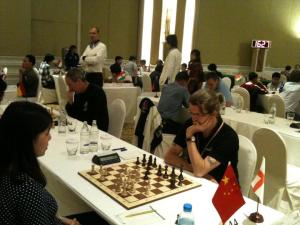
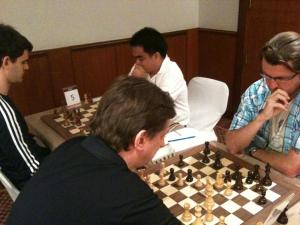
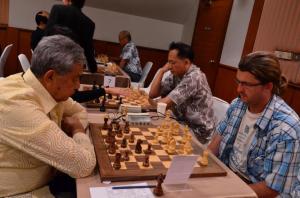
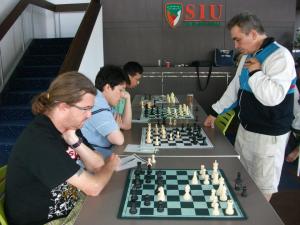
Gallery
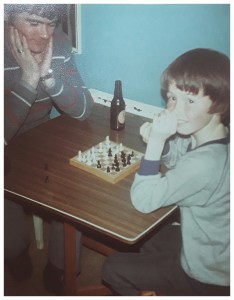
I’m either 10 or 11 here
1982, myself versus Brian from Sunderland.
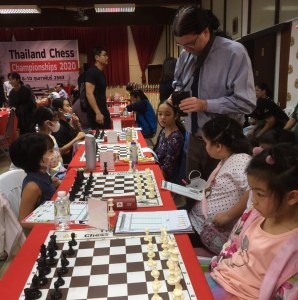
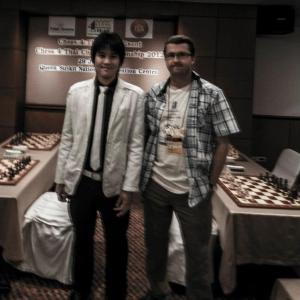
At the Thai Junior chess championships. My daughter of course.
Pattaya 2011
2011
Thai Junior Championships
2008
2011
Around 2011
2011
Pattaya 2009
2011
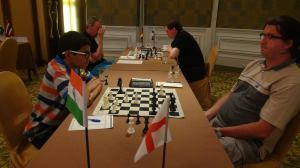
Kuwait 2008
2012
2012
2011 BKK Chess club
2011
2011 Thai Open
2011 Thai Open
2013 approx
Around 2014
2010
2012
Around 2011
2011
2011
2013
Around 2011
Around 2011
2020
2011
2008
2011
2013 or thereabouts
2010
2017
2014?
2010
2024
2024
2024
To add comments, please see the bell at the top of the page.
























 McCreadyandChess