1 A
2 D
3 C
4 B
5 D
6 D
7 A
8 B
9 C
10 A
11 C
12 A
13 D
14 B
15 C
16 C
1 A
2 D
3 C
4 B
5 D
6 D
7 A
8 B
9 C
10 A
11 C
12 A
13 D
14 B
15 C
16 C
Posted in Life beyond the chess board, Trivia, Who wants to be a millionaire chess special | Leave a Comment »
As I sat on a bus, new and red in colour, trundling across Bogota, whilst en route to a private lesson given to a student, I dipped into a favoured publication on puzzles -the appropriately named Chess Travellers Quiz Book by GM Hodgson. Certainly preferable to staring aimlessly out the windows, watching derelict buildings covered in graffiti roll by through the city’s sprawling, run down suburbs… .
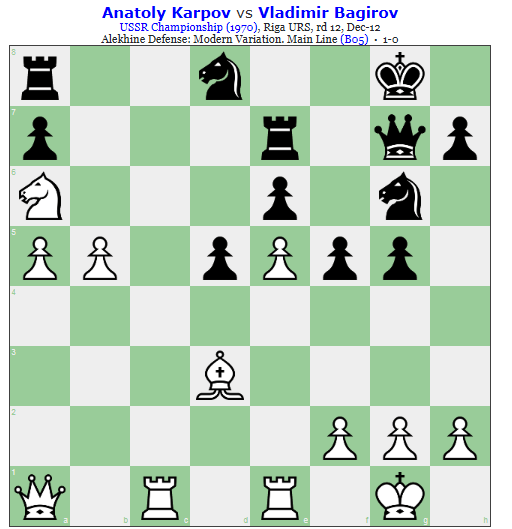
But this time I thought I’d read it backwards. A move more worthy of the annotation !? I remembered its alluring imagery of tourist attractions upon its dazzling white cover well, that there were 12 chapters in total too, but not so that some 200 puzzles in total were to be found within its covers. 200 puzzles in 12 chapters? ‘Most fitting’, I thought somewhat in jest, given that my playing strength in classical chess is usually estimated at around ELO 212 by my opponents after they have won easily yet again (although in truth it is a tad higher than that, say, ELO 214?) :-). Yes thats ELO rating not ECF rating. Jocularity aside, in finding puzzle 200 it was pleasing to see Bedfordshire’s strongest player of all time making a cameo. Attempt it I did as the bi-articulated bus I sat on approached the Zona Industrial stop, barely a kilometre or two from where I would soon embark unhurried… .

In truth, problem-solving is an aspect of chess I have never been too fussed over. That said, trying to find the solution to that above became illuminating upon reflection. Needless to say, I didn’t get very far, and had to question why. ‘White to play and win’ it says, this tells you that something is afoot but what? In OTB chess I tend to shy away from evaluating the positions I stumble across in my games because in GM Rowson’s inspirational book The Seven Deadly Sins of Chess, ‘wanting’ is the first addressed. There, he argues convincingly it is not only injudicious but more so a critical mistake to assess positions as winning or won. Better to think of them as strong/good/better/advantageous or something like that instead. An approach antithetical to problem solving indeed. Thus true to form, I couldn’t find a direct win and opted for moves that just looked good instead… .
After a few minutes, barely seconds before I got off at La estación sencilla Distrito Graffiti, as they say in this neck of the woods, I decided that white’s first move must be Bxg6, and that after fxg6, white probably follows up with Qd3 then Nd4, at which point black’s position looks precarious to say the least. Black’s g-pawn will be captured and the e-pawn probably too. Was I right or was I wrong? Alas, I am just not good enough to assess whether such moves lead to a winning attack or not, I also didn’t have enough time left of my journey to study the solution either, frankly. And like I said problems/puzzles aren’t my forte, so it mattered greatly not… .
Nonetheless, my brief, blank journey across Bogota was made more pleasant, despite the glaring disparity between Bedfordshire’s most successful player and the one most average at best who types these words, ending haplessly with me not daring to check the solution, aware even I had ample to do so upon arrival at the mall, after the fifteen minute walk there, should I want to. Instead, I just sat somewhere on that first floor people watching, clearing my thoughts, waiting for my student to arrive, which she did some thirty minutes or so later. Then the usual meet and greet ensued and two hours or so of instruction took precedence over time-killing, which made it easier to stave off boredom I guess. An impulse or two to write after all classes were completed later that day passed, then I wandered off home as rush hour hit, not really thinking about anything. Simple pleasures gave way to the formalities of business and the two rarely mix well, despite all our efforts. It led to a grey afternoon of sorts. Yes the interior design of the mall leant itself to grey marble I noted. Outside the sky was grey too I saw. The traffic now heavy as back it trudged towards downtown, made the air grey and pong of pollution; falling on the procession of reckless cyclists alongside it was light rain, and then after all that, on a yellow C-19 bus sat I no longer wanting to read, and sat like any vacuous amateur chess player would when reflecting on the lengths they must go to just to earn a crust, and lamentably, why their forays into chess are abstemious. The C-19 returned me to the stop named La estación Flores, a few minutes walk from where this post is being penned. When I got home I made dinner -it was rather English and rather bland. Then I slumped on this bed and watched youtube videos on how chess should be played. But I just watched while I ate and didn’t think too much about the moves being played. Then I fell asleep and a new day was born.


Mark. J. McCready
Posted in Bedfordshire Chess, My own endeavours | Leave a Comment »
Courtesy of GM Levitt on ye olde fb, I was alerted to the following, highly entertaining video. Well worth a watch. I think it should go viral.
Regarding GM Levitt’s work, an example can be found here.
MJM
Posted in Chess, Humour | Leave a Comment »
The subtitle of this website states ‘Some thoughts on the beautiful game‘. The adjective chosen does foretell what you will not, thankfully, ever see on this site…unwritten rules and regulations if you like.
Examples of investigative journalism
Given that by background I am a qualified philosopher and have also led a rich and very colourful life across the globe, I do not wish to expose anything that casts a negative light on chess, irrespective of the alleged wrong-doing involved. The ancient Greeks taught us that everything is a question of character thus not ability so irrespective of how good at chess someone may be, that and those miscreant does not appear on this site. Instead this website is really just a celebration of writing and content I find interesting, that’s all!
Documentation of and references to crimes committed
Related to that above with similar reasons. I do have an extremely large number of contacts, some of which do conduct investigative journalism but I do not wish to, and shall not document such matters.
Corruption and criticisms
Most know the governing bodies of chess, FIDE being at the apogee obviously, usually do not have an exemplary past or one of which they are entirely proud of. But I am simply not interested. Nothing pertaining to such matters will ever be posted here.
Footage of chess portrayed in a negative light
Chess players, professional and amateur, who do not conduct themselves accordingly will not be shown on this website, whatever it may be.
Once again, this site is, if anything, it is a celebration of writing & chess. So all that above you shall not see as it is not identity conferring and by that I mean it goes against the aims of the site.
Mark. J. McCready
Colombia
Posted in On-line journal, Personal Interest & Experience | Leave a Comment »
The NBC, or National Broadcasting Company, as our American friends may tell us, was formed in 1926, it’s headquarters being New York New York -the city so good they had to name it twice. Evidence of which can be found within its music scene, that being the best America has. (please watch the video below)
And so my favourite city in the world once brought us footage of the Soviet Union V USA match back in 1955, a return match after the previous year’s meeting in New York New York. Here it is and interesting it is too.
Futher details may be found here. https://dgriffinchess.wordpress.com/2017/03/10/reshevsky-botvinnik-1st-round-ussr-usa-match-moscow-1955/
Mark. J. McCready
Posted in Quaint Chess History | Leave a Comment »
William Ward, who is documented playing for Luton around the turn of the 19th century, is almost certainly the forth strongest player of all time to play chess in Bedforshire, if and only if, the EDO historical rating site is to be trusted fully, putting his rating at ELO 2422 at its apogee http://www.edochess.ca/players/p562.html.
He came third in the 1905 British Chess Championship in Southport and in taking a look at some of his games, I noticed a curiosity. I have discovered what must be his quickest win ever, courtest of Britbase (see game 60). https://www.saund.co.uk/britbase/pgn/190508bcf-viewer.html. He won in only two moves! I am researching how this came about and will update in due course.
Next day’s update
A brief online chat with author and historian Richard James has drawn attention to such games being described as game stubs, where the newspaper or magazine referred to does not have the entire gamescore for whatever reason.
McCready, latin america
Posted in History of Bedfordshire Chess in the 19th century | Leave a Comment »
I really am not a fan of online chess but it does help alieviate boredom I suppose. Anyway, here’s four wins which show how badly I play online and how bad my opponents usually are. Not anything to be proud of but rather ashamed of instead yet still I post! It remders my play quick fire and impulsive. If you do have to watch any of them then only the last game is worth looking at as my opponent is not so terrible… .
2. No thought needed here, another example of poor opening play by my opponent.
3. Far too easy.
4. Nice trip down memory lane.
Mark. J. McCready
Colombia
Posted in My Own Games | Leave a Comment »
Here is a game which exemplifies I am a mere club & county player, and both challenges the widely held belief that 1. c4 is a quiet move often leading to postional struggles as well as that I am playing for a win still, despite having stopped playing sacrifical chess against computer engines. It’s far from brilliant, like most ad hoc online games are, but looks like the right way forwards for someone wnting to move away from 1. e4.
Mark. J. McCready
Colombia
Posted in My Own Games | Leave a Comment »
“Truth is what your contemporaries let you get away with.” -Richard Rorty
Fellow chess players of Bedfordshire, in returning to Chess in Bedfordshire (F. Dickens & G. L. White: Leeds Whitehead & Miller 1933) once again, courtesy of ineluctable ongoing research, please allow me to draw attention less so to the quote above and more so to the once documented county debut defeat of ours in the S. C. C. U. with special attention paid to a certain individual in particular, since none was given in the aforementioned publication. First, a recap of the result:

Somewhat aside: chess history is not always as laudable as some readers may assume, with not all authors not seen as paragons of virtue by their readers, particularly postmodernists or historiographers who may continuously connect interpreting meaning to establishing significance of events and occurances within discourse, rather than rely on facts or just raw data; and so to understand the nature of this defeat a little better, let us ponder over some rather helpful commentary on the match found in The British Chess Magazine, then move on to a comparison of Middlesex‘s top three boards to ours. This should show a gulf in class at the top end of the teams was in play, one which trickled down to the lower boards too most probably, thus a deciding factor in this defeat on our debut in the S.C.C.U.
Their Board 1
Fellow county chess players, you may already be acquainted with their top board: the esteemed P. W. Sargeant, him being the author of the then future publication A century of British chess (1934). The estimated rating attributed to him by the EDO Historical Chess Ratings website (not entirely reliable but good enough) at the time of the match was 2115 http://www.edochess.ca/players/p4038.html but it should be pointed out, however, that he was the Middlesex county champion of 1921, two years previously.

Their Board 2
On board two was R. C. Griffith. British champion in 1912 in his only such appearance, and as can be seen above, champion of Middlesex some two years after that. Impressive indeed for a board number two. The EDO website has him estimated at 2261 that year http://www.edochess.ca/players/p4615.html.
Their Board 3
And so. onto thee board three, he who this post is about -the Canadian Maurice Fox. The EDO website has him rated at 2341 the year Bedfordshire was beaten. http://www.edochess.ca/players/p7358.html.
More significantly: four years before he beat our F. Dickens, he outfoxed future world champion Capablanca in a simul with the black pieces, Capablanca v Fox, suggesting that he was too strong to play on board three at county level despite Capablanca not being at his optimal best.
According to various sources, later in 1923 he emigrated to Canada. The following year he faced another future world champion with the black pieces, this time Alekhine in a simul in Toronto. During the middlegame, increduously, he decided to march his king down to e3 even though Alekhine still had a queen, rook and knight on the board; sacrificing a rook and a knight along the way and leaving Alekhine the option of allowing himself to be mated instantly or force perpetual check instead! See below. Alekhine v Fox
He then went on to win the national championships in Canada a joint record eight times (joint with GM Yanofsky), with his estimated rating peaking in 1929 to 2364. Much more impressively, in the 1950s he not only outfoxed yet another future world champion with the black pieces but beat him too, a certain Robert. J. Fischer. Fischer v Fox
According to the following link, this game occured at the very first Canadian Open, in Montreal 1956 https://www.bcchesshistory.com/canop5662.html and even though Fischer was only 13 at the time with a rating as low as 2156, he could be hardly be classified as a push over given that at the very same age he played what was called the game of the century against Donald Byrne, thus described by Hans Kmoch ‘The following game, a stunning masterpiece of combination play performed by a boy of 13 against a formidable opponent, matches the finest on record in the history of chess prodigies.”
Shifting the focus homeward bound, how did our top three stand in relation? In terms of estimated ratings, there is little to go on.
Our board 1
W. Church of Luton (no results attainable, no rating estimated)
Our board 2
H. T. Duhan (of Bedford: estimated rated 2141, 12 years previously) http://www.edochess.ca/players/p12485.html
Our board 3
F. Dickens of Dunstable & Luton: no results attainable, no rating estimated (aside please note for our purposes, he played alongside Nigel Staddon’s father for many years).
Do also note that the co-authors of Chess in Bedfordshire (F.Dickens & G.L White: Leeds Whitehead & Miller 1933) are playing on boards 3 and 13, and H. T Duhan (our board 2) had already become champion of South Africa eight years after The Boer War had ended in 1910, as has been documented on this site, and also S.Dickens, who drew on board 12 once turned over Tartakower in a simul in Luton in 1928 (also documented on this site).
‘Bedfordshire received its baptism in S.C.C.U matches when Middlesex were (that’s a collective noun and so should be followed by was not were: subject and verb disagreement) encountered at Australia House on February 17th 1823′. Oh really? Baptism of fire was a more aptly chosen term I would say. Their board trois beat deux of, and drew with un of, those always in the top dix greatest players of all time! (Please excuse my French!)
A consolation of sorts
Last, but by no means least, another perspective: regarding county players who have beaten future world champions with the black pieces, the all-time score between Middlesex and Bedfordshire is most probably 1-1. If, and only if, it is true that Fox is their only player to do so, and GM Plaskett is ours (he beat Anand before he became world champion) that is. And on that note -draw agreed! Anand v Plaskett.
“The world does not speak. Only we do. The world can, once we have programmed ourselves with a language, cause us to hold beliefs. But it cannot propose a language for us to speak. Only other human beings can do that. ”
― Richard Rorty
Mark. J. McCready
Chapinero, Bogota, Colombia
Posted in History of Bedfordshire Chess from 1920-1940 | Leave a Comment »
Unlike the popular gameshow, features such as ‘ask the audience, phone a friend, and 50/50‘ are inapplicable here -sincere apologies. Unfortunately, there’s no money to be made from this also. However, do your best but do it alone please -no googling!
Question 1 £100
How many pawns are there on the board at the beginning of a game?
A: 4
B: 8
C: 16
D: 32
Question 2 £200
When two kings are placed in the centre of the board by an arbiter, what does this signify?
A: a game has been drawn.
B: a game has been won by white.
C: a game has been won by black.
D: a game has not been played.
Question 3 £300
Queening refers to what in chess?
A: castling
B: a sacrifice
C: an exchange
D: promotion
Question 4 £400
The headquarters of FIDE are in which country?
A: France
B: Switzerland
C: Belgium
D: Austria
Question 5 £500
The Lewis Chessmen are housed in a musuem in which city?
A: Glasgow
B: Cardiff
C: London
D: Dublin
Question 6 £1,000
Who is the only person described as both unofficial and official world champion?
A: Wilhelm Steinitz
B: Johannes Zukertort
C: Adolf Anderssen
D: Emmanuel Lasker
Question 7 £2,000
The book Modern Ideas in Chess was written by whom?
A: Aron Nimzowitch
B: Jose Capablanca
C: Richard Reti
D: Max Euwe
Question 8 £4,000
The St. George’s Defence has also been called?
A: The Liverpool Defence
B: The Manchester Defence
C: The Cambridge Defence
D: The Birmingham Defence
Question 9 £8,000
Who became the Women’s World Champion in 2018?
A: Ju Wenjun
B: Hou Yifan
C: Tan Zhyongi
D: Lie Tingjie
Question 10 £16,000
The American player Larry Christiansen was awarded the title of GM in which decade?
A: 1960s
B: 1970s
C: 1980s
D: 1990s
Question 11 £32,000
What was the prize money for the 1992 rematch between Fischer and Spassky?
A: $1,000,000
B: $3,000,000
C: $5,000,000
D: $10,000,000
Question 12 £64,000
Which European master played a match against Paul Morphy in New Orleans in 1850?
A: Daniel Harrwitz
B: Johann Löwenthal
C: Adolf Anderssen
D: Louis Paulsen
Question 13 £125,000
‘Jaque Mate’ is the term for checkmate in which language?
A: French
B: Portugese
C: Italian
D: Spanish
Question 14 £250,000
The 2020 Tata Steel Tournament held in Wijk An Zee was won by whom?
A: Magnus Carlsen
B: Fabio Caruana
C: Wesley So
D: Anish Giri
Question 15 £500,000
Who was Magnus Carlsen’s last opponent as world champion?
A: GM Hikaru Nakamura
B: GM Alireza Firouzja
C: GM Richard Rapport
D: GM David Howell
Question 16 £1,000,000
Who is the only Canadian to have beaten former world champions Capablanca and Fischer, and drawn with former world champion Alekhine?
A: Daniel Yanofsky
B: Nathan Divinsky
C: Duncan Suttles
D: Maurice Fox
So there you are, well done if you did well. No money once again I’m afraid owing to being a poor English teacher. I do put thought into this, so if you got more than half right, you did well. Hope you enjoyed, you might even want to give it a shot yourself!
Mark. J. McCready
Posted in Trivia, Who wants to be a millionaire chess special | Leave a Comment »