Some people have too much time on their hands.
Throughout the 80s, 90s, England was a hotly-tipped nation at national events like the Olympiad. It’s not that way now for main events, unless you change the parameters. The same players who were strong 30-40 years ago are now doing very well in the over 50 and over 65 sections. Details are provided here.
Posted in Chess | Leave a Comment »
The draft save is Feb 12th 2021 and this is about as far as I got. What it doesn’t say in the don’ts’s is don’t play it against people who are much better than you! I say this because you concede a lot of space, and if that’s used well you are in a difficult situation to put it mildly. Since this draft save I have adopted the Sicilian with 2. …e6 as it is more solid and gives you more chances. I really ought to point out here that I did play the St. George’s solidly for at least 6 months at a very busy time (300-500 games) but I am by no means a professional player. The book written by Basman I found to be rather poor but he did seem to know that if the centre is closed, you have to play on the flanks or you will get squashed basically. It’s a fun/novelty opening that can really throw your opponent but I certainly wouldn’t try to build a repertoire around it as its only a matter of time before you’ll be shot down in flames. What is written below is entirely from my own experience, and it became very rare that I was troubled in the opening.
The Do’s which provide playable middlegames.
-understand you are conceding the centre therefore you must play on the flanks.
-understand you gain space on the queenside and so that is where you should play. Attacks on the kingside come later, once your opponent is stretched somewhat or at least attending to your play on the queenside.
-minor piece development order is usually queen’s bishop, king’s knight, king’s bishop, and lastly, queen’s knight.
-you have less space than white and so one or two minor pieces should be exchanged so that you have more room for manoeuvre. White will find it easy to attack if this does not happen.
-because you will develop the queen onto a dark square -most likely b6- you should wait for your opponent to commit his light-squared bishop first unless it can be challenged immediately.
-do try to exchange the c-pawn whenever the opportunity arises because it makes it easier to use the b-file, and if the position stays closed you can’t generate counter play.
-given that it is unorthodox either your opponent won’t set his pieces up correctly, will sit and do nothing or will over-extend, if your play is harmonious he will find it hard.
-try to prevent the queen from gaining access to the kingside if possible. It’s the only option has but it can be deadly. In general you are too committed to the queenside to cope with sacrifices or exchanges which open lines.
-do try to understand its an unconventional opening rarely played, which means your opponent probably won’t know what to do and will go for a passive set up.
-if an early a4 is played, push on with b4. It is played to try and gain the c4 square, which you should not allow for that is a concession which will prevent you from opening the game up.
The Don’ts’ which get you out of the opening with a playable position
-don’t think in terms of transposition to The French or The Sicilian are not quite possible and likely to weaken your position quite a bit.
-don’t allow your opponent to gain a three pawn central majority because you won’t be able to undermine it.
‘the king’s knight shouldn’t stay pinned. h6 seems to work well, Be7 is less risky than Qb6, in general the queen isn’t needed on the queenside until mid to late middlegame. Remember, if the centre closes, the King can stay there.
-don’t come out of the opening with no minor pieces exchanged. Aim for two if possible as your position is rather cramped. Almost certainly the king’s bishop and quite often the queens knight.
…push the b-pawn early as its often a useful moves that alters the set up of the white queenside…
…it could be argued that because The St.Georges Defence is passive there is a greater necessy for black to free himself up and for the opening and early middle game that involves generating counter-play on the queeside and utilizing that, often to attack the white centre.
The black queen is a piece that has to be deployed carefully, sometimes it is best to wait because it may not be needed on the queenside, and is often targetted when placed there. It’s best square is seeingly b6, transfering pressure from e4 to d4 but care must be taken so that a bishop doesn’t come to b3 and a knight doesn’t hop into d5 or c4. Queen placement is probably the move which requires the most care.
…if white play is typically playing standard developing moves its because he doesn’t know what to do.
…* the e4 square is what white can win easily with. If the knight on f6 is removed, and you haven’t castled, then wait because the bishop and queen battery on the c1-h6 diagonal is hard to meet.
…when an early c4 comes, re-route the knight to b6 after the exchange on c4. Don’t allow white to capture the knight and double the d-pawns because they are too difficult to defend and your light squared bishop becomes hemmed in.
Posted in Chess, My own endeavours, Personal Interest & Experience | Tagged 1. ....a6, Birmingham Defence, St George's Defence | Leave a Comment »
Click on the following link and see if you can make sense of it. I couldn’t.
Posted in Life beyond the chess board | Leave a Comment »
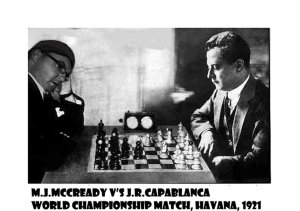
I have great respect for him and have for many years. Check out this classic from yesteryear.
Posted in On-line journal | Leave a Comment »
I’ve started linking media from the website Reddit and will continue to do so because the community of chess enthusiasts and sub-categories is broader than most media platforms, meaning that it’s easy to find content that you can’t find elsewhere. Moreover, I do suggest you have a look at the site itself, as it has come on leaps and bounds from its early days…
https://www.reddit.com/r/chess/ (this is the main one for chess but there are very many others).
Posted in On-line journal, Sources of inspiration | Leave a Comment »
Where most posts are written this summer, with more to follow soon.

Posted in On-line journal | Leave a Comment »
I saw my daughter off to school and have only just taken my medication, so I have a twenty something minute window before I drop off hopefully.
Instead of getting myself ready for bed, I sit up wondering if a Grand Master has ever been tasered and if not who will be the first. This follows on from a tentative Kahoot I came up with entitled ‘Famous chess players who have either been bottled, stabbed, shot, whipped, batted, stun-gunned or tasered.’ Unfortunately, I can only think of one who fits in, and that’s not enough, I would need about twenty. What a great way to get myself ready for sleep huh?
Posted in On-line journal | Leave a Comment »
-
Recent Posts
February 2026 M T W T F S S 1 2 3 4 5 6 7 8 9 10 11 12 13 14 15 16 17 18 19 20 21 22 23 24 25 26 27 28 Archives
…on what this site initially became…on what this site is now becoming…on what this site cannot become…
Categories
- Academia
- Bedfordshire Chess
- Chess
- Chess in Thailand
- Dear Ken
- Documentaries
- FIDE
- History of Bedfordshire Chess
- Humour
- Kasparyan
- Life beyond the chess board
- Luton Chess Club
- Meme
- Moves I could never play
- My daughter
- My own endeavours
- My Own Games
- My own warped humour
- On-line journal
- Personal Interest & Experience
- Postmodern History
- Quaint Chess History
- Reflections
- Reviews
- Selected on-line games
- Sources of inspiration
- Tournament Chess
- Trivia
- Viz inspired material
- Who wants to be a millionaire chess special
- World Championships Analytics
Posts which McCready is mighty pleased with
Luton & The University of Bedfordshire Chess Club
01582 743921/07710036246 (Humuyan)Tuesdays from 7.30 pm, The Library, Ground Floor
Please go to:
https://www.lutonchessclub.com/Blog Stats
- 32,086 hits
-
Join 39 other subscribers
-
A side note on how to read old Tom Sweby's columns
-
Not perhaps, but quintessentially, Old Tom Sweby is best thought of as a passionate devotee to the newspapers he wrote for. He was well read and knowledgeable of the Bedfordshire chess scene and well beyond, given that he was the president of the S.C.C.U. once upon a time. He was generally well-respected and rubbed shoulders with many, if not all, of those eminent within British chess circles. It would, however, be a critical mistake to see his column is primary source material entirely. That it is not. You will also find secondary source material quoted too, and the reliability of that is not quite as Tom hoped. Given that he wrote for decades, this is to some degree inevitable, and after all we are all prone to error whether we realize it or not. Thankfully, with regards to old Tom Sweby, they are infrequent and for the most part old Tom continued to document events and developments in the Bedfordshire league from the get go as best he could but, of course, everything lies open to interpretation. Despite this, and generally speaking. this does indeed make him informative and thus worth reading. Dare I say his columns constitute a narrative describing the latest developments, match reports and changing nature of the Beds league...he knew his audience and wrote according. This manifested itself over decades but brevity was always in play courtesy of the restictions imposed by writing a column. Should you wish to read a in instrumental figure of the Beds' league post WW2, you are quite welcome to peruse what has been posted here... . :-) I should, however, point out that as the decades wore on he gradually moved on away from narratives concerning the Bedfordshire league towards affairs both historical and international. The reasons for this are multifarous, old age was a predominante factor presumably, however, the bottom line is with regards to how the Bedfordshire chess scene developed post WW2: old Tom Sweby is your go to guy. He wrote more about chess in Bedforshire than anyone else did but given he was a Lutonian and writing for a Luton newspaper there is both bias and greater coverage of his hometown than the rest of the county.
Gallery
-
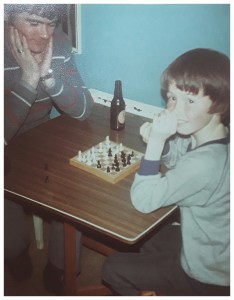
- I’m either 10 or 11 here
-

- 1982, myself versus Brian from Sunderland.
-

- At the Thai Junior chess championships. My daughter of course.
-

- Pattaya 2011
-

- 2011
-
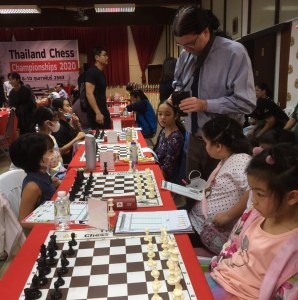
- Thai Junior Championships
-

- 2008
-

- 2011
-
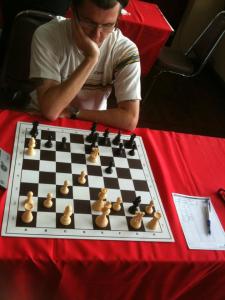
- Around 2011
-
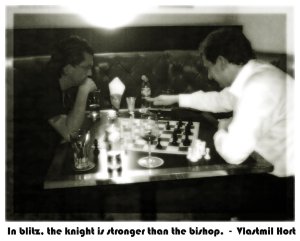
- 2011
-

- Pattaya 2009
-

- 2011
-

- Kuwait 2008
-

- 2012
-
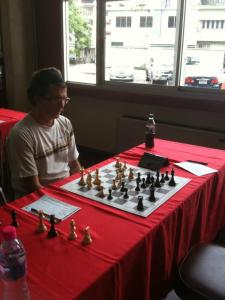
- 2012
-
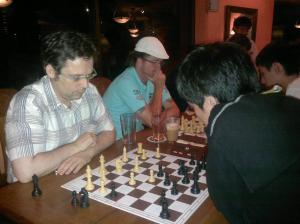
- 2011 BKK Chess club
-

- 2011
-

- 2011 Thai Open
-
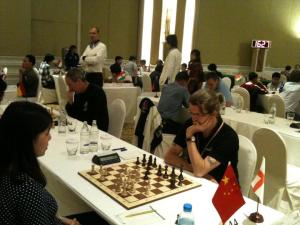
- 2011 Thai Open
-
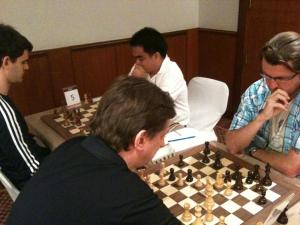
- 2013 approx
-
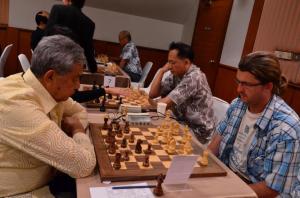
- Around 2014
-
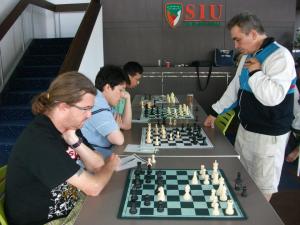
- 2010
-
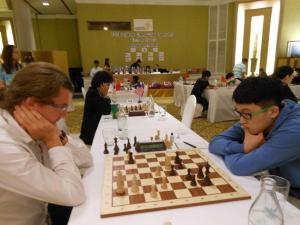
- 2012
-

- Around 2011
-
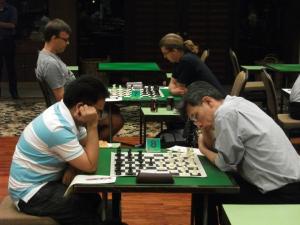
- 2011
-
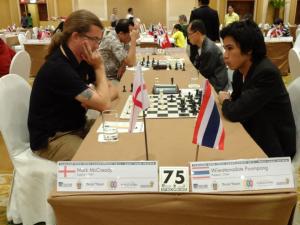
- 2011
-

- 2013
-

- Around 2011
-

- Around 2011
-

- 2020
-
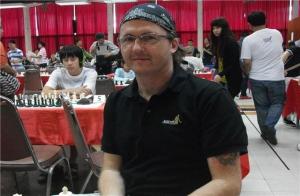
- 2011
-

- 2008
-
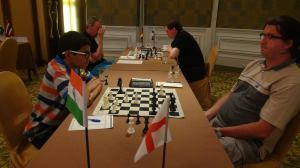
- 2011
-

- 2013 or thereabouts
-
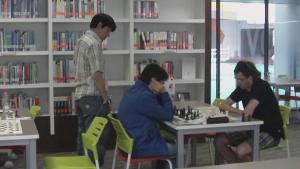
- 2010
-

- 2017
-
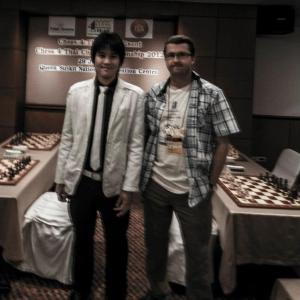
- 2014?
-
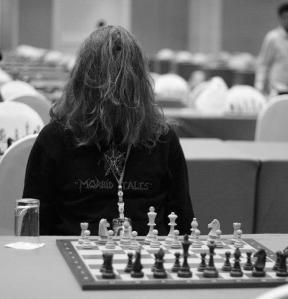
- 2010
-
- 2024
-
- 2024
-

- 2024
-
-
To add comments, please see the bell at the top of the page.

 McCreadyandChess
