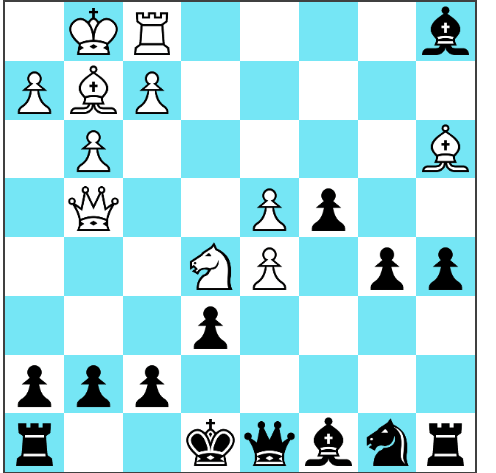
With Bob Hope and no hope the only two hopes I have at being good at chess, the rather radiant move below, that being 18. Nc6 is, above my level very much. The analysis required is so deep, and imagination is required as well. Yes I note that white wants to remove the dark-squared bishop which is a key defender but it looks like Black has enough still. Way, way, way above my level.
Who doesn’t like mad positions? What is black meant to play here? It’s another Soviet Championship game, this time between Balashov and Beliavsky, from 86. The move played looks rather suicidal to me but this position is too difficult to know what’s best imo.
One of Karpov’s best games and such a sublime and elegant move. This is Karpov v Dorfman, Soviet Championships 1976. Way above my level but so beautiful. Most would just want to grab material with dxe7, which is hardly going to win you the game. Karpov knows best.
NB. Perhaps I ought to explain that this is an attempt at irony since I do consider Barrack to be the most politically astute president the US has had for a very long time, and I do know he is a keen Scrabble player too.
‘A shadowed pool in one of the hollows was hardly to be distinguished from the dark earth, except that it was covered with white crowfoot flowers as with five minutes’ snow…over all, the ancient beeches stood up with hard sculptured holes supporting storey after storey of branch and shade which were traversed at the top and at the fringes by fair fresh leaves.’
Edward Thomas, The Heart of England (1909), Chapter VIII, Garland Day
A changing of the guard
Consequences are a curious thing, can’t we say? For how do we know where they shall take us?1 Only early this afternoon I left a voice message to a French friend now in Grenoble, seconded to a university there. ‘I don’t quite know where that is but do recall passing through Strasbourg on the train once, is it near there?’ I asked uncertain of what his answer would be. Bored stiff soon after, I scrambled to look it up and not just that, loaded that long forgotten journey I took on to the ever gracious google maps. Something so incidental in Salzburg, Austria tells twice of that encountered en passant en route to Paris; one which revealed what had already passed, one which reveals what lay on the tracks ahead.
To preface matters, the season I stopped playing chess competitively was 96-97, when academia came to the fore: the season done, the semester halted, summer months abound; by plane, by train, and by car around central Europe, I sauntered with mates found on the Erasmus Exchange Programme in Finland previously that academic year, linking up with one in Gdansk, Poland and those scattered across Austria. For the finale, I took a train from Saltzburg to Paris in mid-August 97, the encore the Eurostar home.
Two things occured on that train to Paris, which upon reflection, help me grasp aspects of the past better. The first that whilst on the train, I passed through Baden-Baden, Germany unwontedly. First proof of chess being a thing of the past at that time it was. I did not know the route well nor where I was, having been on the train for many hours and slept through Munich already. The train did not stop, chess was not timetabled in, the morning light that fell upon that spa town where many great figures once played, I took a look at yes but it had little interest in -it being merely something of a surprise. In fact: I do not recall the last time I thought about this upon reflection, as it never did seem important -further proof.2 It’s not about the facts but the interpretation of them, which you roll with, those in postmodernism, and its neighbouring discourses, will gladly tell you: today, Baden-Baden was no more than a brief moment in time, representing that which had already passed; and now stands upright only, supporting a strongly held, well justified belief.
Something else occurred on that train, also unexpected, but more telling. I shared the carriage with a girl who was studying Philosophy and we spent time talking about it and my spirits rose. She seemed somewhat impressed that I had visited Wittgenstein’s house in Vienna, her English excellent I noticed. She was tanned, wore glasses, had medium length dark hair, wore a blue shirt and cardigan, and had a sharp intellect. I don’t remember exactly what I said but something splurted out and put a smile on her face, whatever it was. I also can’t say what I was reading on the train too but I did have something in the green army rucksack I carried, she was also reading, but what I can’t remember as well. I would not have been reading chess, something from continental philosophy, probably Nieztsche. Was it that which started the conversation off? I thinketh not -that was most likely the trip to Wittgenstein’s house! We chatted like strangers on a train do, but she pulled me up on two things rather harshly; the first when I asked her if she was French since we were heading to Paris and her accent was very slight (she was in fact Austrian), the second was related to Jürgen Habermas and probably about his nationality, and me thinking he was Austrian and not German.3 When we disembarked in Paris, she even assisted me in my time there, even though telling her I wanted to go and see the Eiffel Tower gained a very dismissive look, as she was rather cultured it must be said. But help she did, goodbye was said, then the Eiffel Tower I photographed before I kipped on a bit of grass in the burning hot sun near some palace somewhere in the city… .4 I don’t know if I did ask for her details or not, probably I was too shy to, but I quite liked her anyway. Though incidental, that meeting on the train reveals what lay ahead on the tracks.
I suppose the obvious answer is repression but how did I not couple that captured en passant in Europe to that in America the year next? Most unusual! So female Philosophy graduates were in and female chess players were out -not that I was ever interested in any of those.5 My interests had changed and were more life-affirming, as Wittgenstein cropped up in conversation again with another found female Philosophy graduate and much travel together, and to be together, followed soon enough. Perhaps this was not something I could rationalize at the time, it was something I could only encounter. I was more interested in academia and travel by then and not chess…I suppose I must have been young and free or something like that…. .6
‘Historians too can turn the same landscape into their discourse. Field patterns today could be compared to those pre-enclosure; population now to that of 1831, 1871; land ownership examine how a bit of the view edges into a national park, of when and why the railway and canal ceased functioning and so on. Now, given that there is nothing intrinsic in the view that shouts geography, sociology, history, etc., then we can see clearly that whilst historians and the rest of them do not invent the view (all that stuff seems to be there all right) they do invent all its descriptive categories and any meanings it can be said to have.’
Try researching consequentialism if you are peeved by deontological ethics. For this I am forever indebted to lifelong source of inspiration and by far the most intelligent man I have ever met in my life Prof. Daniel. D. Hutto. https://en.wikipedia.org/wiki/Daniel_Hutto↩︎
It really was of no real importance. Why would it be if you had left that thing behind already? Should it be the case today, I would want to get off that train and visit the venue the chess took place in. That would be a big thing for me today. ↩︎
How he came into the conversation I simply cannot recall, that is far too difficult to do but it has always been the case that I have never enjoyed reading him much. Probably because his interpretation of Nietzsche I found to be questionable and limiting, I always remember thinking I never really saw the point in reading him. ↩︎
I’m assuming there must be more to this than I can remember, or alternatively, that I was something of a raconteur back then. As my friend Paul, who the person alluded to in the following paragraph correctly informed me, was my best friend, found this extremely amusing and many times reminded me of this. What I told him I don’t know, probably I overplayed my displeasure at being told by a policeman I was not allowed to sleep there and told to move on! All I recall was the palace had some sort of glass roof, and it was huge as were the roads around it…whichever bit of the city that was! ↩︎
This is not entirely true. Aged 18, I played in the same tournament as one I fancied for a happy couple of days. She was quite well-known in the south of England, so I am rather reluctant to say her name. And how could I possibly forget that bloody twat who went and opened a large wooden door that led to the quadrant of the grammar school we played in so forcibly I couldn’t get out of the way in time, just as she was walking towards me! And being young, incredibly shy, and completely useless at everything, I froze at his apology then shot my mouth off with an excessively polite reply said loudly to catch her attention, forgetting to curtail my blunt Luton accent as it burst through, making me sound more mentally challenged than skilled at chess! She smirked and I carried on walking, completely oblivious as per usual! ↩︎
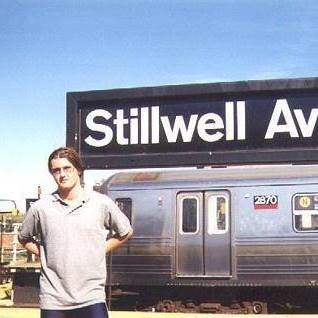
There was another train journey involved over there! This time to Yale University, Connecticut. A conversation was held in New Haven regarding Nietzsche, with a work by Maudemarie-Clark referred to, and briefly Wittgenstein also with a fellow Jewish friend of Rachel’s named Josh -a very gifted academic! SEE PIC BELOW I’m not sure what the moral of this story is…that all around the globe Philosophy has more girls worth getting than chess as they tend to be more loquacious than those sat staring at a board for hours on end all the time perhaps! ↩︎
This pic was taken by Rachel just a few days before so (or was it after?). Do I look like the sort of person interested in chess here? Or do I look like someone much more into exercise (note the adidas cycling shorts), travel (pic taken in NYC) and adventure (I requested we go to Coney Island)?
Which renowned tournament began one summer’s day. The following day war broke out and came within 30kms of the playing venue, so it is claimed. One of the participants left the tournament early to go and fight in it.
I spent eighteen months in Baku, Azerbaijan between 2013-2015, and after a tough start, had such a blast there! Still to this day it is the place I liked working in the most: my life so colourful and engaging on many levels, such a vibrant nightlife for ex-pats like myself, so many great friendships forged there, wonderful job too, an old city steeped in history, so rich in culture with lots of scenic parks but dirty and dingy also, I brought my bike along for the ride, and it’s where my daughter and her mother spent 6 months and a wee bit more with myself before Georgia it was, then back to Bangkok via Istanbul.
Of course I knew Baku is the hometown of former world champion GM Garry Kasparov before I arrived, and had been on the chess radar for decades because of him: this was, without doubt, a deciding factor in me going there. Not that I had grandiose plans to play, rather, and like all ex-Soviet states, it was a place I felt a connection with and knew something about…it was hardly the first I visited and certainly not the last either.
It must be said that in the first few weeks, the love I had of chess went unrequited on the streets of the city I walked down and in what buildings I entered above them. In our main office, I recall asking students if they knew who GM Kasparov was, only to see their complexions change with rapidity, amidst the utterances as they huddled together, I would hear ‘Armenian mother’, also other remarks more disparaging, such as him not being Azeri.1 I soon learned not to go down that path. Instead I asked where I could perchance play chess, ‘further down Nizami Street’, I was told, ‘at the national chess centre up on the corner there‘, they said.2
There was much to discover about Baku but what struck me was how far from being a westernized country it was. They really weren’t big on advertising in any shape or form back then and this presented challenges in playing chess. Through my own endeavour I found that many tournaments were held but they were mostly local affairs and went unannounced. The first day I went to take a look at one, a blitz tournament was held later that day but nothing was said or displayed anywhere. What I saw instead was dozens of children playing, parents watching on, and a very courteous Iranian GM overseeing it all in two large adjacent rooms, the decor like something from a faded photo of the 70s. It went like that a few times thereafer until I approached a more senior figure hanging around once, a stumpy aged fellow with grey hair, who was higher up the chain and spoke good English, some national organizer or something. With my bike chained up outside, I hung around and asked him about the scene in Baku and how I could join events. His manner I found a little uncomfortable not to mention the look on his face. What with me being a westerner and him more Russian than he was Azeri, he first asked Who is your favourite player?’ and not with a glancing look. I told him it was Radjubov, hoping that being believed was more helpful than telling the truth. My answer made him smile oh-so-briefly but then followed, ‘come back tomorrow, and I will talk to you, then and you can tell me all about you’, with a concentrated stare before he wandered off to the curtained office at the back of the room before I had a chance to reply. ‘What a twat’ I remember thinking and never did return. Apart from beat some geezer down the pub, whilst pissed with colleague, Glaswegian and fellow metalhead Allan Miller, I never did play chess in Baku. But watch it in Vurgan Park, where I used to go running that I did,3 and watch the FIDE Grand Prix when it rolled into town, one afternoon in autumn -October 14th 2014 to be exact, also.
I am quite sure I took the day off work for I waited until the final round of the event, and that was on a Tuesday. The venue itself was hard to find as it had some long unpronounceable Azeri name and was located in a part of downtown I was unfamiliar with. And Baku has many theatres and opera houses not that they ever signposted any of them! Finding the one where the chess was at -its name escapes me- wasn’t easy. I do recall the streets nearby were quiet and the architecture along them impressive. There was a small park nearby also, with many statues of famous Azeris from the past I had never heard of. Whilst inside where the chess was played, I was taken aback by the sheer size and splendour of the theatre. It was regal, lavish, and empty almost. I found a row for myself, slumped down, and began to watch the action, the game I took most interest in being this one Mamedayrov V Kasimdzhanov. But an hour or so in things took a turn for the worse. The theatre started to fill, mostly with large groups of children that weren’t supervised properly. This led to a level of commotion and noise I was not comfortable with, so I went to sit nearer the front. More groups of children came, making half a dozen or so, and of the adults sat around them, their etiquette also left a lot to be desired. With the chess not being particularly interesting and silence shattered by the ongoing kerfuffle, I decided not to stay long and left for home early. As I did, a few observations that still stick in my mind came. Whatever way I went to leave the auditorium, I somehow passed close to where the players left the stage. GM Gelfand came out of some side door, clocked me catching him leave, and gave a nervous look; assuming I was some sort of admirer of his or wanted his autograph perhaps. GM Caruana was right behind him and his appearance caught me off guard completely. It instantly caused me to think of how GM Karpov was described when he was young, as being somewhat frail and weak. GM Caruana was certainly skinny I thought, and not too tall either, which does not seem so when he is viewed online, not at all in fact.
Although I experienced a side of Azeri culture I was yet familiar with, which was clearly a follow-on from their Soviet era, the whole thing I found to be a something of a let down, as I did not stay long, returning to my daughter waiting for me back in the Stalinka we stayed in4. It was late afternoon, the streets were as quiet as before, there was sunshine in the park nearby still, the statues with longer shadows drawn over the sandstone supporting them. I felt a little guilty as I walked past, as if they were the hosts and I couldn’t enjoy the cultural events offered in their city or wait for the closing ceremony to express my gratitude and clap my hands to their countrymen competing.
It took no time to reach home and I must have walked up Cəlil Məmmədquluzadə küçəsi or Jalil Mammadguluzade Kucesi5. The rest of the day has faded from memory… .
Outside our office inside the old city.You can see my bike behind me. Metal T-shirt worn.When the snow came, I loved walking to work.
Propaganda is a tool their government employs relentlessly or did back then I should say. Anything or anyine connected to their neighbours Armenia (who they were technically at war with at the time) was frowned upon heavily. Well by the younger generations it was. One of my students, Eldar, would tell me that the Armenians were our cousins and in Soviet days there were no such problems. ↩︎
I had a very, very tough ride along that street once one Autumn afternoon. The heavens opened up and unleashed a downpoor that flooded the road. It was slow going and I got truly soaked. ↩︎
I truly adore heavy metal and hardcore from NYC. I used to listen to Anthrax -a band I have seen live twice- whilst jogging round it. When the old guys played chess in the park, they did not use westernized sets. I have a photo of this somewhere. ↩︎
This is a generic term for a building constructed when Stalin was in power. Those are characterized by their size and solidity. For the most part they still hold up well, as ours did. ↩︎
Kucesi means street. Before that is the name of the person it is named after. My most treasured post on this entire site -something I know I will never emulate- depicts that street very well. It is, amongst other things, an honest account of my time there whilst alone before my daughter and her mother came. It’s the only post I have which pulls off a literary device I have often tried to master so effectively. It’s creative and highly original. I know it will never be beaten: chess, depression and Soviet streets and architecture are the main themes. https://mccreadyandchess.com/2013/12/21/malpractice/↩︎
The chess player I admire most is GM Magnus Carlsen.1 Second is his main rival Fabi.2 Here’s a position from one of their many clashes. It’s too difficult for moi to assess accurately in order to discern what is the best move to play, engines aside. Rook endgames are so highly nuanced that anyone can go wrong in them, so what chance has little ole’ me got of seeing GM Carlsen’s move?
Black (Carlsen) plays 33. … Rb8.
Piece activity is essential in endgames, we all know that and black obviously wants to queen a pawn but can’t he shore up his position first by improving his king position? It doesn’t look right to drop the e-pawn and gift white greater mobility for his rooks like that. I would want to play Kf7-e6-d5 before doing anything else, try and march the king in if you can, assuming of course the position allows for this. Just looks safer and much less double-edged but with calculation skills as limited as mine, and me being prone to making a mess of things, how can I tell what to play for first, Rook or King activity? GM Carlsen only drew this game, so perhaps there are inaccuries in play, however, I would prefer to take black in the position above. I would play 38. … Kf7 here.
…on what this site initially became…on what this site is now becoming…on what this site cannot become…
On what this site initially became…
…once upon a time, the chess-related musings of an adrift academic were bound playfully and electronically in this online journal of sorts. They grew and grew as the decade did too. I kept on because I love to write whether I had much to say or not; therefore, being read by others was usually of little or no importance, comparatively speaking. Content was based on personal thoughts and experience on various topics with no intended audience borne in mind. With topics broadening, my own take on things always shaped the narrative I constructed: I often thought I was insightful but never that I was right. Sometimes imagination gave rise to originality: and of that I have always remained proud. I often introduced humour, believing that I am funnier than I really am. Sometimes, I found my own style antithetical to the conservatism I believe chess is plagued by -oftentimes that has put a gracious smile on my face… .
On what this site is now becoming…
…this site is now becoming a collaboration of chess in Bedfordshire: much more so of the past than the present -that has become the dominant trend. I document the history of chess in Bedfordshire as much as I can, and as time has passed I have become more thorough and resourceful. However, I am not a trained historian as my background lies principally in philosophy but yes it is true I did study some modules on history as both an undergraduate and a post-graduate too; furthermore, I have trained myself up, particularly in terms of postmodern history. Since 2015, I have only read history and historiography as well as those philosophers who have been so influential on postmodern history, such as Nietzsche (whom I once wrote a 19,000 word dissertation on, entitled: Can the Will to Power be Found in The Birth of Tragedy?), also Richard Rorty and Foucault and I suppose certain structualists such as Claude Levi-Strauss too. Regarding postmodernism, mostly I keep to Hayden White, Keith Jenkins and Alan Muslow.
Some friends and former playing partners back home describe me as the ‘go to guy’ for the history of chess in Bedfordshire. This compliment says more about the lack of interest in the subject than my own endeavour. As mentioned, I am too adrift from academia to feel chuffed by it. Rather, I tend to lament that my historical research, like my chess, just isn’t what it should be. Even though I may well have a broad understanding of Bedfordshire chess history courtesy of the volume of research put into it, all of which began in 2014, this is not something I am particularly proud of. Nonetheless, out of courtesy compliments are graciously received. If the truth be told, I just see it as my job and only that – after all someone’s got to do it and no one else is that interested!
Amongst the many others, I have created three categories: ‘Bedfordshire Chess’ and ‘History of Bedfordshire Chess’ and ‘Luton Chess Club’. This website is slowly moving towards a consolidation of those (all of which can be found in one of the toolbars to the right).
On what this site cannot become…
…I like to be both creative and amusing when I can be, factor in that playfulness has been an ever-present factor, the content of this site should be thought of as multifarious. It could be said I continue to enjoy undermining the conservatism I believe chess is underpinned by even after all these years, and often try to use humour to do it still, believing I have got better at it. Consequently, despite the general direction its going in, this site cannot only be about Chess in Bedfordshire and nor will it be. It may become noted for that yes -in fact that’s been the case for years already even by established historians, archivists, and whoever else. External factors aside, this site is titled McCreadyandChess. I cannot, nor will I not, remove my own personal thoughts and experiences of chess from the posts of this site -especially if I think they are funny or original for they constitute my writing at its very, very best. In addition, the number of categories alone tells you that breadth of content is important to me. I am proud of my site, it is identity conferring and that is how it shall stay -end of story. All you really have are: ‘Some thoughts on the beautiful game’, which, incidentally, just happen to be my very own; nothing more, nothing less, take of it whatever you please… .
A side note on how to read old Tom Sweby's columns
Not perhaps, but quintessentially, Old Tom Sweby is best thought of as a passionate devotee to the newspapers he wrote for. He was well read and knowledgeable of the Bedfordshire chess scene and well beyond, given that he was the president of the S.C.C.U. once upon a time. He was generally well-respected and rubbed shoulders with many, if not all, of those eminent within British chess circles. It would, however, be a critical mistake to see his column is primary source material entirely. That it is not. You will also find secondary source material quoted too, and the reliability of that is not quite as Tom hoped. Given that he wrote for decades, this is to some degree inevitable, and after all we are all prone to error whether we realize it or not. Thankfully, with regards to old Tom Sweby, they are infrequent and for the most part old Tom continued to document events and developments in the Bedfordshire league from the get go as best he could but, of course, everything lies open to interpretation. Despite this, and generally speaking. this does indeed make him informative and thus worth reading. Dare I say his columns constitute a narrative describing the latest developments, match reports and changing nature of the Beds league...he knew his audience and wrote according. This manifested itself over decades but brevity was always in play courtesy of the restictions imposed by writing a column. Should you wish to read a in instrumental figure of the Beds' league post WW2, you are quite welcome to peruse what has been posted here... . :-) I should, however, point out that as the decades wore on he gradually moved on away from narratives concerning the Bedfordshire league towards affairs both historical and international. The reasons for this are multifarous, old age was a predominante factor presumably, however, the bottom line is with regards to how the Bedfordshire chess scene developed post WW2: old Tom Sweby is your go to guy. He wrote more about chess in Bedforshire than anyone else did but given he was a Lutonian and writing for a Luton newspaper there is both bias and greater coverage of his hometown than the rest of the county.
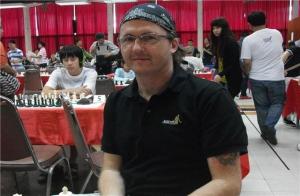
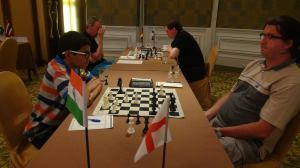
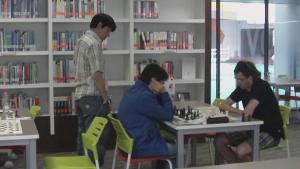
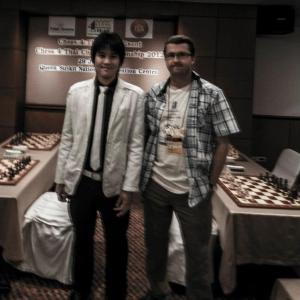
Gallery
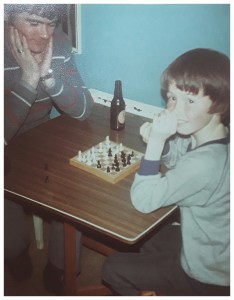
I’m either 10 or 11 here
1982, myself versus Brian from Sunderland.
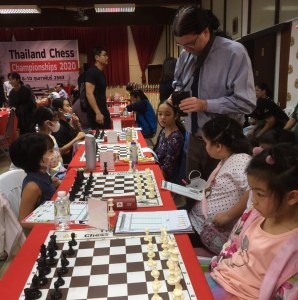
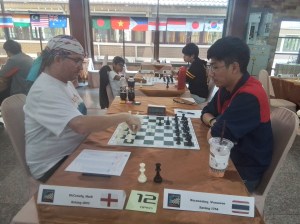
At the Thai Junior chess championships. My daughter of course.
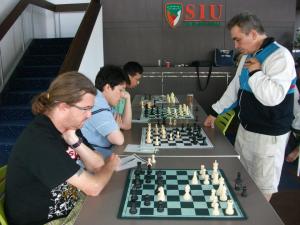
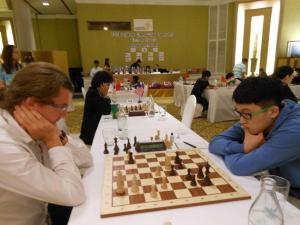
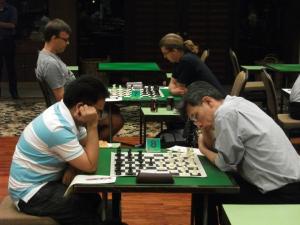
Pattaya 2011
2011
Thai Junior Championships
2008
2011
Around 2011
2011
Pattaya 2009
2011
Kuwait 2008
2012
2012
2011 BKK Chess club
2011
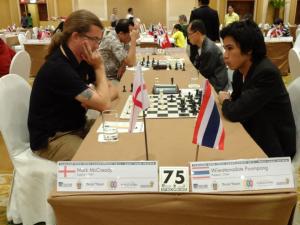
2011 Thai Open
2011 Thai Open
2013 approx
Around 2014
2010
2012
Around 2011
2011
2011
2013
Around 2011
Around 2011
2020
2011
2008
2011
2013 or thereabouts
2010
2017
2014?
2010
2024
2024
2024
To add comments, please see the bell at the top of the page.























 McCreadyandChess