Reflections 17


‘A shadowed pool in one of the hollows was hardly to be distinguished from the dark earth, except that it was covered with white crowfoot flowers as with five minutes’ snow…over all, the ancient beeches stood up with hard sculptured holes supporting storey after storey of branch and shade which were traversed at the top and at the fringes by fair fresh leaves.’

Edward Thomas, The Heart of England (1909), Chapter VIII, Garland Day

A changing of the guard

Consequences are a curious thing, can’t we say? For how do we know where they shall take us?1 Only early this afternoon I left a voice message to a French friend now in Grenoble, seconded to a university there. ‘I don’t quite know where that is but do recall passing through Strasbourg on the train once, is it near there?’ I asked uncertain of what his answer would be. Bored stiff soon after, I scrambled to look it up and not just that, loaded that long forgotten journey I took on to the ever gracious google maps. Something so incidental in Salzburg, Austria tells twice of that encountered en passant en route to Paris; one which revealed what had already passed, one which reveals what lay on the tracks ahead.

To preface matters, the season I stopped playing chess competitively was 96-97, when academia came to the fore: the season done, the semester halted, summer months abound; by plane, by train, and by car around central Europe, I sauntered with mates found on the Erasmus Exchange Programme in Finland previously that academic year, linking up with one in Gdansk, Poland and those scattered across Austria. For the finale, I took a train from Saltzburg to Paris in mid-August 97, the encore the Eurostar home.

Two things occured on that train to Paris, which upon reflection, help me grasp aspects of the past better. The first that whilst on the train, I passed through Baden-Baden, Germany unwontedly. First proof of chess being a thing of the past at that time it was. I did not know the route well nor where I was, having been on the train for many hours and slept through Munich already. The train did not stop, chess was not timetabled in, the morning light that fell upon that spa town where many great figures once played, I took a look at yes but it had little interest in -it being merely something of a surprise. In fact: I do not recall the last time I thought about this upon reflection, as it never did seem important -further proof.2 It’s not about the facts but the interpretation of them, which you roll with, those in postmodernism, and its neighbouring discourses, will gladly tell you: today, Baden-Baden was no more than a brief moment in time, representing that which had already passed; and now stands upright only, supporting a strongly held, well justified belief.

Something else occurred on that train, also unexpected, but more telling. I shared the carriage with a girl who was studying Philosophy and we spent time talking about it and my spirits rose. She seemed somewhat impressed that I had visited Wittgenstein’s house in Vienna, her English excellent I noticed. She was tanned, wore glasses, had medium length dark hair, wore a blue shirt and cardigan, and had a sharp intellect. I don’t remember exactly what I said but something splurted out and put a smile on her face, whatever it was. I also can’t say what I was reading on the train too but I did have something in the green army rucksack I carried, she was also reading, but what I can’t remember as well. I would not have been reading chess, something from continental philosophy, probably Nieztsche. Was it that which started the conversation off? I thinketh not -that was most likely the trip to Wittgenstein’s house! We chatted like strangers on a train do, but she pulled me up on two things rather harshly; the first when I asked her if she was French since we were heading to Paris and her accent was very slight (she was in fact Austrian), the second was related to Jürgen Habermas and probably about his nationality, and me thinking he was Austrian and not German.3 When we disembarked in Paris, she even assisted me in my time there, even though telling her I wanted to go and see the Eiffel Tower gained a very dismissive look, as she was rather cultured it must be said. But help she did, goodbye was said, then the Eiffel Tower I photographed before I kipped on a bit of grass in the burning hot sun near some palace somewhere in the city… .4 I don’t know if I did ask for her details or not, probably I was too shy to, but I quite liked her anyway. Though incidental, that meeting on the train reveals what lay ahead on the tracks.

I suppose the obvious answer is repression but how did I not couple that captured en passant in Europe to that in America the year next? Most unusual! So female Philosophy graduates were in and female chess players were out -not that I was ever interested in any of those.5 My interests had changed and were more life-affirming, as Wittgenstein cropped up in conversation again with another found female Philosophy graduate and much travel together, and to be together, followed soon enough. Perhaps this was not something I could rationalize at the time, it was something I could only encounter. I was more interested in academia and travel by then and not chess…I suppose I must have been young and free or something like that…. .6

‘Historians too can turn the same landscape into their discourse. Field patterns today could be compared to those pre-enclosure; population now to that of 1831, 1871; land ownership examine how a bit of the view edges into a national park, of when and why the railway and canal ceased functioning and so on. Now, given that there is nothing intrinsic in the view that shouts geography, sociology, history, etc., then we can see clearly that whilst historians and the rest of them do not invent the view (all that stuff seems to be there all right) they do invent all its descriptive categories and any meanings it can be said to have.’

Jenkins, Re-thinking History, pg. 10-11 (Routledge 1991)

M J M

  1. Try researching consequentialism if you are peeved by deontological ethics. For this I am forever indebted to lifelong source of inspiration and by far the most intelligent man I have ever met in my life Prof. Daniel. D. Hutto. https://en.wikipedia.org/wiki/Daniel_Hutto ↩︎
  2. It really was of no real importance. Why would it be if you had left that thing behind already? Should it be the case today, I would want to get off that train and visit the venue the chess took place in. That would be a big thing for me today. ↩︎
  3. How he came into the conversation I simply cannot recall, that is far too difficult to do but it has always been the case that I have never enjoyed reading him much. Probably because his interpretation of Nietzsche I found to be questionable and limiting, I always remember thinking I never really saw the point in reading him. ↩︎
  4. I’m assuming there must be more to this than I can remember, or alternatively, that I was something of a raconteur back then. As my friend Paul, who the person alluded to in the following paragraph correctly informed me, was my best friend, found this extremely amusing and many times reminded me of this. What I told him I don’t know, probably I overplayed my displeasure at being told by a policeman I was not allowed to sleep there and told to move on! All I recall was the palace had some sort of glass roof, and it was huge as were the roads around it…whichever bit of the city that was! ↩︎
  5. This is not entirely true. Aged 18, I played in the same tournament as one I fancied for a happy couple of days. She was quite well-known in the south of England, so I am rather reluctant to say her name. And how could I possibly forget that bloody twat who went and opened a large wooden door that led to the quadrant of the grammar school we played in so forcibly I couldn’t get out of the way in time, just as she was walking towards me! And being young, incredibly shy, and completely useless at everything, I froze at his apology then shot my mouth off with an excessively polite reply said loudly to catch her attention, forgetting to curtail my blunt Luton accent as it burst through, making me sound more mentally challenged than skilled at chess! She smirked and I carried on walking, completely oblivious as per usual! ↩︎
  6. There was another train journey involved over there! This time to Yale University, Connecticut. A conversation was held in New Haven regarding Nietzsche, with a work by Maudemarie-Clark referred to, and briefly Wittgenstein also with a fellow Jewish friend of Rachel’s named Josh -a very gifted academic! SEE PIC BELOW I’m not sure what the moral of this story is…that all around the globe Philosophy has more girls worth getting than chess as they tend to be more loquacious than those sat staring at a board for hours on end all the time perhaps! ↩︎

This pic was taken by Rachel just a few days before so (or was it after?). Do I look like the sort of person interested in chess here? Or do I look like someone much more into exercise (note the adidas cycling shorts), travel (pic taken in NYC) and adventure (I requested we go to Coney Island)?

Trivia Q

Which renowned tournament began one summer’s day. The following day war broke out and came within 30kms of the playing venue, so it is claimed. One of the participants left the tournament early to go and fight in it.

M J M

Reflections 16

The Grand Prix that lacked pizzazz.

I spent eighteen months in Baku, Azerbaijan between 2013-2015, and after a tough start, had such a blast there! Still to this day it is the place I liked working in the most: my life so colourful and engaging on many levels, such a vibrant nightlife for ex-pats like myself, so many great friendships forged there, wonderful job too, an old city steeped in history, so rich in culture with lots of scenic parks but dirty and dingy also, I brought my bike along for the ride, and it’s where my daughter and her mother spent 6 months and a wee bit more with myself before Georgia it was, then back to Bangkok via Istanbul.

Of course I knew Baku is the hometown of former world champion GM Garry Kasparov before I arrived, and had been on the chess radar for decades because of him: this was, without doubt, a deciding factor in me going there. Not that I had grandiose plans to play, rather, and like all ex-Soviet states, it was a place I felt a connection with and knew something about…it was hardly the first I visited and certainly not the last either.

It must be said that in the first few weeks, the love I had of chess went unrequited on the streets of the city I walked down and in what buildings I entered above them. In our main office, I recall asking students if they knew who GM Kasparov was, only to see their complexions change with rapidity, amidst the utterances as they huddled together, I would hear ‘Armenian mother’, also other remarks more disparaging, such as him not being Azeri.1 I soon learned not to go down that path. Instead I asked where I could perchance play chess, ‘further down Nizami Street’, I was told, ‘at the national chess centre up on the corner there‘, they said.2

There was much to discover about Baku but what struck me was how far from being a westernized country it was. They really weren’t big on advertising in any shape or form back then and this presented challenges in playing chess. Through my own endeavour I found that many tournaments were held but they were mostly local affairs and went unannounced. The first day I went to take a look at one, a blitz tournament was held later that day but nothing was said or displayed anywhere. What I saw instead was dozens of children playing, parents watching on, and a very courteous Iranian GM overseeing it all in two large adjacent rooms, the decor like something from a faded photo of the 70s. It went like that a few times thereafer until I approached a more senior figure hanging around once, a stumpy aged fellow with grey hair, who was higher up the chain and spoke good English, some national organizer or something. With my bike chained up outside, I hung around and asked him about the scene in Baku and how I could join events. His manner I found a little uncomfortable not to mention the look on his face. What with me being a westerner and him more Russian than he was Azeri, he first asked Who is your favourite player?’ and not with a glancing look. I told him it was Radjubov, hoping that being believed was more helpful than telling the truth. My answer made him smile oh-so-briefly but then followed, ‘come back tomorrow, and I will talk to you, then and you can tell me all about you’, with a concentrated stare before he wandered off to the curtained office at the back of the room before I had a chance to reply. ‘What a twat’ I remember thinking and never did return. Apart from beat some geezer down the pub, whilst pissed with colleague, Glaswegian and fellow metalhead Allan Miller, I never did play chess in Baku. But watch it in Vurgan Park, where I used to go running that I did,3 and watch the FIDE Grand Prix when it rolled into town, one afternoon in autumn -October 14th 2014 to be exact, also.

I am quite sure I took the day off work for I waited until the final round of the event, and that was on a Tuesday. The venue itself was hard to find as it had some long unpronounceable Azeri name and was located in a part of downtown I was unfamiliar with. And Baku has many theatres and opera houses not that they ever signposted any of them! Finding the one where the chess was at -its name escapes me- wasn’t easy. I do recall the streets nearby were quiet and the architecture along them impressive. There was a small park nearby also, with many statues of famous Azeris from the past I had never heard of. Whilst inside where the chess was played, I was taken aback by the sheer size and splendour of the theatre. It was regal, lavish, and empty almost. I found a row for myself, slumped down, and began to watch the action, the game I took most interest in being this one Mamedayrov V Kasimdzhanov. But an hour or so in things took a turn for the worse. The theatre started to fill, mostly with large groups of children that weren’t supervised properly. This led to a level of commotion and noise I was not comfortable with, so I went to sit nearer the front. More groups of children came, making half a dozen or so, and of the adults sat around them, their etiquette also left a lot to be desired. With the chess not being particularly interesting and silence shattered by the ongoing kerfuffle, I decided not to stay long and left for home early. As I did, a few observations that still stick in my mind came. Whatever way I went to leave the auditorium, I somehow passed close to where the players left the stage. GM Gelfand came out of some side door, clocked me catching him leave, and gave a nervous look; assuming I was some sort of admirer of his or wanted his autograph perhaps. GM Caruana was right behind him and his appearance caught me off guard completely. It instantly caused me to think of how GM Karpov was described when he was young, as being somewhat frail and weak. GM Caruana was certainly skinny I thought, and not too tall either, which does not seem so when he is viewed online, not at all in fact.

Although I experienced a side of Azeri culture I was yet familiar with, which was clearly a follow-on from their Soviet era, the whole thing I found to be a something of a let down, as I did not stay long, returning to my daughter waiting for me back in the Stalinka we stayed in4. It was late afternoon, the streets were as quiet as before, there was sunshine in the park nearby still, the statues with longer shadows drawn over the sandstone supporting them. I felt a little guilty as I walked past, as if they were the hosts and I couldn’t enjoy the cultural events offered in their city or wait for the closing ceremony to express my gratitude and clap my hands to their countrymen competing.

It took no time to reach home and I must have walked up Cəlil Məmmədquluzadə küçəsi or Jalil Mammadguluzade Kucesi5. The rest of the day has faded from memory… .

  1. Propaganda is a tool their government employs relentlessly or did back then I should say. Anything or anyine connected to their neighbours Armenia (who they were technically at war with at the time) was frowned upon heavily. Well by the younger generations it was. One of my students, Eldar, would tell me that the Armenians were our cousins and in Soviet days there were no such problems. ↩︎
  2. I had a very, very tough ride along that street once one Autumn afternoon. The heavens opened up and unleashed a downpoor that flooded the road. It was slow going and I got truly soaked. ↩︎
  3. I truly adore heavy metal and hardcore from NYC. I used to listen to Anthrax -a band I have seen live twice- whilst jogging round it. When the old guys played chess in the park, they did not use westernized sets. I have a photo of this somewhere. ↩︎
  4. This is a generic term for a building constructed when Stalin was in power. Those are characterized by their size and solidity. For the most part they still hold up well, as ours did. ↩︎
  5. Kucesi means street. Before that is the name of the person it is named after. My most treasured post on this entire site -something I know I will never emulate- depicts that street very well. It is, amongst other things, an honest account of my time there whilst alone before my daughter and her mother came. It’s the only post I have which pulls off a literary device I have often tried to master so effectively. It’s creative and highly original. I know it will never be beaten: chess, depression and Soviet streets and architecture are the main themes. https://mccreadyandchess.com/2013/12/21/malpractice/ ↩︎
M J M

The chess player I admire most is GM Magnus Carlsen.1 Second is his main rival Fabi.2 Here’s a position from one of their many clashes. It’s too difficult for moi to assess accurately in order to discern what is the best move to play, engines aside. Rook endgames are so highly nuanced that anyone can go wrong in them, so what chance has little ole’ me got of seeing GM Carlsen’s move?

Black (Carlsen) plays 33. … Rb8.

Piece activity is essential in endgames, we all know that and black obviously wants to queen a pawn but can’t he shore up his position first by improving his king position? It doesn’t look right to drop the e-pawn and gift white greater mobility for his rooks like that. I would want to play Kf7-e6-d5 before doing anything else, try and march the king in if you can, assuming of course the position allows for this. Just looks safer and much less double-edged but with calculation skills as limited as mine, and me being prone to making a mess of things, how can I tell what to play for first, Rook or King activity? GM Carlsen only drew this game, so perhaps there are inaccuries in play, however, I would prefer to take black in the position above. I would play 38. … Kf7 here.

https://www.chessgames.com/perl/chessgame?gid=1916995

M J M

  1. It’s more character than ability based. ↩︎
  2. Similar to Magnus. The way he conducts himself, I have a lot of time for. ↩︎

Reflections 15

M J M

My meme 12

M J M

My meme 11

M J M

Reflections 14

In my defence, I suppose I could champion strong defensive skills when competitive chess was all the rage!

I should add further, like most, I only ever think about things when they go wrong; this is something I have a wealth of experience of and have much to talk about.

M J M

Reflections 13

A quirk of fate?

‘This is no man’s garden. Every one who is nobody sits there with a special satisfaction, watching the swift, addle-faced motorist, the horseman, the farmer, the tradesman, the publican, go by; for here he is secure as in the grave, and even as there free -if he can- to laugh or scoff or wonder or weep at the world.’

Edward Thomas, The Heart of England (1909), Chapter 5

In the soft light of the gentrified past, what can be seen in the waters that ran there, still and deep now, cluttered by that discarded long since?

English postmodernists, such as Jenkins, may write that historians are ambitious: facts are trite, it's what they mean that is of more importance. English Grandmasters, such as Speelman, may say: chess is not just about results, it's about how you won or lost also. I may posit below that a certain type of result reveals that left unsaid for so long; unreflective in past but shining clear in the strong morning light in the scorched desert where I sit typing. But why did that one unwonted thing bring delight always when chess it was and chess it was not? How did that which is, -p and also not -p coexist in harmony? 

‘Some reminded me that formerly I had made a poor thing of life, and said that it was too late. Others supposed that I had jested. A few asked me to stay with them and rest. The sky and the earth, and the men and the women drank of the poison that I had drunken, so that I could not endure the use of my eyes, and I entered a shop to buy some desperate remedy that should end it all at once, when, seeing behind the counter a long-dead friend in wedding attire, I awoke.’

Edward Thomas, The Heart of England (1909), Chapter 6

One of Freud’s favourite quotes from Nieztsche comes from Beyond Good and Evil, and that is ‘A thought comes when it wants not when I want’.1 Some days ago, one came and stood dithering on the horizon like some forlorn apparition who had lost his way. Something more wrong than right required pensive reflection -but just a touch as it floated free in the midst of that time past. Why was it whenever I went to play chess and won by default I was always delighted by it? I mean, if you go somewhere to play chess for the day or the evening, only to find your opponent hasn’t arrived, you should feel a disappointment of sorts -but I never did.2 Upon this revelation the reason was uncovered easily enough and there is proof of it in a previous post of course. I was always a team player first. My team winning meant more to me than me winning…it was always like that.

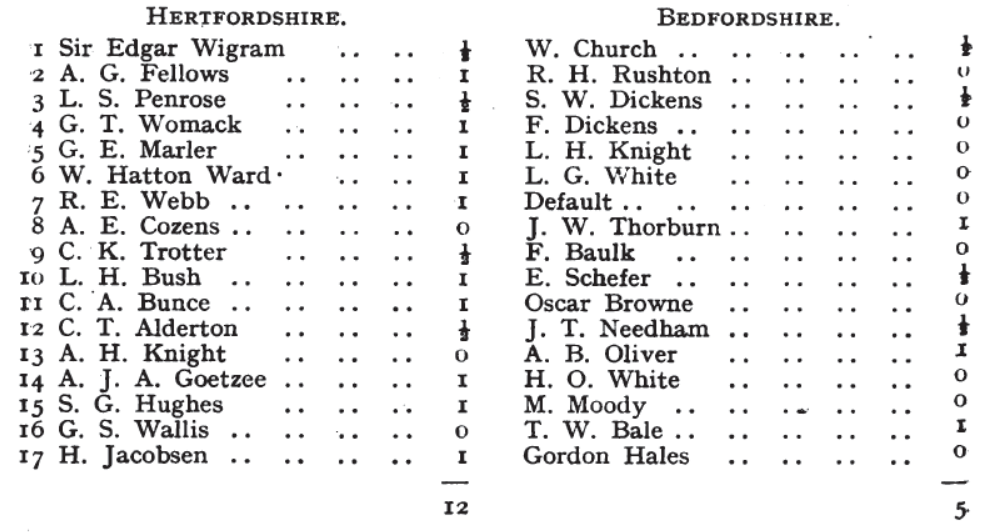
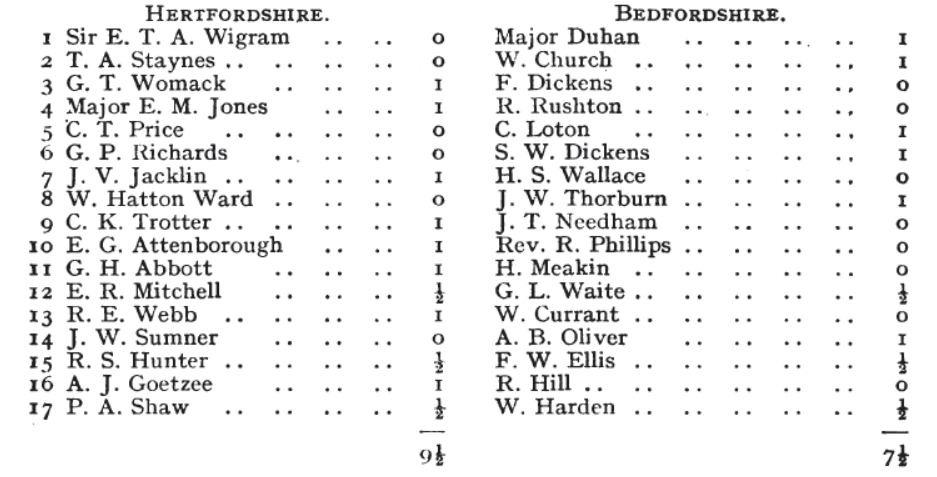
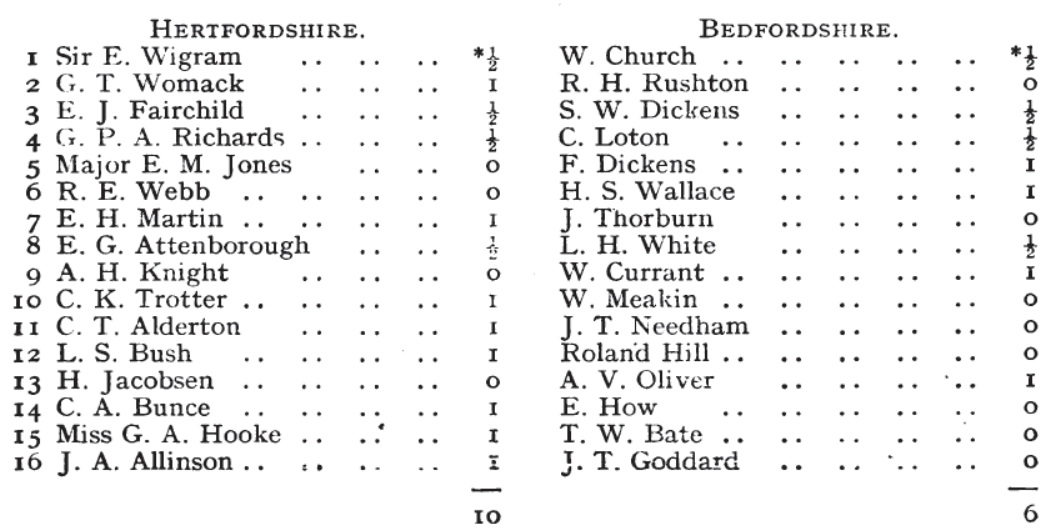
When only 20 years old, at the AGM of my home club, I nominated myself to become captain of the B team and club tournament organizer also, holding both positons for 5 straight years before I abandoned ship and went off studying, gallivanting around the globe and getting up to all sorts of things. I still recall Ken Liddle, the then club secretary, asking me who I wanted in my team, and so I picked the strongest team I could. I was diligent and my team was always strong in the league. I never allowed defaults to happen and always made sure those in my team were kept in the loop of upcoming matches. I floated up too and played for the A team also for many seasons, the second of which I saved it from relegation by beating Neil Hickmann of Bedford A team in a queen endgame I played very solidly, receiving pats on the back by many of the 30 or so who stood and watched, especially team captain Damon D’ Cruz. I was always keen for my team, and any other team I played in, to do well. This is most easily remembered by how I conducted myself during matches. I would often not sit at the board and be up and about to see how everyone else was doing with great regularity, especially when it was my own team. When walking around, the thing I said most often to those playing was ‘How’s your game going?’ In my second season as captain, A team player Nick McBride gave me a typewriter to use and I began producing match reports, with my Board 3 Michael Josephs commenting ‘He’s done this before’ affectionately upon the issue of the first one.

Whenever I turned up to play and my opponent didn’t show I was delighted because it was a point for the team, which I was far from sure of should I be playing.3 Winning my own games never really mattered that much unless the team needed me to, then it did…please allow me to explain further. If we were outgraded or up against it, then I was more focused and on top of my game. This held true if promotion and especially relegation were possible also. What I found more difficult however, and generally avoided was taking calculated risks which unbalanced the position if we were losing the match and I needed to play for a win from a drawn position. I was generally solid and played positionally, tactics weren’t my forte so I didn’t like to open the position up generally speaking. What usually happened was I would be more on the look out for opportunities and try to take them if the risk involved wasn’t high, that’s all I was capable of -I just heightened my awareness, and tried to lift my game that’s all. I was far better at telling myself I had to play for a win before play began than telling myself to start playing for one during a game, should such a situation arise. That was how it stayed really. With regards to defaults, in retrospect it does seem a little odd that I would travel miles, sometimes many, just to play chess then be delighted I didn’t have to and would wait around for hours instead watching games unfold. I don’t think it’s too uncommon or unsurprising however.

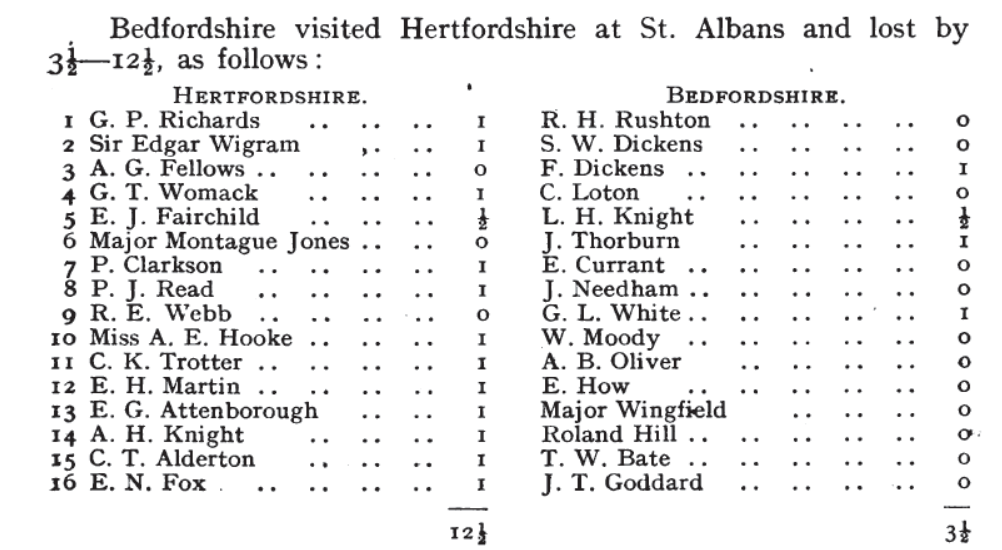
All this helps partly explain why I never did play in that many tournaments and often lost interest in them no matter how I did. 4 It’s true I did care about the first one I won but not the second. I nearly won three more too but one coincided with the 1990 World Cup and it was a hot summer’s day in Hitchin, Hertfordshire. I won all my games on the final day of play but kept playing as hurriedly as I could and kept on running out to the public phones in the grammar school grounds with my yellow T-shirt and grey corduroys on to find out what the football scores were. When I was asked by lifelong friend Damon D’ Cruz how I got on, I said ‘I won all my games’, he congratulated me but I cut that short and returned to asking him about the football as England had played Cameroon that day in the quarter finals, and I wanted to know whether they had made it through to the next round and how.

So I liked to play chess and not play chess but always preferred the latter when it arose. What does this tell you? It tells you I was not interested in improvement much as missing the opportunity to play meant missing the opportunity to improve your rating and understanding of the game. I recall many instances where it was possible to change board order for me to get a game and someone else drop out instead but never went for that.5 Perhaps once or twice over the years it did happen, perhaps a few times more even but it certainly wasn’t the norm, I would remember otherwise. What is also important to note is that I generally had good relations in chess during the 90s and especially liked the drives to and from venues. And of course if we had won the match then the mood in the car home was usually jubilant. Often you would be asked what happened in your game or congratulated on your result. I felt as though I belonged to something, which in that period of my life meant a lot to me.

To sum up, a quirk of fate? Yes, I liked being part of a team on many levels, and being team captain especially. I just liked to play really, and in being relatively average, wasn’t too intent on getting much better, a bit maybe yes but not much, so dropping out never bothered me at all. I wasn’t very confident as a player either and preferred to avoid losing more than winning. My style was rather solid and drawish and lacked dynamism mostly. I averaged over 50 competitive games a year, was at my local club almost every week (we did not close for Summer), went round many friend’s houses to play often and usually had my head in one book or another that I had bought or borrowed from the local library, so there was enough to keep me active. In retrospect, I like that it is all rather unspectacular but noteworthy nonetheless.6

‘Even so in the long wet ruts did the flase hope of spring contend with the shadows: even so at last did it end, when the dead leaves on the tree begin to stir madly in the night wind, with the sudden ghostly motion of burnt paper on a still fire when a draught stirs it inm a silent room at night; and even the nearest trees seemed to be but fantastic hollows in the misty air.’

Edward Thomas, The Heart of England (1909), Chapter 6

  1. If you think it’s worth it because you find pretentious titles alluring for whatever reason, you may wish to invest time in the Hermeneutics of Suspicion, chasing up Paul Ricoeur as it’s him who got that started. Very powerful ideas yes. But like his compatriot Gadamer, his writing skills leave a lot to be desired (although at least he saves us the courtesy of often adding afterthoughts that require so much deconstruction you’ll be up all night at it, for example (and it’s because of his use of concepts such as these that Schopenheur is accused of a lack of historicism in some of his ideas. And the same could be said of Kant). However, it should be pointed out that Ricouer’s works identify connections and distintions between Marx, Nietzsche and Freud far more convincingly than anyone else ever has done or even come close to in my opinion. His elucidation of how all three detail how human motivations are usually unconscious is most impressive. ↩︎
  2. It does need to be stated that I did also lack confidence in myself for I was weak and uncertain in many respects when I was young. ↩︎
  3. Between Feb 88 and May 97 I played 496 competitive games, my win rate was 44% and my opponents were usually rated higher than me by approximately 50-150 Elo points. ↩︎
  4. I never did count the number of them but it isn’t very many 10-20 I would say. They certainly stopped before I started university in September 95. The last two being Nottingham April 94 and St. Albans April 95. I had little interest in either and only really went because friends did and drove me to both. I went along for the ride you could say, after all, what else was there to do? ↩︎
  5. Should you care to broaden your understanding of how memory functions (rely on philosophers and not historians or psychologists for this), you may pick up on the point that fogetting is an essential feature of it. If so, as is surely the case, this precludes me from saying with absolute certainty that this held true for every single instance, of which there were dozens and dozens. I am, however, confident I would remember if that were so because I always wanted my team to win no matter where they were in the league. Every rule has its exceptions however.. ↩︎
  6. This I have to curtail. Once again, Nieztsche is remarkably adept at using rhetoric to achieve his aims, and in one case describes what certain types of academics and writers are forbade from detailing, according to their respective professions. In my case -well this is just a blog and I am playful often- but there are certain things…paths I can’t go down any further, and for many reasons. As Hayden White will tell you time and time again, all narratives are emplotted and mine are no different. It is undoubtedly obvious I was first and foremost a team player, the evidence is overwhelming but what I can’t detail here is how things were outside of chess and how I coped and did not cope with them inside playing venues. It was the case that I always wanted to talk to other players about their games and get involved with post-game analysis also but I never really did say all that much for reasons best left unsaid. Let’s just leave it as: I was, in fact, a cause of concern for a time in that 9 year stretch longer than you may think: the looks I got most often, especially by club secretary Ken said it all: they could see something was wrong but didn’t know what it was and didn’t want to ask, as I was still young and it could be anything -very English! It was not just anything but on that note, here this footnote should end. I was very shy and didn’t like to show how I felt at all. I reached out the best I could through talk of chess instead but breaking the silence beyond that I could never do and always shied away from. That was true most when things were at their worst, but as the years rolled by, the more that tailed off…enough said. ↩︎

M J M

Me in desert…best description -it’s like an oven out there!

I do love bravery over the board especially when it comes from those remembered more for defeat than victory. Pianist and GM Taimanov shows confidence in his calculation skills and plays something that myself, who is always a nervous wreck over the board is too feeble and rubbish to try!

Taimanov plays 12. 0-0-0 here.

Could you castle long here and leave your queen hanging? Perhaps you could if you can see whose king is in the most danger. At first blush it’s not for the faint-hearted me thinks but spend a few minutes and it’s actually quite playable. That said, instinctively I would discard such moves as being far too risky and look for something more solid instead. An interesting game with a devastating attack it is.

https://www.chessgames.com/perl/chessgame?gid=1111512&kpage=4&comp=1

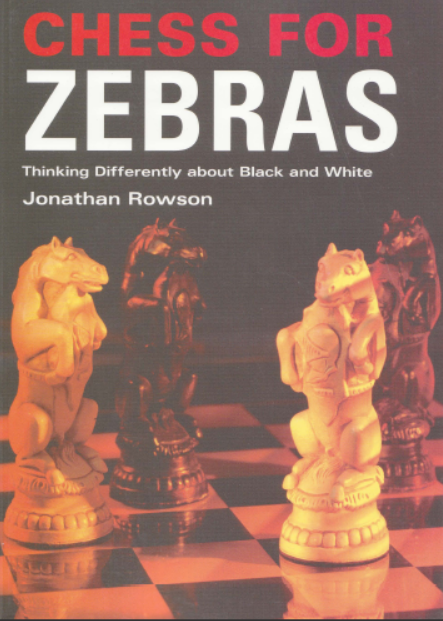
Analysis of the game above can be found on pg. 105 of that below.

M J M