Dependant upon which side of the pond you sit, you may have noticed The Queen’s Gambit became the number one show on Netflix recently or not! Courtesy of the current digital revolution sweeping the globe, no one lies beyond broadcasts. It’s not often chess reaches ”the silver screen” and when it does it’s usually in the form of documentary and not TV series. But the latter fits into mainstream media more -that audience being old Joe Public of course. Given that its an American production, and what with dumbing things down being a cultural norm out there, this obviously set alarm bells ringing for those of us in parts of the world that are cultured comparatively. And for those of us who are academics also, it raises questions over the definable nature of the market and whether a domestic market does indeed exist anymore? If not, exact who is your intended audience and how is this reflecting in the scripting/writing process? Admittedly, at first I assumed it was all going to be very American and that all the characters were likely to be obtuse, the plot ingratiating, that we’d see cars crashing through windows and things being blown up all the time, and all the characters had either a hotdog or hamburger in their hand, and were loudmouthed throughout too -but perhaps that’s just me succumbing to stereotypes and not thinking properly!

The current world champion Carlsen described it as being ‘a bit too unrealistic’, which is either him being diplomatic or that being something of an understatement. I found it be something of a joke from start to finish and stopped watching early on. I did notice that most chess players really enjoyed it but perhaps that’s a reflection of the conservatism chess is spellbound by rather than a cinematic appreciation of what was shot. What I mean is that the show deviates from the trite we usually end up watching considerably in terms of content, since documentary doesn’t incorporate and depict aspects of deviancy like the aforementioned show does. I tried to watch it three times but just couldn’t force myself and found it to be superficial and all too mainstream American.

Anyway, if you want to watch a clip between the main character and an actual female chess protégé, then click on the link below. It’s not exactly wonderful viewing as Judit is rather shy and perhaps excessively polite. The comments from the main character in the show are most certainly not going to be remembered as a great advert for it, and if anything, far from it. It made me wonder whether the cultural difference and backgrounds in play, was alas, too great to be overcome.

https://en.chessbase.com/post/queens-of-chess-beth-harmon-and-judit-polgar-have-a-little-chat

…on this day…

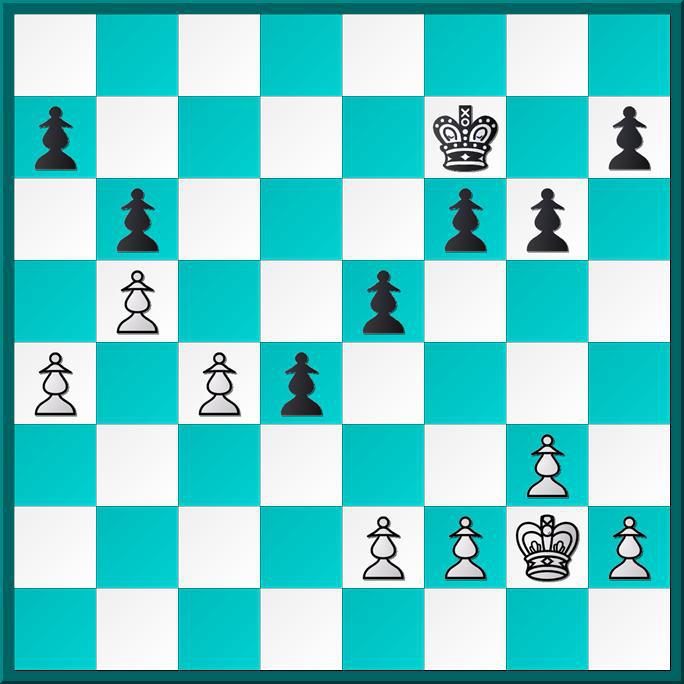
I posted the following on fb nine years ago today.

Given the advanced nature of black’s pawns, the position appears ominous at first glance for white, however, the win is straightforward as both Kf1 and Rc8 win for white. As soon as one of the pawns move, its game over, owing to the good position of the white king.

The Numbers

Cherry Drops

The confectionary I couldn’t play chess without once upon a time. Cost -55p: rating increase +5.

on this day…

I posted the following on fb nine years ago to the day.

White plays the counter-intuitive c5 and wins since the black king is too far to do anything.

26

A mere 26 years on, since I ran away from the responsibility of being Tournament Organizer at my home club, I’m back at it again. The difference is, this time its all on-line quickplay stuff, which is a damn site easier to do than club championships where more than half never even shown up once!

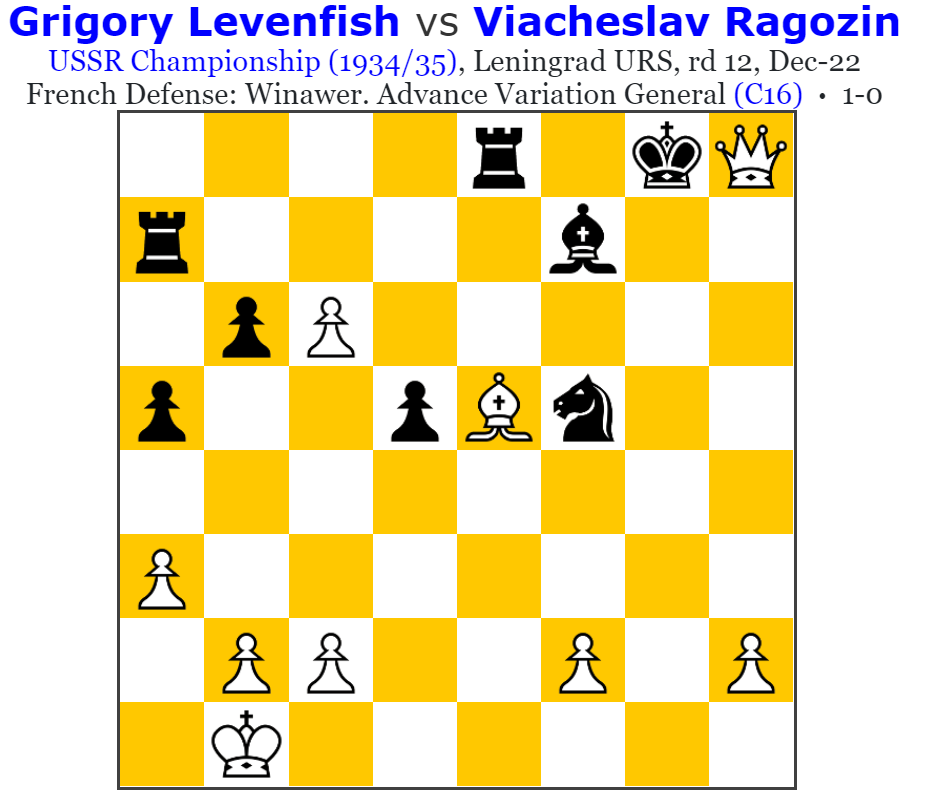
It could be argued that the Soviets played much more attacking chess then their, comparatively affluent, counterparts in the west. Partly because of what is ingrained in their culture/spirit, and partly because winning meant more or at least in becoming titled the government made more effort to look after you, and partly because the competition was much stiffer. And here’s a fine example from the 9th Soviet Championships, a spirited Levenfish shows us how it was done.

White played g4 here and could because black has not applied pressure to the centre.
Not looking good is it?
Quite a finale

https://www.chessgames.com/perl/chessgame?gid=1090615

If you teach then perhaps you know that the website www.readinga-z.com has become a force to be reckoned with in the context of blended learning. And since ‘enlighteners for the little blighters they be, below lies a Level G reader all about Chess. You are, of course, quite welcome to download it and do whatever you so wish. And yes I have already contacted the publisher to suggest improvements as the initial definition of chess clearly isn’t correct.

As a rule of thumb, the more complex the concepts you grapple with are, the better the player you are. By this I mean when you move away from the material to the abstract, it means the more you are absorbing, very generally speaking. If you never consider control over colour complexes, it’s fair to say you are most likely playing for pleasure than playing to push yourself towards becoming a professional player. Those at the very top are able to win by means of controlling colour complexes and here’s a fine example by the first accredited Soviet Grand Master Verlinsky. Yes of course in retrospect we see Botvinnik as being the first but that wasn’t so. And so here is our old Soviet friend, who played without hearing, doing what he does best, showing why he was indeed world class.

The final position before Rauzer resigned. He’s not down on material but all the light squares have been taken away from him. The collapse of his position was like a slow-motion train crash.

https://www.chessgames.com/perl/chessgame?gid=1272362