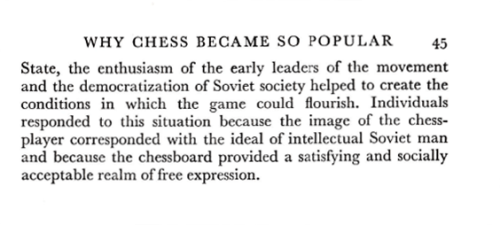
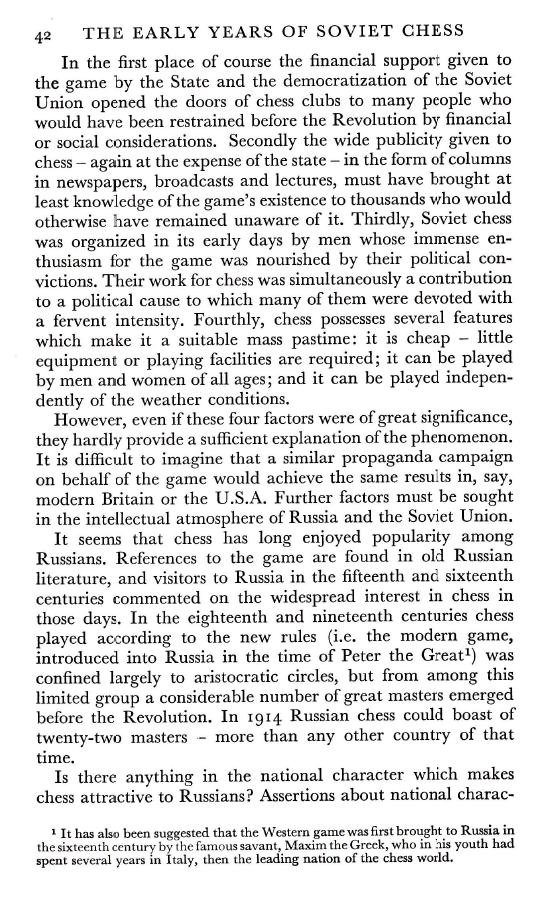
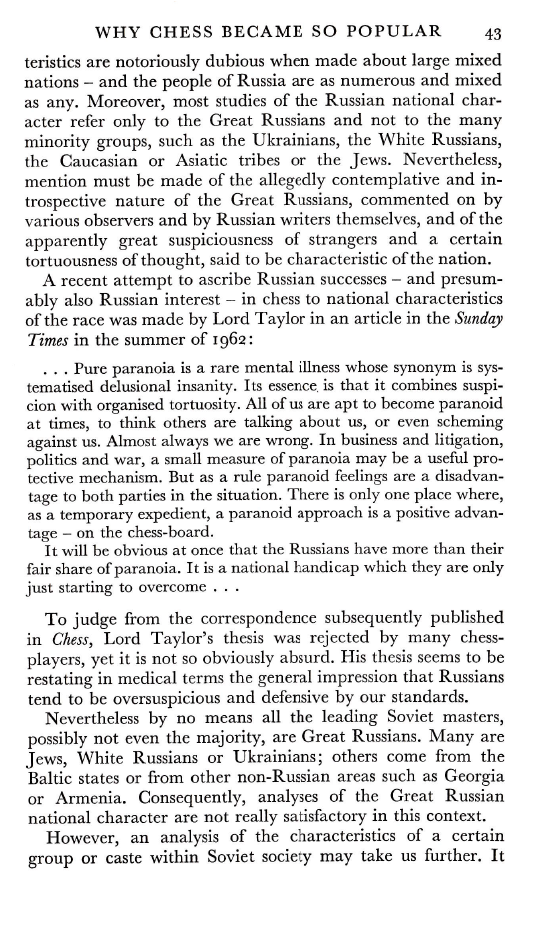
According to D. J. Richards in his noted text ‘Soviet Chess’ (1965), whose presented mode of history would not stand up in our post-modern world, there are two things we can jot down regarding Soviet chess history in the early 50s but don’t ask me which is more surprising: more than ‘100,000’ ‘from the countryside’ competing actively or that chess was not part of the national curriculum in schools (up to time of publication of course).

richards8

Page 89

richards9

page 90

richards10

Page 91


meises2

meises1

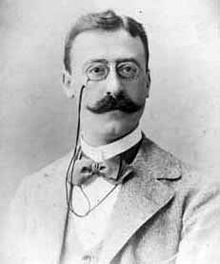
I think we can all agree that at 81 years old Mr. Meises should have been proud of himself over his accomplishment. Note that amongst those who drew was the future Headmaster of Bedford Modern Junior School T. I. (Idris) Hussey.

JM

Jacques Meises

I don’t play much chess these days and hardly ever against computers but I decided to give Lucas Chess a few games, as I noticed many updates to the software were now available, the latest version being 9.08 https://www-lucaschess.rhcloud.com/#

I usually play against Chispa (ELO 2227) which is a bit of a struggle so opted for a softer option around the 1900 mark.

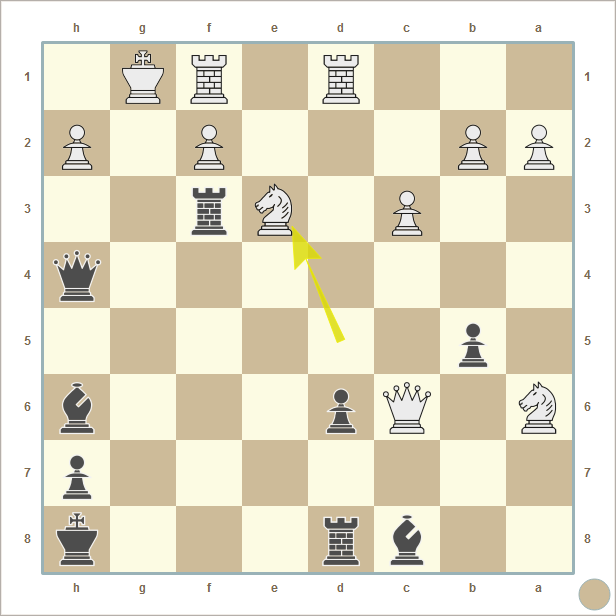
I played the Sicilian Sveshnikov and gained the initiative in the middle game. I then reached the following position which contains a move that wins outright. Can you find the move that black (me) must play which is decisive?

ssd

White just played Nxe3, hence the arrow.


Scroll down slowly for the answer:

Black has several options but h2 is unguarded, so Bf4 wins on the spot.

The position below is quite famous, it is from Lasker – Capablanca Moscow 1935. White to play and formulate a winning plan. When I first saw this position I had no idea of how white could win but if you look a little deeply, there are serious weaknesses in black’s position.

260562_10150278581523487_3001701_n

You can find the full game here. http://www.chessgames.com/perl/chessgame?gid=1258185

Two things stand out to me; Lasker doesn’t play like someone who became 67 years old that year, secondly, Capablanca’s passive play with a Winawer of all things -he wouldn’t stand a chance against today’s super GMs playing like that.

My morning has been filled with memory from Penang. Facebook claims that on this day I posted the following on my wall 5 years ago:

259930_10150274178293487_1430932_n

Rossolimo vs Nestler, Venice 1950. A double exchange sacrifice by white has lead to a complex position. Black must defend the threat against his queen but how should he continue? The recommended amount of time for this position is 30 minutes by Kotov.

I imagine it comes from Kotov’s ‘Think like a Grandmaster’ which I once had a re-read of when I visited Penang, Malaysia the month before. I remembered this position when I saw it again but not as well as the Indian food I’d had in Georgetown that same day which was exceptional… .

I should add that the solution is rather difficult. You can find the game here.

http://www.chessgames.com/perl/chessgame?gid=1471412

I could cycle from Bedfordshire top to bottom inside an hour with ease (and that’s with a break in between) before heading into Hertfordshire and beyond at my fittest.

In the forties, after the war there was little chess action until the Bedfordshire League resumed in 1945. Its a bloody good thing that upon its a resumption, the teams in the Beds. league were from Bedfordshire. Bletchley, who in 1975 would become Milton Keynes, were thankfully decades away from thrashing joining us still. I’ve just seen the team they fielded against poor old Oxford University, As you may know during WW2 the codebreakers working for the government were employed there, several being former British champions. The official line was that Britain’s greatest mathematicians were in great need to save our nation against the supposed ‘terrible threat of the nazis’.

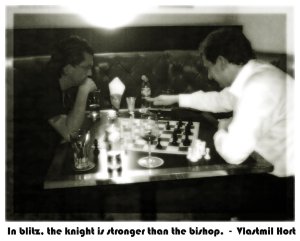
Unofficially, the chess playing collective sat around all day playing blitz and smoking cigars, then at the day’s end they would take a quick glance at a few Japanese ciphers before wandering off to the nearest drinking establishment where they would consume too many pints of ale and punch a policeman on their way home, as was customary in those days (and today too come to think of it).

A dumbed-down British attempt to document Bletchley Park came out recently called ‘The Imitation Game’…I couldn’t watch it all so can’t comment but I did notice it exuded a level of flatness and mediocrity that British films typically suffer from, and the exemplification of the code-breaker machines was laughable to say the least.

The Bletchley team on the 2nd of December 1945.

1. C.H.O’D Alexander 2. H. Golombek 3. Dr J.M. Aitken 4. Dr I.J. Good 5. N.A. Perkins 6. Sgt. Jacobs (US Army) 7. Sgt. Gilbert 8. M.A. Chamberlain 9. P.J. Hilton 10. W.R. Cox 11. D. Rees 12. Lt. A. Levinson (US Army)

I suspect it would have reemed whitewashed every Bedfordshire team of its day and kindly asked to find alternative arrangements.

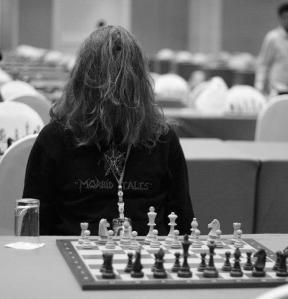
There are rumors abound that chess players will no longer be allowed to wear glasses or contact lens during tournament play. It is alleged that FIDE claim such optical devices make it too easy for those who employ them to see the board clearly thus providing an unfair advantage over those who rely on their natural eyesight. This development is part of the anti-cheating campaign which aims to ensure fairness and equality for all. It is in response to a lengthy, vitriolic e-mail sent to FIDE from an oldskool, ex-Soviet Grandmaster entitled ‘Why goggle-eyed git with rating 400 points lower see everything in our game?’ Which then concludes with, ‘If I give you good price, could you please go finish him, I know where he house.’ A FIDE official refused to comment on the email but asserted when the new anti-cheating ruling is brought into effect a blind eye may be turned towards those who wear a monocle with some panache.

sdg

No

asd

No

shutterstock_99784436

…oh go on then.

The American Rex Sinquefield, courtesy of his untold riches, has made St. Louis, Missouri the chess capital of the USA world according to the BBC http://www.bbc.com/news/magazine-36257742. How long that will last we don’t know (probably not long) nevertheless for the time being he is certainly making things happen.

We all enjoyed the Kasparov Blitz Challenge and whilst on youtube I noticed that a channel dedicated to the efforts of our American friends has appeared with some lovely content. All-round nice guy GM Yasser Seirawan, who as well as being a great player is also a great commentator, lectures for us. His history is solid enough in its employed role and the chess, as you would expect, is there to be enjoyed. I took great pleasure in watching the following, having just read Botvinnik’s ‘Achieving the Aim’. If you want to see how much chess has changed at the very top level since the 50s, this makes for good viewing.

The ideas of the ruling class are in every epoch the ruling ideas: i.e the class which is the material force of society, is at the same time its ruling intellectual force. The class which has the means of material production at its disposal, has control at the same time over the means of mental production, so that thereby, generally speaking, the ideas of those who lack the means of mental production are subject to it.

Marx and Engels, The German Ideology, quoted by A. Giddins, The Class Structure of the Advanced Societies, London, Hutchinson, 1981 p.29

richards7

D. J. Richards, Soviet Chess, pg. 13, 1965, OUP
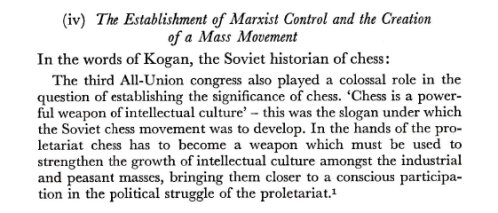
richards6

D. J. Richards, Soviet Chess, pg. 17, 1965 OUP

With some relief I am enjoying D. J. Richards’s (the former Exeter champion from the 60s and Russian lecturer at Exeter University) engaging narrative on Soviet Chess. When a publication is out of print for so long it can be a trifle difficult to establish why and whether the book is worth a read. But Richard’s Soviet Chess is considered by the informed few to be a seminal publication, and rightly so.

Here’s an example of his writing. I do need to add that it is the conclusion to the first chapter, and is hence an elucidation of points previously made. At present I have every single book ever written in English on Soviet Chess, and many of the biographies and autobiographies of its most noted practitioners too, Richard’s detailed account of Soviet Chess in the 1920s presents a more persuasive account than anything I have read so far.
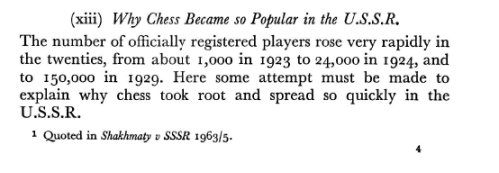
richards1

richards2

richards3

richards4

richards5Lastly, to understand the cultural and political developments that the Soviet Union underwent in its early years as a nation, you must of course, go beyond chess literature. I don’t recommend that you watch one of the many documentaries for help as they are often superficial and pummel you with glossy oversimplifications. I suggest that you start with the talented American Scholar Dr. Mark Steinberg his publications are all rich in insight. Also, it goes without saying that you must consult Noam Chomsky, and to do this you need only go to his great site https://chomsky.info/.


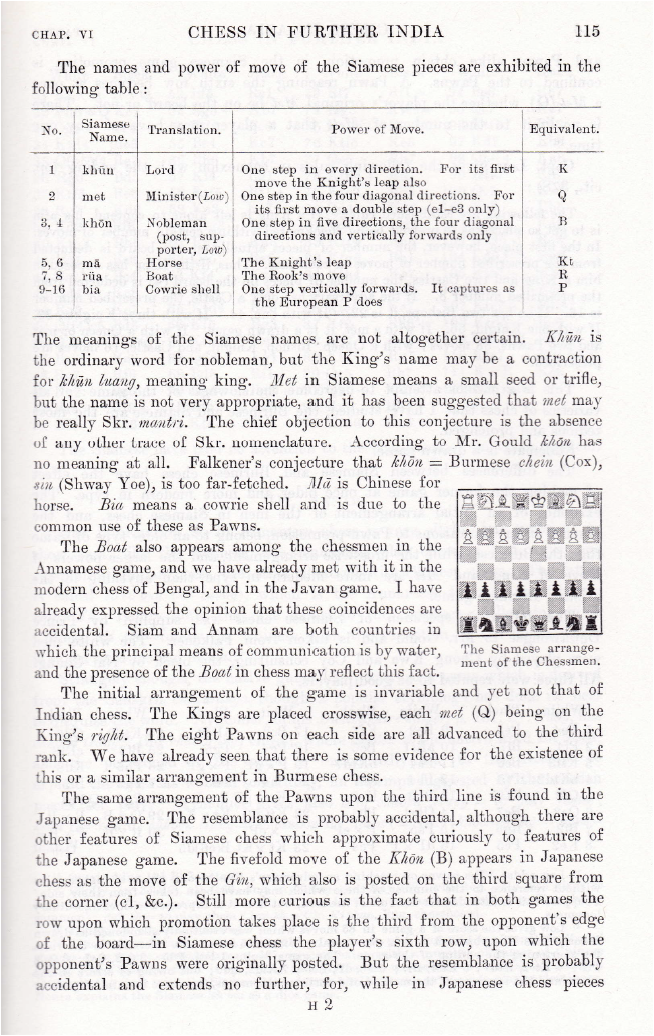
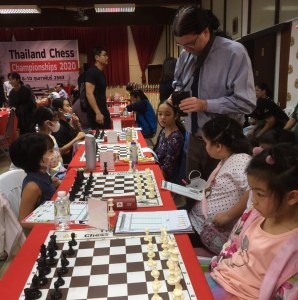
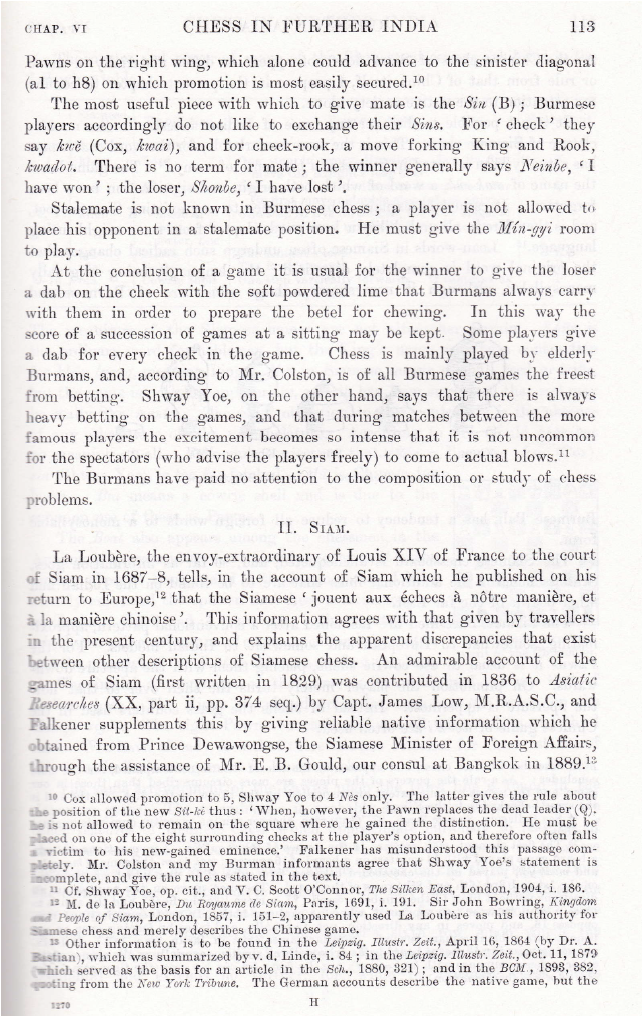
Here is H. J. R. Murray’s account of Thai chess in his 1913 publication A History of Chess. It is brief but well-researched. I can’t comment, however, if any changes have occurred in Thai Chess since publication 103 years ago.
thai2

thai1
thai3

thai118

thai4

thai5