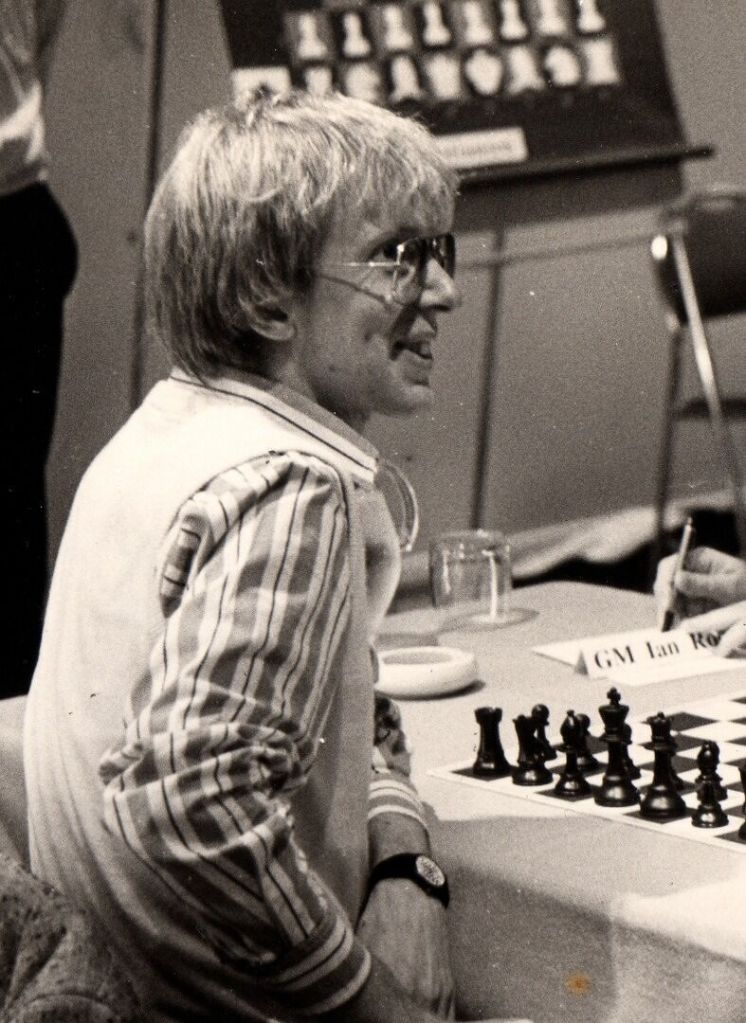
On this day thirty-eight years ago, I played a Grandmaster for the first, but not the last, time. It was a simul yes. I was black, the opening was the Ruy Lopez closed, Chigorin variation. I was outplayed in the middlegame and lost. He did have a 100% record against the then current world champion Garry Kasparov, so it’s hardly surprising. He also wrote a critically acclaimed and very thorough book on the Ruy Lopez about a year before also.
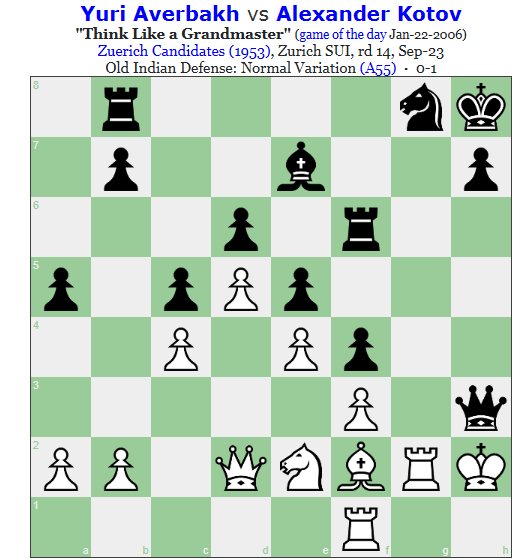
Here’s a game from two senior, well-read figures from the Soviet chess scene. As I am sure you know, Kotov’s most famed publication is Think like a Grandmaster. This game should be called Blink like a Grandmaster. I am sure he did plenty of that when the queen sac came in! I can’t sac anything, let alone queens. In this game, yes there are highly favourable conditions surrounding it but it still requires deep calculation above my level to jusify as white plays another 20 moves before being totally lost. I could not play 30. … Qxh3+ here, could you?
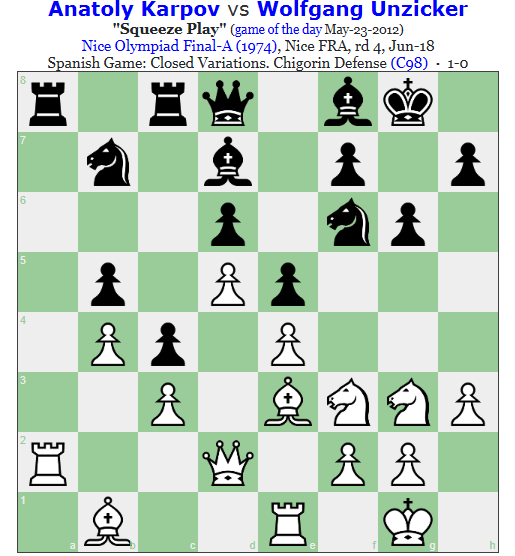
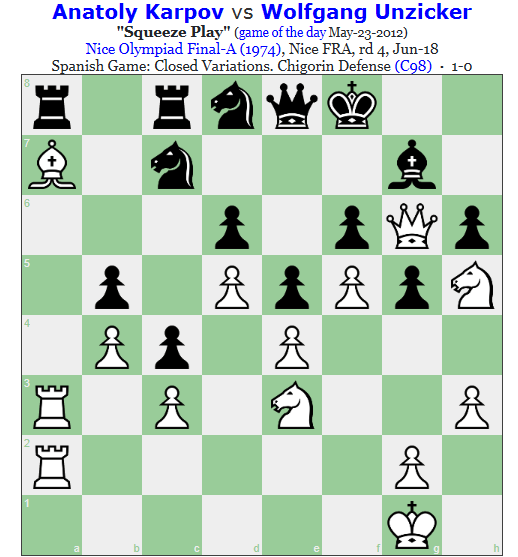
Before Carlsen came along, my favourite player was Karpov. Unlike him, I am not able to put my opponent in zugwang very often, if ever, being a BM like Diggle. In the following game, Karpov plays the sort of move only he could and I most certainly could not as it doesn’t seem to do anything to me. Here Karpov plays 24. Ba7.
Could you play 24. Ba7 here?
How deep do you have to go to see that is worth playing? Let’s look at the final position of the game.
Black is almost in zugwang here. Squeeze play like the title suggests. Way above my level. Note that Karpov was not world champion yet when this was played. The game can be found here: https://www.chessgames.com/perl/chessgame?gid=1067846
‘The new things are based and supported on sturdy old things, and derive a massive strength from their deep and immemorial foundations, though with such limitations and impediments as only an Englishman could endure. But he likes to feel the weight of all the past upon his back; and, moreover, the antiquity that overburdens him has taken root in his being, and has grown to be rather a hump than a pack, so that there is no getting rid of it without tearing his whole structure to pieces . . . as he appears to be sufficiently comfortable under the mouldy accretion, he had better stumble on withit as long as he can.‘ Nathaniel Hawthorne, 1862
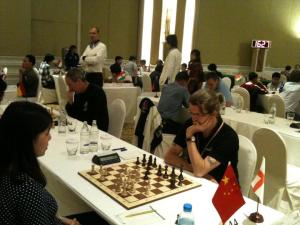
At the time of writing, Bedford’s Ledger brothers (Andy, Dave & Steve) are playing for England at the FIDE World Senior (50+) Team Championships in down there in Durres, Albania. England has 5 men’s teams and 1 women’s team. The Ledger brothers are playing for England 3 alongside Laurence E. Webb, FIDE rating 2203. Details of the tournament teams and results can be found here: FIDE World Seniors. Local chess fans may like to know that I did ask GM Plaskett why he wasn’t playing and he told me that he wasn’t invited this time.
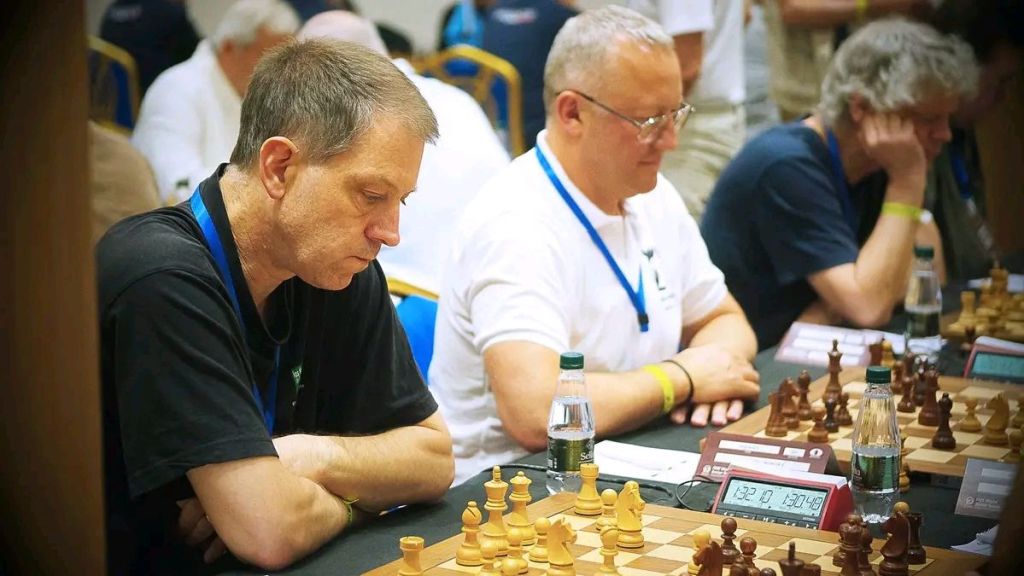
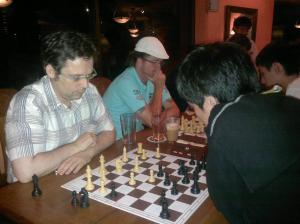
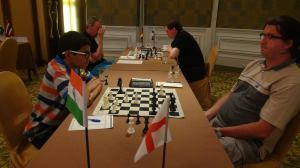
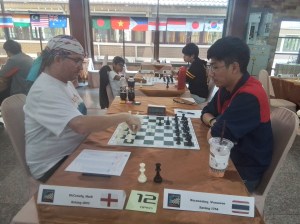
Andy Ledger can be seen here on the left of the image.
Perhaps history, of which most lies unrecorded, is more so about interpretation than facts,1 but I am not going to state the Ledger brothers are writing history by becoming the first brothers to play for England, as some evidence to the contrary may be found here and stops me doing so.2 Whatever is of utmost importance in history, we wish them good luck with their endeavours anyway.
The England that we love is the England of old towns, tilled fields, little rivers, farms, churches and cottages. If by violently marring the fair country and vulgarizing the shy old buildings we obtain so much less to love, what shall it profit? Without an England to love we cannot remain stout of heart and enduring.’ James Lees-Milne
According to postmodernist Jenkins, facts are trite, it’s what they mean that matters. ↩︎
Too lazy to conduct thorough research and as is almost always the case, my personal library is in another continent. However, I posted Q’s here and have info. Brothers playing for England↩︎
…on what this site initially became…on what this site is now becoming…on what this site cannot become…
On what this site initially became…
…once upon a time, the chess-related musings of an adrift academic were bound playfully and electronically in this online journal of sorts. They grew and grew as the decade did too. I kept on because I love to write whether I had much to say or not; therefore, being read by others was usually of little or no importance, comparatively speaking. Content was based on personal thoughts and experience on various topics with no intended audience borne in mind. With topics broadening, my own take on things always shaped the narrative I constructed: I often thought I was insightful but never that I was right. Sometimes imagination gave rise to originality: and of that I have always remained proud. I often introduced humour, believing that I am funnier than I really am. Sometimes, I found my own style antithetical to the conservatism I believe chess is plagued by -oftentimes that has put a gracious smile on my face… .
On what this site is now becoming…
…this site is now becoming a collaboration of chess in Bedfordshire: much more so of the past than the present -that has become the dominant trend. I document the history of chess in Bedfordshire as much as I can, and as time has passed I have become more thorough and resourceful. However, I am not a trained historian as my background lies principally in philosophy but yes it is true I did study some modules on history as both an undergraduate and a post-graduate too; furthermore, I have trained myself up, particularly in terms of postmodern history. Since 2015, I have only read history and historiography as well as those philosophers who have been so influential on postmodern history, such as Nietzsche (whom I once wrote a 19,000 word dissertation on, entitled: Can the Will to Power be Found in The Birth of Tragedy?), also Richard Rorty and Foucault and I suppose certain structualists such as Claude Levi-Strauss too. Regarding postmodernism, mostly I keep to Hayden White, Keith Jenkins and Alan Muslow.
Some friends and former playing partners back home describe me as the ‘go to guy’ for the history of chess in Bedfordshire. This compliment says more about the lack of interest in the subject than my own endeavour. As mentioned, I am too adrift from academia to feel chuffed by it. Rather, I tend to lament that my historical research, like my chess, just isn’t what it should be. Even though I may well have a broad understanding of Bedfordshire chess history courtesy of the volume of research put into it, all of which began in 2014, this is not something I am particularly proud of. Nonetheless, out of courtesy compliments are graciously received. If the truth be told, I just see it as my job and only that – after all someone’s got to do it and no one else is that interested!
Amongst the many others, I have created three categories: ‘Bedfordshire Chess’ and ‘History of Bedfordshire Chess’ and ‘Luton Chess Club’. This website is slowly moving towards a consolidation of those (all of which can be found in one of the toolbars to the right).
On what this site cannot become…
…I like to be both creative and amusing when I can be, factor in that playfulness has been an ever-present factor, the content of this site should be thought of as multifarious. It could be said I continue to enjoy undermining the conservatism I believe chess is underpinned by even after all these years, and often try to use humour to do it still, believing I have got better at it. Consequently, despite the general direction its going in, this site cannot only be about Chess in Bedfordshire and nor will it be. It may become noted for that yes -in fact that’s been the case for years already even by established historians, archivists, and whoever else. External factors aside, this site is titled McCreadyandChess. I cannot, nor will I not, remove my own personal thoughts and experiences of chess from the posts of this site -especially if I think they are funny or original for they constitute my writing at its very, very best. In addition, the number of categories alone tells you that breadth of content is important to me. I am proud of my site, it is identity conferring and that is how it shall stay -end of story. All you really have are: ‘Some thoughts on the beautiful game’, which, incidentally, just happen to be my very own; nothing more, nothing less, take of it whatever you please… .
A side note on how to read old Tom Sweby's columns
Not perhaps, but quintessentially, Old Tom Sweby is best thought of as a passionate devotee to the newspapers he wrote for. He was well read and knowledgeable of the Bedfordshire chess scene and well beyond, given that he was the president of the S.C.C.U. once upon a time. He was generally well-respected and rubbed shoulders with many, if not all, of those eminent within British chess circles. It would, however, be a critical mistake to see his column is primary source material entirely. That it is not. You will also find secondary source material quoted too, and the reliability of that is not quite as Tom hoped. Given that he wrote for decades, this is to some degree inevitable, and after all we are all prone to error whether we realize it or not. Thankfully, with regards to old Tom Sweby, they are infrequent and for the most part old Tom continued to document events and developments in the Bedfordshire league from the get go as best he could but, of course, everything lies open to interpretation. Despite this, and generally speaking. this does indeed make him informative and thus worth reading. Dare I say his columns constitute a narrative describing the latest developments, match reports and changing nature of the Beds league...he knew his audience and wrote according. This manifested itself over decades but brevity was always in play courtesy of the restictions imposed by writing a column. Should you wish to read a in instrumental figure of the Beds' league post WW2, you are quite welcome to peruse what has been posted here... . :-) I should, however, point out that as the decades wore on he gradually moved on away from narratives concerning the Bedfordshire league towards affairs both historical and international. The reasons for this are multifarous, old age was a predominante factor presumably, however, the bottom line is with regards to how the Bedfordshire chess scene developed post WW2: old Tom Sweby is your go to guy. He wrote more about chess in Bedforshire than anyone else did but given he was a Lutonian and writing for a Luton newspaper there is both bias and greater coverage of his hometown than the rest of the county.
Gallery
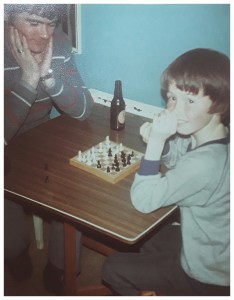
I’m either 10 or 11 here
1982, myself versus Brian from Sunderland.
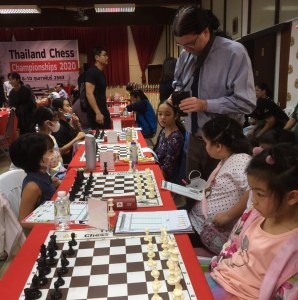
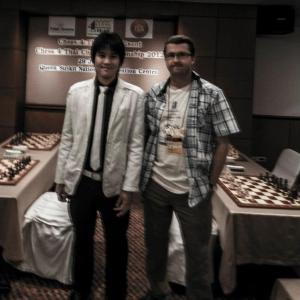
At the Thai Junior chess championships. My daughter of course.
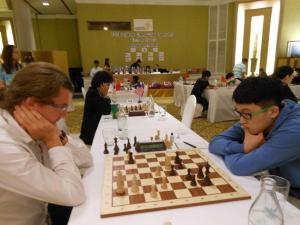
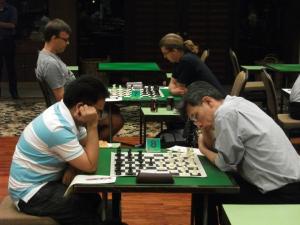
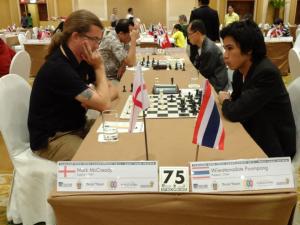
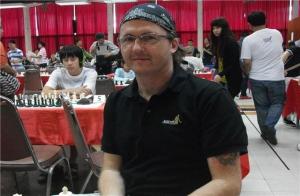
Pattaya 2011
2011
Thai Junior Championships
2008
2011
Around 2011
2011
Pattaya 2009
2011
Kuwait 2008
2012
2012
2011 BKK Chess club
2011
2011 Thai Open
2011 Thai Open
2013 approx
Around 2014
2010
2012
Around 2011
2011
2011
2013
Around 2011
Around 2011
2020
2011
2008
2011
2013 or thereabouts
2010
2017
2014?
2010
2024
2024
2024
To add comments, please see the bell at the top of the page.