If you delve into chess played back in Victorian times -to use an English term- more work is involved than you may think: some would argue the further back in time you go the more cumulative this becomes. Not yet aghast? You may even discover that sometimes a spiffing Englishman come up against a chap from a former colony of ours and gets a tonking over the board -just imagine that!
In those heady days chess was bereft of ratings and titles only categories were used for classification; differing among nations in terms of criterion and meaning since they weren’t universal and subject to revision and misreportage also.
Today, some just go on the name of a player alone just to estimate their strength. But of course you can always compare ability by matching up these greats of the past. Look at the example below to see what I mean. Let’s look at a position and ponder a move first before playing through the game.
Everything is open to interpretation, so make of it what you will. It looks to me like there is a serious gulf in class here. This appears to be substanitated by their results.
In May I posted details of Bedfordshire’s baptism of fire in the S.C.C.U back in 1923. I drew attention to Middlesex’s board 3, pointing out that he beat two former world champions and drew with one, using that as an explanatory factor in the size of the defeat dished out, amongst others. The post is called Bedfordshire Outfoxed and can be found in the search bar.
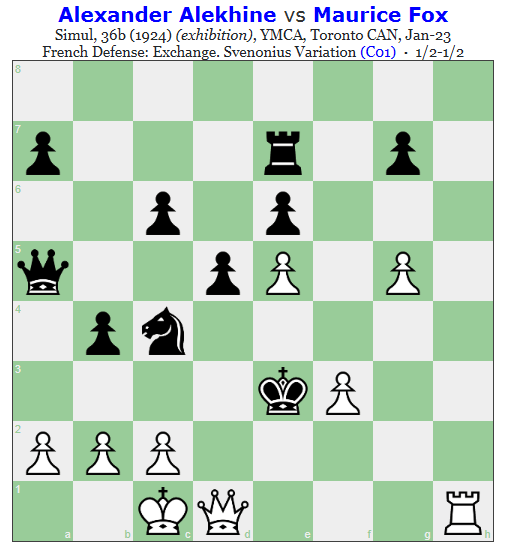
The post contains the aforementioned games but I felt drawn to his game against Alekhine in particular. Yes it was part of a simul with sacrifices galore, as so often happens in such events but upon looking at the game closely, I found one move in particular of Fox’s that I am rather fond of I must say. It was both brave and in the spirit of things or was it his saving grace instead? Let’s have a look:
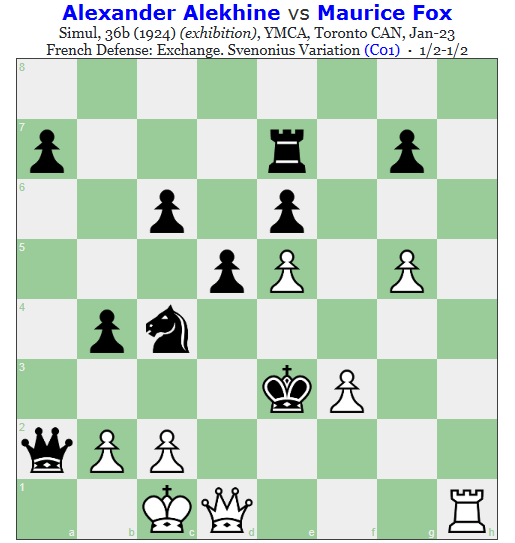
White has just played 29. dxe5. What would you play as black here? You can see what Fox played in the image below.
As much as I would love to paraphrase Kasparov in ‘How Life Imitates Chess’ I cannot. So I can’t say this exemplifies how ‘the best form of defence is attack’ for it is a counter-attacking move and doesn’t quite qualify. It is, however, unusual to see being mated averted by threatening mate in one yourself, if that’s the case of course. Since it is a simul, we don’t know how much time Fox had to make the move, probably not very long. Great move nonetheless. Here’s the game again.
As I sat on a bus, new and red in colour, trundling across Bogota, whilst en route to a private lesson given to a student, I dipped into a favoured publication on puzzles -the appropriately named Chess Travellers Quiz Book by GM Hodgson. Certainly preferable to staring aimlessly out the windows, watching derelict buildings covered in graffiti roll by through the city’s sprawling, run down suburbs… .
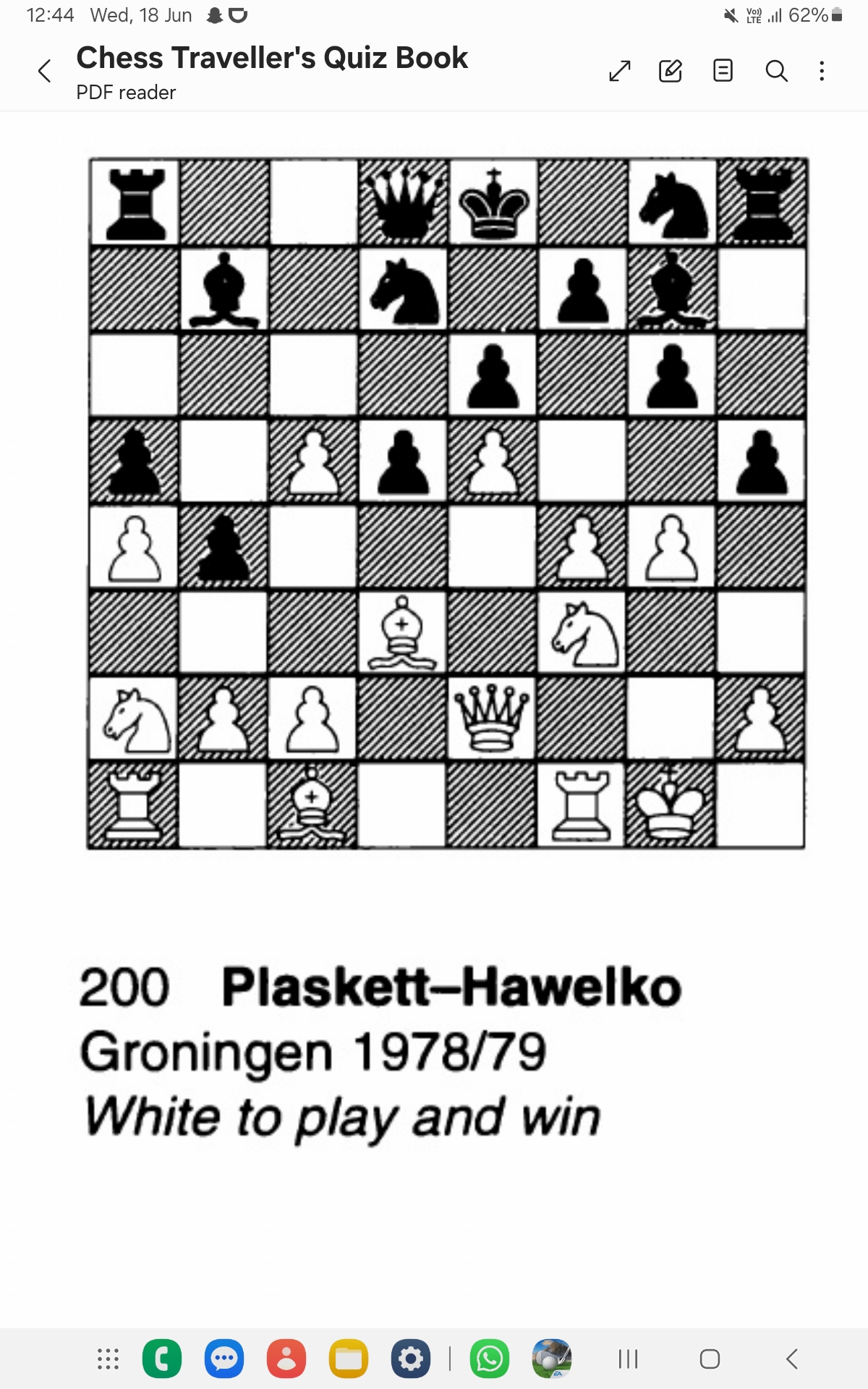
But this time I thought I’d read it backwards. A move more worthy of the annotation !? I remembered its alluring imagery of tourist attractions upon its dazzling white cover well, that there were 12 chapters in total too, but not so that some 200 puzzles in total were to be found within its covers. 200 puzzles in 12 chapters? ‘Most fitting’, I thought somewhat in jest, given that my playing strength in classical chess is usually estimated at around ELO 212 by my opponents after they have won easily yet again (although in truth it is a tad higher than that, say, ELO 214?) :-). Yes thats ELO rating not ECF rating. Jocularity aside, in finding puzzle 200 it was pleasing to see Bedfordshire’s strongest player of all time making a cameo. Attempt it I did as the bi-articulated bus I sat on approached the Zona Industrial stop, barely a kilometre or two from where I would soon embark unhurried… .
In truth, problem-solving is an aspect of chess I have never been too fussed over. That said, trying to find the solution to that above became illuminating upon reflection. Needless to say, I didn’t get very far, and had to question why. ‘White to play and win’ it says, this tells you that something is afoot but what? In OTB chess I tend to shy away from evaluating the positions I stumble across in my games because in GM Rowson’s inspirational book The Seven Deadly Sins of Chess, ‘wanting’ is the first addressed. There, he argues convincingly it is not only injudicious but more so a critical mistake to assess positions as winning or won. Better to think of them as strong/good/better/advantageous or something like that instead. An approach antithetical to problem solving indeed. Thus true to form, I couldn’t find a direct win and opted for moves that just looked good instead… .
After a few minutes, barely seconds before I got off at La estación sencilla Distrito Graffiti, as they say in this neck of the woods, I decided that white’s first move must be Bxg6, and that after fxg6, white probably follows up with Qd3 then Nd4, at which point black’s position looks precarious to say the least. Black’s g-pawn will be captured and the e-pawn probably too. Was I right or was I wrong? Alas, I am just not good enough to assess whether such moves lead to a winning attack or not, I also didn’t have enough time left of my journey to study the solution either, frankly. And like I said problems/puzzles aren’t my forte, so it mattered greatly not… .
Nonetheless, my brief, blank journey across Bogota was made more pleasant, despite the glaring disparity between Bedfordshire’s most successful player and the one most average at best who types these words, ending haplessly with me not daring to check the solution, aware even I had ample to do so upon arrival at the mall, after the fifteen minute walk there, should I want to. Instead, I just sat somewhere on that first floor people watching, clearing my thoughts, waiting for my student to arrive, which she did some thirty minutes or so later. Then the usual meet and greet ensued and two hours or so of instruction took precedence over time-killing, which made it easier to stave off boredom I guess. An impulse or two to write after all classes were completed later that day passed, then I wandered off home as rush hour hit, not really thinking about anything. Simple pleasures gave way to the formalities of business and the two rarely mix well, despite all our efforts. It led to a grey afternoon of sorts. Yes the interior design of the mall leant itself to grey marble I noted. Outside the sky was grey too I saw. The traffic now heavy as back it trudged towards downtown, made the air grey and pong of pollution; falling on the procession of reckless cyclists alongside it was light rain, and then after all that, on a yellow C-19 bus sat I no longer wanting to read, and sat like any vacuous amateur chess player would when reflecting on the lengths they must go to just to earn a crust, and lamentably, why their forays into chess are abstemious. The C-19 returned me to the stop named La estaciónFlores, a few minutes walk from where this post is being penned. When I got home I made dinner -it was rather English and rather bland. Then I slumped on this bed and watched youtube videos on how chess should be played. But I just watched while I ate and didn’t think too much about the moves being played. Then I fell asleep and a new day was born.
‘Knowledge is power.‘Francis Bacon, Meditationes Sacrae 1597
Who is the only player to have developed and emerged from the Bedfordshire league to become British Chess Champion? 1
Which player from Bedfordshire is the only one to have represented England in his heyday (excluding anyone at junior or senior level). 2
Who, then rated 146th in the world; 23 ELO points and 31 places above future world champion Capablanca, according to the EDO Historical Chess Ratings, is the only person documented playing for Luton in the 19th century more than once. 3
In which year did Northampton WMC (as it was then called) enter the Bedfordshire league? 4
Which company entered a team in the Bedfordshire chess league, ran by FM Peter Gayson’s father and also employed retired Luton town footballing regend Joe Payne, noted for scoring more goals in a game (10) than any other player in the history of English football? 5
How many former county champions have beaten former world champion Emmanuel Lasker? 6
On record, how many had already become national champions before competing in the Bedfordshire league? 7
What was unusual about Division 1 of the Beds. league in the 74/75 season? 8
In which year did Bedford become national club champions? 9
How many players who have played for teams & clubs in Bedfordshire have gone on to become president of the S.C.C.U? 10
GM Michael Adams has the highest rating of any English player ELO 2761 and is generally considered to be the greatest English chess player ever, he was also British champion more 8 times. Two Bedfordshire based players have beaten him. Who are they? 11
Who is the only British boys chess champion to have played in the Beds. league?13
Who did IM Andy Ledger think was the best player/the most difficult to beat in the Beds. league during the 80s?14
Who was the first titled player to participate in the Beds league? 15
Who is the only player to compete in the Beds. league for a number of seasons, who also went onto become champion of South Africa? 16
The fastest game recorded in chesss history occured at Luton High Town Recreactional Centre between GM Tony Miles and Stewart Reuben, 1. Draw. How much did that prearranged draw earn GM Tony Miles for achieving 1st place, classifying him as that outright winner? 17
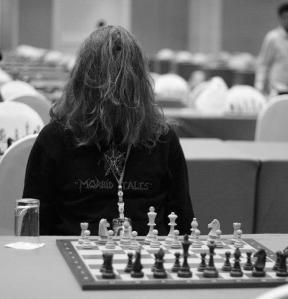
Which team captain had by far the longest hair in the Beds league, having not cut it for over six years in the 90s? 18
When reigning world champion Anatoly Karpov played the top 20 juniors England had, one of them came from Bedfordshire, Dunstable more specifically. Who was he?19
Who is the only former county champion who played for Northampton? 20
Who, whilst playing for Vauxhall in Luton, entered the club, was abruptly taken outside, then seconds later got beaten up in the snowy car park? 21
How many teams that lay outside Bedfordhire have participated in the Bedfordshire League? 22
Who is the only Bedfordshire born and chess player who went onto receive a C.B.E in 1988? 23
In which year did Bedford Modern School reach the final of the National Schools Championships, and who did they lose to? 24
Which European world class player (no ELO back then) associated with hypermodernism, once performed a simul in Luton blindfold, winning all fourteen games on January 25th 1923, the date cited in the reportage. An account one day out can be found on pg. 15 of Chess in Bedfordshire (1933) Dickens&White. 25
Which was the last chess club in Bedfordshire to be left with no playing premises of their own, and were left to share the venue of another club in the league 26
Yours truly, attempting to be facetious, once claimed Milton Keynes often won Division 1 because navigating around that city was more difficult than chess itself, leaving opponents mentally exhausted upon arrival before play began. True or false? 27
Canadian GM Suttles performed a simul at which club in Luton in the early 70s? 28
Who is the only Bedfordshire born and based player who participated at the chess olympiad in both 1986 and 1988? And who did he represent? 29
In which year did the Bedfordshire League become named so by incorporating teams from around the league so that all teams competed in the same league and were no longer subject to the north/south divide preceeding? 30
In which three consecutive years did Bedfordshire achieve national success courtesy of both county chess teams, and unsurprisingly, the success of our most successful protégé? 31
Paul Habershon was a teacher at Bedford Modern School and also played for the chess team. Who was the other teacher also an established team member for many years? 32
Leighton Buzzard’s doorsteps were once sadly darkened by which former British champion, who won a quickplay held in Bossard Hall before he infamously fled the country? And in which year? 33
When was the Bedfordshire Chess Association formed? 34
Who, known primarily for Newsflash, was the first to frequently write about chess in Luton & Bedfordshire in circulations published nationally, and which bank was he the manager of in Luton? 35
Courtesy of the tail end of the industrial revolution, as it’s commonly referred to, the ensuing development of a rail network made it easier for clubs within Bedfordshire to play those in neighbouring counties, in particular Hertfordshire. What was the name of the neutral venue where a club from both Bedfordshire and Hertfordshire met to play, but used different rail lines to arrive at the venue betwixt them both? 36
Who is the only GM to have performed a simul in Luton twice and at the time had a 100% record against the current world champion Gary Kasparov. 37
Which former junior county champion also participated in the Beds. league with his mother, who was active for many years? 38
In the 1901 Anglo-American cable match, William Ward, who is documented playing for Luton before becoming champion of London countless time over, beat which prominent American player, who took on world champions along with the very best in the world throughout much of his career? 39
Which was the last team to participate in the Bedfordshire Chess League with an ordinal number in its name? 40
What was the name of Bedfordshire’s only noted problemist? 41
Which two appeared on the same popular teatime Channel 4 tv gameshow? 42
Which most unfortunate Bedfordshire based player is remembered for an all too harrowing end to a visit to his club, making him the only one who’s night involved, more than some friendlies, plenty of pints (hence his nickname), as well as being thrown through a windshield of a taxi into a bush on his way home. What was his nickname also? 43
Which two appeared in quiz shows on tv; one shown on BBC2, the other on ITV? 44
Who was head of the Stopsley school league team (Luton) and went onto to become a prominent member of the Bedfordshire Chess Association? 45
Which trophy did Bedfordshire once retain for 10 years last milennium? 46
All 50 questions, which should you seek the footnoted answers below will, I hope, broaden your understanding of Bedfordshire Chess Present & History greatly. All scores are welcome in the comments also. The primary purpose here is not so those attempting the quiz can answer all Qs. correctly but rather the questions will inspire those reading to seek the answer (footnoted) below.
An addendum: anything I have missed which should have been included do suggest (I will modify), the questions being too hard or not seemingly of no importance (please say so), any other suggestions and criciticisms are graciously accepted. This is a fun way to improve your understanding of the History of Bedfordshire Chess. The questions have been carefully chosen.
Most in our modern world are unflective and uncritical of their own lives, satisified enough to stay within their own comfort zone and keep it that way. Much more interested in playing with their phone than making an effort to define who they are. Similarly most chess players can only be described as being exempt from the same criticisms if you are taking the piss. It’s the norm that chess players cannot offer rationally informed opinions as to why they play chess. Most will say they just like it, some will say they love chess, many will admit its just a hobby they’ve kept going. If you were to ask how do you develop meaning from chess and how does that bring value in what you do. This is not a question likely to be answered comprehensively by club and county players. This can only be answered purposely by referring efforts aimed towards improvement, the principle selling factor of chess literature. You may be told how they read a book to improve their game. That’s usually about the limits of the efforts for most club/county players who are generally uncommital.
This is partly because they are unaware that improvement itself is multifarious, and sadly that they tend to be poorly educated and adopt an uncritical approach to life itself and all it throws at you. Even Grandmasters, the best chess players on offer, are predomonantly poorly educated most have little or no ability to publish their achievements and are almost completely oblivious to standard literary and academic conventions, hence the reason why as a genre chess literature is decadent and something we should all be ashamed of.
I omce wrote an ambitious dissertation whilst finishing an MA where I had to reinterpret a seminal text and trace unformulated fragements of a concept which was much later developed further in a text towards the end of the authors unappreicated career. I happily went into overdrive with that, accompanied by persistence which pushed me on always. After 18 months research skills that still surprise me to this day, I was commended by several Ph.d students for how beautiful my writing was, told by my professor the amount of work put in made it very useful and insisted it be placed in the library so that undergraduates could benefit from the deeply informative contextualization that shaped it, I got a commendation too but was very glad to see the back of it. I began by readering the seminal text 11 times on the bounce and although this enabled me to understand how it was written and how certain chapters were really only consoldated lecture notes, I fell very much out of love with that text, always certain it’s been given far too much important and am unable to go near it ever again. It’s main criticism is that it’s overwritten, I would say its a complete fucking joke he should be thoroughly ashamed of, as should every person on this planet was stupid enough to read the fucking thing.
This and the numerous meetings I had with my professor, not to mention the defence of it I had to give of it to the entire department that afternoon fashioned and forged a critical mindset, which emerged as an undergraduate, since I came second in the entire year, scoreing 67.4 and only missing out on a first by 2.6 per cent but came on leaps and bounds as a post-grad. I’ve since had to train myself up with post modernism in order to avoid the mistakes usually made with regards to chess history. The good news is I have a deeply obssessive mind and know that if you can channel your thoughts in play you are provided with a massive engine for them. I am an educator and have been in education all my adult life. With so much to learn from the history of chess in our county.and how chess has flourished previously. It’s almost certianly the case that I am more equipped to educate those in charge of things much more so than anyone else, as its far easier for me to define how things stand presently as well as explain how things can be improved by describing that most crucial to be learnt from and implemented. Unforunately this may mean nothing more than me just saying my piece rather than inspiring people and prompting them into action, most probably they’ll just interpret it as extra effort they’ve been lumbered with and make no effort whatsoever. This will make me want to give up on them initally but the virute of my deeply obssessive mind will most likely obliterate that to kingdom come and push me on to persist and not stop persisting until they are suitably impressed with my intentions enough. I have very good relations and am not only well-repected for my blog, also described as a historian my county members, something I am uneasy with as I’ll never be able to define myself as one. I’m nothing more than someone who is pretty good at writing, it’s an art form I began practicising when I was 15 and I never stoped. Originality and creativity are what I cherish most of all, nonetheless, I’m nothing too special, except for when I write brilliantly but that’s not the norm, usually I don’t have much to say because I let my desire to write overrule the pronise not to write if I have nothing to say. But then if you don’t write to be read, all you are doing is letting yourself down. Only the history of chess in Befordshire has an intended audience, everything else is for me only. Despite this, I reiterate I am an educator and what began as I hope it could be learned from is moving towards a necessity that must be enforiced. Raise awareness, narrate our history so that it can be applied, deliniate the decline we are undergoing and demand action. I am more than capapable of achieving that -it’s a piece of piss you could say. Let’s move on from intentionality.
A likely consequence to all this, if I can make it happen, is to return home and become president of my club and county, then it will become my job to put a rocket up the arse of those shanghied into doing what I tell them to do when I tell them to do it. Far too proud of my working class beginnings to do it any other way. I know I can give it my best shot and remain satisfied that I did even if I fail to achieve what I set out to accomplish. Why’s that. Because Greek philosophy has stayed with me all my life, I know how important Socrates being told know thyself by the oracle of Delphi but should you buy into that and want to give it a shot, I’m sorry to tell you it’s a life-long task that is much, much harder than you might think. You have, in fact absolutely no fucking chance whatsoever unless you’ve also got a deeply obssessive mind like me. I know what I idealise and like Tennyson said in. In Memoriam, ‘it’s better to have loved and lost than never have loved before.’ And the most we are ever capable of is to try our best but as we all know nothing often come of that. Nothing to go mental over if I fail, something superceded by the the concession that learing is a life long process. and we can always move on lamenting that doing my best just wasn’t good enough, remembering to alter your opinions of those who did fuck all to help, redefining them as useless bastards I wouldn’t piss on if they were on fire.
I don’t need you to wish me luck, if I can make it happen, most likely I will succeed.
GM James Plaskett has a DVD out where he celebrates many of his greatest victories. As you may know, James is the only one who emerged from the Bedfordshire league and went on to become British champion, a feat unlikely to ever be equalled. So for those interested in Bedfordshire chess, its a worthwhile acquisition. You shouldn’t expect to find games from the Beds. league contained within, still it is something we should all be proud of. It can be found below, I have placed an order myself.
We played on the same team on 87 (Luton A), and were members of the same club in its final year, so let’s see if Board 1 can beat Board 4! (most probably!)
Game on
1.e4 c5. We start with a Sicilian because it offers more counterplay than the French, which I grew rather tired of as the years rolled on by.
2.Nf3 e63.d4 cxd44.Nxd4 Nc6 5.Nc3 Nf6 (note to self: try to remember the correct bloody move order next time please!). Uppsala! Having not played one single game in 8 months, I simply forgot 5. …a6 or 5. …Qc7 are the most playable responses that avoid transposing towards the deluge of open Sicilian theory -clumsy.
6.Ndb5 d6 (almost a necessity and frighteningly transpositional!)
7. Bf4 e5 8.Bg5 a69. Na3 b510.Nd5 Be7
We have transposed into the Sveshnikov but that’s quite alright as I played it for a few years and read up on it too! But as GM Rowson once said ‘the Sveshnikov is full of holes’. They can appear on both flanks, some caution is needed.
11.Bxf6 Bxf612. c4
Yoicks, not the main move, so now I am out of book. Although 12. …Qa5 may look tempting, its not at all, its premature. Black has threats to attend to before any counterattacking ideas can be put into play. I could lose the exchange or a pawn easily if I am not careful. So the plan is to shut things down and shore things up, that way the position should stay in tact – hopefully should! I can’t really tell because I am out of book already, so will stick to the few opening principals I learnt some ten years ago.
12.…b4 (let’s shut things down) 13.Nc2 a5 (and shore things up) 14.Qf3! I chose exclamation mark because I’ve never seen that move before and don’t know why it’s played. Here I play 14.…Be6 because usually the light-squared bishop goes to either e6 or b7 and I never worked out why the latter was the preferable option so, once again, I stuck it on e6, and also because I couldn’t work out what else to do, so blindly follow opening theory and principles I shall but this is really just about as far as I can go, I’m pretty much on my own from now on. I know I may get double f-pawns but that’s okay, all it means is the king should stay in the centre, and that’s okay, its quite safe there with the bishop on e6.
15.Nxf6 (from what I understand this is thematic as black usually ends up with doubled f-pawns)
15. … Qxf6. I spent around 5 minutes thinking about this. In principle, white’s remaining knight is heading to d5, so why would I want to put my queen on f6? I played it because the white queen is on f3, and unless white exchanges, I gain a tempo, which I can lose with, say Qg6, should the knight land on d5. I’m not expecting an exchange of queens.
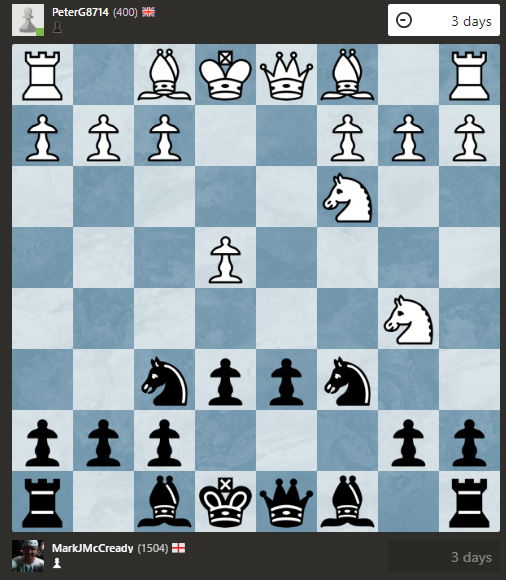
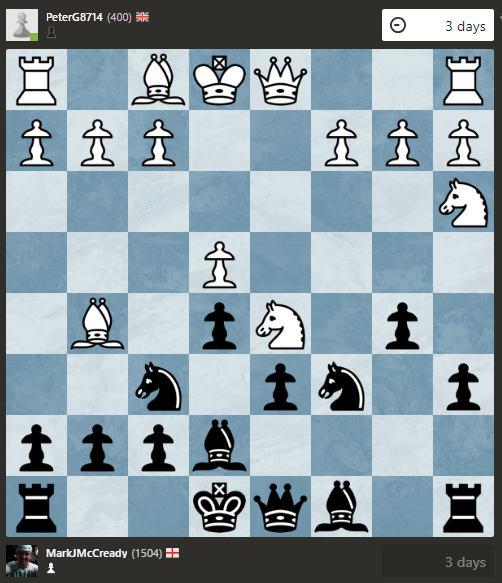
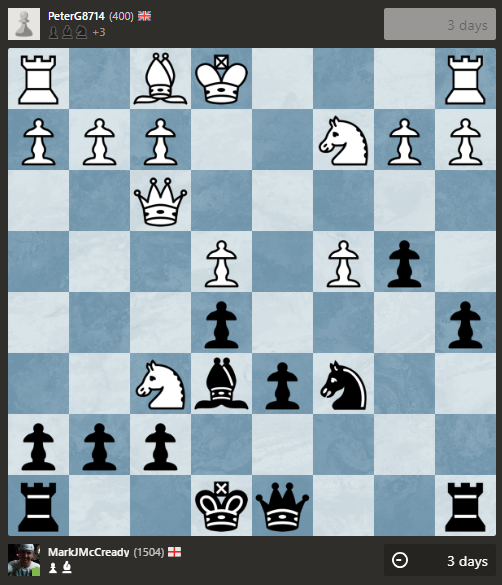
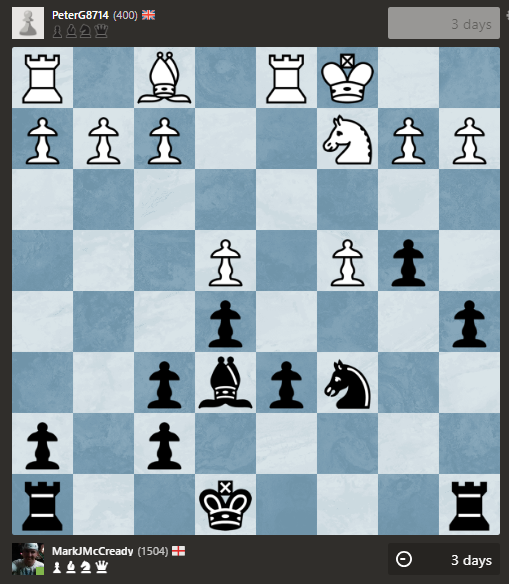
16.Qxf6 gxf617.0-0-0. Now what do I do?
Much thought required here. Where does the king go? I don’t really want to place it on e7 if a knight can pop into d5. I have to keep my bishop on e6 and exchange off if that happens but if it does, I think my knight is slightly better than white’s bishop as it can stay unchallenged on d4. Do I castle queenside? My rook can gain counterplay on the a-file, do I want to take it off that file?
Television has a role in modern western society which is being decentralized by the internet and the so called digital revolution we are, apparently, undergoing.
Nonetheless, important it remains and compelling it may be too…especially when Bedfordshire’s finest chess players appear on it. Who might they be and what was that all about then?
1 (The man who failed to beat me with the King’s Indian Attack)
The first was Bedford’s Dave Ledger, who appeared on the Channel 4 daytime show Countdown around 1993 (apologies for my imprecision). I did ask him about his experience on the show once, and he informed me that it (Countdown) was far less glamorous than it appears on tv! Dave did win on his debut it, I remember watching him, and gave a good account of himself. https://wiki.apterous.org/Episode_1571 . It is also claimed that Dave appeared on a show called Brainteaser but I have no evidence of this.
2 (The man who dismantled my Bird’s opening far too quickly)
Staying with Bedford, second was Paul Habershon, who also appeared on countdown some eleven years later, and like Dave, won in the first but lost in the second show. Further information can be be found on the Countdown Wiki here. https://wiki.apterous.org/Paul_Habershon
3 (The man I never met over the board)
Third in line was Bedford’s James Plaskett, who famously appeared on Who Wants To Be A Millionaire in 2006, and in all probability, won more money on a gameshow than any other chess player in history.
4 (The man once rated 200+ who once saw me off with with his Catalan)
Forth comes Dunstable & Luton’s Colin Garwood, who recently appeared on University Challenge and did rather well for himself.
5
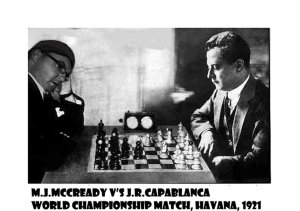
The exclusion of the fifth element! Mr. M. J. McCready once appeared as an extra in the film Whoops Apocalypse in 1986, and then appeared on tv many times thereafter in the crowd at Luton Town football club. I’ve also appeared on tv in Saudi Arabia and Azerbaijan. But I’m not linking any of that nor should I include myself. All appearances were fleeting and I never said very much. Additionally, I’m both shy and rubbish at chess, which makes my inclusion rather unnecessary and quite unjustifiable!
More pics and details about the revival of Luton chess club to follow…and yes it is only a matter of time before I return to the helm and run the club myself (marooned abroad so about a decade)…assuming it hasn’t folded by then of course.
…on what this site initially became…on what this site is now becoming…on what this site cannot become…
On what this site initially became…
…once upon a time, the chess-related musings of an adrift academic were bound playfully and electronically in this online journal of sorts. They grew and grew as the decade did too. I kept on because I love to write whether I had much to say or not; therefore, being read by others was usually of little or no importance, comparatively speaking. Content was based on personal thoughts and experience on various topics with no intended audience borne in mind. With topics broadening, my own take on things always shaped the narrative I constructed: I often thought I was insightful but never that I was right. Sometimes imagination gave rise to originality: and of that I have always remained proud. I often introduced humour, believing that I am funnier than I really am. Sometimes, I found my own style antithetical to the conservatism I believe chess is plagued by -oftentimes that has put a gracious smile on my face… .
On what this site is now becoming…
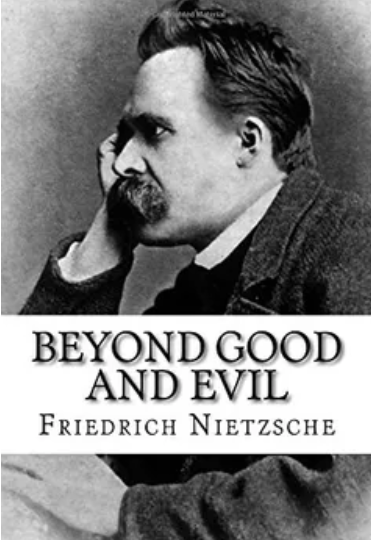
…this site is now becoming a collaboration of chess in Bedfordshire: much more so of the past than the present -that has become the dominant trend. I document the history of chess in Bedfordshire as much as I can, and as time has passed I have become more thorough and resourceful. However, I am not a trained historian as my background lies principally in philosophy but yes it is true I did study some modules on history as both an undergraduate and a post-graduate too; furthermore, I have trained myself up, particularly in terms of postmodern history. Since 2015, I have only read history and historiography as well as those philosophers who have been so influential on postmodern history, such as Nietzsche (whom I once wrote a 19,000 word dissertation on, entitled: Can the Will to Power be Found in The Birth of Tragedy?), also Richard Rorty and Foucault and I suppose certain structualists such as Claude Levi-Strauss too. Regarding postmodernism, mostly I keep to Hayden White, Keith Jenkins and Alan Muslow.
Some friends and former playing partners back home describe me as the ‘go to guy’ for the history of chess in Bedfordshire. This compliment says more about the lack of interest in the subject than my own endeavour. As mentioned, I am too adrift from academia to feel chuffed by it. Rather, I tend to lament that my historical research, like my chess, just isn’t what it should be. Even though I may well have a broad understanding of Bedfordshire chess history courtesy of the volume of research put into it, all of which began in 2014, this is not something I am particularly proud of. Nonetheless, out of courtesy compliments are graciously received. If the truth be told, I just see it as my job and only that – after all someone’s got to do it and no one else is that interested!
Amongst the many others, I have created three categories: ‘Bedfordshire Chess’ and ‘History of Bedfordshire Chess’ and ‘Luton Chess Club’. This website is slowly moving towards a consolidation of those (all of which can be found in one of the toolbars to the right).
On what this site cannot become…
…I like to be both creative and amusing when I can be, factor in that playfulness has been an ever-present factor, the content of this site should be thought of as multifarious. It could be said I continue to enjoy undermining the conservatism I believe chess is underpinned by even after all these years, and often try to use humour to do it still, believing I have got better at it. Consequently, despite the general direction its going in, this site cannot only be about Chess in Bedfordshire and nor will it be. It may become noted for that yes -in fact that’s been the case for years already even by established historians, archivists, and whoever else. External factors aside, this site is titled McCreadyandChess. I cannot, nor will I not, remove my own personal thoughts and experiences of chess from the posts of this site -especially if I think they are funny or original for they constitute my writing at its very, very best. In addition, the number of categories alone tells you that breadth of content is important to me. I am proud of my site, it is identity conferring and that is how it shall stay -end of story. All you really have are: ‘Some thoughts on the beautiful game’, which, incidentally, just happen to be my very own; nothing more, nothing less, take of it whatever you please… .
A side note on how to read old Tom Sweby's columns
Not perhaps, but quintessentially, Old Tom Sweby is best thought of as a passionate devotee to the newspapers he wrote for. He was well read and knowledgeable of the Bedfordshire chess scene and well beyond, given that he was the president of the S.C.C.U. once upon a time. He was generally well-respected and rubbed shoulders with many, if not all, of those eminent within British chess circles. It would, however, be a critical mistake to see his column is primary source material entirely. That it is not. You will also find secondary source material quoted too, and the reliability of that is not quite as Tom hoped. Given that he wrote for decades, this is to some degree inevitable, and after all we are all prone to error whether we realize it or not. Thankfully, with regards to old Tom Sweby, they are infrequent and for the most part old Tom continued to document events and developments in the Bedfordshire league from the get go as best he could but, of course, everything lies open to interpretation. Despite this, and generally speaking. this does indeed make him informative and thus worth reading. Dare I say his columns constitute a narrative describing the latest developments, match reports and changing nature of the Beds league...he knew his audience and wrote according. This manifested itself over decades but brevity was always in play courtesy of the restictions imposed by writing a column. Should you wish to read a in instrumental figure of the Beds' league post WW2, you are quite welcome to peruse what has been posted here... . :-) I should, however, point out that as the decades wore on he gradually moved on away from narratives concerning the Bedfordshire league towards affairs both historical and international. The reasons for this are multifarous, old age was a predominante factor presumably, however, the bottom line is with regards to how the Bedfordshire chess scene developed post WW2: old Tom Sweby is your go to guy. He wrote more about chess in Bedforshire than anyone else did but given he was a Lutonian and writing for a Luton newspaper there is both bias and greater coverage of his hometown than the rest of the county.
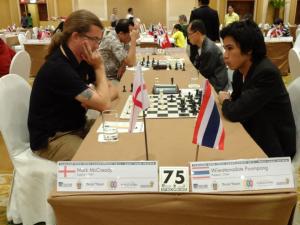
Gallery
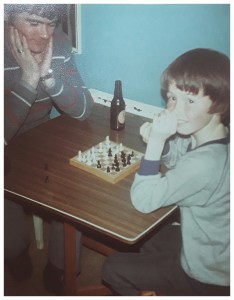
I’m either 10 or 11 here
1982, myself versus Brian from Sunderland.
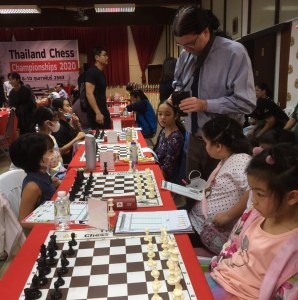
At the Thai Junior chess championships. My daughter of course.
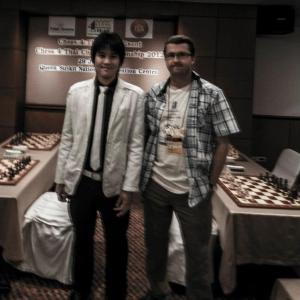
Pattaya 2011
2011
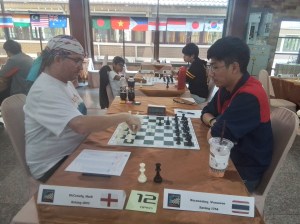
Thai Junior Championships
2008
2011
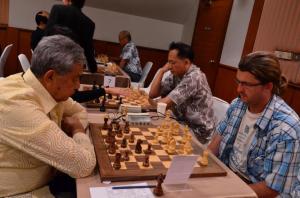
Around 2011
2011
Pattaya 2009
2011
Kuwait 2008
2012
2012
2011 BKK Chess club
2011
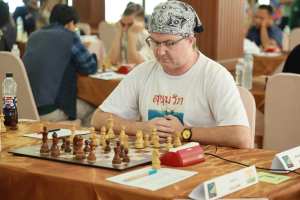
2011 Thai Open
2011 Thai Open
2013 approx
Around 2014
2010
2012
Around 2011
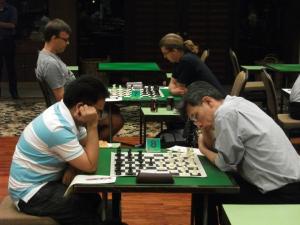
2011
2011
2013
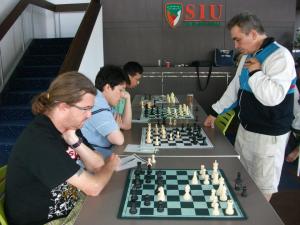
Around 2011
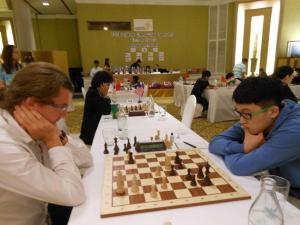
Around 2011
2020
2011
2008
2011
2013 or thereabouts
2010
2017
2014?
2010
2024
2024
2024
To add comments, please see the bell at the top of the page.


























 McCreadyandChess