Archive for the ‘History of Bedfordshire Chess from 1920-1940’ Category

Diggle, who in a -news- flash has become my favourite chess writer, spent at least four years living in my home town just before the war, I was pleased to recently learn. There he befriended the ever-smiling Tom Sweby – Bedfordshire’s principle post-war chess representative, and a man I had the pleasure of meeting as a once promising junior, long, long ago. It would appear that he also knew the esteemed Secretary of Luton Chess Club Brian Cox too. (see Part 5 of https://mccreadyandchess.com/2015/06/05/bedfordshire-chess-in-the-70s-its-past-and-its-future/). Here is Diggle’s take on the unlikely duo and my home town. (Reminiscences of a Badmaster [Vol.1])

                                34. Grandmaster Mecca

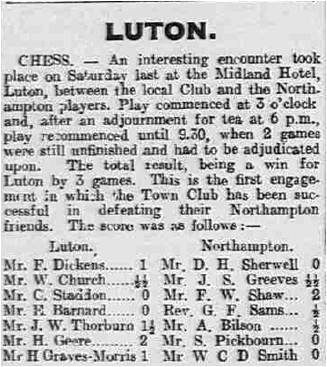
The Luton Chess Club (of which the BM has pleasant memories from 1935-1939) celebrates its Centenary this year. Among generations of its stalwarts, two great figures in particular bestride the Century. In a match played in 1931 between Luton and Northampton, we find on adjacent boards the names of Edward How and T.W.Sweby. The former, then 83 years of age, playing in his last match, had been a founder member in 1878, Hon. Sec. for over 30 years, and President thereafter. The latter, playing in his first match, was destined after a long stretch as ‘general factotum’ to ‘stagger along’ (his own expression) as President (which he still is) for the ensuing quarter of a century. In How’s time Luton was visited by Blackburne, Zukertort, Lasker, Capablanca, Reti, and Alekhine; in Sweby’s (during the past decade alone) by Larsen, Keene, Hartston, Wade, Tal, Glogoric, Suttles, Korchnoi, Petrosian and Hort. The popularity of Luton as a ‘Grandmaster’ Mecca can be ascribed partly to the organising genius and dynamism of a remarkable Secretary (Brian Cox) and partly to the hospitality of its President and his charming wife. One cam almost believe that Grandmasters (after the manner of tramps) inscribe mysterious signs on the front gate of the ‘White House’ when departing, to notify those that follow that they will find the place ‘a bit of alright’.

The younger generation of Luton chessplayers , however, may be surprised to hear that in his earlier days, ‘T. W. S.’ [Diggle is referring to how Sweby signs his Luton News Column] (who now ‘leaves all the organization to Michael’) himself embarked on chess ventures, some of a peculiar kind [of course, those of us who knew Tom Sweby would not be surprised at all, being the great raconteur that he was]. On one occasion eight local players received ‘top secret’ letters instructing them  to be at the front entrance of the Midland Hotel at a certain hour – they would then be ushered in to take part in an eight round ‘Mystery Lightening Tourney’ against eight ‘Invisible Masters’! Another eight Luton chessists each received a similar letter, except that their venue was another entrance round the corner. The two parties (in the custody of T. W. S. and the BM respectively) were smuggled up different staircases and via separate doors into opposite halves of a large room divided by a high folding partition; each half contained a row of eight boards. Play then commenced T. W. S. calling out ‘over the wall’ the first move made by his No.1 Board and the BM making it at once on the corresponding No.1 and so on to No.8, then the process was reversed, the BM calling the replies and the T. W. S. making them. At the end of each round, one contingent ‘moved one up’ as in the Mad Hatter’s tea-party – the other lot sat still. Though all combatants had been enjoined to observe the strictest silence each set of ‘Invisible Masters’ rumbled the other (collectively) in no time, the rot being started by a well-known character with a notorious high-pitched cough which he suddenly emitted during the second round. Thereafter, the announcements of the moves were punctuated by derisive comments from the performers: P-KR3 ‘I bet that’s Joe, the cautious old bastard’ or ‘Resigns’ (loud laughter) ‘that’s Len’s cackle but he sounds three boards off me’. By a masterstroke of timing the last round terminated at 9.30 pm and was followed by a general stampede to the bar – where the ‘first round’ started!

z1

12091178_607357609405597_4381037998926246791_o

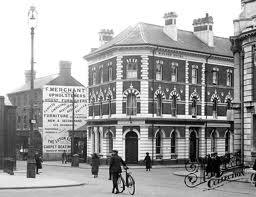
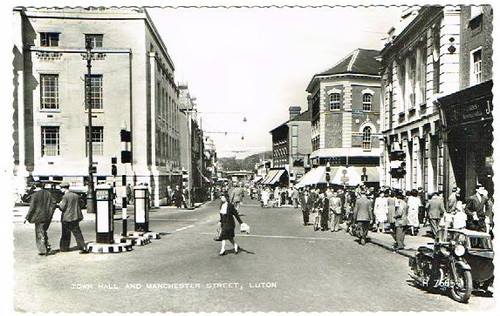
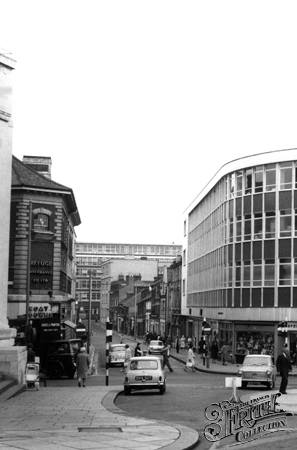
Luton in Diggle’s days. Note that the ‘Midland Hotel’ (painted white) can be seen to the left.

Read Full Post »

More from the irrepressible Badmaster (G.H. Diggle) here:

18. Blake’s deaf ear

The Badmaster (though on principle he never draws attention to his own errors when he has not been found out) thanks Messrs John Beach and J.C.Calvert for setting him right over H.E. Atkins. As Mr. Beach adds in his most interesting letter, the old lion lived to be over 90. Another famous chess nonagenarian was the redoubtable J.H. Blake. After retiring from serious play, Blake was in his later year Secretary of the aristocratic City of London Chess Club, which flourished between the wars at the imposing address of ‘Wardrobe Court, Doctors Commons’ (between St.Pauls and Blackfriars bridge). The club was on a first floor and occupied two spacious rooms on either side of the landing, one for match play, the other more of a lounge, with a refreshment bar and many portraits of masters on the walls, like the ‘Long Room’ at Lords. Occasionally the match room was let by concession for County Matches, and ‘Beds’ sometimes played ‘Berks’ there, the former team including R.H Rushton, T.W. Sweby, the Badmaster, ‘and others’. On one occasion the clans duly gathered for the fray, but remained for a time huddled together on the landing, as no one seemed to know who had the key. Through the frosted glass on the other side we could dimly make out several eminent club Members such as R.C.J. Walker and J.M. Bee (the Chess Editor of the ‘Sunday Times’) reclining at their ease in the ‘lounge’. After a while, the ‘the people began to murmur against Moses’, and a general air of ‘Why are we waiting?’ (though no one ventured to burst into song in that hallowed spot) pervaded the assembled warriors, until finally the venerable Blake himself (having been apprised of the situation) sailed into port and opened Sesame. At this point one of our more forthright lower Boards ( a hardboiled Lutonian),  who thought Blake was the caretaker, expressed (not too inaudibly) the view that ‘Old Rip van Winkle was past his job’. ‘T.W.S’ and the badmaster exchanged glances of inexpressible horror, but luckily Blake had suddenly grown very deaf… .

Read Full Post »

The so-called ‘historical method’ [implies the avoidance of] imaginative excess (i.e enthusiasm) at any price.

Hayden White, Tropics of Discourse, Johns Hopkins, University Press, 1978 p. 126

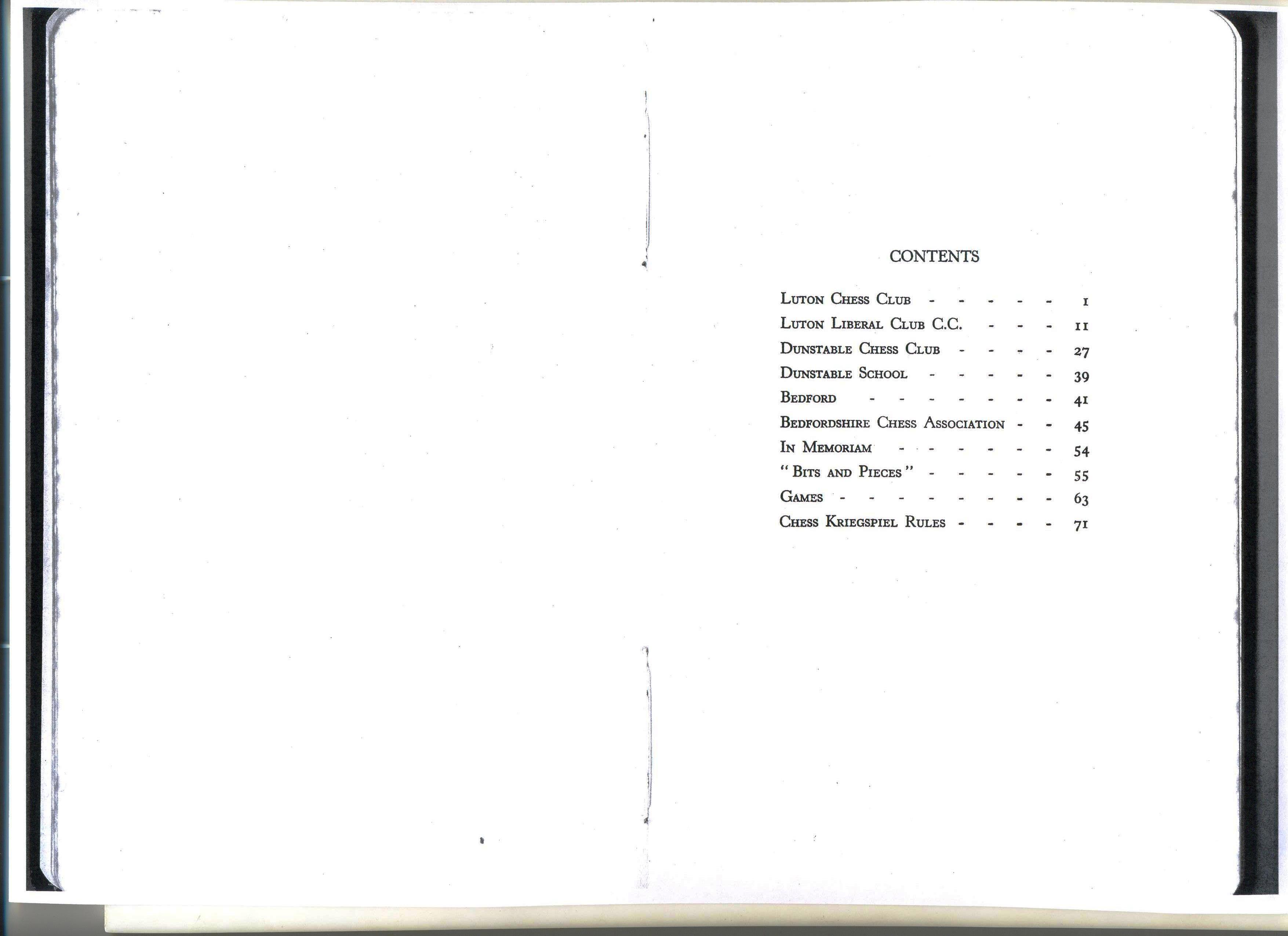
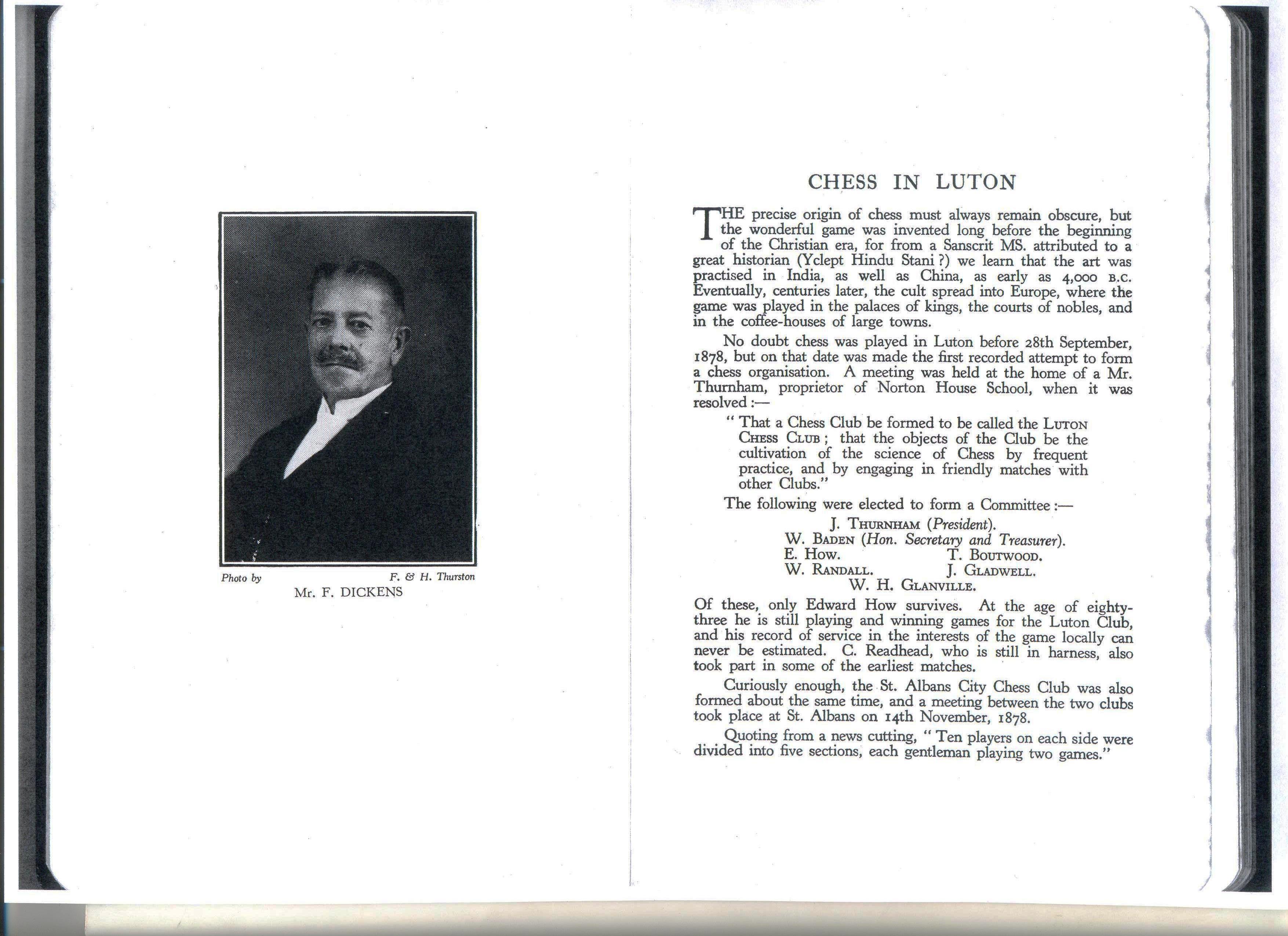
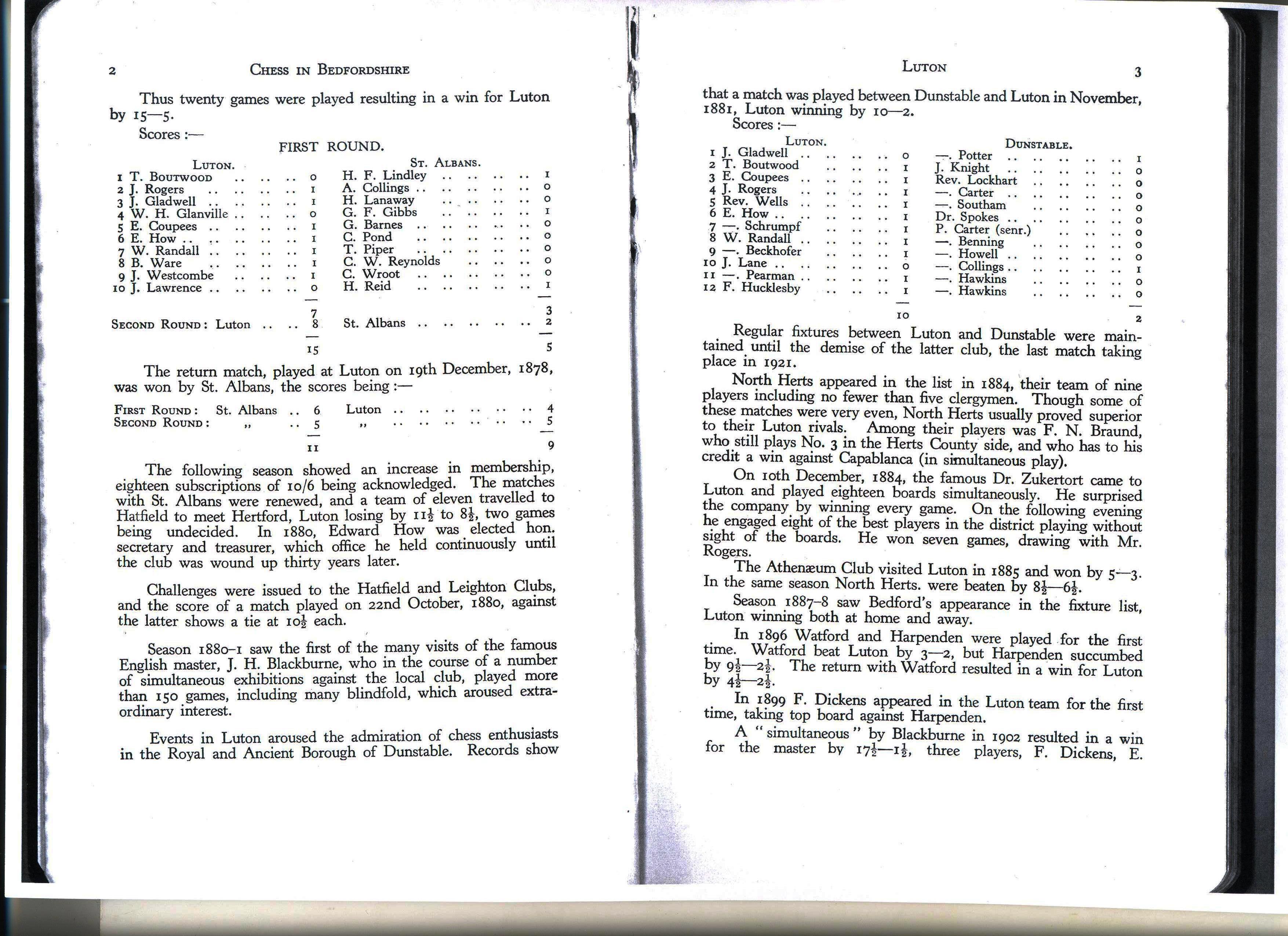
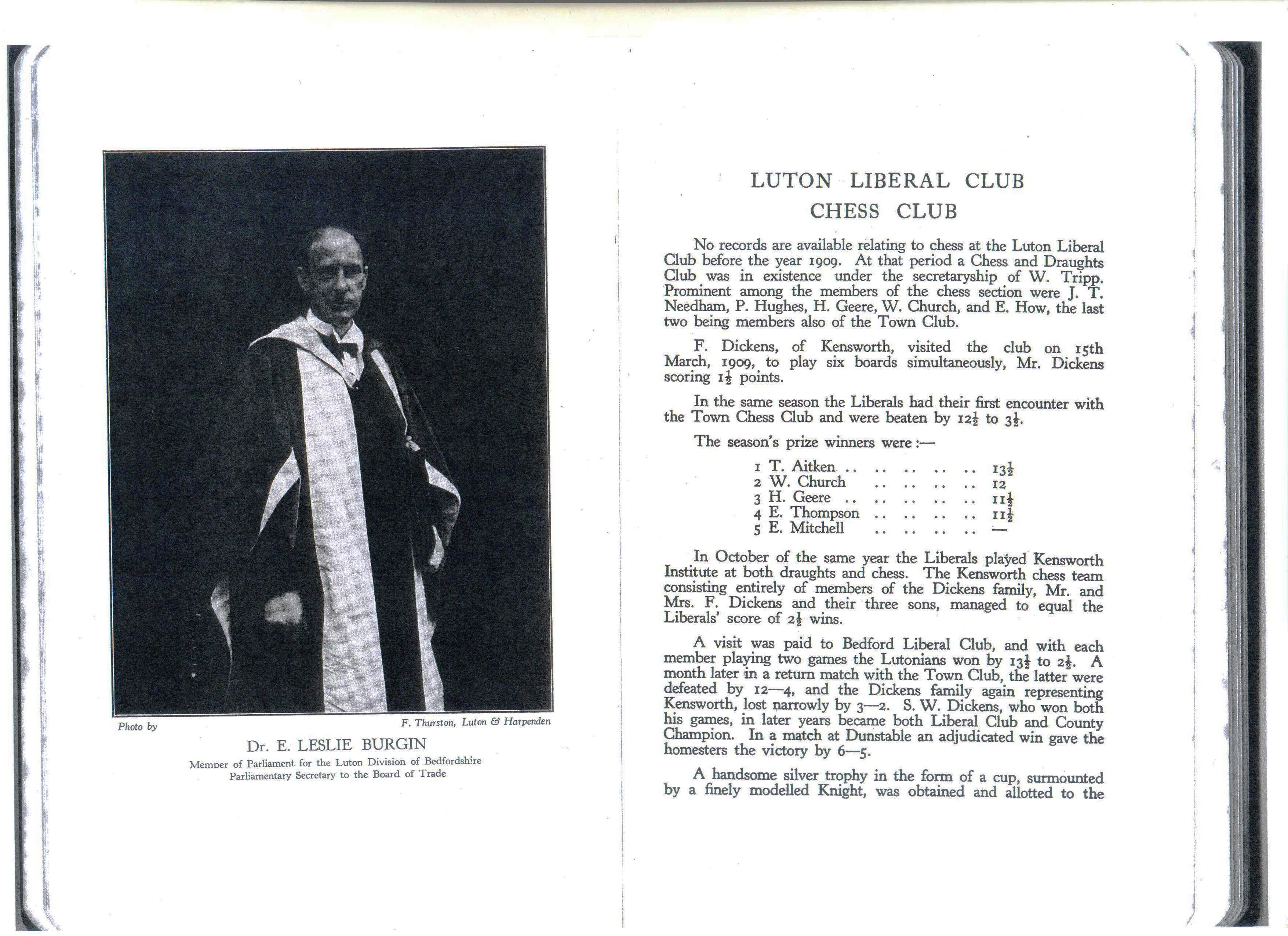
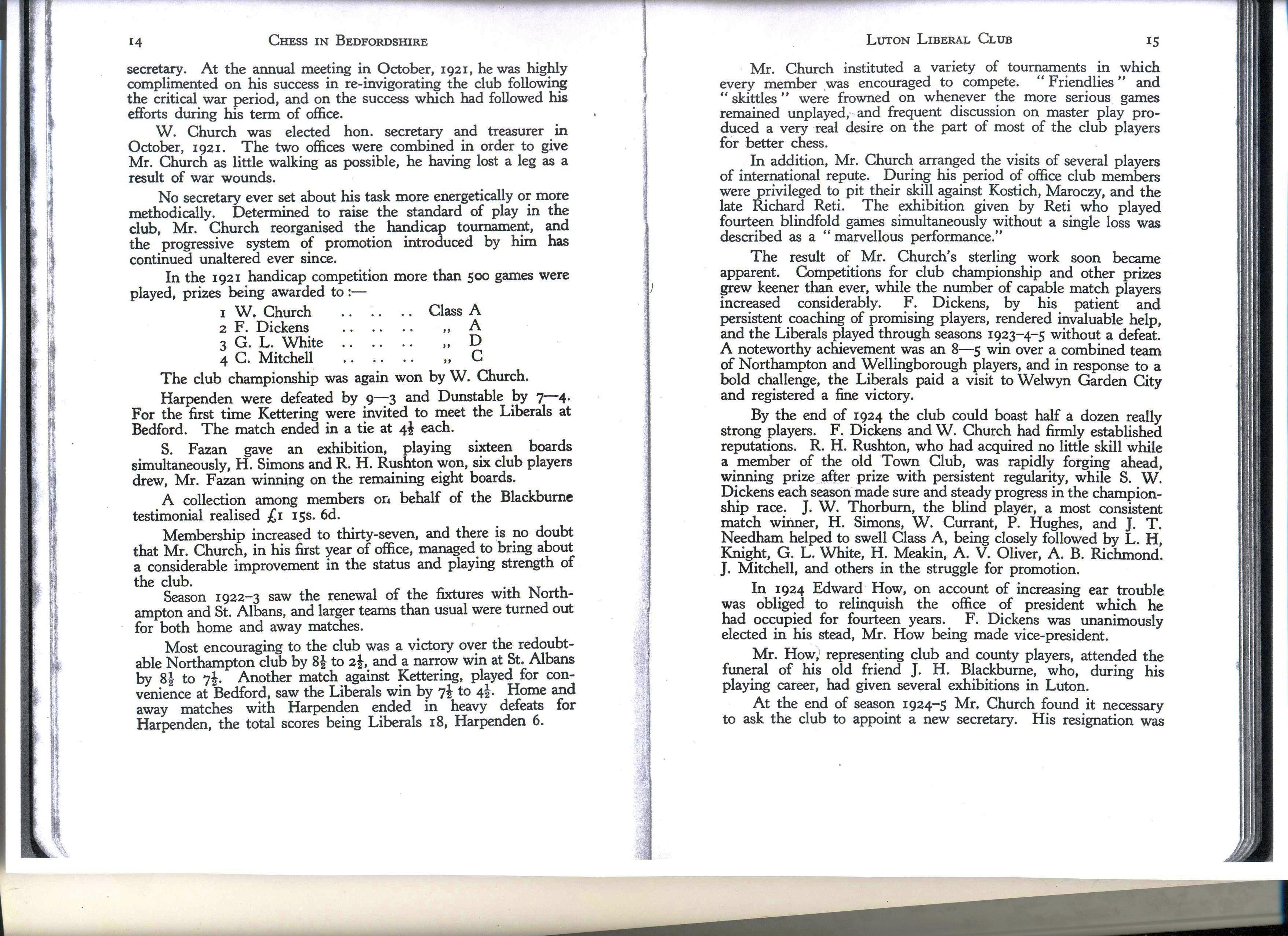
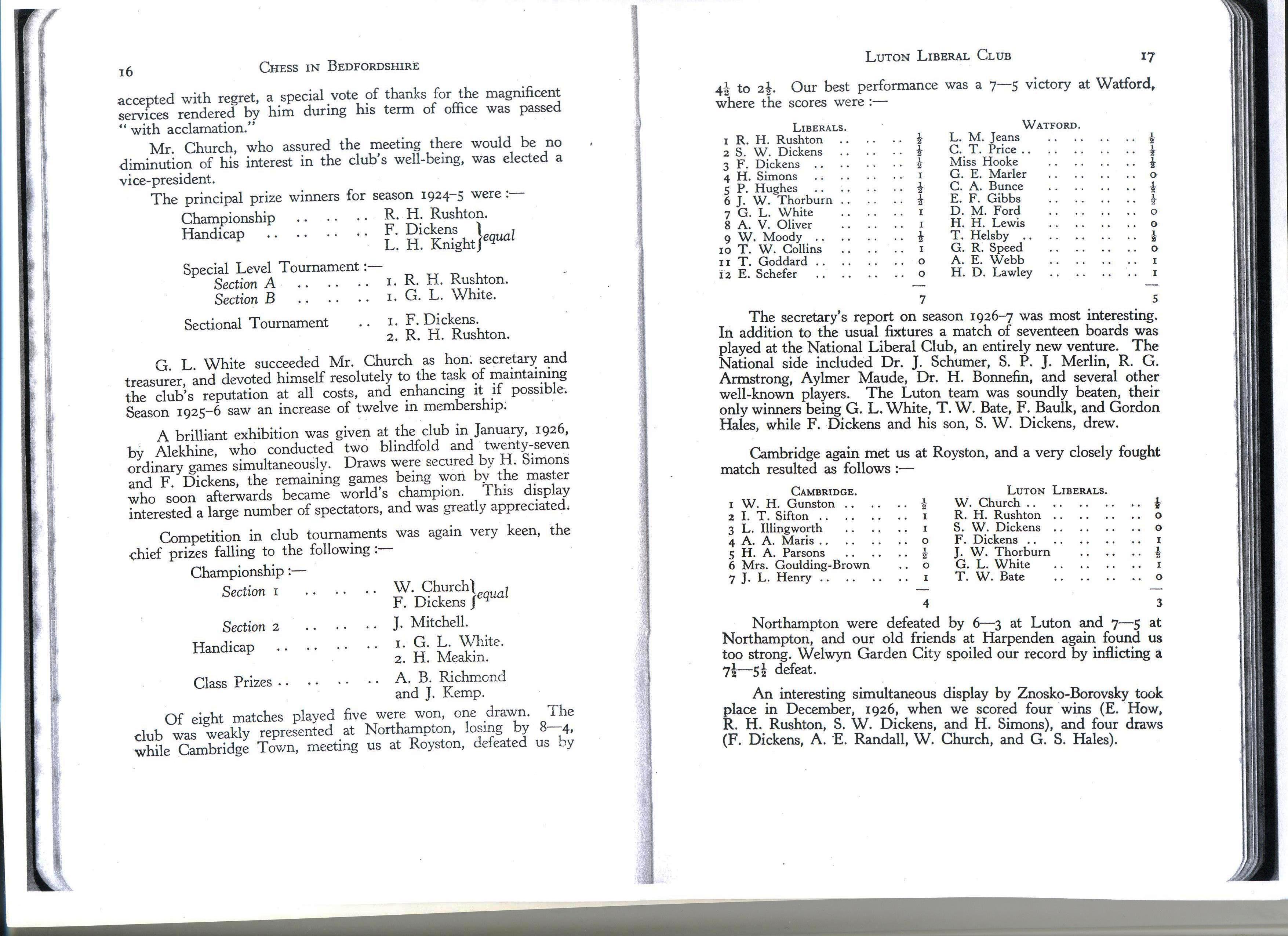
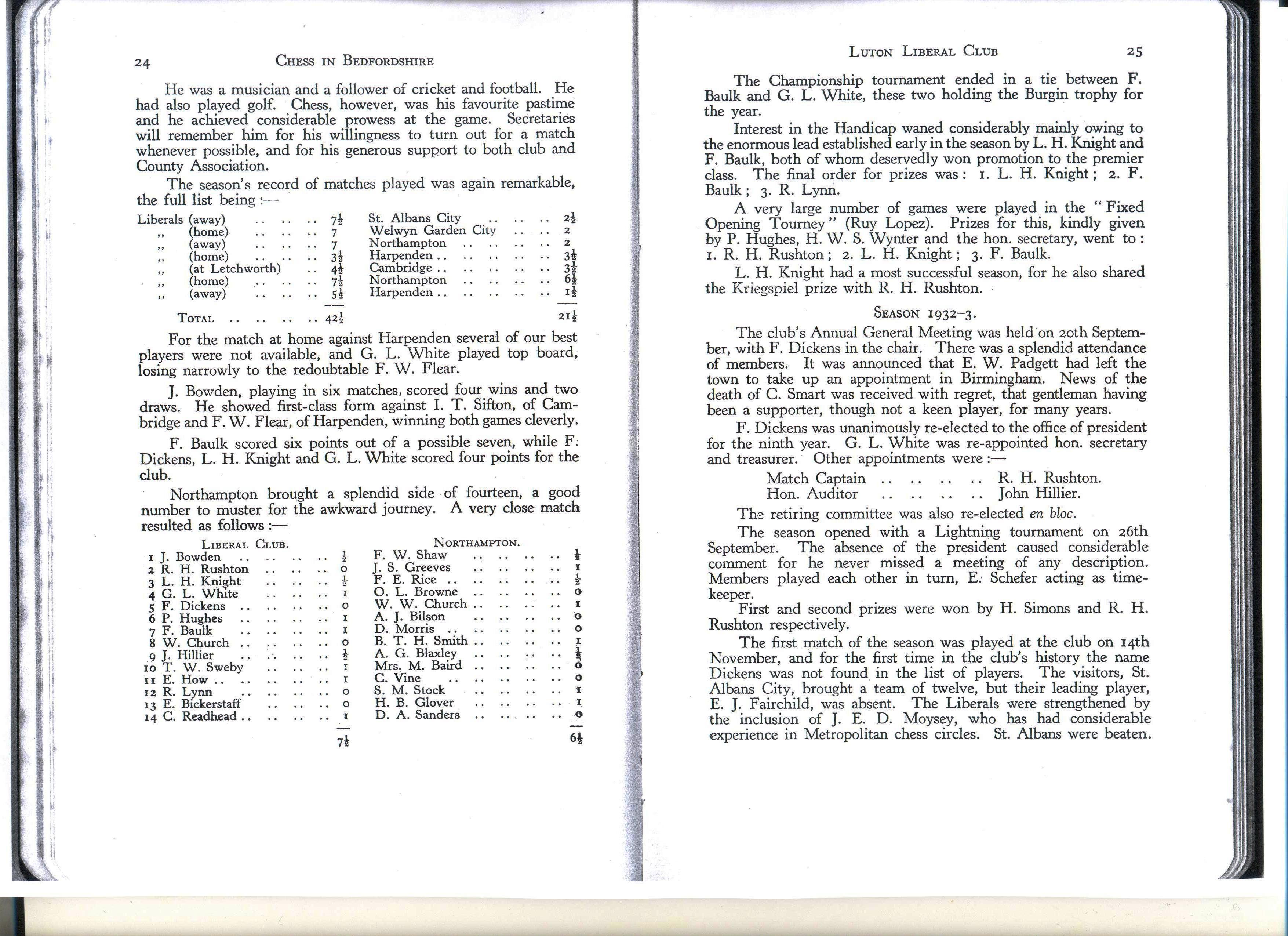
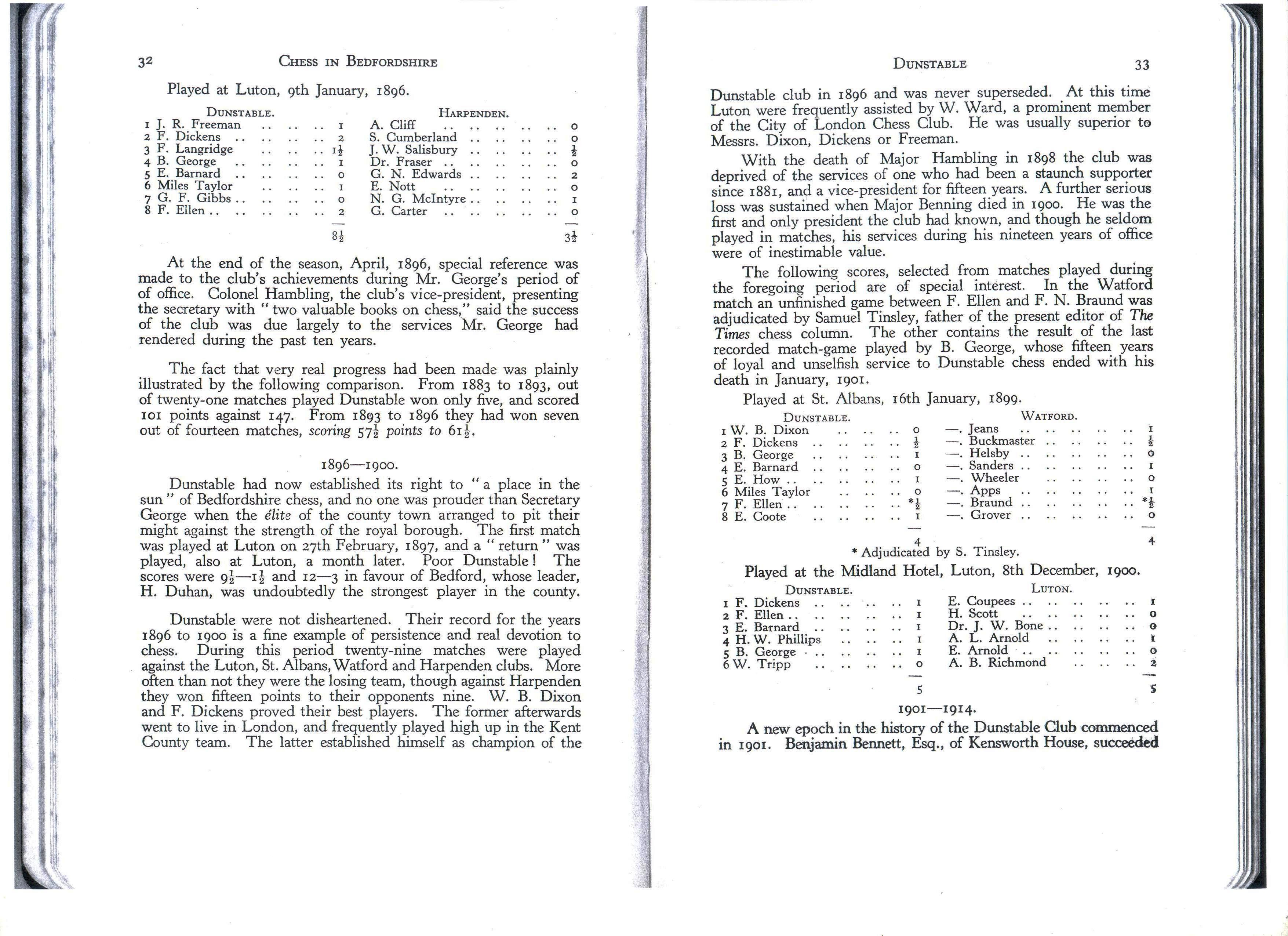
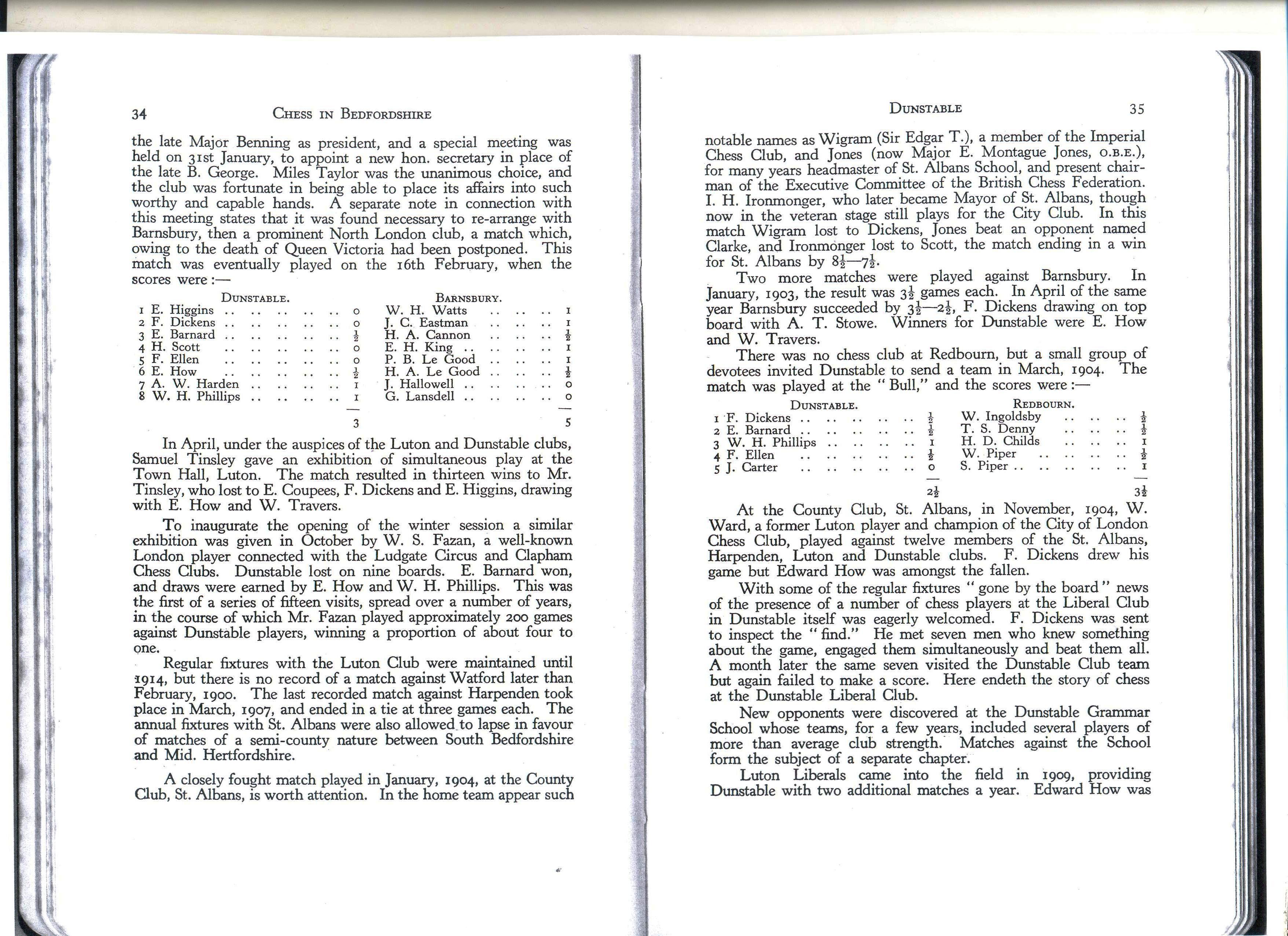
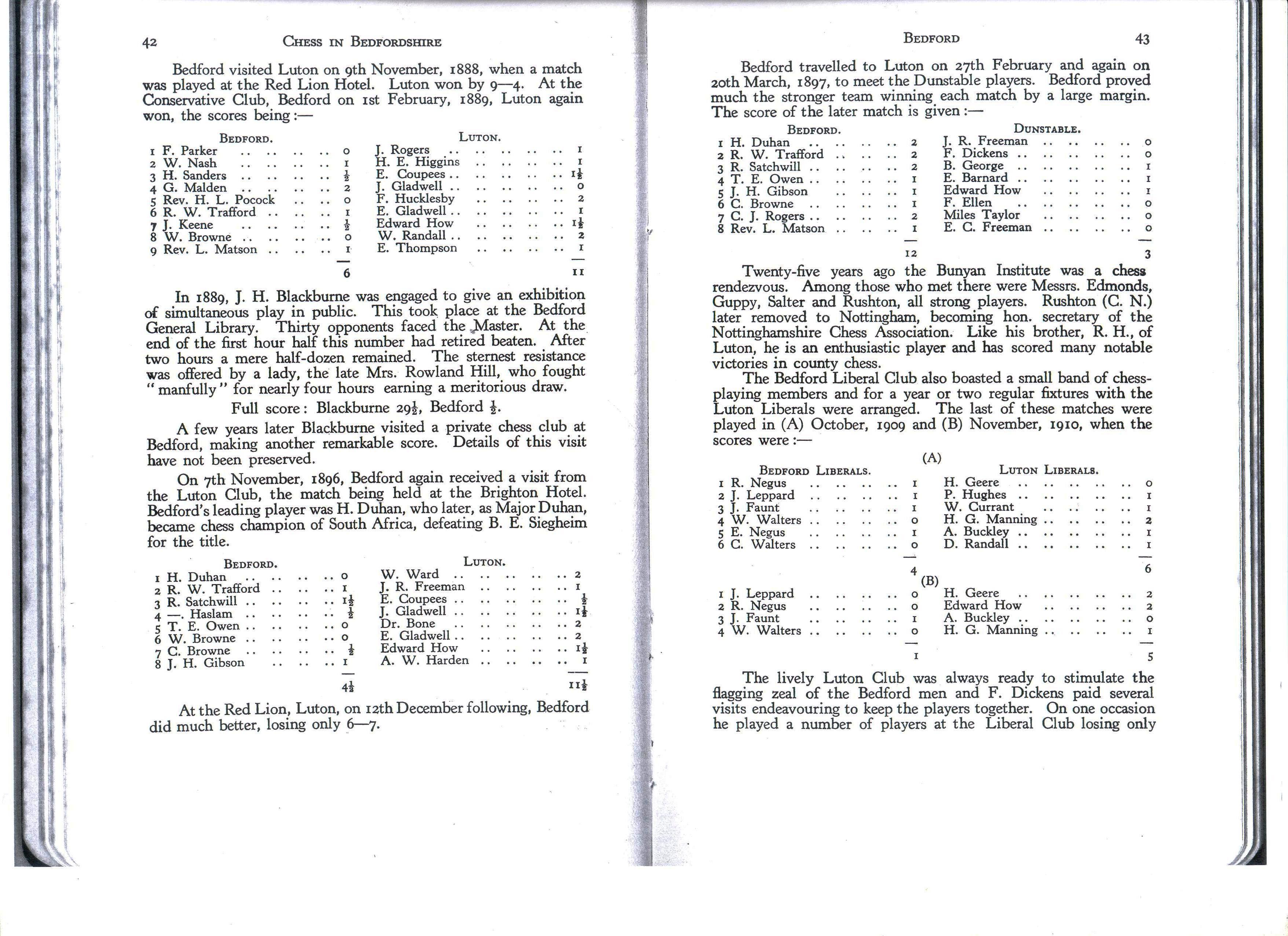
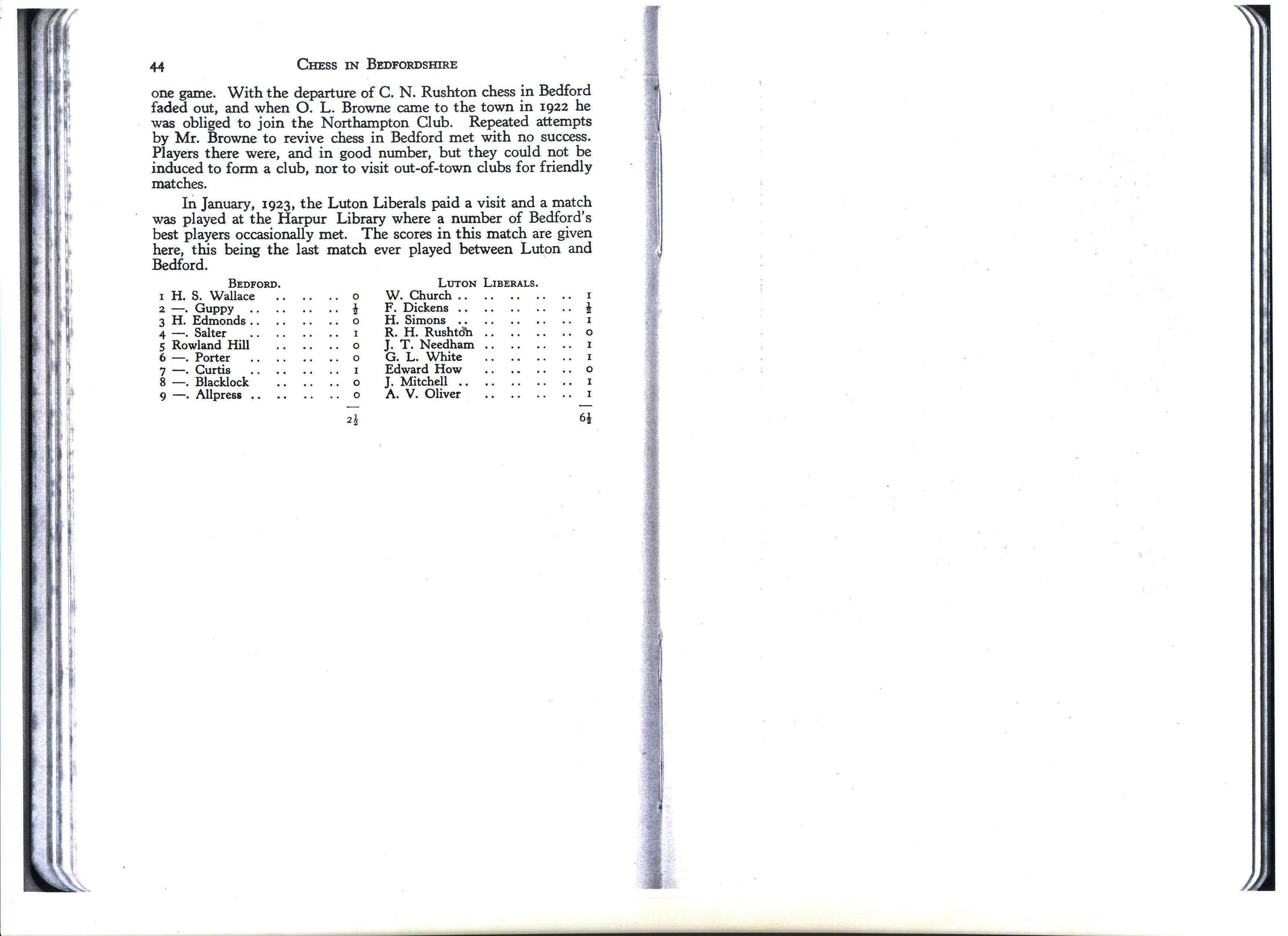
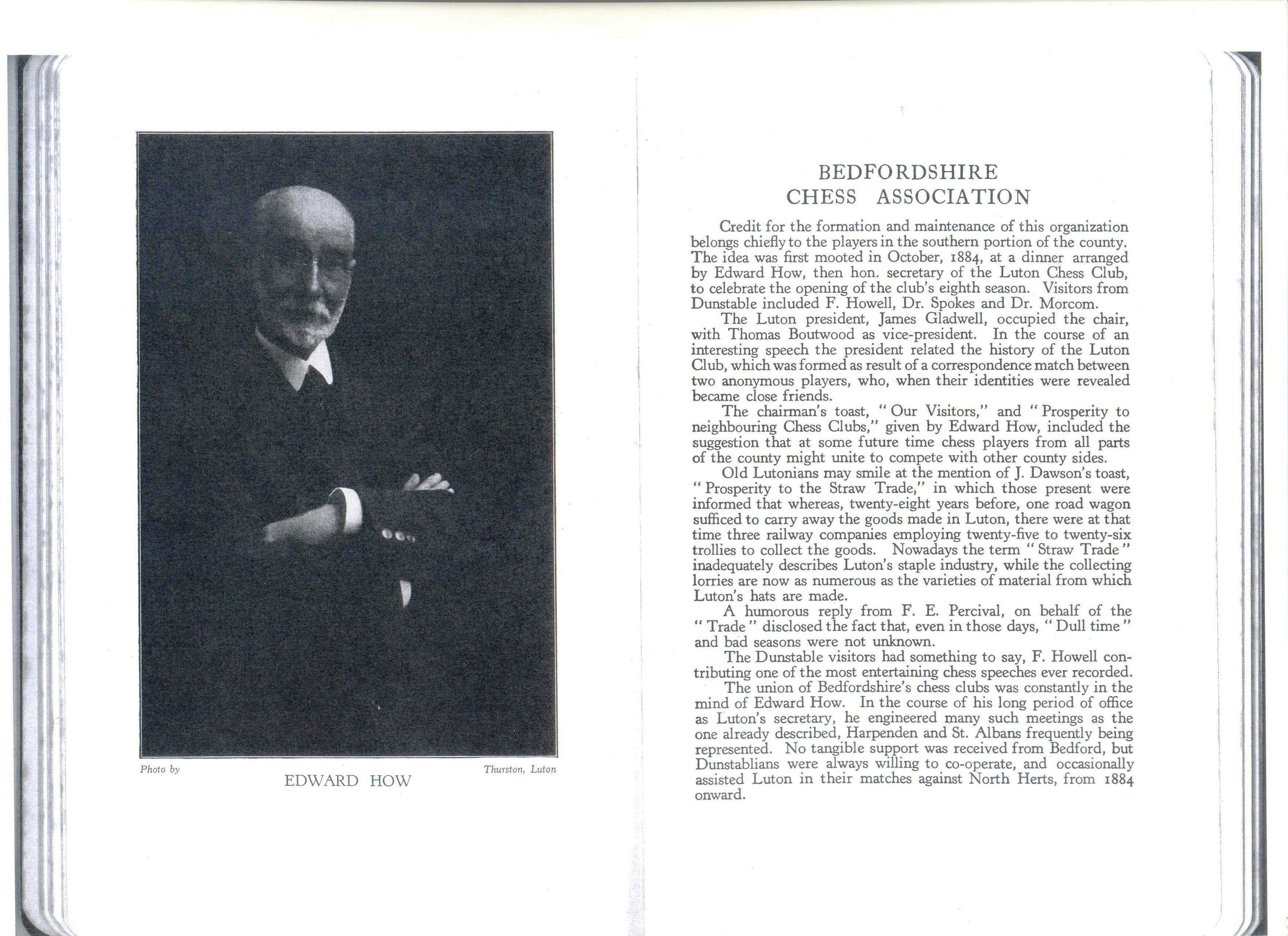
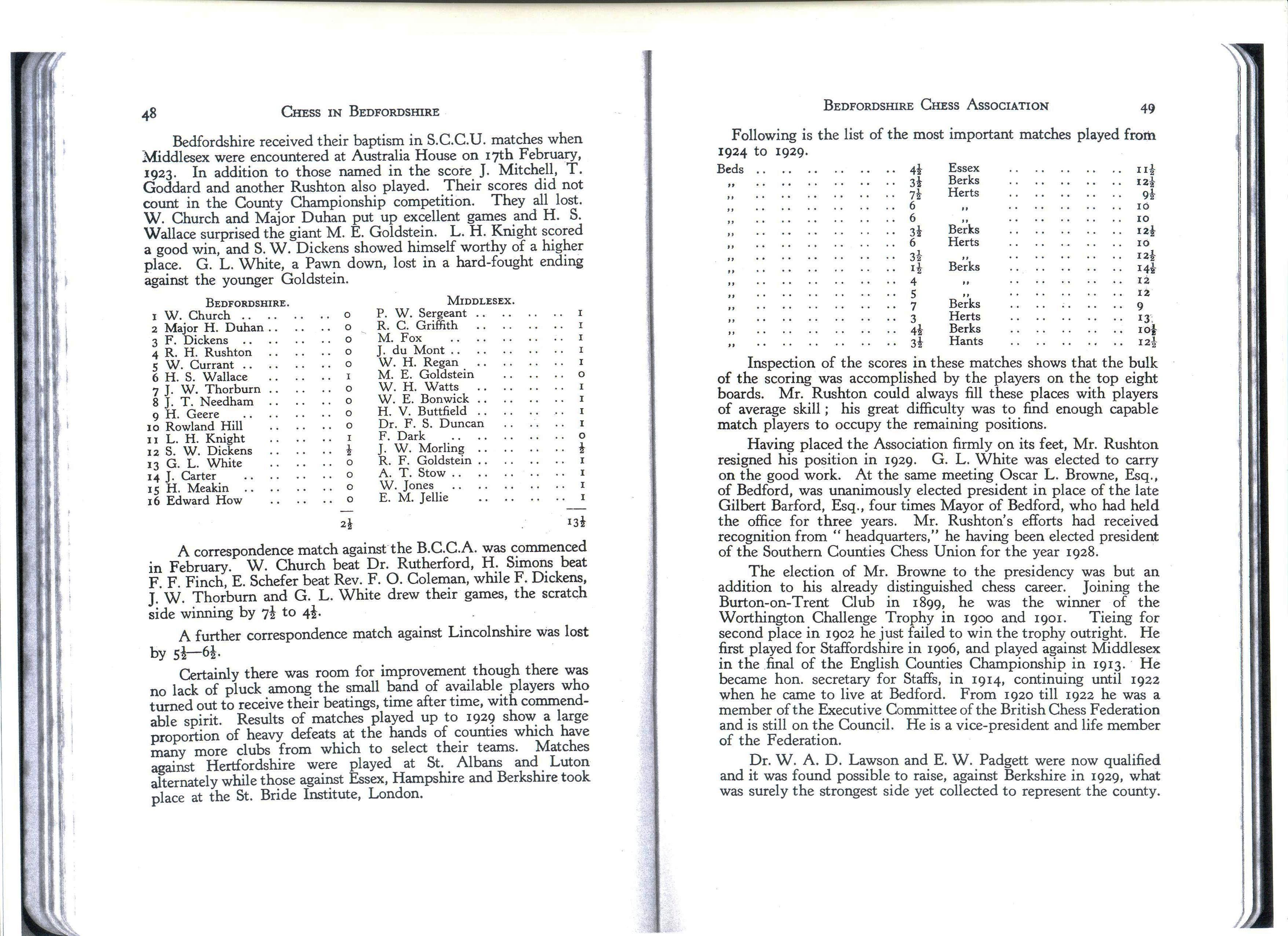
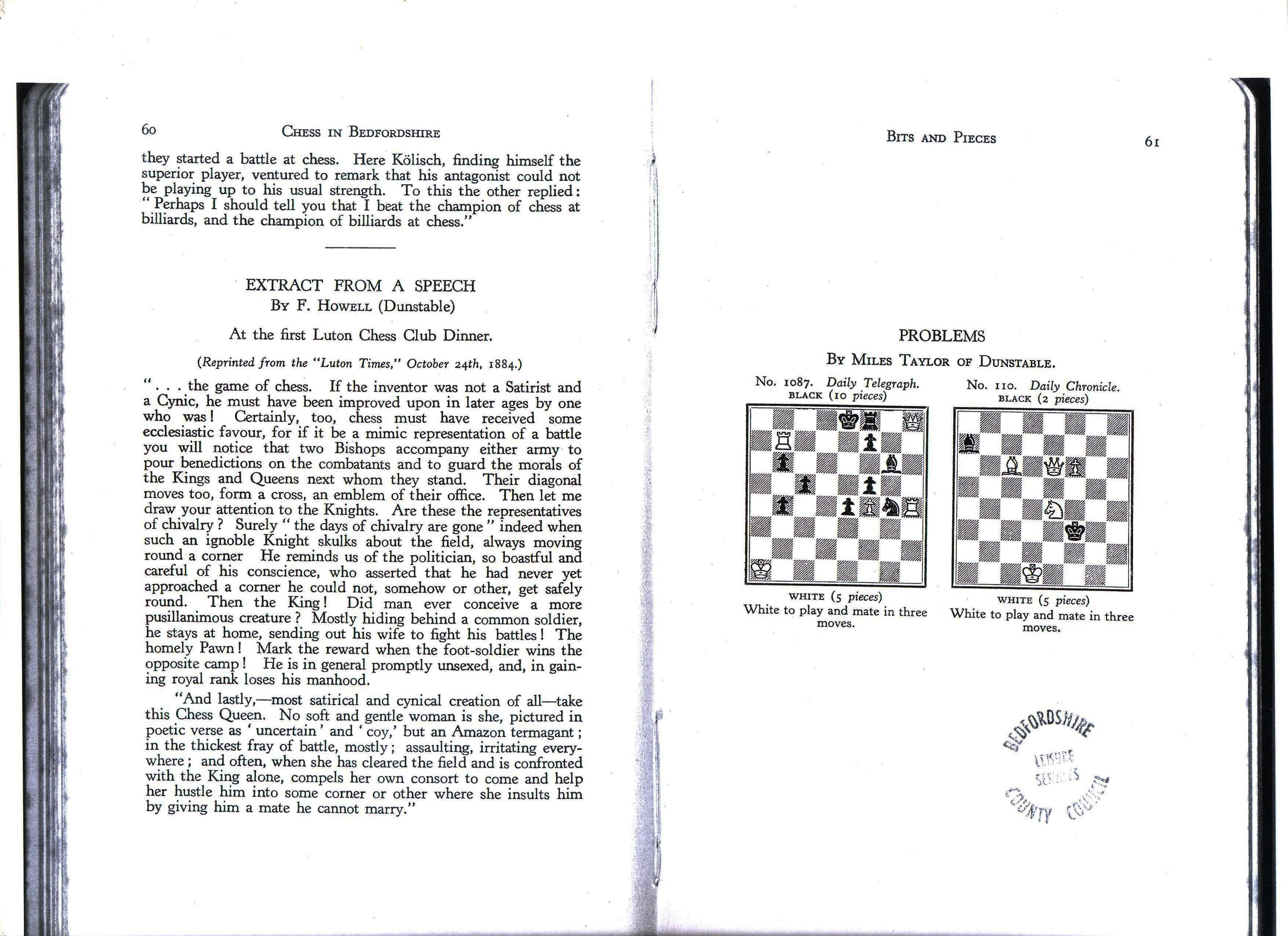
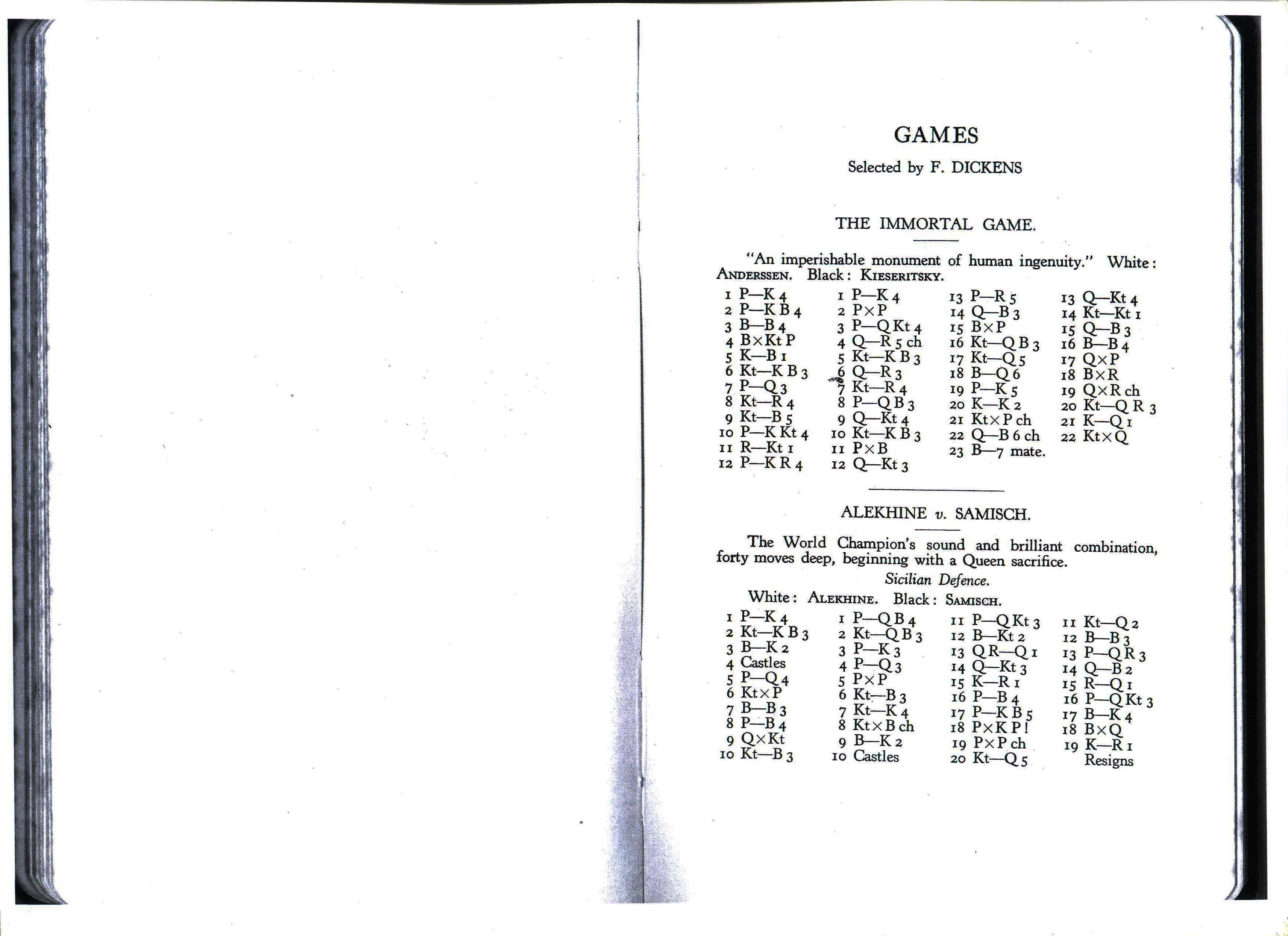
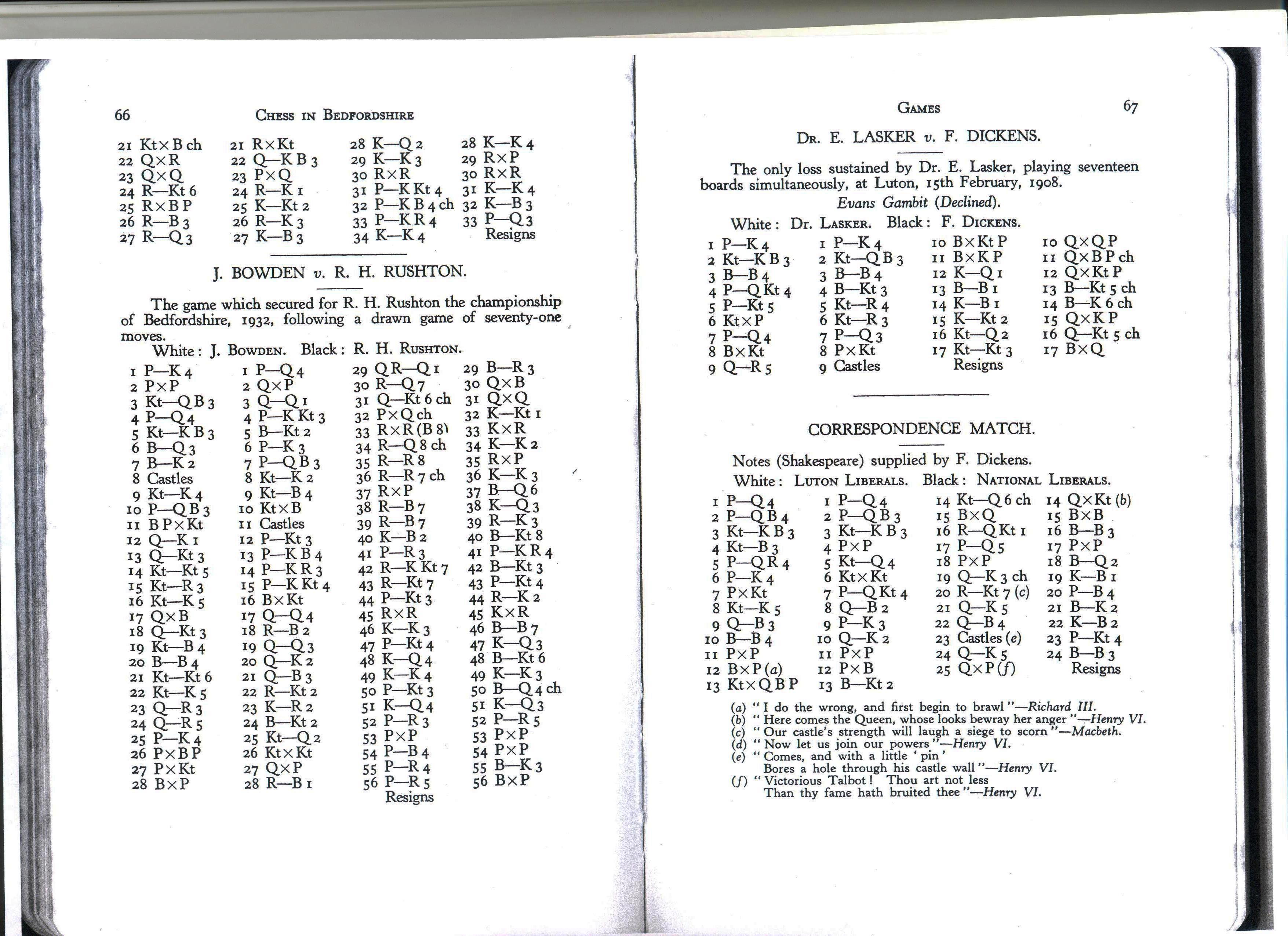
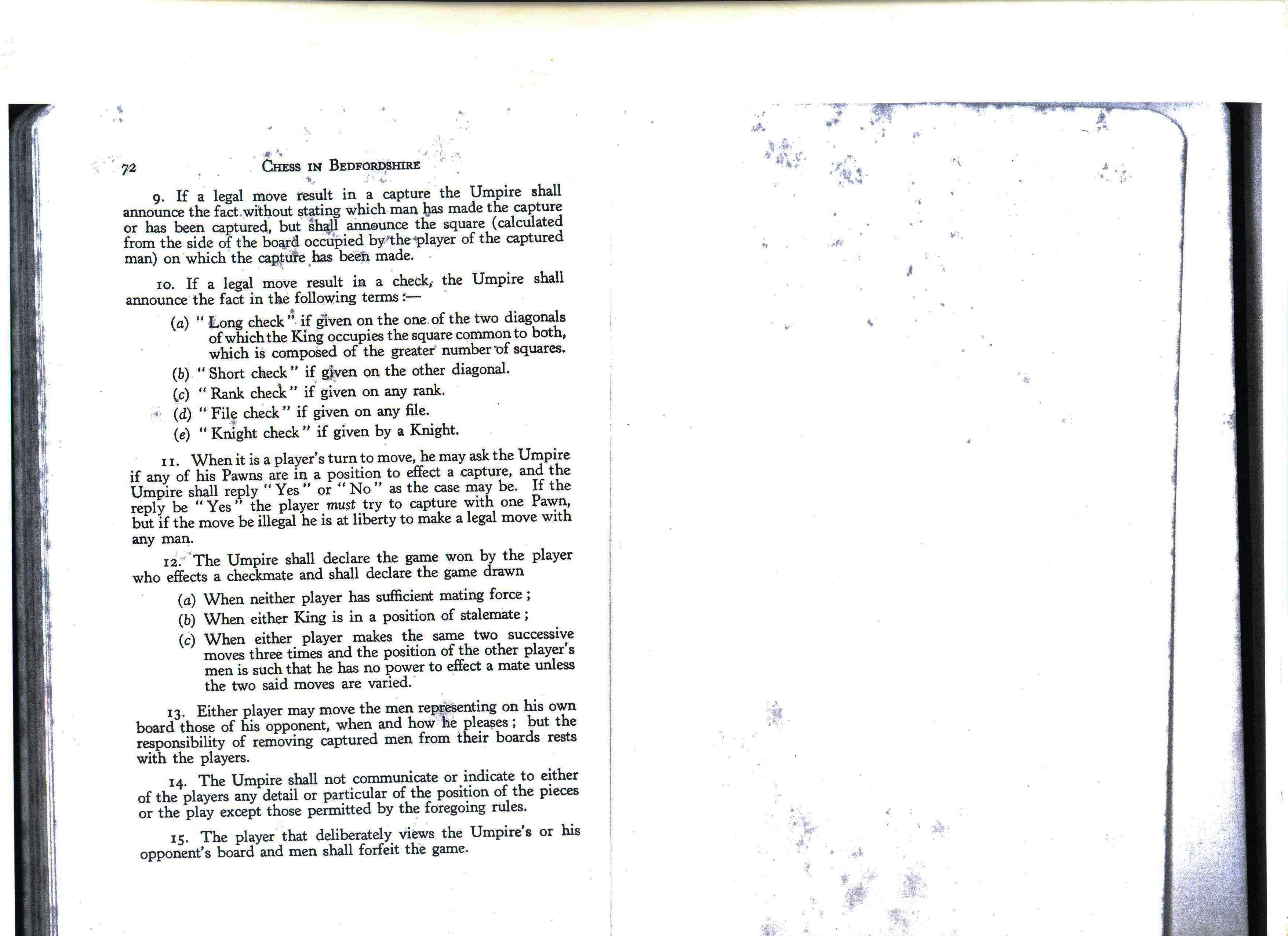
In this post you can find the 1933 classic Chess in Bedfordshire (F.Dickens & G.L White: Leeds Whitehead & Miller). It’s a rare book but can be found in Bedford library. When I can free up my work schedule I will write about it in more detail as the (heavily flawed) approach by the authors, which G.L. White explains in the Foreword has a number of significant historiographical ramifications; with the exception of a brief mention on page 42, they have -believe it or not- omitted Bedfordshire’s first internationally recognized player…more on that when I can find the time, until then enjoy reading… .

a b c d e f g h i j k l m n o p q r s t u v w x y z za zb zc zd ze zf zg zh zi zj zk zl zm zn

Read Full Post »

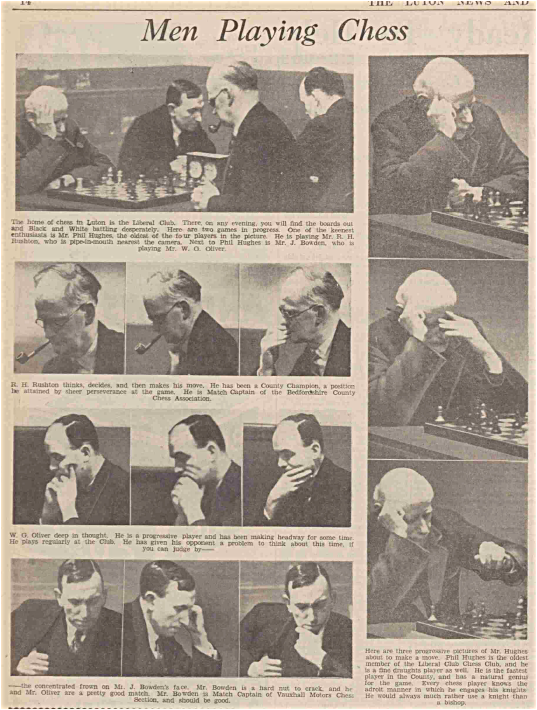
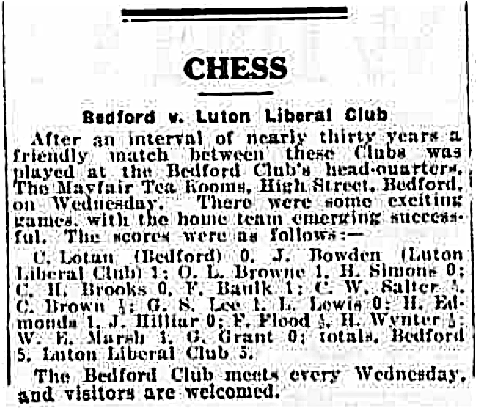
The excerpt below taken from The Luton News and Bedfordshire Advertiser, Thursday Jan 20th 1939 depicts what the general public (and its journalists) still consider chess to be, that being a genteel affair played by the patriarchs of society, as the misinformed BBC recently confirmed: http://www.bbc.com/sport/0/olympics/33109003

luton1

It is no longer 1939: this is how chess is presented by those within the game in 2015.

What a contrast indeed. Unfortunately for you younger guys, the cute Sopiko Gurumishvili is coupled to Dutch hipster and superstar GM Anish Giri. She’s also rated around the 2400 mark, so you’ll have trouble impressing her over the board also.

That aside Chess24.com offers the most interactive chess platform on-line and is so far ahead of everything else that endless hours of entertainment await you, a far cry from our bygone days indeed… .

Read Full Post »

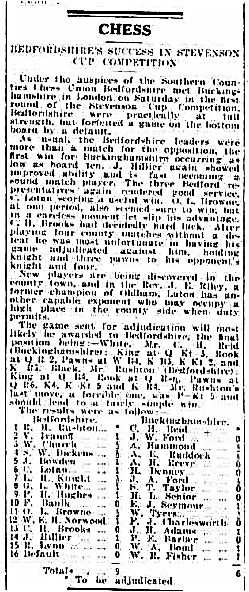
Some rather blasé journalism can be found in ‘A Chess Move’, which I feel gives an unfair account of the state of chess in Bedford at the time. If you’ve read ‘Chess in Bedfordshire’ (1933), you will most likely suspect that the author of ‘A Chess Move’ is following the book without performing adequate research.  Please click on the images for a better view.

beds1

beds2

The aforementioned Stevenson Cup and the match played that season can be found here:

beds3

beds4

The player on board 2 Ivanoff is mentioned by G.H. Diggle in Newsflash in Feb. 83. Edward Winter, has added it to his wonderful site on the following page, http://www.chesshistory.com/winter/winter85.html, scroll down to 7223.

Bedford weren’t as weak as was suggested in ‘A Chess Move’, is made out as is shown below.

beds6

beds5

Read Full Post »

He who climbs upon the highest mountains laughs at all tragedies, real or imaginary. Nietzsche TSZ

By now you’ve probably noticed that the best site on the net is Edward Winter’s Chess Notes and the worst is my own…right? If not then shame on you. Owing to the former ambitions of the Proletarian Tourist Excursions Society not too far from Stalin’s home town and a near simultaneous fireworks display held past midnight at -10, some late night surfing on top of a snow-capped mountain range has come to fruition.

A book about chess in my home county was written in 1933, Chess in Bedfordshire by F. Dickens and G.L. White (Leeds, 1933). According to Mr.Winter my home town had its fair share of pre-WW2 talent, with an adopted Lutonian disposing of former world champion Lasker in a simul with the Falkbeer Counter-gambit of all things, and a possible relative of Dickens beating Tartakower, also in a simul. Admittedly, the play from our Maestros leaves a lot to be desired, and had Tartakower played 13…g5 against me (see below), there is no doubt I would have beaten him too. I will endeavour to find out what brought him to Luton and report any findings.

Before its catastrophic modernization, which began in the 1950’s and finished the year I was born, Luton was once a quaint picturesque town where everyone knew each other -quite unlike what it has become. If you don’t know anything about Luton, it was once voted as the worst town in England, although in truth it’s best described as a northern town down south. In recent years it has become an immigration dumping ground for the government, causing the rise of the far-right movement the EDL, which was formed by a group of individuals who lived at the top of my road, and went to the same school I did. http://news.bbc.co.uk/2/hi/uk_news/3692154.stm

In chess terms it is famous for the shortest game ever played between Stewart Reuben and Tony Miles in 1975, the game was:

1. Draw.

I am indebted to Edward Winter for the content below:

Courtesy of ChessNotes 7224. http://www.chesshistory.com/winter/winter85.html

An adopted Lutonian, J.E.D Moysey, owner of the once infamous Midland Hotel beats Lasker!

cn7223_laskermoysey

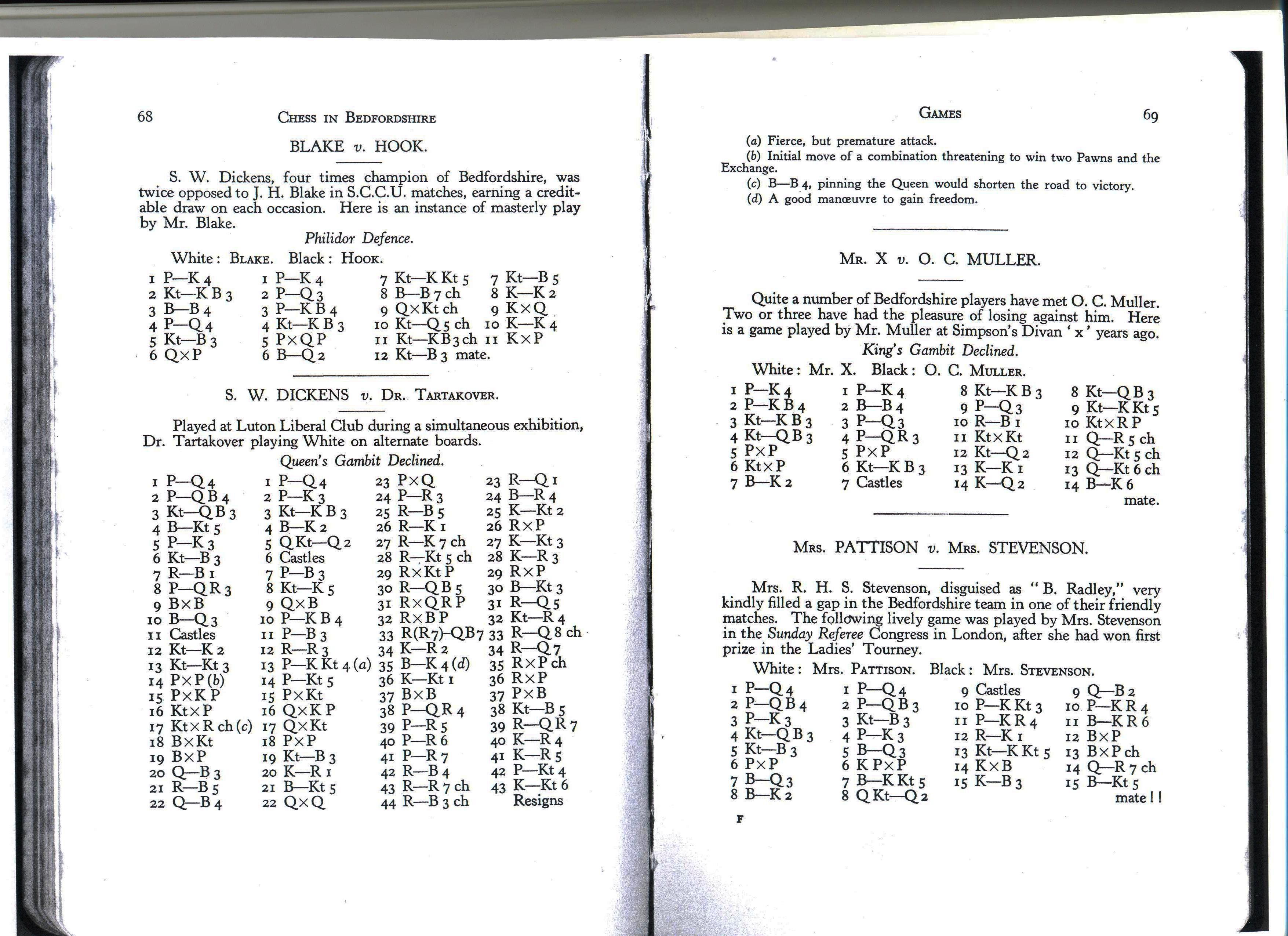
What the Dickens! Tartakower loses in Luton!

S.W. Dickens – Savielly Tartakower
Luton, January 1928
Queen’s Gambit Declined

1 d4 d5 2 c4 e6 3 Nc3 Nf6 4 Bg5 Be7 5 e3 Nbd7 6 Nf3 O-O 7 Rc1 c6 8 a3 Ne4 9 Bxe7 Qxe7 10 Bd3 f5 11 O-O Rf6 12 Ne2 Rh6 13 Ng3

dia

13…g5 (‘Fierce, but premature attack.’) 14 cxd5 (‘Initial move of a combination threatening to win two pawns and the exchange.’) 14…g4 15 dxe6 gxf3 16 Nxf5 Qxe6 17 Nxh6+ (‘17 Bc4, pinning the queen, would shorten the road to victory.’) 17…Qxh6 18 Bxe4 fxg2 19 Bxg2 Nf6 20 Qf3 Kh8 21 Rc5 Bg4 22 Qf4 Qxf4 23 exf4 Rd8 24 h3 Bh5 25 Rf5 Kg7 26 Re1 Rxd4 27 Re7+ Kg6 28 Rg5+ Kh6 29 Rxb7 Rxf4 30 Rc5 Bg6 31 Rxa7 Rd4 32 Rxc6 Nh5 33 Rac7 Rd1+ 34 Kh2 Rd2 35 Be4 (‘A good manoeuvre to gain freedom.’) 35…Rxf2+ 36 Kg1 Rxb2 37 Bxg6 hxg6 38 a4 Nf4 39 a5 Ra2 40 a6 Kh5 41 a7 Kh4 42 Rc4 g5 43 Rh7+ Kg3 44 Rc3+ Resigns.

Source: pages 19 and 68-69 of Chess in Bedfordshire by F. Dickens and G.L. White (Leeds, 1933).

An excerpt from the Beds Advertiser and Luton Times Nov 11th 1910 shows F.Dickens in action for Luton (source cf: The British Newspaper Archive)

 Picture1

Legal Disclaimer by the author:

This post contains disturbing, graphic imagery that is far too shocking for chess players. Discretionary viewing is advised.

Our Lifeless Past

The danger of staring too long at this still is that you may become a feature of our lifeless past for generations. Imagine having to wait over 100 years before anyone could upload and emancipate you into the net.
480963_499514520069012_311957213_n

The horror of it all. The Midland Hotel, a typically rough Luton drinking establishment and its chess-playing owner who’indulged in animated and dogmatic estimates of London players he had met’ during heavy drinking sessions. ‘-his favourite derogatory phrase, delivered in his strong public school accent, was “He’s a mere CAFFYHOUSE player!” So often did he bring this out that it became a sort of shibboleth or “Hi, de, Hi!” in Luton chess circles.’ http://www.chesshistory.com/winter/winter85.html Please go to 7223.

9077_280023015471102_1346244262_n

The Midland Hotel is to the right. It was demolished as was much of Luton town centre for the sake of ‘progress’. The substance of that progress was concrete, unpainted concrete and lots of it, rendering the town centre a light-grey colour in the sun and dark-grey in the rain, sleet and snow. An American style mall became the focal point of the town and ripped the heart out of it. Apart from its grotesque, functionalist design, the most obvious criticism, which still stands today, is that a shopping centre cannot function as the heart of the town, given that it closes at 5pm the town centre is dead thereafter. Culture gave way to commerce, which in turn was based on the whims of a few empowered and disenchanted individuals.
1509182_334969326644428_603345349_n

The swinging sixties: when you look at this image you can’t help but relive those psychedelic grooves can you? The street you see (Williamson St.) no longer exists and in the name of progress, the building to the right was ripped down and rebuilt to look the same some years later. This is why so many leave small towns in England, they have nothing to offer except urban misery.

ARNDALE SHOPPING CENTRE BEDFORDSHIRE LUTON

The 70’s revealed in what is the most graphic, disturbing image ever to be posted on a chess website.  Luton Arndale centre: a timeless void you must never gaze into.

The Price of Art in Luton

On the bridge approaching the railway,

the man was begging.

I said draw me a dog

and I’ll give you a quid.

So I gave him some paper

and he did.

And I said, there you go, mate,

you can make money out of art!

Will you sign it?

As I handed him the one pound thirty-odd

I had in my pocket,

he informed me that the signed ones were a fiver.

John Hegley (Luton poet and comedian)

A music video by The Doves, which illustrates the effects of the drab and dreary nature of urban life in 70’s Britain can be found below. After being brutalized by a bland supermarket, a gentleman breaks down mentally and abandons all around him. In his need to escape he undertakes a journey full of functionalist architecture, panic, exotica and psychedelia. All that aside its a very catchy tune.

Read Full Post »

« Newer Posts