Archive for the ‘History of Bedfordshire Chess from 1940-1960’ Category

BRONSTEIN AND TAIMANOV IN LIVERPOOL

By DENIS V. MARDLE

CHESS, May 1952, Vol.17 no.200, p154

In 1951, it was decided to run an International Union of Students’ Chess Tournament in conjunction with the National Union of Students’ Arts Festival at Liverpool this Easter. The British Universities’ Chess Association co-operated, and some eight teams with three players in each were expected to meet from April 4th to April 10th, but by the opening date only one Belgian, one Dane and one Indian were at Liverpool to meet the British and Finnish teams. It was known that players were to come from the Soviet Union, and their non-appearance brought many enquiries from reporters. There was no “mystery” about the matter; the late choice of players had meant late applications for visas. In fact, only four days was required for the issue of these once Bronstein and Taimanov were known to be waiting in Prague.

The three individual players were grouped into an “International” team, and while awaiting the arrival of the Russians a short Tourney was held in which Finland beat Britain by 2-1, and the International team by the same margin, while the British trio beat the latter by 3-0.

The Soviet Grandmaster and Master arrived at 6 a. m. on April 10th, and a tournament was hastily arranged with the fast time limit of 40 moves in two hours. This was unfortunately necessary, as two games a day had to be played on two of the five days available. The other competitors were the Finnish master Pastuhoff and his fellow-countrymen Nyren and Rutanen with the Danish player Dinsen and the Indian Katragadda.
As was to be expected, the Russians won all their games against the other players, though they met stiff opposition. Nyren had a drawn position against Bronstein after 40 moves but was outplayed in the ending. The draw between the Russian players was a bitterly contested struggle. Taimanov, a concert pianist by profession, gave short recitals to the other competitors, and Bronstein’s work at the British section of the Institute of Languages in Moscow was of great service, even if he appeared to speak our language rather more quickly than most British people!

Unfortunately the impossibility of issuing advance publicity meant that few spectators witnessed the rare spectacle of two Soviet masters playing in a tourney in Britain.

In their individual game Bronstein avoided a draw by repetition on the fifteenth move, and after intense study of the transition to the middle game obtained a superior position, but as the time limit approached he had to make twelve moves in three minutes. At this point Taimanov sacrificed a piece for an attack which gained him a draw by perpetual check, Bronstein having missed a winning line.

The text above has been lifted from the following site:
https://www.saund.co.uk/britbase/pgn/195204liverpool-viewer.html

Read Full Post »

The 1956 grading list has been republished, unfortunately not a single player from Bedfordshire is on there. Why this is so is unclear since D. V. Mardle of Luton won most of his tournaments between 1955-1963 and was clearly one of the strongest players in the country at the time. The list is linked below.

https://www.saund.co.uk/britbase/pdfs/1956gradinglist.html

Read Full Post »

Is there anything better to do than grabbing journalists and giving them a kick up the backside? Probably not…well probably there is. Seek out Primary Source material perhaps?

According to folklore and legend my hometown had it’s own league in the 70’s. Thankfully, we postmodernists do realize that history is per se discourse thus develops. Okay. Let’s look at things before the…before thee…thee so called Fischer-fiasco as our comrades once put it.

So a wintery 1952 it is. Here’s a snapshot of the Beds league. Even then Luton already has almost an entire league of its own, some 19 years before the famous Fischer – Spassky match and the ensuing ‘chess-explosion’ England underwent thereafter.

As some of you may know Dennis.V. Mardle went on to be given a C.B.E for his work on Polio, from which he suffered. He was an exceptionally strong player and many of his games can be found of this site.

Together the pgns above shows us that chess clubs flourished across Luton not long after the war had ended… .

More on Mardle can be found here:

https://mccreadyandchess.com/2016/12/07/mardles-battle-against-polio/?preview_id=6870&preview_nonce=9cae60ad6f&preview=true

MJM

Read Full Post »

Sweby adds details about Mardle’s award of a C.B.E. Assigning a home to William Ward is dubious. Himself aside, Mardle is the best chess player Luton has ever produced, and professionally, the most accomplished.
img_20161206_131944

Read Full Post »

meises2

meises1

I think we can all agree that at 81 years old Mr. Meises should have been proud of himself over his accomplishment. Note that amongst those who drew was the future Headmaster of Bedford Modern Junior School T. I. (Idris) Hussey.

JM

Jacques Meises

Read Full Post »

I could cycle from Bedfordshire top to bottom inside an hour with ease (and that’s with a break in between) before heading into Hertfordshire and beyond at my fittest.

In the forties, after the war there was little chess action until the Bedfordshire League resumed in 1945. Its a bloody good thing that upon its a resumption, the teams in the Beds. league were from Bedfordshire. Bletchley, who in 1975 would become Milton Keynes, were thankfully decades away from thrashing joining us still. I’ve just seen the team they fielded against poor old Oxford University, As you may know during WW2 the codebreakers working for the government were employed there, several being former British champions. The official line was that Britain’s greatest mathematicians were in great need to save our nation against the supposed ‘terrible threat of the nazis’.

Unofficially, the chess playing collective sat around all day playing blitz and smoking cigars, then at the day’s end they would take a quick glance at a few Japanese ciphers before wandering off to the nearest drinking establishment where they would consume too many pints of ale and punch a policeman on their way home, as was customary in those days (and today too come to think of it).

A dumbed-down British attempt to document Bletchley Park came out recently called ‘The Imitation Game’…I couldn’t watch it all so can’t comment but I did notice it exuded a level of flatness and mediocrity that British films typically suffer from, and the exemplification of the code-breaker machines was laughable to say the least.

The Bletchley team on the 2nd of December 1945.

1. C.H.O’D Alexander 2. H. Golombek 3. Dr J.M. Aitken 4. Dr I.J. Good 5. N.A. Perkins 6. Sgt. Jacobs (US Army) 7. Sgt. Gilbert 8. M.A. Chamberlain 9. P.J. Hilton 10. W.R. Cox 11. D. Rees 12. Lt. A. Levinson (US Army)

I suspect it would have reemed whitewashed every Bedfordshire team of its day and kindly asked to find alternative arrangements.

Read Full Post »

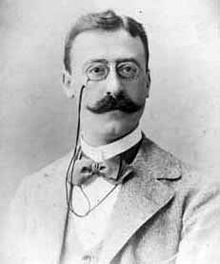
D. V. Mardle, undoubtedly Bedfordshire’s strongest player in the mid-twentieth century can be seen in the picture below :Picture1aa

In the following cutting, his friend and admirer T. S. Sweby gives a brief account of where Dennis went after he left Luton. As you may know he would go on to receive a CBE for his work on Polio, which he suffered from for many years.

Feb 19th 1970 2

Lastly, the picture above can be found here http://www.saund.co.uk/rgs/pdfs/viewer.html?file=http://www.saund.co.uk/britbase/pdfs/1950universitieschessannual.pdf, therein lies some analysis of Mardle’s play against J. E. Littlewood.

Read Full Post »

The cutting below, which reports on the 1953 British Chess Championships:

Fig.2

Which appears in this post (https://mccreadyandchess.com/2015/06/05/bedfordshire-chess-in-the-70s-its-past-and-its-future/) can be qualified by John Saunders excellent work on Britbase here http://www.saund.co.uk/britbase/pgn/195308bcf-viewer.html. Please note the following that R. H. Rushton (of Luton) came joint second rather than second outright, as the local reportage implies. Games 170 [versus Bonham:he referred to in the cutting], 156, 137, 124, 112, 88, 78, 58, 37 (Draw with Golombek), 27, 14( bad loss to R. G. Wade [19. …Nxc2 looks highly suspect to me]) are all Mardle’s. I think it can be argued quite easily that Mardle is, with the possible exception of W. Ward, whose identity is a little problematic to say the least, Luton’s strongest ever player.

In the style of Tom Sweby I would like to apologize for the lack of input recently. I have time off from work but have been very ill of late.

Read Full Post »

Dennis Victor Mardle is commonly found in Tom Sweby’s long running chess column in The Luton News. It’s hardly surprising since they both come from the same town, played in the same team and that Mardle, a true Lutonian, was by far the strongest of his generation from Bedfordshire. With the probable exception of William Ward, whose identity is less straightforward, he is still the strongest player Luton has produced to date.

Feb 19th 1970 2

The Luton News Feb 19th 1970

I managed to find one of Mardle’s tournament successes here http://www.saund.co.uk/britbase/brit50.htm (please scroll down to 1959). I have to say Mardle’s crushing defeat of British champion Wade (whose unwillingness to resign is rather embarrassing quite frankly) was a sure sign of his strength.

1

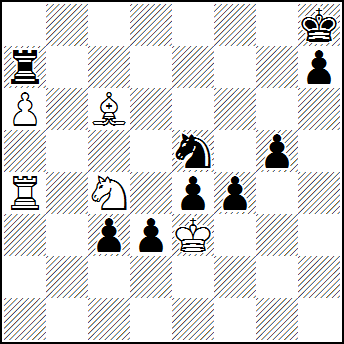
Wade – Mardle after 48. …f4+ Just how many connected passed pawns does it take for your opponent to resign gracefully?

I note that the tournament is listed at the 7th Bognor Open and in the zipped file as the Stevenson Memorial. My more senior fellow county players will recognize that as the eponymous R. Stevenson of Kent, since The Stevenson Cup, hosted Bedfordshire a number of times over the years. (see: https://mccreadyandchess.com/2015/07/02/reportage-of-bedford-chess-club-in-the-30s/)

Stevenson had, most unfortunately, great tragedy in his personal life. His first wife Agnes, four times British Ladies’ Champion in the 1920s was tragically killed when she flew to Poland to play in the Women’s World Championship in 1935 when she walked into a propeller after the plane had landed. His second wife, former world champion Vera Menchik died nine years later in London after a V1 Rocket hit her home at the end of WW2.

Mardle was not so fortunate in life as well. He received a C.B.E for his relentless work on Polio in 1988. During one of many visits to Kenilworth Road, Luton to watch his beloved team play, he drank from a cracked cup and therewith contracted the disease himself…I wonder if his exploits over the board in Bognor 1959 were inspired by his beloved football team’s cup run that month and those preceding?

57ff029178bcb7bcb0bc52b652075c89

Debilitating disease aside, I suspect Dennis would have been somewhere amongst that crowd after Luton returned home as losing finalists of the 1959 FA Cup. 31 years on, your author stood below the ‘Saxone’ sign welcoming the England Football Team after they returned home from Italia 90.


Read Full Post »

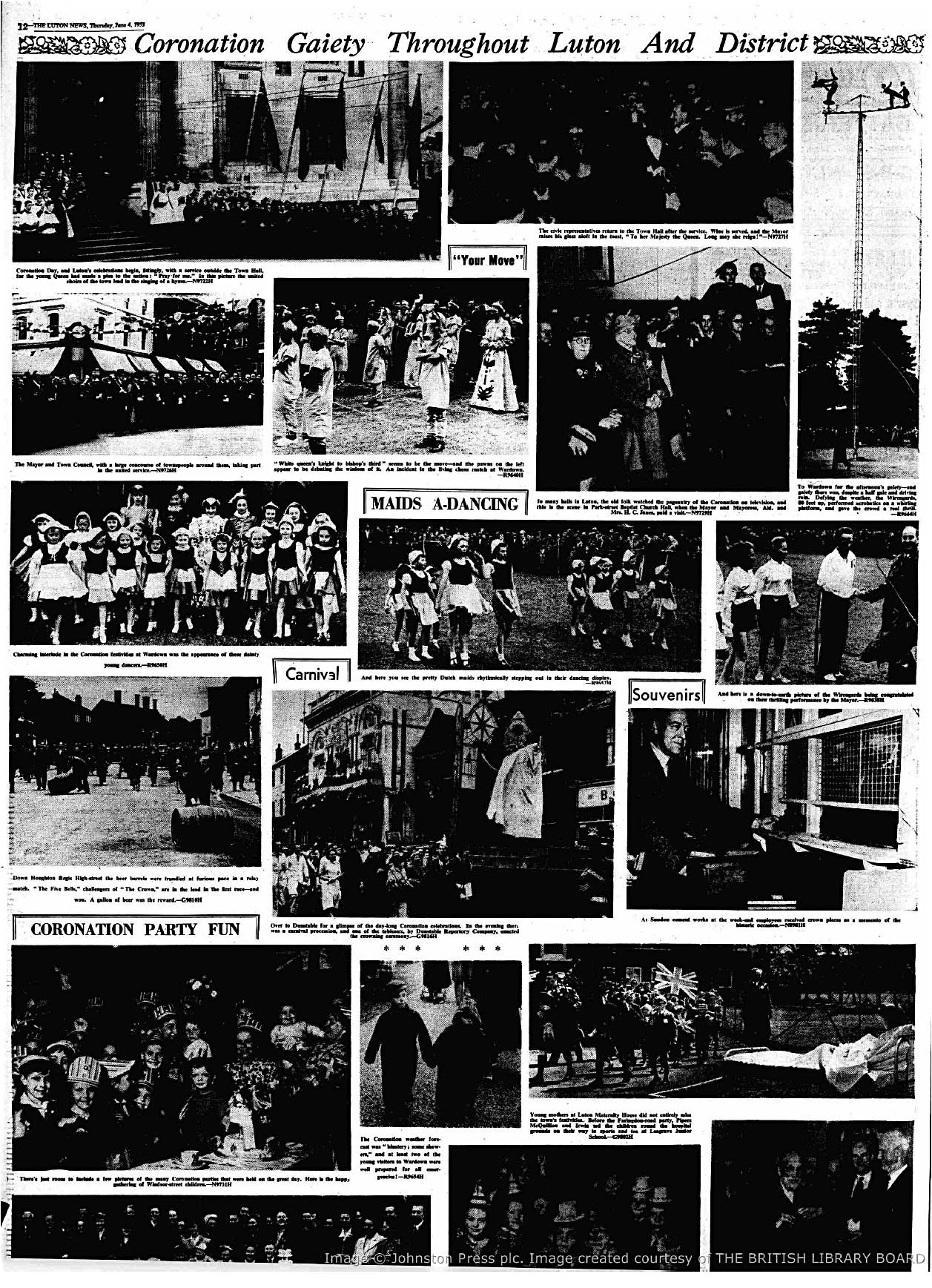
I have found an image of the ‘living game of chess’ played to celebrate the coronation of Queen Elizabeth II in Wardown Park, Luton. It is described in detail in the following post (https://mccreadyandchess.com/2015/06/05/bedfordshire-chess-in-the-70s-its-past-and-its-future/).

Here it is, you may click on the image for a better view.

coro

Second row, second image from the left.


Read Full Post »

« Newer Posts - Older Posts »