A short but interesting article has appeared on the NY Times. A chess coach has been accused of cheating and has been barred from chess.com. A lawsuit is pending.
http://nypost.com/2013/11/16/chess-coach-im-not-a-cheater/ .
Posted in Life beyond the chess board on November 24, 2013| Leave a Comment »
A short but interesting article has appeared on the NY Times. A chess coach has been accused of cheating and has been barred from chess.com. A lawsuit is pending.
http://nypost.com/2013/11/16/chess-coach-im-not-a-cheater/ .
Posted in Life beyond the chess board, tagged Chess: A Sporting Chance on October 7, 2013| Leave a Comment »
A well-written account of the state of chess today. Journalism how it should be:
Enjoy.
MJM
Posted in Life beyond the chess board on September 19, 2013| Leave a Comment »
Whilst surfing, I found the following article on the net. Naturally I opened the link with bated breath, not daring to think of what the cause of the media attention could be this time. Click if you dare,
http://blog.sfgate.com/cityinsider/2013/09/17/police-shut-down-chess-games-on-market-street/
It’s actually an interesting read, revealing some of the positive benefits of chess, and how it saved some of the homeless on the streets of San Francisco. They made it into the news because the police shut down their games due to unsavory characters infiltrating the chess scene and causing mischief…allegedly.
MJM
Posted in Life beyond the chess board, tagged armed standoff, chess on July 19, 2013| Leave a Comment »
It’s 2am. Your neighbour knocks on your door to play chess then a S.W.A.T team shows up! Only in America.
Click on the link below.
MJM
Posted in Life beyond the chess board, tagged Lewis Chessmen on July 4, 2013| Leave a Comment »
I came across this documentary on YouTube the other day and found it fascinating. Though I have seen the Lewis Chessmen in London a number of times, I knew little about their history. That was all swept away with this professional and informative doc. A mere 30 mins long its well worth a watch.
The BBC at its best.
Posted in Life beyond the chess board on November 30, 2012| Leave a Comment »
If you scour the sites on the net for the latest chess news, as I sadly do, you might have noticed that the quality of the journalism often leaves a lot to be desired. This isn’t just an on-line phenomena, many chess magazines aren’t much better…certainly the ones I subscribe to aren’t anyway. Although you are more likely to find better writing within them, much of the content isn’t inspirational in my opinion. But whenever a quality broadsheet turns its attention towards chess, we are often presented with the opportunity to see how it should be done. With this in mind, I was very happy to find the following article http://www.independent.co.uk/news/people/profiles/i-never-wanted-mens-pity-chess-child-prodigy-judit-polgar-on-the-games-inherent-sexism-8340951.html If you haven’t already, I suggest you read the article before you continue.
If you have read carefully -which of course is the only way to read- rather than glance over the article, you will have noticed the ease with which the writer handles the subject, in part this is due to the fact that the author used to/still plays chess himself. Having been a fan of ‘The Late Review’ myself for so many years, I was happy to see a distinguished journalist turn his attention to our beautiful game. So apart from the ease with which he handles the subject, what else is there to say about this intriguing article? Firstly, though we are undoubtedly aware of the paucity of women’s chess during the 80’s & 90’s, we -or certainly I- weren’t aware that it was personal tragedy which previously brought out the best in Judit. This gives us a new angle on the issue of gender in chess in an informative manner: what I am referring to specifically is the level of stress in top-flight chess was ‘perhaps’ affecting Judit’s ability to have a child.
I have spoken in a previous post about the issue of gender in chess (https://mccreadyandchess.wordpress.com/wp-admin/post.php?post=360&action=edit) and will not go into that here. There is no need to add to what has been said, as the topic is well handled here. Judit tells how she was taught there should be no limit to what a woman can achieve, questioning the prevailing culture of the game, where women still tend to compete against women. The odd thing about this I thought though, is that given she herself has clearly benefited from stepping outside of the women’s circuit so to speak, why haven’t others followed?
The topic of gender is handled well in this article. He even knew of Zsuszu’s amusing reflection that she had never lost to a healthy male! Gender aside, the difficulty of achieving success within a communist state is touched upon as well as the importance of ethnic background. A light touch is used by Lawson to identify defining, personal moments in Judit’s past. The article concludes by pointing out that it will be the first time since 88 that we have seen Judit in the UK (another point I was unaware of).
So there we have it: craft and expertise from Lawson, whose effortless, unpretentious style brings us closer to the world’s best ever female chess player.
MJM
Posted in Life beyond the chess board on November 30, 2012| Leave a Comment »
Among top grandmasters the Dutch is a rare defense, which is good reason to play it! It has not been studied very deeply by many opponents, and theory, based on a small number of ‘reliable’ games, must be rather unreliable. – Bent Larsen
The producers of the F.E.B (The Full English Breakfast http://thefeb.podbean.com/) recently put me onto a stunning victory by Simon Williams with the Dutch Defence against Boris Gelfand.
It can be found here: http://www.chessgames.com/perl/chessgame?gid=1694581
One of the things I like about this game is that it exemplifies what the Dutch is all about. The position quickly becomes complex and unbalanced, and though black goes the exchange up quite early on, it isn’t clear if he’s winning at any point. The game, then, teaches you how important it can be NOT to simply rely on a material count to see who’s ahead. White’s strong knight and pawn majority in the center make it, in my humble opinion, difficult to be sure whether black has a winning advantage.
Another thing I like about it is that there is consistency in strategy from black’s point of view. If you happen to read or even watch William’s material on the Dutch (I do and I have to say I am not a fan) he does chide an early b4 but more importantly, we see the more typical f-pawn push to f4 (A move Williams likes to play with white, perhaps he is an f4 addict!), and an attack on the kingside, all atypical features of the Dutch, as understood by Mr.Williams.
A game well worth studying, one which can teach a great deal.
MJM
Posted in Life beyond the chess board, tagged Chess for Tigers, Simon Webb on August 30, 2012| Leave a Comment »
The hallmark of the artist is simplicity. – Larry Evans
Somewhat irrelevant introduction
After an inordinate amount of time in the desert and an inability to find anything better to do than re-create a chess library -I say re-create because I stopped playing for well over a decade and threw out most of the books I had ages ago- I thought I’d work through what I bought on-line, starting with one of my favourites as a young player -Chess for Tigers.
Sadly, the author is no longer with us, after dying in tragic circumstances, (http://www.chessbase.com/newsdetail.asp?newsid=2277), so it was with some poignancy that I began reading a book which I had not come across since my teens.
I should point out that I could not get hold of the original Pergamon Edition and had to settle for the updated Batsford Edition. However, such details are trivial as the modifications to the second edition are minor, and do not really alter the book on the whole.
Basic Observations
First question, what is it that makes CFT (Chess for Tigers) a good read? The answer is twofold; firstly Mr.Webb is a good writer (rare in chess) his style is clear and concise, meaning that he is able to communicate effectively; secondly, also immediately apparent, is who the target audience is, and therein lies the real strength of the book. Unlike many writers and titled players, Webb has the ability to understand and explore the mind of the average player. Again, this is usually not the case in chess and in fact most areas of expertise. In order to achieve expertise it is necessary to overcome error and focus on perfection, therefore, when presented with error, an expert can easily become flummoxed by its presence, particularly when their area of expertise is more of a pastime than a profession per se, as is the case with chess. Even the greatest player of his day, irrespective of his era, would probably never be able to answer the question ‘Why did that amateur play that move?’ effectively. Understanding -the lack of ability- in others is a recherché artefact in chess literature and amongst titled players in general, an easy way to see this is to notice how GM’s sometimes take interest in the lower sections at tournaments. You may occasionally find one of them looking at a position with interest, however, you sense that they are not so interested in the play itself but are thinking more in terms of ‘How did that bishop get there?’ or ‘How did he end up with such bad pawns?’ or ‘Why doesn’t he just checkmate him?’ Sadly, I’ve had more than one top GM look at my score sheet and even return to my game, since the position was so irregular. For this reason, I would like to point out that I think this review of CFT may be more valid than others because I am precisely the type of player that the book was written for: I am not a tiger…well not yet anyway, I am an average club player whose love of chess blinds him towards certain practicalities, of which Mr Webb is unduly aware.
Second question, what is the purpose of the book? It is, according to the back cover, to move the club player away from the abstraction of aesthetics and towards the beastly brutality of winning at all costs. This overall objective is retained throughout, giving the book an even consistency. Mr.Webb had clearly thought about the ramifications of playing for a win at all costs before he put pen to paper, which cannot be said of all publications in chess.
I shall not go into great depth, instead I shall restrict myself to basic observations. First and foremost, even simple points made by Mr.Webb have a degree of practicality that is often overlooked by more modern, technical works. For example, in the chapter ‘How to Build an Opening Repertoire’ he suggests restricting yourself to an opening (line) as a main response and then choosing an alternative. Though simple enough, such advice is not always followed by club players. I know individuals that like to and do play just about everything they can, slavishly following the more modern GM professional approach, but the difference is that they are rated between 1800-2100 and are far from the level of those they imitate. Given the time and understanding that learning 1 d4, 1 e4, 1 c4 and all responses with black requires, I am more inclined to lean towards Mr.Webb’s advice. Obviously this does not apply to master level but for the average club player, it is simple and sound advice. As Mr. Webb put it ‘The main advantage in specializing in an opening line is that you obtain positions which suit you and which you are familiar with. If you play several different openings, you will find yourself having too many problems to solve at the board. and this will make you a less effective player than you ought to be.’ (pg36)
Another point I would like to draw attention to comes from the chapter ‘How to win won positions’, something which I am personally poor at. Mr.Webb offers four main points of advice, again, being simple but effective (1) Keep the Initiative (2) Give your opponent as little chance as possible (3) Check complications carefully but don’t be afraid of them (4) Don’t assume the position will win itself. Each piece of advice forms a sub-heading in which Mr.Webb goes into more detail and explains what he means. One of the things I like about CFT is how well backed-up his points are with examples, the games he offers to support his points do their job well too throughout, suggesting that great care and thought was put into the book, sadly I cannot find some of his games on-line, and cannot thus link them ( I will try to add them to chessgames.com and return at a later date).
Other points of interest include why playing the best move might not always be the best thing to do, how to swindle your opponent, and what to do in drawn positions. Should you wish to gain further insight into the mechanics of team-play or perhaps quick-play, you will find quality material inside that will help you in your play. Regarding team-play, issues such as the role of the captain are covered. Having been one myself for many years, I know how important the role can be, so it’s pleasantly surprising to see that it hasn’t been overlooked.
A potential criticism
Much of what Mr.Webb is anchored around the dichotomy play the man/board, with Mr.Webb suggesting that club players stick to playing the man. In truth I am not sure what to make of this. When I first read this book, back in 88, this was the chapter I spent the most time on, however, there are question marks regarding the antithesis itself. Computers have modernized the game in such a way that sometimes no man is present! So at the very least we should reflect upon a trichotomy ‘Play the man/board/computer’. But even without interference from AI, the concept of playing the man/board itself is in much need of clarification. How do we apply this to tactical play, for example, when our thought processes are direct and propositional in content, (If p then q [If the knight moves to d4 then I will capture it with the knight on f3]). Am I to believe that when calculating tactics I should be able to somehow introduce terms of reference with a qualitative change in meaning, one that can encapsulate a different approach altogether? For example If his knight moves to d4 then I will capture it with my knight on f3 ? There is no change in meaning here, what my opponent may or may not be thinking of is of no relevance. I may look to my opponent and his probable style for clues concerning strategic or positional play but that’s all -surely?
During tactical phases of the game play can go down forcing lines for a number of moves, isn’t this a critique of such advice? Under what circumstances are we playing the man when this occurs? Perhaps, then, we should think of Webb’s advice as being generic and nothing more than a practical approach towards the game. He cites world champions as being knowledgeable enough to prepare for their opponents, and mentions that club players may also know their opponent well but in my opinion these cases are peripheral in chess. More often we don’t know much or anything about our opponent, let alone the position we find ourselves in over the board. At lower levels players have a tendency to over-compensate and will ruin the balance within a position for the sake of general principles. If we become reliant upon what are essentially stereotypes in chess, such as ‘He’s Russian, he must be strong, or, he’s old so tactics won’t be his forte’ we are more likely to get it wrong than right. Ok, so your opponent is in his 60’s, so you want to play aggressively towards him but when do you play like that in the game? From the outset or do you wait? If you wait, how long for and why? What if the position becomes too unfamiliar? Do you -as Mr.Webb will also go on to suggest- strive towards a position you are more comfortable with or do you stick to playing your man regardless?
I think more needs to be said over what playing the board/man entails. Chess has become more professional since the 70’s, playing styles at the top level have become more concrete. In the recent Anand-Gelfand match neither was playing the other, both were following computer analysis for the most part. Most modern players would frown upon Mr.Webb’s advice in Chapter 2 of his great book, context however, allows us to refrain from criticism, given that it was written in 77, and that the primary objective of the book is to increase the practical winning chances an average player might get.
A Definite Criticism
If there’s one point in the book which personal experience won’t allow me to accept, it is the relatively minor point concerning ‘The Barrage Technique’, which for those who don’t know is a direct attempt to win on time when your opponent is in time trouble. Essentially it means storing up thinking time so that you can blast out at least 3 moves at once, thus causing your opponent to panic and use more time. Mr.Webb states quite clearly that this technique should not be used if you are in a winning position, however, its so risky really I don’t know if it should be used at all. Not only is it partly dependent upon a rule which is now illegal in chess, writing down your move first, it invites error all too easily as you yourself are just as likely to fall victim to your own strategy. To pull ‘The Barrage Technique’ off well, I think you need to be of a certain strength and constitution which most non-tigers cannot reach.
A Modern Discovery
Somewhat sadly, Mr.Webb’s attempts to modernize his classic text came a little too early. A shame because being such a great correspondence player, he has much to say on it, and much of that has found new meaning in the modern forms of the game. With e-mail chess becoming increasingly popular, and GM’s becoming more insistent upon viewers spending time over-the-board whilst analysing, CFT’s chapter 14 Correspondence Chess contains advice which has found new relevance. There are a number of certain errors which Mr.Webb tells us to look out for in correspondence chess which apply equally to e-mail chess, such as learning how to ensure you are analysing from the game position still and not from within your own analysis. Having done it countless times myself, I have returned to the board set-up, only to find I was analysing from the anticipated move rather than the actual move played, sometimes sending a reply from the wrong position. He is also quick to point out how your games are likely to contain a greater number of strong moves, and how this should impact upon your chess in that form of the game. All interesting stuff, I found.
To conclude, I did enjoy re-reading Chess For Tigers again. Mr.Webb writes well and encourages his readers to self-reflect, offering advice on what they should be looking for and why throughout. It is unashamedly autobiographical, which is how chess literature should be, rather than a mishmash of games and positions which the author will inadvertently or otherwise hijack with his own material and experiences, or pass off as his own when such is not the case. The book loses its way towards the end a little but remains entitled to being ‘A Chess Classic’, it is a great shame that Mr.Webb is no longer with us, I would have liked to have told him how much I like his style.
For those interested, below is his profile on chessgames.com. I will add games of his in due course.
http://www.chessgames.com/perl/chessplayer?pid=23327
In addition, here’s a link to his respected series, ‘How do chess players think?’
http://exeterchessclub.org.uk/content/how-do-chess-players-think
The pupil wants not so much to learn, as to learn how to learn. – Samuel Boden
MJM
Posted in Life beyond the chess board on July 24, 2012| Leave a Comment »
How does a world champion, who is by all accounts a quiet, courteous man, become embroiled in two of the bitterest rivalries in chess history? Even the KKK couldn’t conjure up anything nearly as nasty as the K-K-K (Korchnoi-Karpov-Kasparov) battles which dominated the chess world for well over a decade. In the following clip the trials and tribulations of being world champion are touched upon by Karpov, and then re-enforced by an ungentlemanly Korchnoi http://www.youtube.com/watch?v=WjLU03_KqbA&feature=plcp.
Are Karpov’s remarks equally valid in the context of the modern game? Probably not, since the title of World Chess Champion does not carry quite the same weight it once did. Not only have some of the top players dropped out of the world championship cycle of late, the rating system is now seen as a more reliable indicator of true playing strength. Anand recently defeated Gelfand yet the chess-playing public largely rejected the notion that the match would establish who the greatest player in the world was, since both competitors were both past their prime and ranked outside the top three. Concomitantly, the gradual dissolution of nationalism coincidently coupled with an ascent to global internationalism in chess, over more recent decades, has dampened or destroyed much of the dogmatism which underpinned many forms of rivalry at the top; the world champion, whoever he may be from now on, cannot be backed or used by a government in quite the same way as was the case in the 70’s, by this I specifically mean there is no back drop of the cold war intensifying measures over the board.
Moving on, the book ‘The Greatest Ever Chess Endgames’ by S. Giddins, contains a game between Kurajica & Karpov (pg.56) which is interesting on a number of levels, it can be found here. (http://www.chessgames.com/perl/chessgame?gid=1067946)
Not only does the endgame have a beautiful and instructive winning procedure but Kurajica missed a drawing manoeuvre, thus exemplifying just how incredibly tough the endgame can be even for top players. In the following position, white must not allow black to break up his kingside pawns, which he will later do with a kingside pawn sacrifice. He must create a ‘fortress’ of some kind to stop the black king from invading and should play either h3 or g4. But as several annotators pointed out, placing the pawns on light squares was, psychologically, very difficult to do.

White played 34 g3 ?! here.
It is endgames like the one above that show how strong Karpov was around the time of his ascension to the throne of world champion. Would he have beaten Fischer had they played? Probably not but the match would have been close, with the determining factors being Fischer’s mental health and rustiness.
I must confess that when I studied the above game, I had absolutely no idea of how to win or hold the draw but then I have come to appreciate just how difficult it is to understand the play of a world champion. The disparity in levels between a club player and a world champion is so great that bridging it is a task that requires copious amounts of highly exact analysis as well as a number of well-timed, insightful remarks concerning more general considerations from a guiding author, on top of the obligatory ‘enormous’ commitment by yourself…but even then the most sufficient analysis can still leave a sense of magic untouched. For club players it is probably best not to study world champions, it is more pragmatic to study players around 2400. To contradict myself slightly, here is my favourite Karpov game. http://www.chessgames.com/perl/chessgame?gid=1022951&kpage=1#reply4
Here’s a clip of Karpov excelling in an area where ex-world champions are not famed for: http://www.youtube.com/watch?v=yQbhtNnlRIY . As one commentator says ‘The world would be a nice place if everyone were like Karpov’ -well said.
MJM
Posted in Life beyond the chess board, tagged anand, gelfand on June 4, 2012| Leave a Comment »
… in itself the title of world champion does not give any significant advantages, if it is not acknowledged by the entire chess world, and a champion who does not have the chess world behind him is, in my view, a laughing-stock. – Emanuel Lasker
A week on from the conclusion of the Anand – Gelfand match I thought I’d pen a few thoughts on the matter… .
What we saw in Moscow was not a great advert for chess. Though Anand was the winner, Gelfand was not the loser…professional chess was and to a lesser extent F.I.D.E too. Gelfand, in fact, returned home as something of a hero http://chessbase.com/newsdetail.asp?newsid=8205, and Anand went into the record books.
The Drawn Games -what did they signify?
In the context of the modern game, the strings of eventless draws represented a paradox. On one level they did not signify anything, and on another told us everything we needed to know. Computer-aided preparation dominated affairs so greatly that few ideas were generated over the board. We saw a lot of defensive play but nothing bold or adventurous. Anand, especially at the London Chess Classic last year, (http://www.youtube.com/watch?v=GbGTDQ-P49E) defends the role of computers & preparation in the modern game, suggesting that they stimulate creativity as much as they take it away, so I was particularly disappointed by the long periods in the match where little effort was made to go outside preparation. We did see novelties early in the games but they were nearly always within drawish lines. Both players chose to play it safe for professional reasons; Anand is better at faster times controls and had a natural advantage going into the play-offs, plus he had a title to defend, Gelfand was the underdog and wanted to keep it tight in the beginning, and then push later in the match. The drawn games confirmed that the players were too similar in approach and style. The chess was subsequently lifeless, mechanical, and bereft of artistry…and in an art museum of all places! Nigel Short said on the first day that he particularly enjoyed reading the quotation in the museum by Marcel Duchamp that while ‘Not all artists are chess players, all chess players are artists’. The match that unfolded in Moscow was a counter-argument to such a claim.
Botvinnik once claimed that clash of individual style is of paramount importance for great matches. As the match unfolded I became more and more convinced of how right he was, and how the modern game lacks the characters of his generation. I kept asking myself if an Anand V Carlsen match up would have made much difference. If Botvinnik is correct in the sense that clash of style ranks more highly than quality of play, then probably not. For this reason, Anand’s match against Topalov is likely to stand out is the most inspiring match. Though Topalov was not his strongest opponent, they differed in style sufficiently to generate enough exciting chess.
Anand’s Loss -a surprise of sorts.
Fischer once said that he didn’t believe in psychology, he believed in good moves but before Anand played Qb8 in his loss to Gelfand, even an amateur psychologist could see he was giving off multiple signs of distress. He seemed to know he was in trouble early on, much passive play followed with a victory which seemed all too easy for Gelfand.
Gelfand’s Loss -a record breaker.
The history books tell us that the fastest loss ever in a world championship match wasn’t Euwe’s in the revenge return match against Alekhine http://www.chessbase.com/newsdetail.asp?newsid=8181 but it was Zukertort’s 1886 loss to Steinitz, as pointed out by flamboyant GM Danny King http://www.youtube.com/watch?v=TeAq7fzF2AQ&feature=player_embedded until the game in question that is. It’s easy to say what should have happened in retrospect, so I won’t say that Gelfand should have been more cautious but why did he choose the provocative Nh5, and go head-to head in this game?
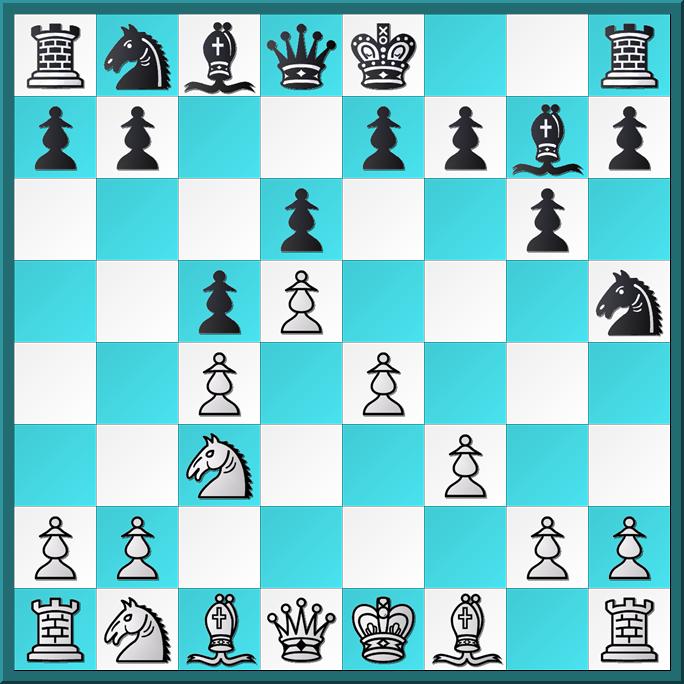
It’s difficult to be sure but I wonder if he let his heart rule his head? He may have had a slight surge in confidence from taking the lead and thought that the match was there for the taking. In this post-match interview, http://chessbase.com/newsdetail.asp?newsid=8208, Anand does concede that he felt he was in trouble at that point, perhaps then, Gelfand sensed this and acted. Given that chess teaches you to control your emotions rather than act upon them, he shouldn’t have made a decision on that basis, if I am right that is. He should have remembered that Anand is a better tactician and been more cautious. The very strange thing about this game, which is the first time I have ever seen it live in a match of such stature is that Gelfand didn’t see that Qf6 was a blunder at any point.
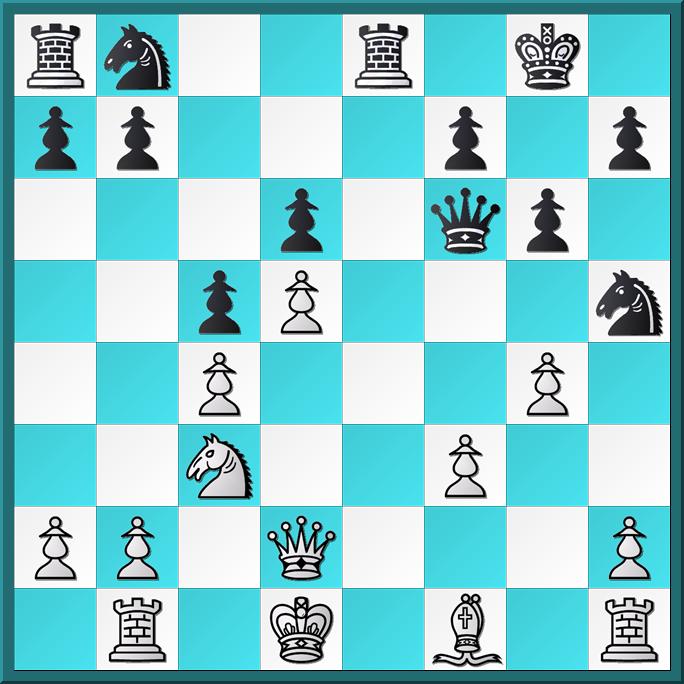
The last few moves were played quickly but he should have told himself that world champions do not drop rooks early in the game, and that something MUST be afoot. A critical moment had clearly arrived, why couldn’t he act accordingly? I didn’t buy into the talk concerning this trap, it is a neat trap, Fritz blundered straight into along with Gelfand, but that’s hardly the point. Gelfand had enough experience to know he should have taken a very big step back. Watching it live I saw him arch over the board and go into a think. He saw a combination which he thought was winning, only to resign minutes later. The look on his face as he resigned said it all, he had been completely caught out. He didn’t see Qf2 but he really should have questioned the ease with which he was about to win the rook. How many candidate moves were chosen here? Yes Qf2 was hard to spot but this irrelevant. He did not give himself enough time to find it by half. His play was out of character a little, something slight had changed inside him. Perhaps it was merely pressure alone, perhaps his desire to become the world champion increased a notch after taking the lead, just enough to cause a change in approach which he himself was not quite ready for. The balanced play we had become accustomed to seemed to go straight out of the window in this game.
The play off’s -a sad end.
I don’t want to comment because I don’t believe that matches of that calibre should be reduced to rapid chess. Obviously Vishy took the lead, and also obviously, Boris had the chance to equalize. The only notable feature of them was that Vishy showed that he is clearly better at a faster time control.
The aftermath -welcome to Russia.
Leaving the disappointment of the chess aside, the media centre and live feeds were certainly….different? I was a little surprised to find that play was broken up by frequent adverts and long lectures on Russian art. As a lover of chess, I would have liked the option of watching the lectures at my own time, rather than be forced to sit through them. A number of crucial points were missed throughout the match, and much play was lost generally. We were lead to believe that the museum was a truly wonderful venue yet the playing hall was small and austere. You felt as though the price to pay for obtaining such a venue was was that chess itself was denied the centre stage, there was a sense in which being now entirely bereft of Communist ideals, Russia is no longer the home of chess. A heavy-handed commercial shove left chess as a side-show at times. Some of the lectures were an hour long, some of the ads for the museum went up to ten minutes at times, and what was that so called amphitheatre they played in, wasn’t it a broom cupboard in disguise…if Lenin were alive today, he’d be turning in his grave.
Another questionable facet of the match concerned the on-line relay in information. The commentators were usually between 1-3 minutes behind actual play, due to a lag, the screen above the players was also out slightly. This meant that at times, you had the board itself, the screen behind, and the analysis board in the commentary room out of synch and showing different positions for minutes on end. At times the players in the commentary room were completely in the dark over what had been played and were trying to guess the moves based on a panoramic overview of the theatre itself. How can such basic errors remain prevalent throughout a match of that calibre?
Concerning the commentary team, the editor of New In Chess Dirk van long Dutch name was a very good choice indeed, thoroughly professional. Many of the commentators were great too, Svidler was very interesting to listen to indeed, as were several others. The only thing to ponder was the freedom of speech they had. Debate and critique are always best yet nothing critical was said about the match itself on any level, though you many times felt it was coming. Given the number of commentators there were, it does beg the question whether they were asked to refrain from negative comments, which if so is a shame. It was only Kasparov who broke rank and spoke his mind at one point.
Kasparov’s comment – was this man really the World Chess Champion?
To begin, you can find it here, it’s worth a look http://www.youtube.com/watch?v=mMPbDJ5czTk&feature=related. I thought the whole issue concerning Kasparov’s visit to the match was badly handled. It wasn’t explained why Kasparov thought the Kramnik V Aronian match was such a big contribution to chess, and it wasn’t clear why he thought Anand had lost his motivation to play. Frankly I thought both comments were naive. Anand has had a dip in form, that is clear, but to claim it is down to a lack of motivation is highly questionable. Firstly, motivation is an internal phenomenon, results and play are external. Motivation doesn’t have to be directly manifest in any particular action, it can be an internal commitment towards something. Someone can be inwardly passionate about retaining their title, for example, whilst displaying a veneer of disinterest. They can choose to play quieter lines if they offer a greater chance of success generally. It’s precipitant to say that Anand has lost his motivation just because you cannot remember the last time he had won a tournament, and the chess so far was dull. In my opinion Anand became entirely focused upon the match many months before, and began making minor modifications in his general play and approach. If so then his commitment towards retaining his titled cannot be questioned and thus neither his motivation to remain at the top. The strange thing is that Kasparov lost his title to a similarly quiet strategical approach by Kramnik, who also sacrificed his own preferred style of play in favour of winning the title. Of course we know Anand to be tactically astute but if he assessed that quieter play in the classical phase of the match to be part of a more effective strategy, we should not be too critical. Personally I found the Azerbaijani anti-hero to be off the mark there.
Concerning the players, I don’t want to blame the players as the qualifying matches were no better, instead some thought should be given to the direction chess is going. On the whole, I thought this match exemplified how creativity has become stifled by ‘professionalism’ in the modern game. It was a poor advert for our game, and had I gone along and bought a ticket, I would be asking for my money back. We weren’t provided with a chess spectacle, rather a reduction of chess. Anand was Anand: he was conservative, quiet in method and professional, he seems to have -temporarily- lost the cutting edge to his play but did what he needed to do; paradoxically, it was what he didn’t do that showed us what is great abut him. He is the first Asian world champion, and thus more measured and pragmatic than certain ‘Great Predecessors’. It would have been easy for him to react to Kasparov’s comments at the time but given the turmoil that has surrounded the game at the top level over the last few decades, having a conservative world champion isn’t so bad in some respects. Instead of reacting, Vishy remained true to his quiet, title-orientated strategy, the kind that Kramnik used effectively against Kasparov himself.
Gelfand was Gelfand: a slight -not big- underdog (apologies for the insert of a poker term), he lost his cool in one of the classical games but stabilized immediately. His etiquette left a lot to be desired at times, trying to stare-down (once again apologies for the poker term [though much more popular, poker is a vastly inferior game and does not deserve a mention by jealous chess players] Vishy seemed inappropriate and you couldn’t help but wonder whether the primary motivation for the blind over-the-board analysis was to distract. I knew very little about him before the match, given that I am not a fan of the modern game, that is precisely how it will stay: his play is the embodiment of the strengths and weaknesses of the modern professional game.
To conclude, there wasn’t much to get your teeth into. The only thing that was really talked about was the quick loss Gelfand suffered. The expectations were low for the match, and in retrospect, justifiably so. Anand did what he needed to do, Gelfand didn’t quite do enough, all in all the match will be largely forgotten about.
He is not the most talented or the strongest player but certainly the most inconvenient player in the world! His ambition is not to play actively, but to paralyse his opponents’ intentions. – (Botvinnik on Petrosian)
MJM
| M | T | W | T | F | S | S |
|---|---|---|---|---|---|---|
| 1 | 2 | 3 | 4 | 5 | ||
| 6 | 7 | 8 | 9 | 10 | 11 | 12 |
| 13 | 14 | 15 | 16 | 17 | 18 | 19 |
| 20 | 21 | 22 | 23 | 24 | 25 | 26 |
| 27 | 28 | 29 | 30 | |||
A side note on how to read old Tom Sweby's columns
Not perhaps, but quintessentially, Old Tom Sweby is best thought of as a passionate devotee to the newspapers he wrote for. He was well read and knowledgeable of the Bedfordshire chess scene and well beyond, given that he was the president of the S.C.C.U. once upon a time. He was generally well-respected and rubbed shoulders with many, if not all, of those eminent within British chess circles. It would, however, be a critical mistake to see his column is primary source material entirely. That it is not. You will also find secondary source material quoted too, and the reliability of that is not quite as Tom hoped. Given that he wrote for decades, this is to some degree inevitable, and after all we are all prone to error whether we realize it or not. Thankfully, with regards to old Tom Sweby, they are infrequent and for the most part old Tom continued to document events and developments in the Bedfordshire league from the get go as best he could but, of course, everything lies open to interpretation. Despite this, and generally speaking. this does indeed make him informative and thus worth reading. Dare I say his columns constitute a narrative describing the latest developments, match reports and changing nature of the Beds league...he knew his audience and wrote according. This manifested itself over decades but brevity was always in play courtesy of the restictions imposed by writing a column. Should you wish to read a in instrumental figure of the Beds' league post WW2, you are quite welcome to peruse what has been posted here... . :-) I should, however, point out that as the decades wore on he gradually moved on away from narratives concerning the Bedfordshire league towards affairs both historical and international. The reasons for this are multifarous, old age was a predominante factor presumably, however, the bottom line is with regards to how the Bedfordshire chess scene developed post WW2: old Tom Sweby is your go to guy. He wrote more about chess in Bedforshire than anyone else did but given he was a Lutonian and writing for a Luton newspaper there is both bias and greater coverage of his hometown than the rest of the county.
















To add comments, please see the bell at the top of the page.
 McCreadyandChess