Soviet chess and Bondarevsky plays a move against Panov I could not play. The queen and two minor pieces are on the queenside and white appears to have control over many squares on the kingside, so making a sac work on that side of the board feels counter-intuitive and inadvisable. But work it does with deep calculation and another sac to follow. Not easy to see how so.
With regards to the publication below, which I bought decades ago, I’ve always had a strong admiration for Tolush. He was Spassky’s trainer, and his style of play is so reckless at times, as you will see below should you click on the link provided. I’m not a 1. d4 player but I know enough about The Trompowsky to say with some confidence that if you play it, and your queenside collaspes completely, and most of the kingside has been left undeveloped whilst your king gets chased half way up the board, perhaps you didn’t gain much of an advantage out of the opening! When you resign on move 26, that’s often the case. I couldn’t play the move below because my assessment is based more on evaluation than calculation and I am not brave enough to play such moves. How can he justify allowing 9. Nxc2+? Very brave indeed or failing that miscalculated-hard for me to tell. You may want to play through the game, many over the years have as it’s quite something.
On pg. 101 in his excellent book The Soviet Championships B. Cafferty comments that the move below requires deep analysis. Far too deep for me and almost everyone else below 2600 ELO I would imagine. Sacrifices with long-term compensation are above my level I don’t mind admitting. I do not know how white is meant to proceed after the annotated move below.
I’ve never sacced a queen in my life! So what are the chances of the likes of me playing the move below? Yes, there’s some immediate compensation but not enough and the win is from from easy. Another 13 moves are played before GM Miles resigns with mate imminent. A fine game by Bedfordshire’s GM Plaskett, considered his best.
Even if shown it by Topalov prior to the tournament, as McShane claimed was the case back then, I still could not play this move. Unsurprisingly, long term exchange sacrifices are not my forte, only pawn sacrifices I can do if push comes to shove.
McShane plays here 10. …axb5
Great advert for English chess, and shows how immensely strong McShane was at his peak. A fogotten old favourite, still too above my level to grapple with.
In the position below I would be more inclined to lament over being under the kosh than what I should play next. A sort of ‘Blast it! Just play anything and expect to sac back at some point‘, said under one’s breathe to oneself whilst lurching over the board, psychologically defeated. Which moves are better than others, that I don’t know. Defeat for white looks inevitable to me despite him being a piece up -I stand to be corrected of course.
Topalov plays 20. Qb3+ here.
Somehow connected to saccing back presumably. The link to this long forgotten game is below.
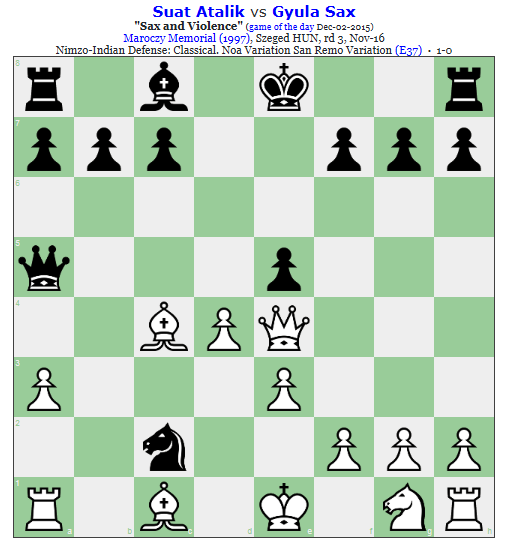
Since I used to admire Spassky’s old trainer Tolusch, who has a game in Cafferty’s book on the Soviet Championships, where he drops almost everything on the queenside and has to walk his king up the board in the opening before resigning, I try to avoid doing it myself. Without extensive opening preparation, something club and county players like myself are rather shy of, I could not play the move below, and would assume Kd1 is the safer bet. The alternative is so committal, you would have to be very sure it works to play it.
Here, Atilak plays 13. Ke2
As mentioned, without extensive opening preparation, how could you play that? Personally, I prefer the king to stay on the back rank if possible. The game is rather interesting though, showing capitalising on an out of play queen can be decisive. ‘Sax and violence’ they call that in the link below -good title.
For concrete analysis, it can be found in one of the many publications I have purchased over the years and also forgotten all about, that being ‘The Mammoth Book of The World’s Greatest Chess Games’ by Burgess, Nunn, and Emms.
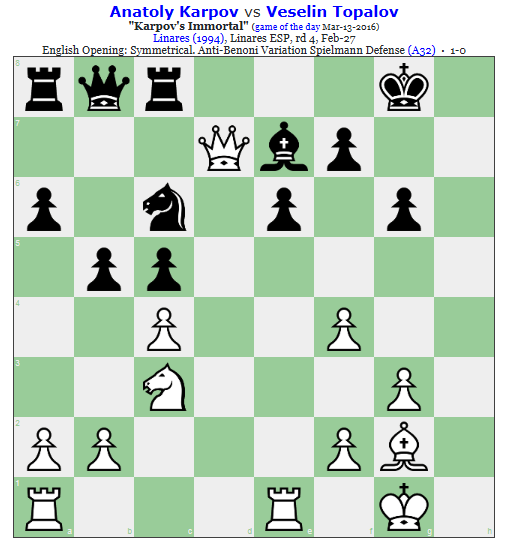
All games played by those above ELO 2700 with three rooks offered up in nine moves are easy enough to follow, right! But the first instance, a full on rook sac by Karpov, is far too above your average club player like me.
This game is described as Karpov’s immortal game in several places, and the tournament victory is considered one of his best, if not the best. Unsurprisingly, the move above and the game itself constitutes entertainment only for most of us.
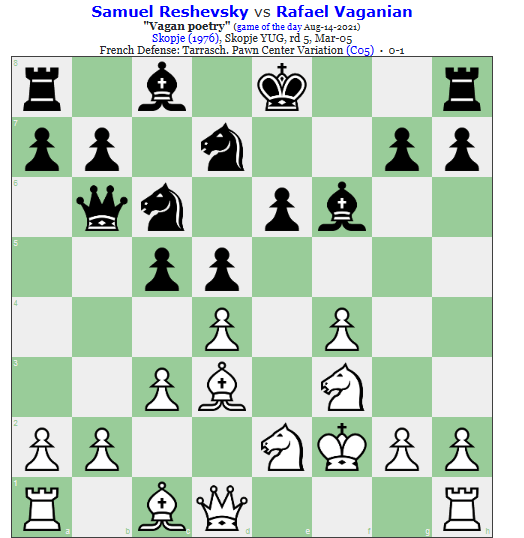
GM Reshevsky is the subject of my most treasured trivia question, that being ‘who is the only player to have played both Lasker and Karpov in classical chess?’ (factor in simuls and Botvinnink can be counted also), as no one ever knows the answer.
Anyway, here GM Reshevsky plays a move that I interpret as being provocative, having had an Austrian FM play something very similar against me once during a blitz tournament, in hope I would burn up time in trying to refute it (which I did). Blitz permits such risky moves to some degree but classical chess?
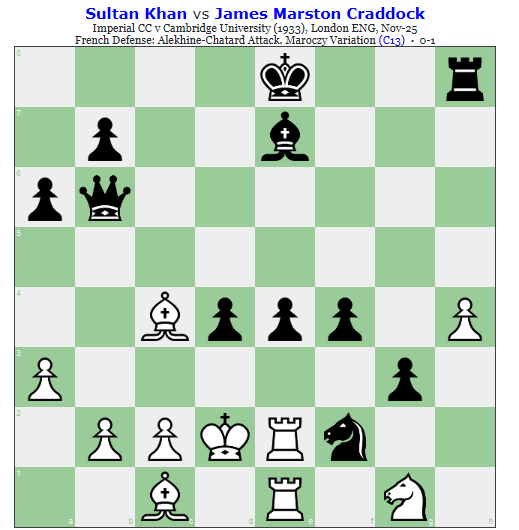
J. M. Craddock was British Boys (U-18) champion 1929-1931. I take particular interest in his games because for a while in the 50’s he lived in Dunstable and played for Bedfordshire. Here he dismantles British champion Mir Sultan Khan, who brought it on all himself in my opinion. The move below played by him is either extremely brave or downright foolhardy, one of the two -not a move I would dare play. Castling long, looks natural on one level as black has king safety issues, but that said, Khan is subject to an attack which he has no answer for, making castling long look premature perhaps?
Mir Sultan Khan plays 15. 0-0-0.
Given white has prised open black’s king almost, it seems like a good move in principle but is either premature or just unprepared I think. Why? White never gets an attack going himself and struggles to hold on before capitulating in a horrendous position.
Position after 33. …e4. Does it look like castling long got him into a spot of bother or was it mishandled thereafter?
It’s often been said that amateur players have a tendency to castle mechanically but Mir Sultan Khan was hardly that, having beaten Capablanca in fine style a few years previously. Perhaps he took Craddock all too easily, switched off for a moment then paid the price for doing so? Understandable if so but not quite what you would expect from the reigning British champion.
…on what this site initially became…on what this site is now becoming…on what this site cannot become…
On what this site initially became…
…once upon a time, the chess-related musings of an adrift academic were bound playfully and electronically in this online journal of sorts. They grew and grew as the decade did too. I kept on because I love to write whether I had much to say or not; therefore, being read by others was usually of little or no importance, comparatively speaking. Content was based on personal thoughts and experience on various topics with no intended audience borne in mind. With topics broadening, my own take on things always shaped the narrative I constructed: I often thought I was insightful but never that I was right. Sometimes imagination gave rise to originality: and of that I have always remained proud. I often introduced humour, believing that I am funnier than I really am. Sometimes, I found my own style antithetical to the conservatism I believe chess is plagued by -oftentimes that has put a gracious smile on my face… .
On what this site is now becoming…
…this site is now becoming a collaboration of chess in Bedfordshire: much more so of the past than the present -that has become the dominant trend. I document the history of chess in Bedfordshire as much as I can, and as time has passed I have become more thorough and resourceful. However, I am not a trained historian as my background lies principally in philosophy but yes it is true I did study some modules on history as both an undergraduate and a post-graduate too; furthermore, I have trained myself up, particularly in terms of postmodern history. Since 2015, I have only read history and historiography as well as those philosophers who have been so influential on postmodern history, such as Nietzsche (whom I once wrote a 19,000 word dissertation on, entitled: Can the Will to Power be Found in The Birth of Tragedy?), also Richard Rorty and Foucault and I suppose certain structualists such as Claude Levi-Strauss too. Regarding postmodernism, mostly I keep to Hayden White, Keith Jenkins and Alan Muslow.
Some friends and former playing partners back home describe me as the ‘go to guy’ for the history of chess in Bedfordshire. This compliment says more about the lack of interest in the subject than my own endeavour. As mentioned, I am too adrift from academia to feel chuffed by it. Rather, I tend to lament that my historical research, like my chess, just isn’t what it should be. Even though I may well have a broad understanding of Bedfordshire chess history courtesy of the volume of research put into it, all of which began in 2014, this is not something I am particularly proud of. Nonetheless, out of courtesy compliments are graciously received. If the truth be told, I just see it as my job and only that – after all someone’s got to do it and no one else is that interested!
Amongst the many others, I have created three categories: ‘Bedfordshire Chess’ and ‘History of Bedfordshire Chess’ and ‘Luton Chess Club’. This website is slowly moving towards a consolidation of those (all of which can be found in one of the toolbars to the right).
On what this site cannot become…
…I like to be both creative and amusing when I can be, factor in that playfulness has been an ever-present factor, the content of this site should be thought of as multifarious. It could be said I continue to enjoy undermining the conservatism I believe chess is underpinned by even after all these years, and often try to use humour to do it still, believing I have got better at it. Consequently, despite the general direction its going in, this site cannot only be about Chess in Bedfordshire and nor will it be. It may become noted for that yes -in fact that’s been the case for years already even by established historians, archivists, and whoever else. External factors aside, this site is titled McCreadyandChess. I cannot, nor will I not, remove my own personal thoughts and experiences of chess from the posts of this site -especially if I think they are funny or original for they constitute my writing at its very, very best. In addition, the number of categories alone tells you that breadth of content is important to me. I am proud of my site, it is identity conferring and that is how it shall stay -end of story. All you really have are: ‘Some thoughts on the beautiful game’, which, incidentally, just happen to be my very own; nothing more, nothing less, take of it whatever you please… .
A side note on how to read old Tom Sweby's columns
Not perhaps, but quintessentially, Old Tom Sweby is best thought of as a passionate devotee to the newspapers he wrote for. He was well read and knowledgeable of the Bedfordshire chess scene and well beyond, given that he was the president of the S.C.C.U. once upon a time. He was generally well-respected and rubbed shoulders with many, if not all, of those eminent within British chess circles. It would, however, be a critical mistake to see his column is primary source material entirely. That it is not. You will also find secondary source material quoted too, and the reliability of that is not quite as Tom hoped. Given that he wrote for decades, this is to some degree inevitable, and after all we are all prone to error whether we realize it or not. Thankfully, with regards to old Tom Sweby, they are infrequent and for the most part old Tom continued to document events and developments in the Bedfordshire league from the get go as best he could but, of course, everything lies open to interpretation. Despite this, and generally speaking. this does indeed make him informative and thus worth reading. Dare I say his columns constitute a narrative describing the latest developments, match reports and changing nature of the Beds league...he knew his audience and wrote according. This manifested itself over decades but brevity was always in play courtesy of the restictions imposed by writing a column. Should you wish to read a in instrumental figure of the Beds' league post WW2, you are quite welcome to peruse what has been posted here... . :-) I should, however, point out that as the decades wore on he gradually moved on away from narratives concerning the Bedfordshire league towards affairs both historical and international. The reasons for this are multifarous, old age was a predominante factor presumably, however, the bottom line is with regards to how the Bedfordshire chess scene developed post WW2: old Tom Sweby is your go to guy. He wrote more about chess in Bedforshire than anyone else did but given he was a Lutonian and writing for a Luton newspaper there is both bias and greater coverage of his hometown than the rest of the county.
Gallery
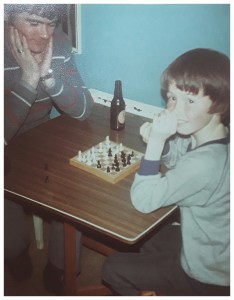
I’m either 10 or 11 here
1982, myself versus Brian from Sunderland.
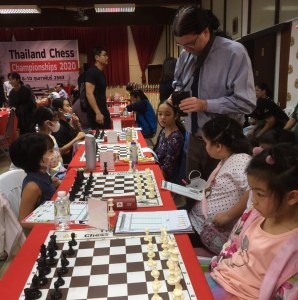
At the Thai Junior chess championships. My daughter of course.
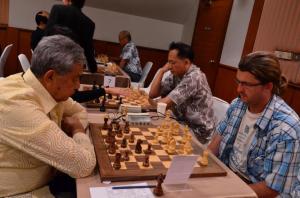
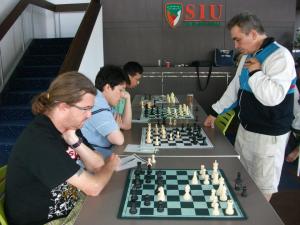
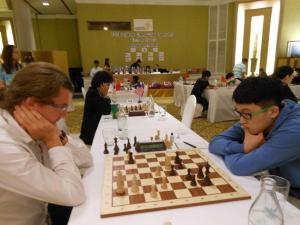
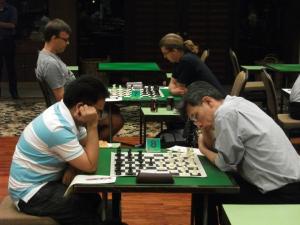
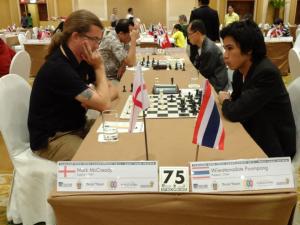
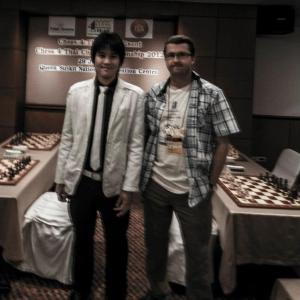
Pattaya 2011
2011
Thai Junior Championships
2008
2011
Around 2011
2011
Pattaya 2009
2011
Kuwait 2008
2012
2012
2011 BKK Chess club
2011
2011 Thai Open
2011 Thai Open
2013 approx
Around 2014
2010
2012
Around 2011
2011
2011
2013
Around 2011
Around 2011
2020
2011
2008
2011
2013 or thereabouts
2010
2017
2014?
2010
2024
2024
2024
To add comments, please see the bell at the top of the page.