D. V. Mardle, undoubtedly Bedfordshire’s strongest player in the mid-twentieth century can be seen in the picture below :
In the following cutting, his friend and admirer T. S. Sweby gives a brief account of where Dennis went after he left Luton. As you may know he would go on to receive a CBE for his work on Polio, which he suffered from for many years.
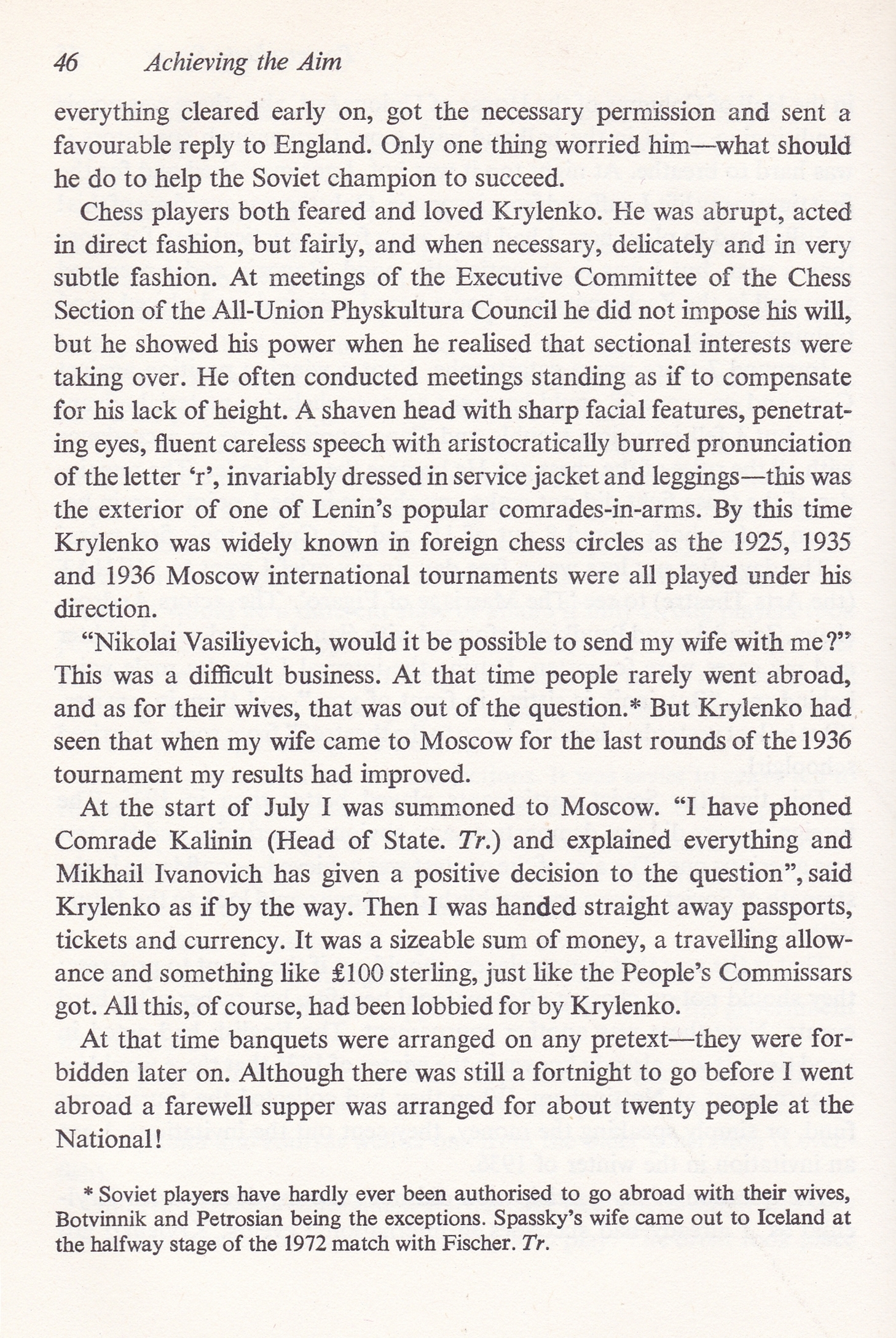
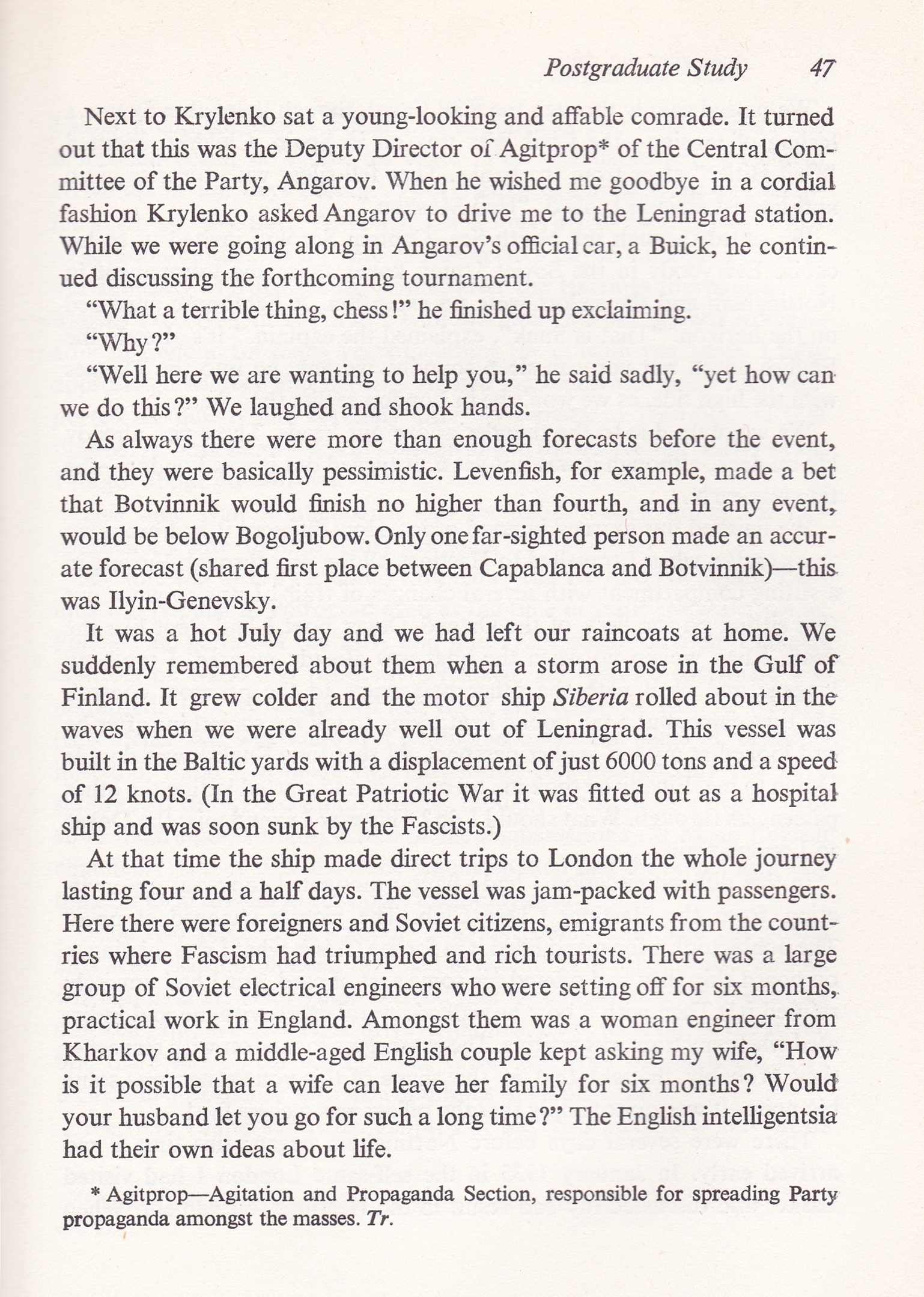
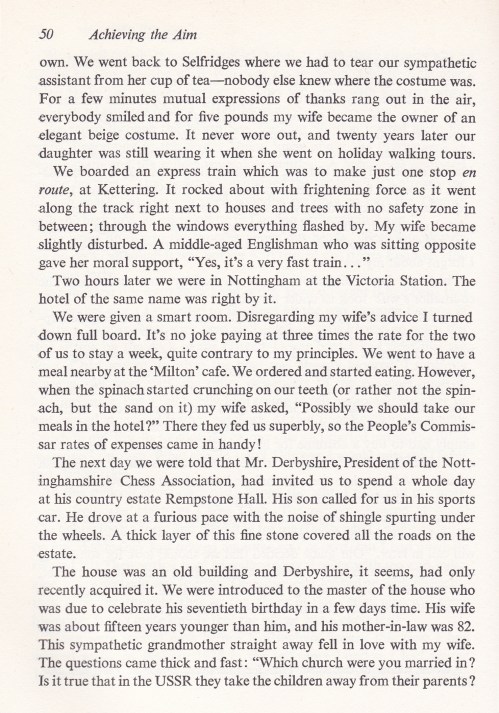
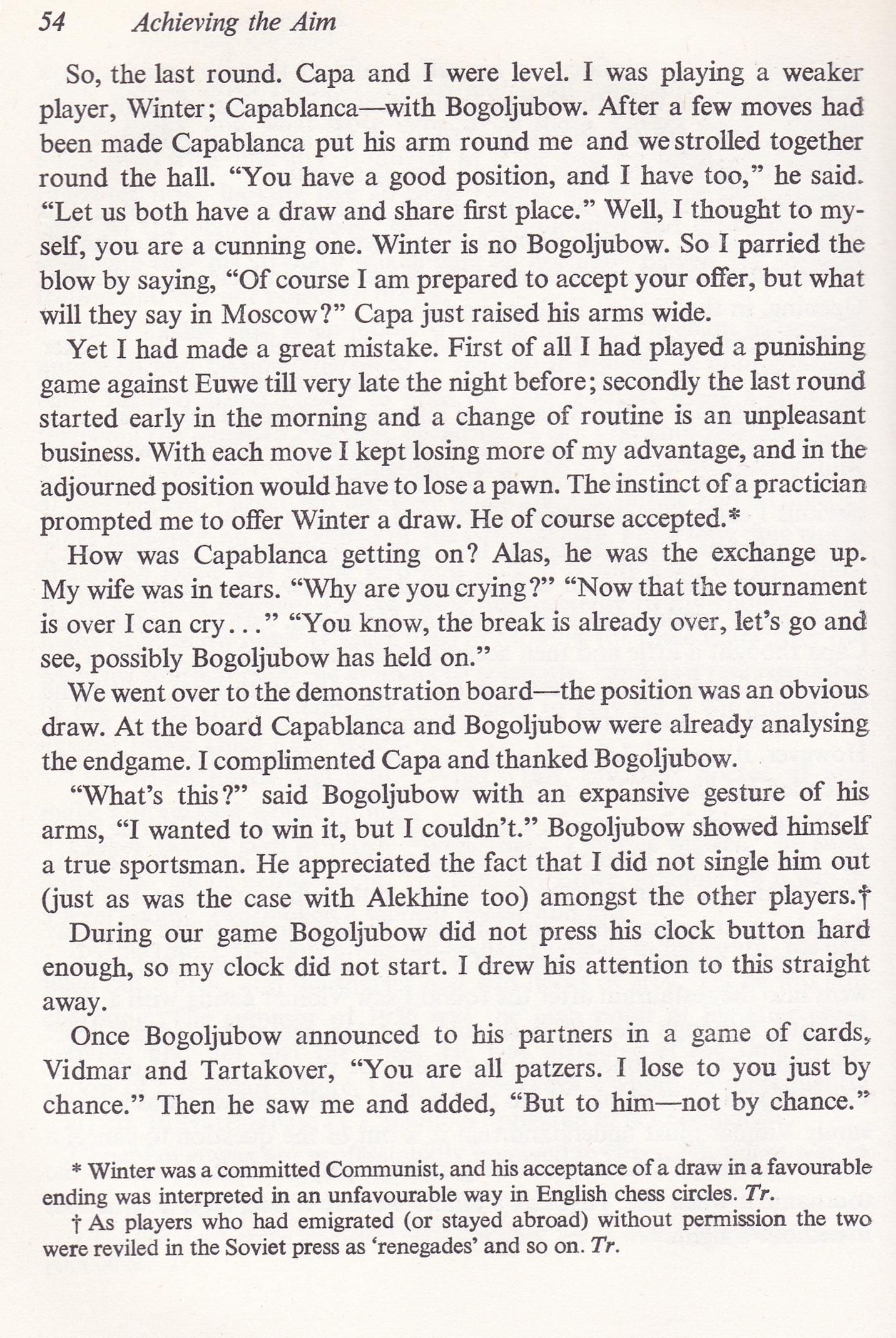
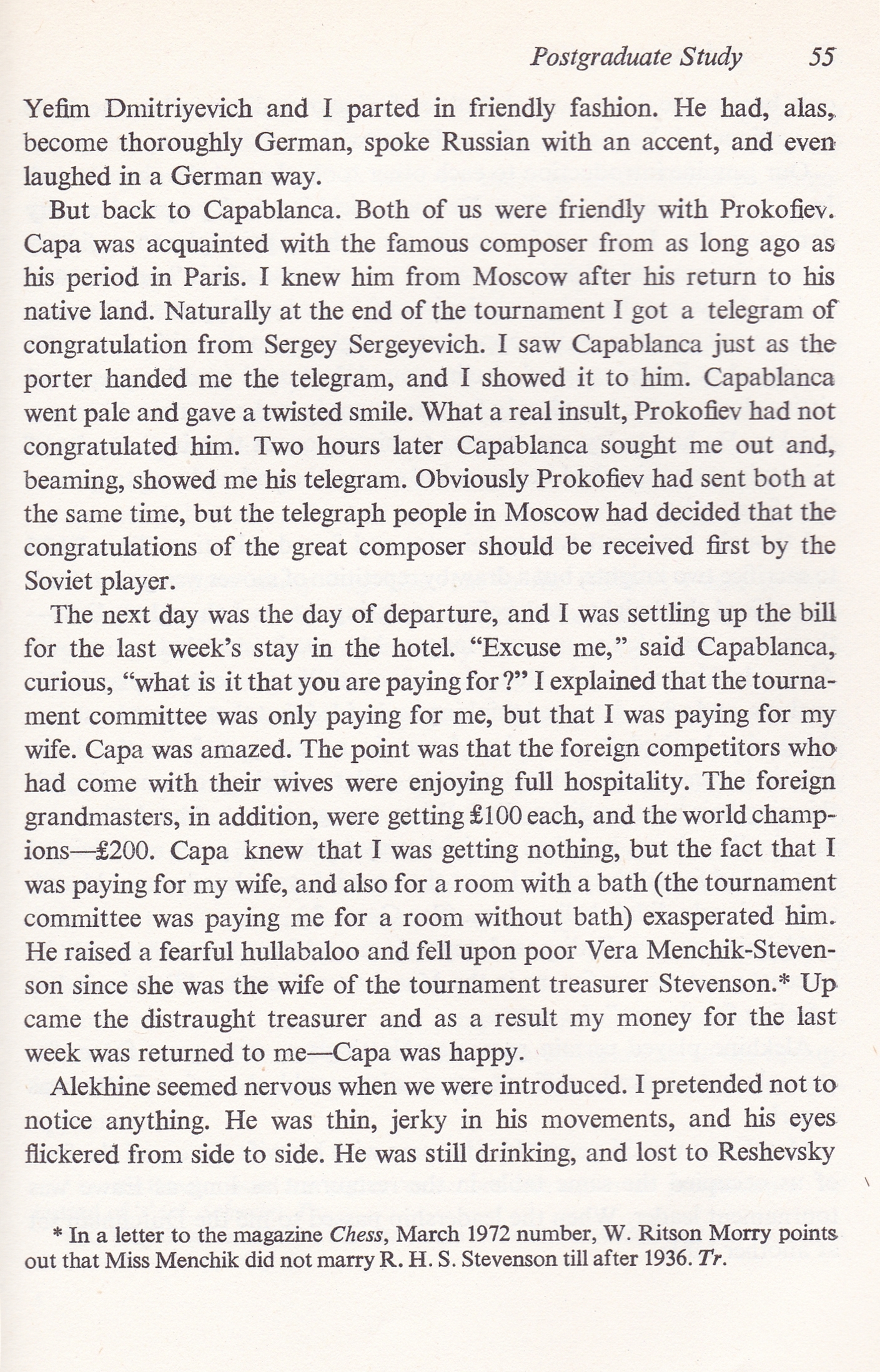
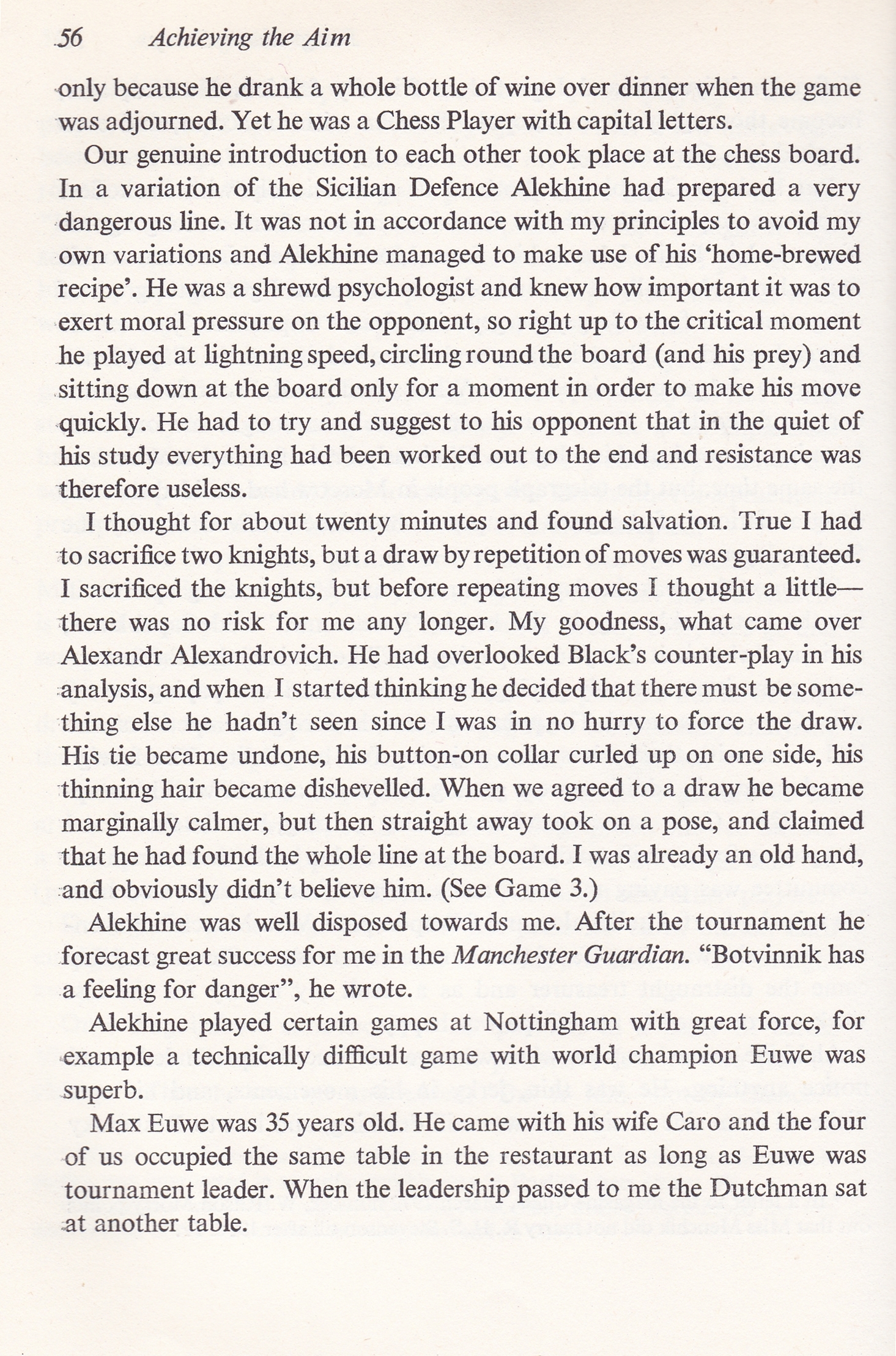
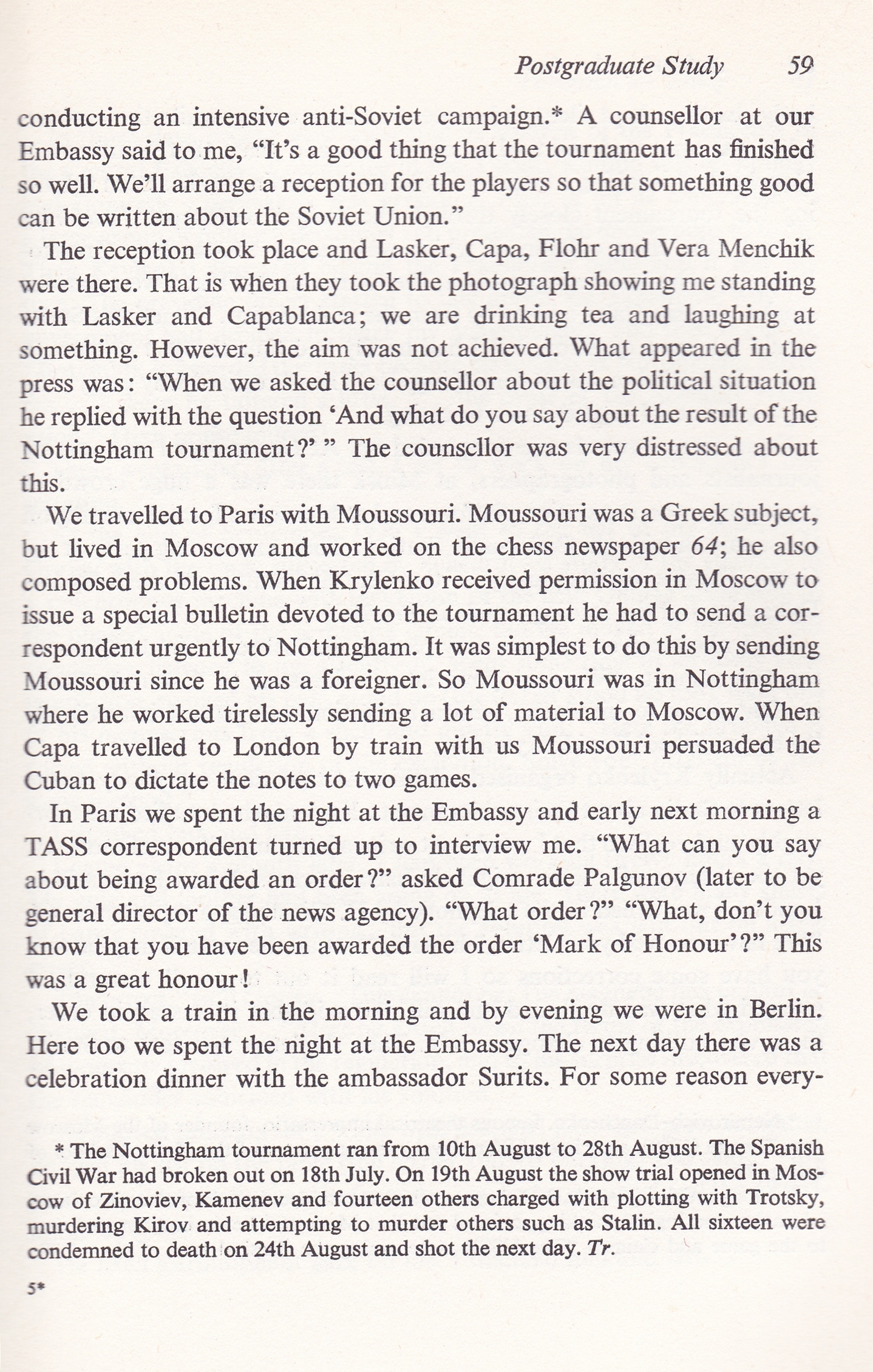
And find it engaging. Perhaps due to his success, Botvinnik plays with a straighter bat than most ex-players when it comes to chess history; he doesn’t blatantly use artistic license like his former opponent Sossonko does, nor does he try to convince you with amazing feats of memory like Averbakh unfortunately tends to. I offer his account of Nottingham 1936 (see historian Edward Winter’s fine site for photos: http://www.chesshistory.com/winter/extra/nottingham.html), which makes for an interesting read in itself. It does, however, need to be remembered that he was writing 40 years on, the extent to which the text can be considered a reliable primary source is thus in question -as it must be.
How much easier it is to write reminiscenes, all you have to do is think what should be published, what not!
The cutting below, which reports on the 1953 British Chess Championships:
Which appears in this post (https://mccreadyandchess.com/2015/06/05/bedfordshire-chess-in-the-70s-its-past-and-its-future/) can be qualified by John Saunders excellent work on Britbase here http://www.saund.co.uk/britbase/pgn/195308bcf-viewer.html. Please note the following that R. H. Rushton (of Luton) came joint second rather than second outright, as the local reportage implies. Games 170 [versus Bonham:he referred to in the cutting], 156, 137, 124, 112, 88, 78, 58, 37 (Draw with Golombek), 27, 14( bad loss to R. G. Wade [19. …Nxc2 looks highly suspect to me]) are all Mardle’s. I think it can be argued quite easily that Mardle is, with the possible exception of W. Ward, whose identity is a little problematic to say the least, Luton’s strongest ever player.
In the style of Tom Sweby I would like to apologize for the lack of input recently. I have time off from work but have been very ill of late.
MemoryChess (found on facebook) is at it again, and has posted yet another wonderful image for us all to drool over. Note Alekhine’s dress: I will add more info when I get it.
Well, my on-line friends, upon this outstretched morning I am stuck for something to do, having been marooned 1600 meters up the volcanic island of Java in the former colony of the Dutch East Indies (which btw produces some fantastic Jasmine Tea). Me My colleagues have buggered off gone to Singapore for the weekend and have inadvertently condemned me to a luxurious weekend of gentle mountain breezes and solitude…given the lofty nature of my current position and its ensuing perspective, I must now look down into the endless, atemporal valleys of digitized chess misdemeanors… .
Here’s a glimpse of the American GM Maurice Ashley (possibly the nicest guy in the entire chess world) and his defeat of a Washington Square hustler, who could learn a great deal from his opponent on how to conduct himself over the board, and more importantly, away from it. I have to say, even though I have watched many videos concerning the New York chess hustlers over the years, that sub-culture of chess is completely alien to me, and quite frankly, not particularly pleasant to watch. Hence, we can take great pleasure in the defeat of our trash-talking annoying twat interlocutor… .
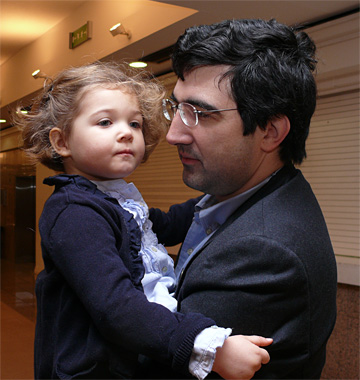
Vladimir Kramnik tells us of the benefits of chess with some practical advice for parents. Whilst listening, I do believe I agreed with every single word he said.
I don’t know how to describe Kasparyan’s talent as all words seem superfluous…perhaps it is best to study what he left us with instead. The problem below has a beautiful final position, so you won’t be disappointed if you solve it (and it’s not that hard by his standards as many moves are easy to find). There is a link below showing the final position if you need it.
It’s white to play and win in 9 (hint: the Bishop needs to change the diagonal it is on first of all).
Most of us can remember objectionable matches from yesteryear where playing conditions were, shall we say, less than perfect? For me it was a drafty church hall in a geriatric village named Warboys near Peterborough one winter morning long, long ago. But no matter how terrible the worst of the very worst playing venues may have been for you, I doubt whether they can compete with the conditions on offer for those playing in Russia just after the revolution.
Courtesy of Tony’s Bookstore http://www.chessbooks.co.uk/ I’m reading Ilyin-Genevsky’s ‘Notes of a Soviet Master’. For those who don’t know who he is, Ilyin-Genevsky is generally accepted by historians as an instrumental figure in the promotion of chess after the revolution and is described by some as an unsung hero of his generation. As was common for his time, his life was tragic but untypically long for a soldier; he joined the army on May 15th, 1915 and soon after was gassed by the ‘Germano-Austrian’ forces near Warsaw, then within two months he was severely shell-shocked on the front-line by a mortar near the village of Peski, in the Kholmaskaya Guberinya region. He was paralyzed in the legs and arms, had lost his sense of feeling, hearing and memory: even though he was already a strong chess player at the time, during his lengthy treatment, he had to be taught how to play chess once more. Upon his relocation to Moscow after his recovery he went in search of chess players. His long city-walks were often in vain but in uncovering the clandestine Moscow chess circle, he then wrote an account of the conditions he had to play in on July 10th 1919.
15. The Match with N. D Grigoriyev and Moscow Competitions
…it is interesting to dwell on the mundane circumstances of our match. The games were usually played in the evening, and once it began to go dark, we had serious difficulties. Due to the general destruction of that time, the electricity came on and faded quite arbitrarily. Sometimes the owner of the flat, Berman, happened to have some poor quality candles. In that case, the trouble was mitigated. When there were no candles at all, Grigoriyev and I moved over to the window ledge and then on to the stairs where there was a large window. When the light through this window failed, we were in a real mess. In such cases we had almost to play blindfold since the board and pieces could hardly be made out due to the darkness. I can remember, for example, one such case. During one game, it became so dark that we could distinguish nothing at all. Fortunately Berman happened to have a box of matches (a very valuable thing in those days) and he magnanimously sacrificed them for our benefit. We arranged matters in this fashion: when it was one player’s turn to think, the other player would light a match and hold it between his fingers until one of his fingers was almost burned (after all, every small speck of light was so valuable to us). When the match had burned out, darkness prevailed until the next match could be struck. It was under such circumstances that we had this curious mishap. ‘Check to the king,’ announced Grigoriyev to me. ‘Excuse me, Nikolai Dmitriyevich,’ was my answer, ‘but your king is already in check.’ In fact I had given check with my last move, which he had missed due to his excitement and the darkness. Hence the winning combination which he had been relying on proved impractical and the game ended in a draw a few moves later.
…my best success of this period was the share of first place with Grigoriyev and Grekov in a Moscow tournament for first category players. It is interesting to point out under what difficult conditions we had to play in at that time. Berman’s flat was not heated due to the lack of firewood, and in the winter the temperature inside the flat was several degrees below freezing. We had to play in our outdoor coats and galoshes (rubber boots) but even this did not keep out the cold. The players’ noses, hands, and particularly, feet started freezing, so they had to dance the polka-mazurka with their feet under the table in order not to get stiff with cold while thinking about their next move. Yet our love of chess was so great that nobody complained, and we just sat there quietly night after night enjoying the tournament games.
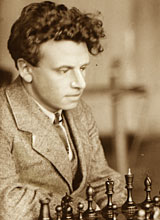
Ilyin-Genevsky (of Geneva where he studied -so his name implies). Taken in 1927 apparently.
Warboys. A cold, lifeless village where, after refusing a second draw offer, I once misplayed a rook ending whilst playing for Bedfordshire.
And these gentlemen certainly thought they had it tough!
…on what this site initially became…on what this site is now becoming…on what this site cannot become…
On what this site initially became…
…once upon a time, the chess-related musings of an adrift academic were bound playfully and electronically in this online journal of sorts. They grew and grew as the decade did too. I kept on because I love to write whether I had much to say or not; therefore, being read by others was usually of little or no importance, comparatively speaking. Content was based on personal thoughts and experience on various topics with no intended audience borne in mind. With topics broadening, my own take on things always shaped the narrative I constructed: I often thought I was insightful but never that I was right. Sometimes imagination gave rise to originality: and of that I have always remained proud. I often introduced humour, believing that I am funnier than I really am. Sometimes, I found my own style antithetical to the conservatism I believe chess is plagued by -oftentimes that has put a gracious smile on my face… .
On what this site is now becoming…
…this site is now becoming a collaboration of chess in Bedfordshire: much more so of the past than the present -that has become the dominant trend. I document the history of chess in Bedfordshire as much as I can, and as time has passed I have become more thorough and resourceful. However, I am not a trained historian as my background lies principally in philosophy but yes it is true I did study some modules on history as both an undergraduate and a post-graduate too; furthermore, I have trained myself up, particularly in terms of postmodern history. Since 2015, I have only read history and historiography as well as those philosophers who have been so influential on postmodern history, such as Nietzsche (whom I once wrote a 19,000 word dissertation on, entitled: Can the Will to Power be Found in The Birth of Tragedy?), also Richard Rorty and Foucault and I suppose certain structualists such as Claude Levi-Strauss too. Regarding postmodernism, mostly I keep to Hayden White, Keith Jenkins and Alan Muslow.
Some friends and former playing partners back home describe me as the ‘go to guy’ for the history of chess in Bedfordshire. This compliment says more about the lack of interest in the subject than my own endeavour. As mentioned, I am too adrift from academia to feel chuffed by it. Rather, I tend to lament that my historical research, like my chess, just isn’t what it should be. Even though I may well have a broad understanding of Bedfordshire chess history courtesy of the volume of research put into it, all of which began in 2014, this is not something I am particularly proud of. Nonetheless, out of courtesy compliments are graciously received. If the truth be told, I just see it as my job and only that – after all someone’s got to do it and no one else is that interested!
Amongst the many others, I have created three categories: ‘Bedfordshire Chess’ and ‘History of Bedfordshire Chess’ and ‘Luton Chess Club’. This website is slowly moving towards a consolidation of those (all of which can be found in one of the toolbars to the right).
On what this site cannot become…
…I like to be both creative and amusing when I can be, factor in that playfulness has been an ever-present factor, the content of this site should be thought of as multifarious. It could be said I continue to enjoy undermining the conservatism I believe chess is underpinned by even after all these years, and often try to use humour to do it still, believing I have got better at it. Consequently, despite the general direction its going in, this site cannot only be about Chess in Bedfordshire and nor will it be. It may become noted for that yes -in fact that’s been the case for years already even by established historians, archivists, and whoever else. External factors aside, this site is titled McCreadyandChess. I cannot, nor will I not, remove my own personal thoughts and experiences of chess from the posts of this site -especially if I think they are funny or original for they constitute my writing at its very, very best. In addition, the number of categories alone tells you that breadth of content is important to me. I am proud of my site, it is identity conferring and that is how it shall stay -end of story. All you really have are: ‘Some thoughts on the beautiful game’, which, incidentally, just happen to be my very own; nothing more, nothing less, take of it whatever you please… .
A side note on how to read old Tom Sweby's columns
Not perhaps, but quintessentially, Old Tom Sweby is best thought of as a passionate devotee to the newspapers he wrote for. He was well read and knowledgeable of the Bedfordshire chess scene and well beyond, given that he was the president of the S.C.C.U. once upon a time. He was generally well-respected and rubbed shoulders with many, if not all, of those eminent within British chess circles. It would, however, be a critical mistake to see his column is primary source material entirely. That it is not. You will also find secondary source material quoted too, and the reliability of that is not quite as Tom hoped. Given that he wrote for decades, this is to some degree inevitable, and after all we are all prone to error whether we realize it or not. Thankfully, with regards to old Tom Sweby, they are infrequent and for the most part old Tom continued to document events and developments in the Bedfordshire league from the get go as best he could but, of course, everything lies open to interpretation. Despite this, and generally speaking. this does indeed make him informative and thus worth reading. Dare I say his columns constitute a narrative describing the latest developments, match reports and changing nature of the Beds league...he knew his audience and wrote according. This manifested itself over decades but brevity was always in play courtesy of the restictions imposed by writing a column. Should you wish to read a in instrumental figure of the Beds' league post WW2, you are quite welcome to peruse what has been posted here... . :-) I should, however, point out that as the decades wore on he gradually moved on away from narratives concerning the Bedfordshire league towards affairs both historical and international. The reasons for this are multifarous, old age was a predominante factor presumably, however, the bottom line is with regards to how the Bedfordshire chess scene developed post WW2: old Tom Sweby is your go to guy. He wrote more about chess in Bedforshire than anyone else did but given he was a Lutonian and writing for a Luton newspaper there is both bias and greater coverage of his hometown than the rest of the county.
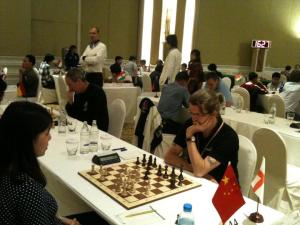
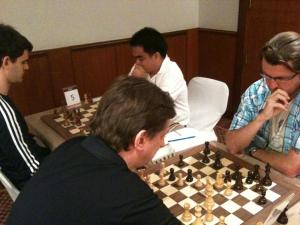
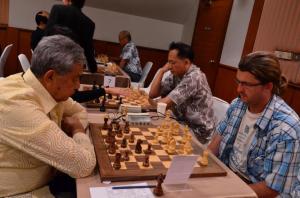
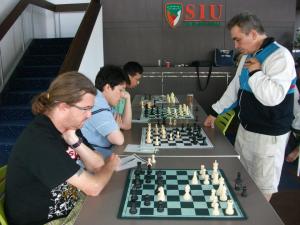
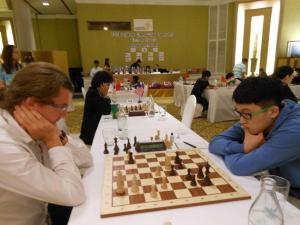
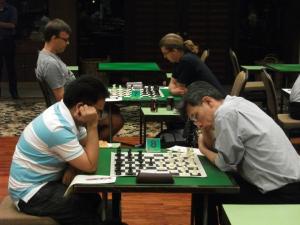
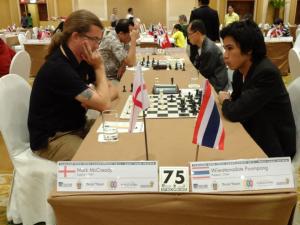
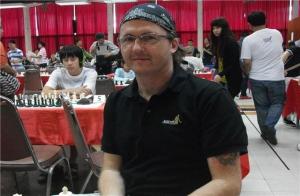
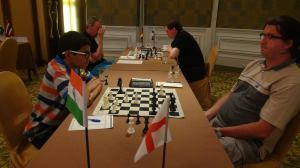
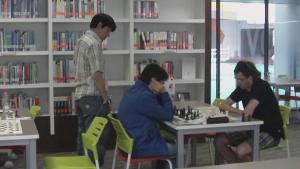
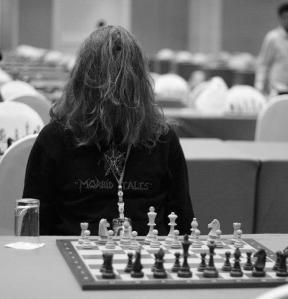
Gallery
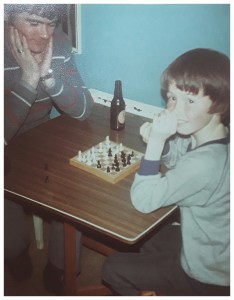
I’m either 10 or 11 here
1982, myself versus Brian from Sunderland.
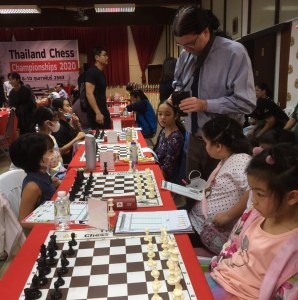
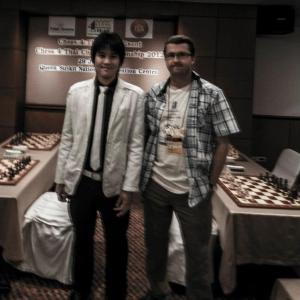
At the Thai Junior chess championships. My daughter of course.
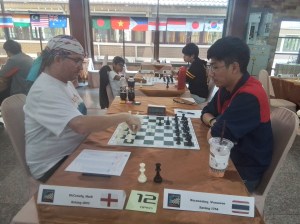
Pattaya 2011
2011
Thai Junior Championships
2008
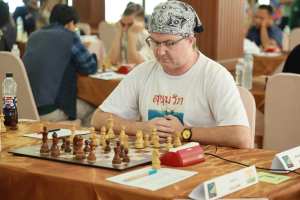
2011
Around 2011
2011
Pattaya 2009
2011
Kuwait 2008
2012
2012
2011 BKK Chess club
2011
2011 Thai Open
2011 Thai Open
2013 approx
Around 2014
2010
2012
Around 2011
2011
2011
2013
Around 2011
Around 2011
2020
2011
2008
2011
2013 or thereabouts
2010
2017
2014?
2010
2024
2024
2024
To add comments, please see the bell at the top of the page.






























 McCreadyandChess