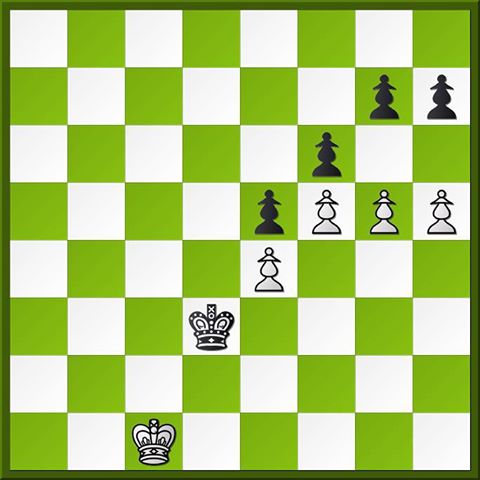
The Swiss GM Yannick Pelletier has had a bumper month by beating Nakamura with some beautiful preparation against his beloved Kings Indian Defence, and then the current world champion Magnus Carlsen. Carlsen, who perhaps underestimating his opponent rated almost 300 points below him, played a move that is certainly not becoming of a world champion…but then what blunder is?
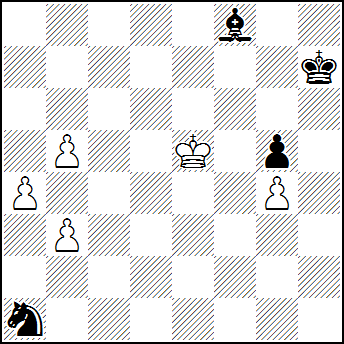
It is here that Carlsen plays 37… Rg8??
Is it me or does it seem that Pelletier has been around for ever?
For those partial to a little schadenfreude -in other words the entire global chess playing community- here’s Naka upstaging Carlsen on the blunder front against Caruana. The move that follows defies belief. How on earth can someone of his caliber play a move that you see at the lowest level of amateur games!
Nakamura (Black), has just played 6…f6?? I promise I’m not making that up. Check out the game below if you don’t believe me.
At present, the Open European Team Championship, held in Reykjavik, is in danger of becoming a cracking tournament with great chess aplenty.
The Hungarian GM Richard Rapport, who is arguably the most creative and entertaining super GM around has, hot on the heels of his exciting attempt to wipe out GM Mickey Adams with the King’s Gambit, had us on the edge of our seats once again with his colourful and kaleidoscopic combinations once more.
In becoming less patient about thrusting his f-pawn up the board on only his second move Rapport played 1 f4 instead. Oo-la-la monsieur his 2700+ opponent thought must have thought!
Rapport – Fressinet
Then on move 29 the supra-f-pawn moves to f5 with devastating effect.
After 30. …exf5, it is white to play with a winning attack to follow.
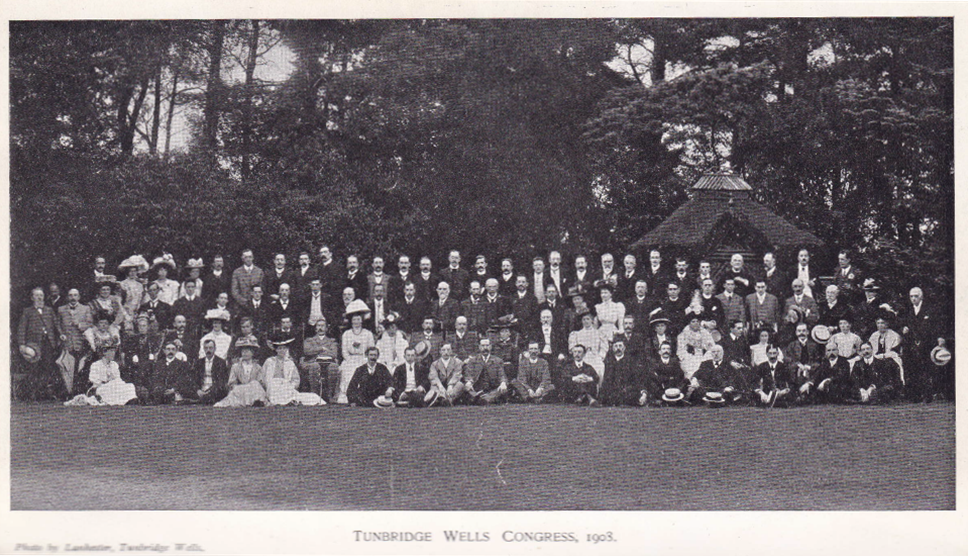
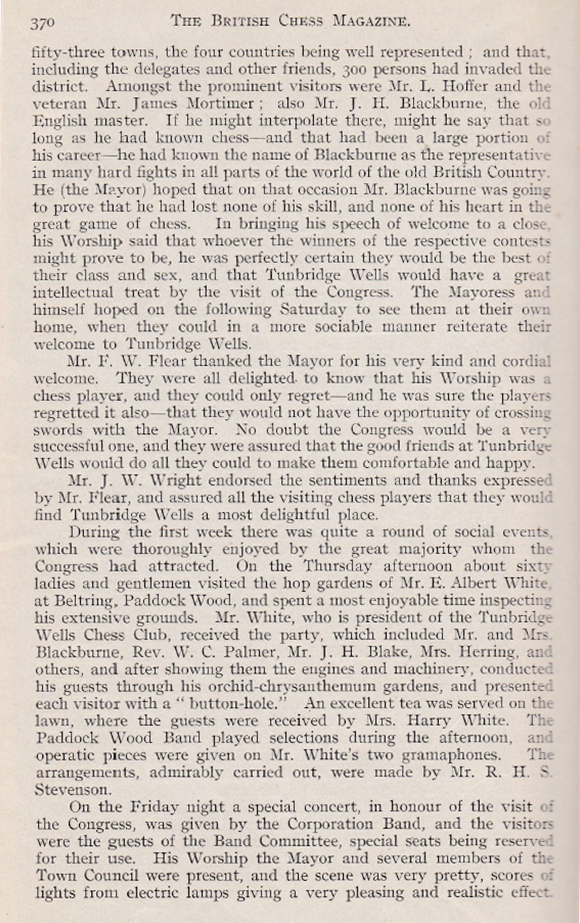
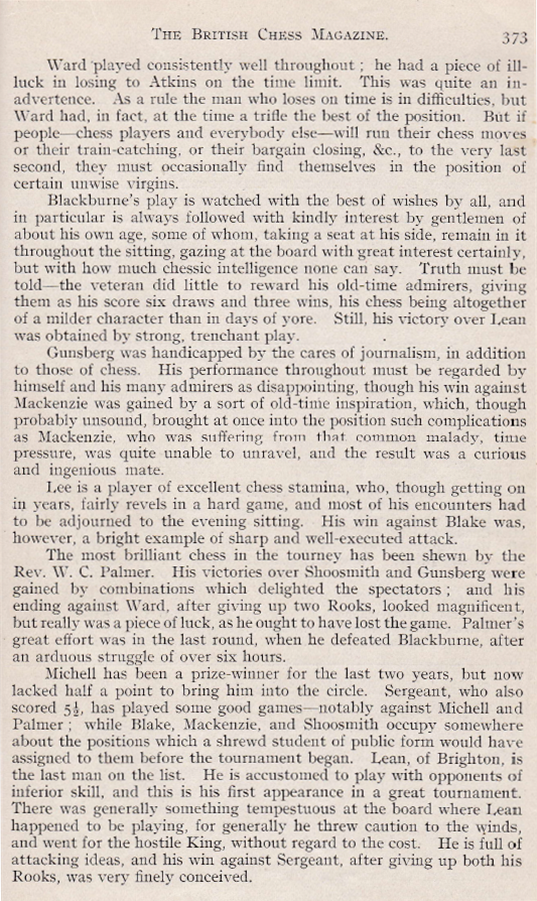
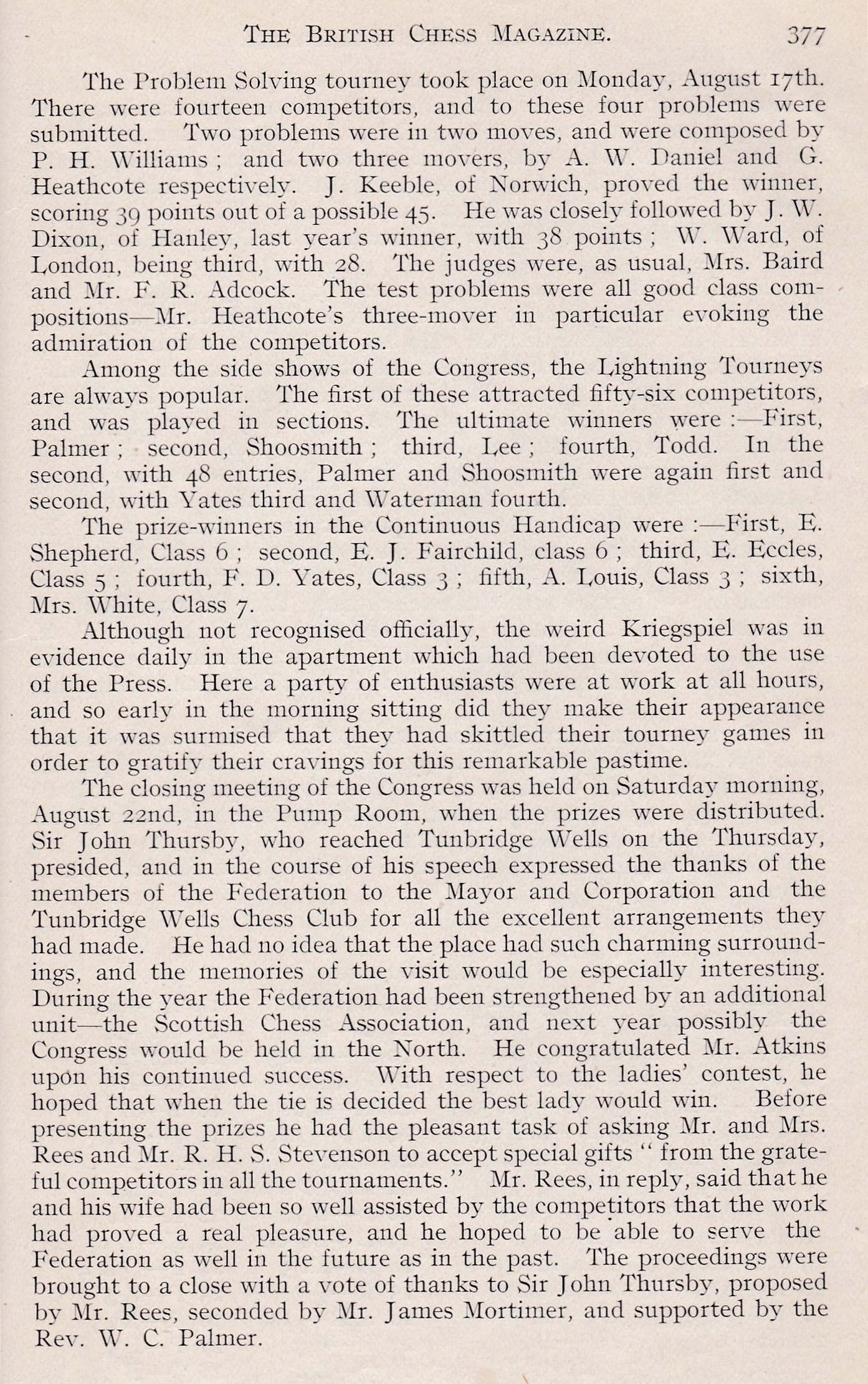
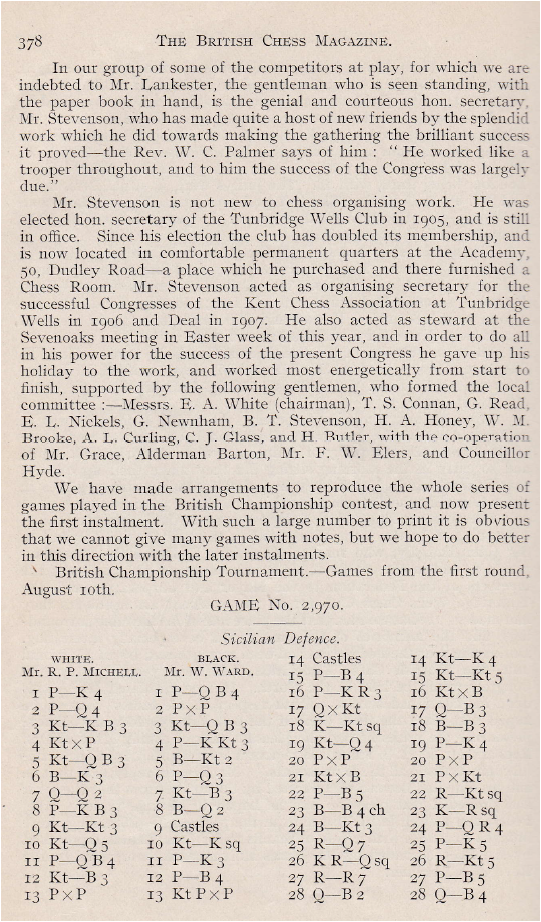
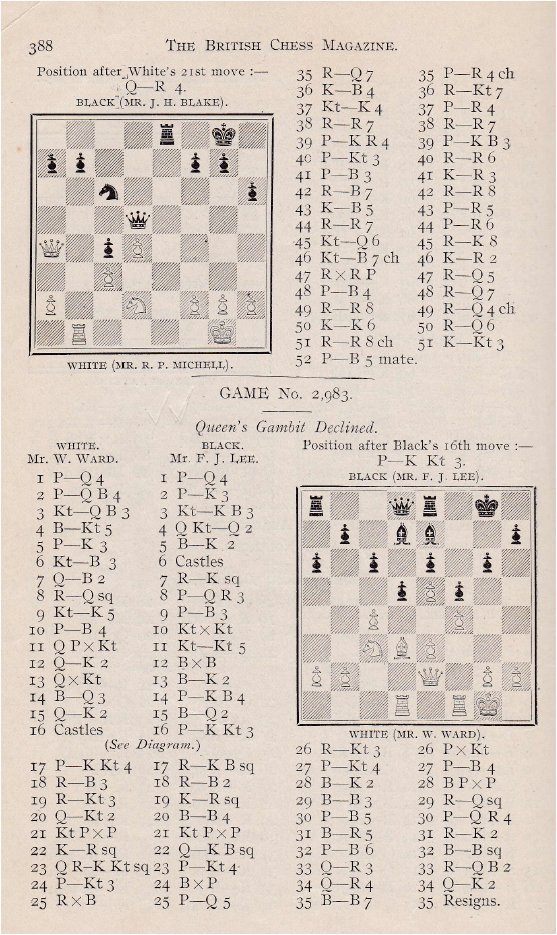
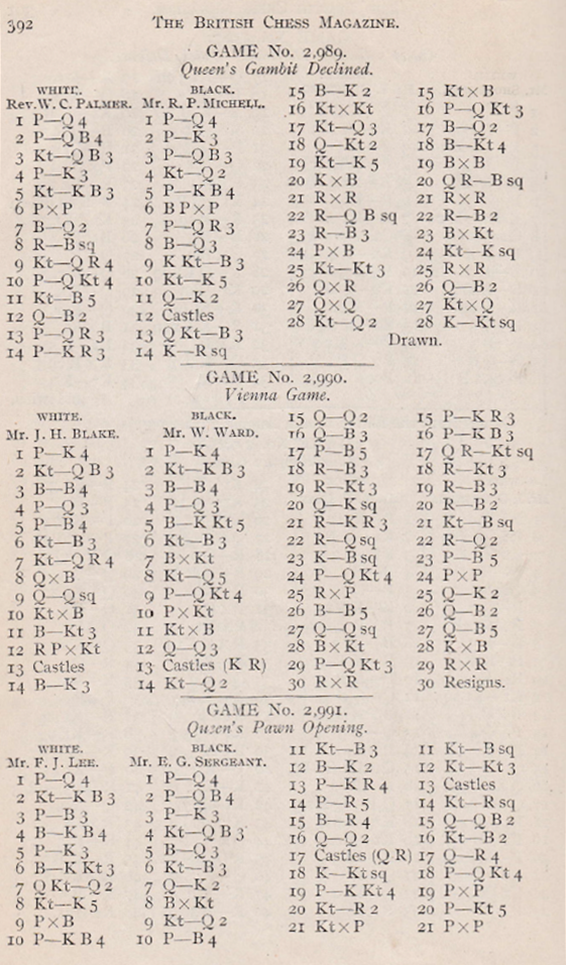
Once upon a time Bedford, traditionally the intellectual centre of Bedfordshire, had to suffer the slings and arrows of outrageous fortunes by conceding considerable chess inferiority to its industrialized half-sister Luton. Blackburne, who trusted historian Tim Harding has recently written about, http://www.amazon.co.uk/Joseph-Henry-Blackburne-Chess-Biography/dp/0786474734/ref=sr_1_1?ie=UTF8&qid=1446805615&sr=8-1&keywords=tim+harding managed to squeeze in a visit whilst circumnavigating the county and its more established chess hubs (post on his visit to Luton to follow). Here’s an account of his time in Bedford, he puts the current world champion to shame on the blindfold front (please click on the image for a better view).
Allegedly taken a year before his visit to Bedford.
When you are away from home for so long, you begin to wonder what happened to those you once knew, so I was saddened to learn that my first playing partner at Luton Chess Club, Peter Whone has long since left us.
Peter was always well-dressed, not easy for a man of his enormous size. He was impeccably mannered and happy to play anyone new to the club though in truth he was too good for newcomers. Through allotments, he was a self-made millionaire and lived a life of leisure in his fifties although you would never have known as he was a shy, self-effacing man, a gentle giant in fact. In retrospect I am quite indebted to him and the kindness he showed when both myself and school playing partner Ashok Bhundia turned up as nervous schoolboys at the Luton Chess Club in Biscot Mill just after half-term in 87.
To begin we would only play each other whilst making up nicknames for the various club members we saw. Peter’s was Tefal, on account of his large forehead.
When we became bored of that, we would watch Peter with his usual playing partners, Richard and Margret. Peter was tactically-minded and played quickly, rarely taking more than a few seconds per move, often moving instantaneously. He only ever played 1. e4 and only ever expected 1. e5 in reply, anything else would draw a suspicious stare and a mumbled, but light-hearted, accusation of ‘that’s cheating’ or ‘he’s playing tricks’. He liked to commentate on games and would often accuse someone of being ‘nasty’ or would sometimes tell himself ‘I’ve made a boo-boo’. He never studied chess theory and gained great pleasure from skittles only. When he played for a team he never altered his style and would play lightening fast, using barely five minutes of his allotted time however ample that may be, often forgetting to write his moves down.
Without his kindness and patience I would not have been able to measure my progress as a junior as when my school friend stopped attending, I continued to visit the club, even though every game in every week came with defeat after defeat, finally however, after six weeks of trying, I gained my first win against Peter. Twenty eight years have since passed, so I cannot remember our casual game in its entirety but I do remember his friend Richard looking on in interest, smiling to himself as my white pieces did battle with Peter’s black army in a semi open game which had stemmed from a two knight’s defence to my Giuoco Piano. Peter tried a tactical ruse but had overlooked the vulnerability of his back rank, and after an exchange I played a winning intermezzo -Rd8- and claimed my first win against a recognized club player. He sat back in his chair in his characteristic way after he’d lost a game before congratulating me on my victory being the gentleman that he was. By this time my love of chess had turned me into a rebel at school: through antipathy, I had managed to drop out of all subjects -sometimes not through choice- and began reading chess literature voraciously whilst loitering in empty corridors or on empty playgrounds. Now known as a lost cause amongst teachers, I would never attend lessons, opting to bunk off and swot up on the latest openings instead, and even when I did attend I would never write or read anything but always had six or more chess books from the local library in my bag at the ready, hoping that some inattentive Science teacher wouldn’t see me slip one out and place it under my exercise book, having begun the current chapter on the bus home from school the day before. I was, in fact, offering a valid critique of the education system, and having suddenly gone from being yet another underachieving face in the crowd to school champion, thus I was left alone to educate myself… .
Peter’s finest hour?
One of Peter’s greatest ever victories over the board came in my first full season, playing for Luton ‘C’ team. On the 25th of October 1988 we drove to Linslade to play Leighton Buzzard, where for the first time I met the irrepressible Henry ‘Bill’ Charlotte, the pipe smoking septuagenarian that ‘anyone could lose to’ according to former team mate Gary Ames. Peter, rated only 89 at the time, was our top board, our main man and played Kevin Williamson rated 142 at the time. Because he played so fast, Peter had an uncanny ability to unsettle his opponent and often dupe them into keeping up with him. This was always a critical mistake and meant certain defeat to those who tried. Peter had the white pieces and, from memory, Kevin played the Pirc/Modern defence but fell for a nasty trap around the 25 move mark. After the game I distinctly remember telling Peter his opponent’s rating and the look of disbelief in his face – in fact he never forgot that game and had a great season, putting 30 points on his rating.
Peter shows his busy hands
One chess evening just before Christmas, a group of players, myself included, were invited to Peter’s house for an evening of chess and snooker. The journey was memorable since Peter usually bought Vauxhall cars built in Luton but had recently chose to buy a metallic blue E-reg, Ford Sierra much to the horror of us Lutonians. Instead of the back lanes, he chose to turn off the motorway at the first exit but it was a cold night, the street lamps shone through frosted air…perhaps that was the safer route to his house in Redbourne, a forgotten Hertfordshire village just outside Harpenden. Inside his huge bungalow was a full-sized snooker table and a chess board placed on a small table by an armchair. Snooker was his other love, and he would often draw comparisons describing both chess and snooker as being ‘cruel’ games, referring to the fact that mistakes weren’t easily rectified in either. I remember how ashamed he was at the mess he’d left on the armchair as he’d not intended to invite anyone back before he left, ‘Look at that mess’, he repeated, referring to an item of clothing placed upon a folded newspaper, aside which his house was spotless and quite unlike that typically associated with an aging bachelor…an evening of wine, chess and snooker followed. A brief description of his house can be found here:
The thing that Peter taught me more than anything else was the importance of welcoming juniors with open arms to your chess club. By nature they are, like I once was, timid souls, who respond to kindness and patience above all. Peter had a great ability to treat everyone on the same level, irrespective of their age and playing level. In retrospect he was the ideal first playing partner as he exemplified a love of chess and people and was impossible not to warm to. Everyone played him and everyone lost to him if they tried to play at his speed. He never took anything seriously and could shrug off defeat better than any player I ever met. It is a great shame that he is no longer with us, he was a true gentleman and is not forgotten.
Vimeo has, amongst its many treasures, short films on chess aplenty. Here’s an intriguing mini-series that appears to have much hard work put into it. How many films can you name?
…on what this site initially became…on what this site is now becoming…on what this site cannot become…
On what this site initially became…
…once upon a time, the chess-related musings of an adrift academic were bound playfully and electronically in this online journal of sorts. They grew and grew as the decade did too. I kept on because I love to write whether I had much to say or not; therefore, being read by others was usually of little or no importance, comparatively speaking. Content was based on personal thoughts and experience on various topics with no intended audience borne in mind. With topics broadening, my own take on things always shaped the narrative I constructed: I often thought I was insightful but never that I was right. Sometimes imagination gave rise to originality: and of that I have always remained proud. I often introduced humour, believing that I am funnier than I really am. Sometimes, I found my own style antithetical to the conservatism I believe chess is plagued by -oftentimes that has put a gracious smile on my face… .
On what this site is now becoming…
…this site is now becoming a collaboration of chess in Bedfordshire: much more so of the past than the present -that has become the dominant trend. I document the history of chess in Bedfordshire as much as I can, and as time has passed I have become more thorough and resourceful. However, I am not a trained historian as my background lies principally in philosophy but yes it is true I did study some modules on history as both an undergraduate and a post-graduate too; furthermore, I have trained myself up, particularly in terms of postmodern history. Since 2015, I have only read history and historiography as well as those philosophers who have been so influential on postmodern history, such as Nietzsche (whom I once wrote a 19,000 word dissertation on, entitled: Can the Will to Power be Found in The Birth of Tragedy?), also Richard Rorty and Foucault and I suppose certain structualists such as Claude Levi-Strauss too. Regarding postmodernism, mostly I keep to Hayden White, Keith Jenkins and Alan Muslow.
Some friends and former playing partners back home describe me as the ‘go to guy’ for the history of chess in Bedfordshire. This compliment says more about the lack of interest in the subject than my own endeavour. As mentioned, I am too adrift from academia to feel chuffed by it. Rather, I tend to lament that my historical research, like my chess, just isn’t what it should be. Even though I may well have a broad understanding of Bedfordshire chess history courtesy of the volume of research put into it, all of which began in 2014, this is not something I am particularly proud of. Nonetheless, out of courtesy compliments are graciously received. If the truth be told, I just see it as my job and only that – after all someone’s got to do it and no one else is that interested!
Amongst the many others, I have created three categories: ‘Bedfordshire Chess’ and ‘History of Bedfordshire Chess’ and ‘Luton Chess Club’. This website is slowly moving towards a consolidation of those (all of which can be found in one of the toolbars to the right).
On what this site cannot become…
…I like to be both creative and amusing when I can be, factor in that playfulness has been an ever-present factor, the content of this site should be thought of as multifarious. It could be said I continue to enjoy undermining the conservatism I believe chess is underpinned by even after all these years, and often try to use humour to do it still, believing I have got better at it. Consequently, despite the general direction its going in, this site cannot only be about Chess in Bedfordshire and nor will it be. It may become noted for that yes -in fact that’s been the case for years already even by established historians, archivists, and whoever else. External factors aside, this site is titled McCreadyandChess. I cannot, nor will I not, remove my own personal thoughts and experiences of chess from the posts of this site -especially if I think they are funny or original for they constitute my writing at its very, very best. In addition, the number of categories alone tells you that breadth of content is important to me. I am proud of my site, it is identity conferring and that is how it shall stay -end of story. All you really have are: ‘Some thoughts on the beautiful game’, which, incidentally, just happen to be my very own; nothing more, nothing less, take of it whatever you please… .
A side note on how to read old Tom Sweby's columns
Not perhaps, but quintessentially, Old Tom Sweby is best thought of as a passionate devotee to the newspapers he wrote for. He was well read and knowledgeable of the Bedfordshire chess scene and well beyond, given that he was the president of the S.C.C.U. once upon a time. He was generally well-respected and rubbed shoulders with many, if not all, of those eminent within British chess circles. It would, however, be a critical mistake to see his column is primary source material entirely. That it is not. You will also find secondary source material quoted too, and the reliability of that is not quite as Tom hoped. Given that he wrote for decades, this is to some degree inevitable, and after all we are all prone to error whether we realize it or not. Thankfully, with regards to old Tom Sweby, they are infrequent and for the most part old Tom continued to document events and developments in the Bedfordshire league from the get go as best he could but, of course, everything lies open to interpretation. Despite this, and generally speaking. this does indeed make him informative and thus worth reading. Dare I say his columns constitute a narrative describing the latest developments, match reports and changing nature of the Beds league...he knew his audience and wrote according. This manifested itself over decades but brevity was always in play courtesy of the restictions imposed by writing a column. Should you wish to read a in instrumental figure of the Beds' league post WW2, you are quite welcome to peruse what has been posted here... . :-) I should, however, point out that as the decades wore on he gradually moved on away from narratives concerning the Bedfordshire league towards affairs both historical and international. The reasons for this are multifarous, old age was a predominante factor presumably, however, the bottom line is with regards to how the Bedfordshire chess scene developed post WW2: old Tom Sweby is your go to guy. He wrote more about chess in Bedforshire than anyone else did but given he was a Lutonian and writing for a Luton newspaper there is both bias and greater coverage of his hometown than the rest of the county.
Gallery
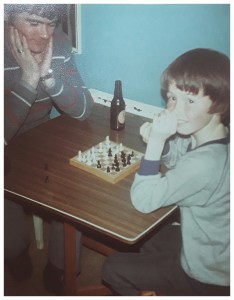
I’m either 10 or 11 here
1982, myself versus Brian from Sunderland.
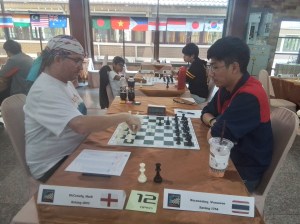
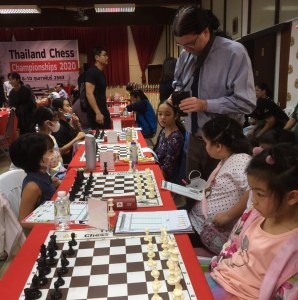
At the Thai Junior chess championships. My daughter of course.
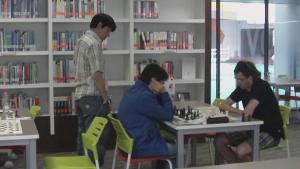
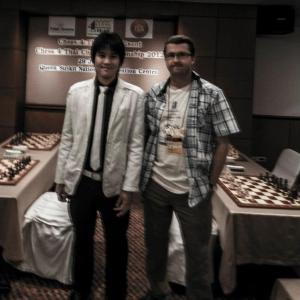
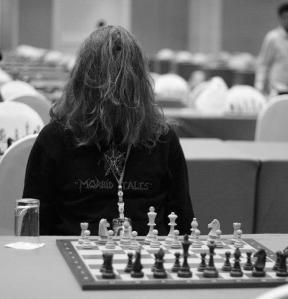
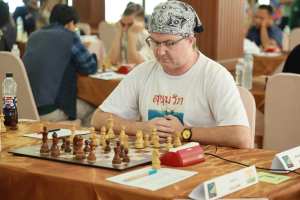
Pattaya 2011
2011
Thai Junior Championships
2008
2011
Around 2011
2011
Pattaya 2009
2011
Kuwait 2008
2012
2012
2011 BKK Chess club
2011
2011 Thai Open
2011 Thai Open
2013 approx
Around 2014
2010
2012
Around 2011
2011
2011
2013
Around 2011
Around 2011
2020
2011
2008
2011
2013 or thereabouts
2010
2017
2014?
2010
2024
2024
2024
To add comments, please see the bell at the top of the page.